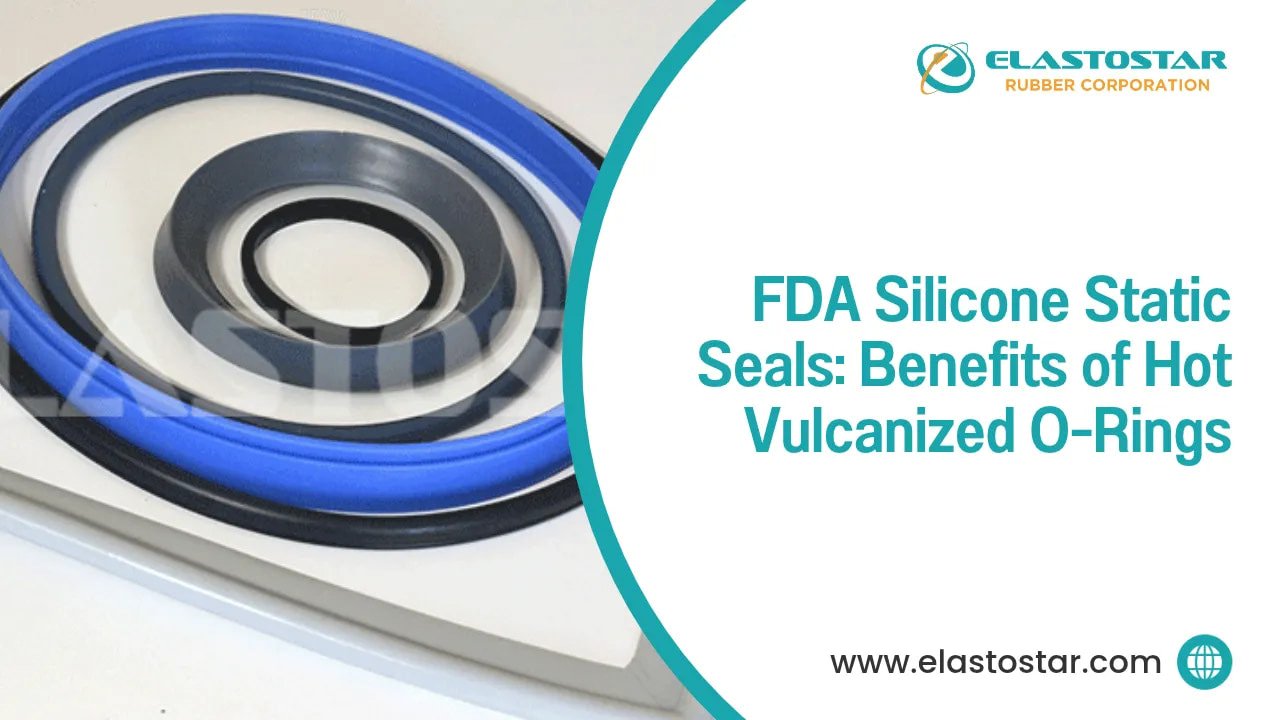
A leaking O-ring in a food-processing tank or equipment housing can interrupt production, create cleaning problems, and lead to unexpected maintenance. Finding a replacement becomes even harder when the equipment uses a large or non-standard sealing diameter.
FDA-compliant silicone O-rings are used in stationary sealing applications where the material must meet specific food-contact requirements.
When standard molded rings aren’t available, hot-vulcanized silicone O-rings offer another manufacturing option for custom diameters, unusual cross-sections, and large equipment openings.
This guide explains how hot-vulcanized O-rings work, where they are used, what FDA documentation buyers should request, and how to choose the right custom silicone O-ring manufacturer.
Key Takeaways
- FDA compliance matters: Silicone O-rings intended for repeated food contact must meet applicable FDA requirements, including 21 CFR 177.2600 where relevant to the finished article and its conditions of use.
- Reliable static sealing: Silicone O-rings help prevent leaks in stationary equipment such as processing tanks, manways, and housings.
- Custom sizes available: Hot vulcanized O-rings are useful for large diameters and non-standard sealing dimensions.
- Flexible manufacturing: Hot vulcanization can reduce the need for dedicated full-ring molds, especially for custom and low-volume orders.
- Choose the right material: Temperature, pressure, chemicals, hardness, and groove dimensions affect O-ring performance.
- USA manufacturing: At Elastostar Rubber Corporation, we manufacture custom silicone O-rings with reverse engineering, design support, and prototype-to-production capabilities.
Table of Contents
What Are FDA-Compliant Silicone Static Seals?
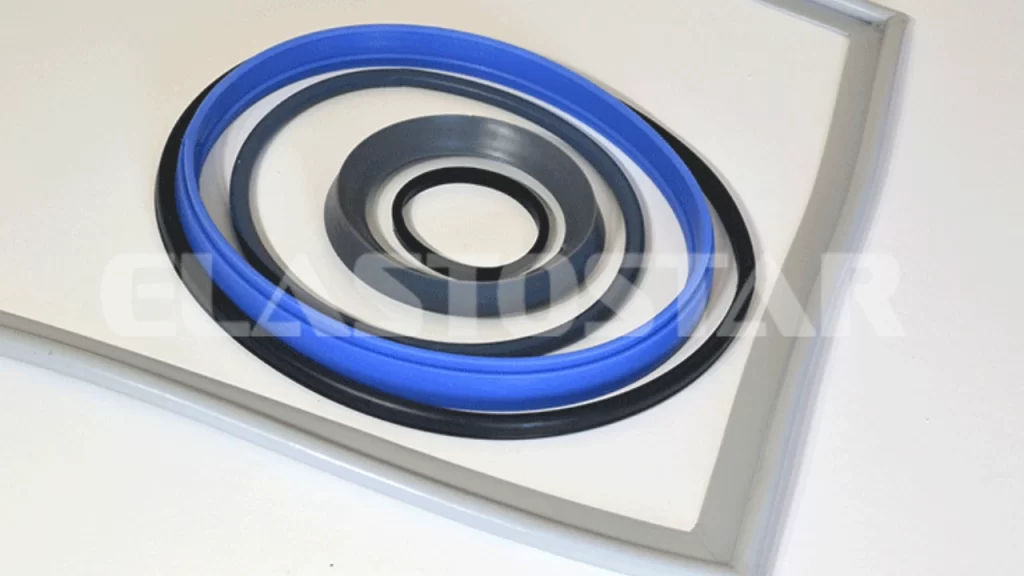
FDA-compliant silicone static seals are silicone rubber components manufactured from materials that meet applicable FDA food-contact requirements for their intended use.
A static seal sits between two surfaces that remain stationary relative to each other during normal operation. When the equipment is assembled, the O-ring is compressed inside its groove to create a barrier against leakage.
Common applications include processing tank covers, manways, inspection ports, and stationary equipment housings.
For food-contact applications in the United States, buyers should understand the requirements of FDA 21 CFR 177.2600 silicone rubber, which addresses rubber articles intended for repeated food contact.
What makes silicone suitable for static sealing?
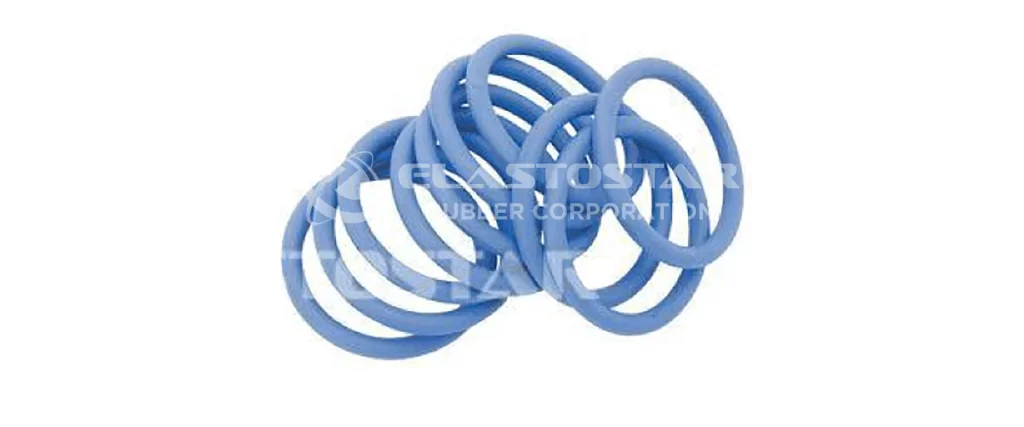
Silicone rubber offers flexibility, compression recovery, and resistance to a broad range of operating temperatures, depending on the compound.
These properties make silicone useful in equipment where the sealing surfaces remain stationary for long periods.
1. When do FDA requirements apply?
FDA food-contact requirements become relevant when the O-ring is intended to contact food or food ingredients under regulated conditions.
Review the specific compound, additives, curing materials, and intended contact conditions. Simply describing a product as silicone or food grade does not establish compliance.
2. FDA-compliant vs. FDA-approved silicone
The terms are often confused.
FDA-compliant means the material or finished article meets the applicable requirements for its specified use.
FDA-approved is frequently used in product marketing, but it can incorrectly suggest that the FDA has individually approved a particular O-ring.
Our explanation of FDA-approved vs. FDA-compliant silicone helps buyers understand the distinction.
Why Are Silicone O-Rings Used for Static Sealing?
Silicone O-rings create a seal when compressed between mating surfaces. Their flexibility helps them conform to the groove and surrounding hardware, provided the dimensions and compression are correct.
For stationary applications, silicone offers several useful properties.
| Silicone O-ring property | Benefit for static sealing |
|---|---|
| Flexibility | Helps the seal conform to mating surfaces |
| Compression recovery | Supports sealing under appropriate compression |
| Temperature resistance | Allows use across a broad temperature range, depending on the grade |
| Custom dimensions | Accommodates unusual equipment and groove sizes |
| Material selection | Supports application-specific compound and hardness requirements |
| Weather and ozone resistance | Useful for certain exposed equipment applications |
Silicone is often a good choice for stationary sealing, but it is not suitable for every chemical, pressure, or mechanical condition.
For example, a seal exposed to continuous movement may require greater abrasion resistance. Understanding when to use a static seal instead of a dynamic seal helps prevent incorrect material selection.
For food-processing equipment, we also help customers evaluate silicone compounds based on their temperature exposure, cleaning chemicals, and required food-contact documentation.
What Are Hot Vulcanized Silicone O-Rings?
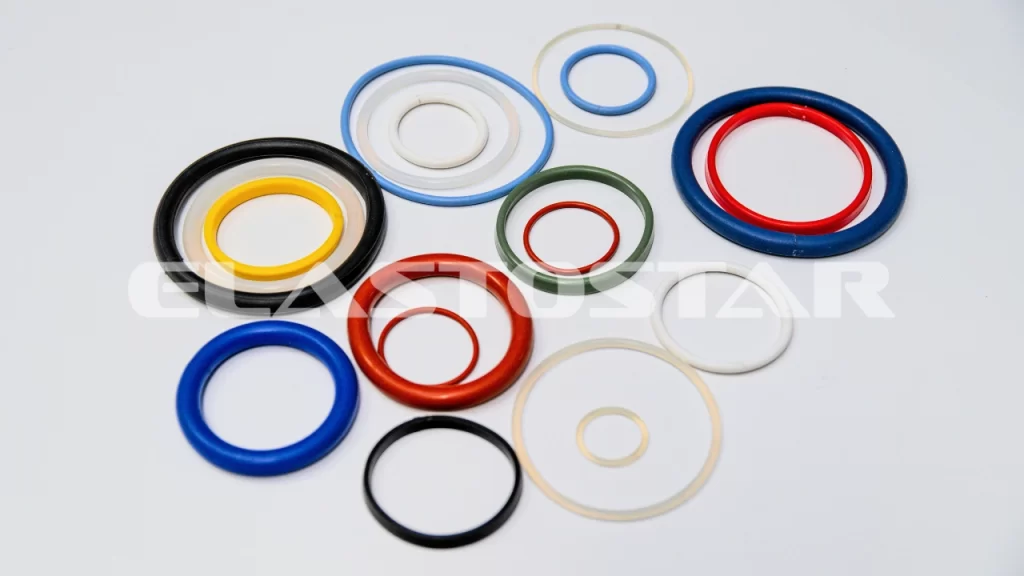
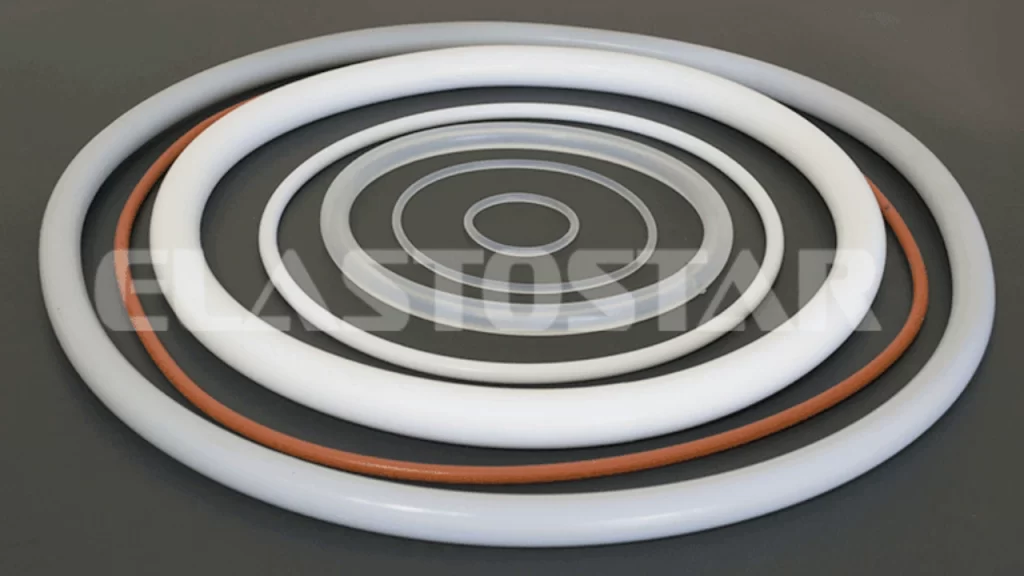
Hot vulcanized silicone O-rings are manufactured by joining the ends of an extruded silicone rubber cord or profile using heat and a controlled vulcanization process.
Unlike a molded O-ring, which is formed in a mold, a hot vulcanized ring begins as an extruded profile. We cut the profile to the required length, form it into a ring, and join the ends.
This method allows us to manufacture spliced vulcanized silicone rubber O-rings in custom dimensions, including large diameters that may be difficult to obtain from standard catalogs.
How the manufacturing process works
- Material selection: We select the silicone compound and hardness based on the application.
- Profile extrusion: We manufacture the required cord or custom cross-section.
- Precision cutting: The profile is cut to the required length.
- Hot vulcanization: The ends are aligned and joined using a controlled vulcanization process.
- Inspection: We evaluate dimensions, joint condition, and other agreed quality requirements.
The vulcanized joint is an important part of the finished seal. Its quality depends on the joining process, material compatibility, and manufacturing control.
Why Choose Hot Vulcanized O-Rings for FDA-Compliant Static Seals?
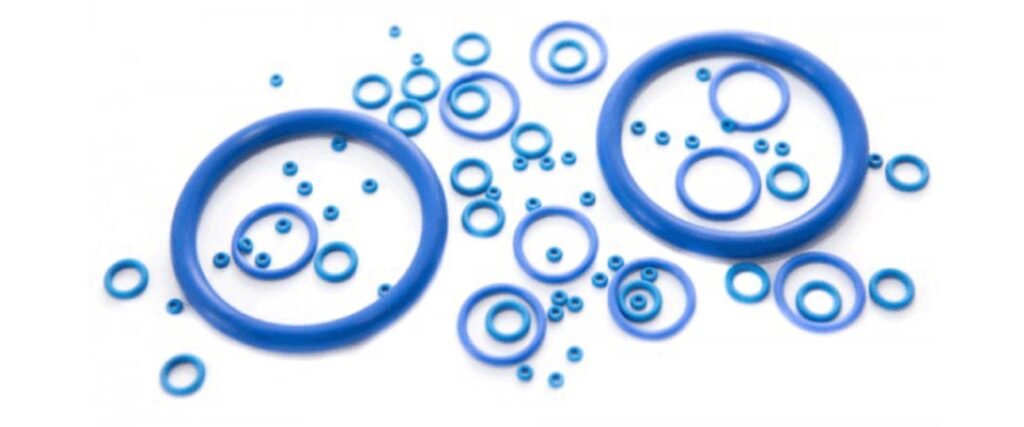
Standard molded rubber O-rings are available in many common sizes. But large processing equipment and custom machinery do not always use standard dimensions.
Hot vulcanization provides more flexibility when the required ring is difficult to source.
1. Custom diameters for non-standard equipment
A processing tank may use a sealing groove that does not match any standard O-ring size.
We can manufacture custom vulcanized O-rings based on the required inside diameter and cross-section, subject to material and manufacturing feasibility.
2. Large-diameter silicone O-rings
Large tank covers, manways, and equipment housings often require sealing rings much larger than conventional molded O-rings.
Hot vulcanization is worth evaluating because it can produce large rings without requiring a dedicated mold for the entire circumference.
3. Custom cross-sections
Not every sealing groove is designed for a round O-ring.
Depending on the equipment, we can manufacture custom silicone profiles for stationary sealing applications. We also manufacture silicone rubber square and rectangular seals for designs that require alternative gasket shapes.
4. Material and hardness options
Different applications require different silicone compounds and durometers.
We help customers evaluate material options based on operating temperature, pressure, contact media, and applicable documentation requirements.
5. Low-volume and prototype requirements
Some equipment manufacturers need only a few custom seals for testing, maintenance, or specialized production equipment.
Hot vulcanization may reduce the need for dedicated full-ring tooling, making it a useful option for prototype and low-volume projects.
6. Replacement of hard-to-find O-rings
Older machines sometimes use discontinued or non-standard seals.
Through our reverse engineering support, we can review an existing O-ring, sample, or equipment drawing to evaluate a suitable replacement.
These are some of the main benefits of hot vulcanized silicone O-rings for static seals.
For FDA-compliant applications, the finished O-ring, including its vulcanized joint, must still meet the required food-contact and performance specifications.
When Are Large-Diameter FDA Silicone O-Rings Needed?
You need large-diameter FDA silicone O-rings when equipment has a wide circular opening or a sealing groove that cannot accommodate a standard ring.
They are particularly relevant in industrial food and hygienic processing equipment.
| Equipment | Typical sealing requirement |
|---|---|
| Processing tanks | Large covers and access openings |
| Manways | Stationary seals around vessel access points |
| Mixing equipment | Custom covers and equipment connections |
| Food-processing machinery | Non-standard sealing grooves |
| Pharmaceutical processing equipment | Large stationary assemblies with specific material requirements |
| Sanitary equipment | Custom seals for cleanable equipment designs |
For example, a food-processing tank may require a custom ring to seal its access cover. If the original seal has an unusual diameter or cross-section, a standard molded O-ring may not fit.
In these situations, we can evaluate a custom hot-vulcanized silicone O-ring based on the existing seal dimensions or equipment drawing.
Correct sizing is essential. A ring that does not match the groove may leak even if the silicone material is suitable. Our guide to manway gasket failure causes also covers problems such as incorrect compression and surface damage.
Hot Vulcanized vs. Molded Silicone O-Rings: Which Should You Choose?
Both hot vulcanized and molded silicone O-rings can be used for static sealing. The better choice depends on size, quantity, tooling, and operating requirements.
| Factor | Hot vulcanized silicone O-rings | Molded silicone O-rings |
|---|---|---|
| Size availability | Useful for custom and large diameters | Depends on available mold sizes |
| Tooling | May avoid dedicated full-ring tooling | Requires suitable mold tooling |
| Customization | Flexible diameter and profile options | Dimensions determined by mold design |
| Order quantity | Often useful for custom, low-volume orders | Often economical for repeat production |
| Lead time | Depends on material, extrusion, and joining requirements | Depends on tooling and production schedule |
| Joint construction | Contains a vulcanized splice | Generally formed as one continuous molded ring |
| Application suitability | Requires qualification for the intended service | Requires qualification for the intended service |
When should you choose hot vulcanized O-rings?
Consider hot vulcanization when the required diameter is large, the dimensions are unusual, or the order quantity makes dedicated molding tooling less practical.
When should you choose molded O-rings?
Molded rubber O-rings may be preferable when a suitable standard size is available or when repeat production volumes justify the tooling.
We manufacture custom rubber cord products and vulcanized seals, allowing customers to discuss manufacturing options based on their actual requirements.
Neither method is automatically better. Joint performance, dimensional requirements, and operating conditions must guide the final decision.
Hot Vulcanized vs. Cold-Bonded O-Rings for Static Sealing
The main difference between hot vulcanized and cold-bonded O-rings is how the two ends of the rubber profile are joined.
Hot vulcanized O-rings use heat and a suitable vulcanization process to create the joint.
Cold-bonded O-rings generally use an adhesive to connect the ends without the same heat-vulcanization process.
| Comparison | Hot vulcanized O-rings | Cold-bonded O-rings |
|---|---|---|
| Joining method | Heat vulcanization | Adhesive bonding |
| Joint construction | Vulcanized splice | Adhesive bond |
| Temperature suitability | Depends on compound and joint qualification | Depends on rubber and adhesive limits |
| Food-contact requirements | Compound and splice materials must be evaluated | Compound and adhesive must be evaluated |
| Inspection | Joint integrity and dimensions | Bond integrity and dimensions |
For food-processing applications, buyers should verify the suitability of every material used in the completed seal.
Do not assume an adhesive or vulcanizing material is compliant simply because the base silicone compound meets FDA requirements.
We recommend reviewing joint construction, temperature exposure, cleaning conditions, and expected service requirements before choosing a manufacturing method.
What FDA Requirements Should Buyers Check for Silicone O-Rings?
When purchasing FDA silicone O-rings for food-processing equipment, the most important step is verifying the specific material and intended contact conditions.
For repeated food-contact rubber articles, FDA 21 CFR 177.2600 is a key regulatory reference.
The regulation includes requirements related to permitted ingredients and extractives under specified testing conditions.
According to the US Food and Drug Administration’s guidance on food-contact material components, the regulatory status of a food-contact material depends on its components and applicable conditions of use.
What buyers should verify
- FDA food-contact requirements: Confirm that the specific silicone compound is suitable for the intended application under FDA 21 CFR 177.2600.
- Material documentation: Request the supplier’s declaration and relevant supporting records.
- Contact conditions: Identify the food or processing media, temperature, and contact duration.
- Finished O-ring construction: Confirm that the splice materials and processing method do not introduce unsuitable substances.
- Compound traceability: Request batch or material identification where needed.
- Additional certification: Check whether the equipment requires NSF/ANSI 51 or another standard.
Some food-processing applications may call for an NSF 51 silicone rubber compound.
We can discuss our NSF/ANSI 51 certification and the available documentation when reviewing a customer’s specifications.
FDA compliance and NSF certification are different requirements. Buyers should confirm that the exact compound and finished part meet the standards relevant to their equipment.
Not all silicone O-rings are FDA compliant. The formulation and intended use matter more than the general material name.
Where Are FDA-Compliant Hot Vulcanized Silicone O-Rings Used?
Custom hot vulcanized silicone O-rings are used in stationary sealing applications where equipment dimensions and material requirements make standard seals difficult to use.
1. Food-processing equipment
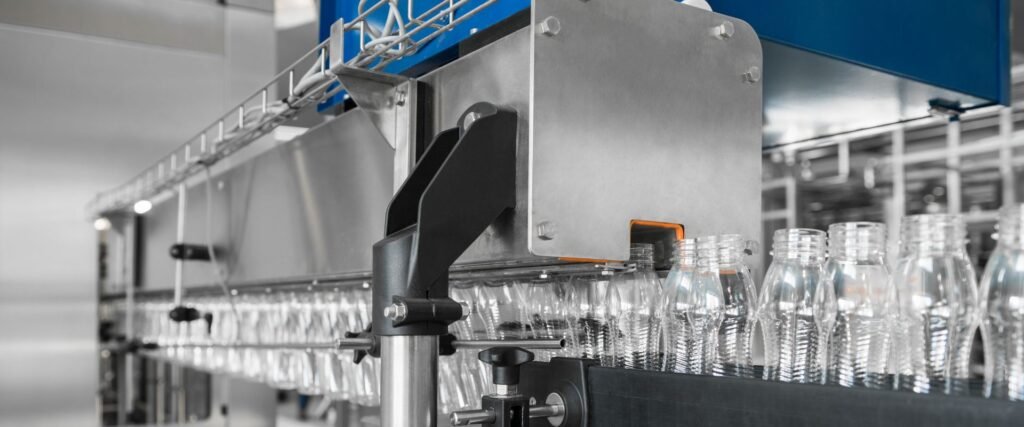
Processing tanks, mixers, inspection covers, and stationary machine housings may require custom food-grade silicone (177.2600) seals.
The best O-rings for food processing equipment depend on the sealing groove, operating temperature, cleaning chemicals, and food-contact requirements.
We help customers evaluate these conditions before selecting a suitable silicone compound and sealing design.
2. Beverage and dairy equipment
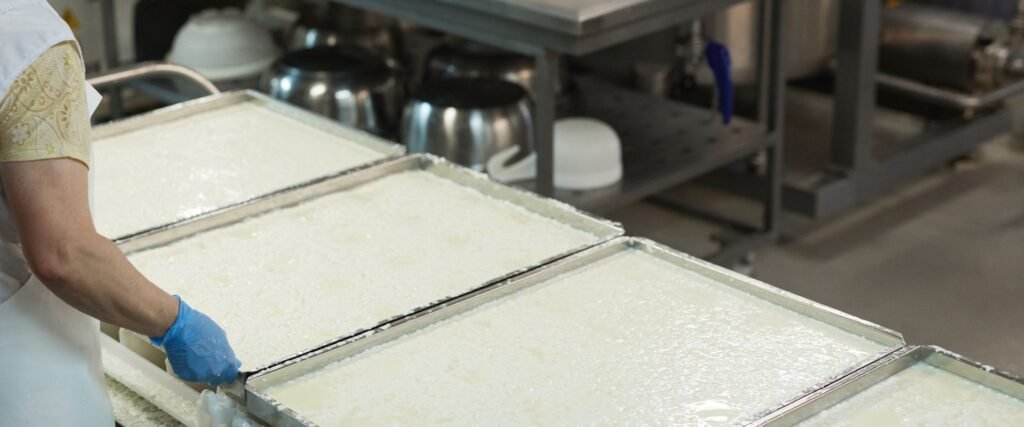
Beverage and dairy processing equipment may use large tank openings and removable covers.
Seal selection must account for product contact, cleaning chemicals, operating temperature, and equipment design.
Our experience with dairy and cheese-processing equipment supports customers looking for custom sealing profiles.
3. Processing tanks and manways
Large vessel openings often prompt evaluation of custom hot vulcanized O-rings.
For applications where a conventional round ring isn’t appropriate, our extruded U-channel manway seals and gaskets offer another profile option, depending on the equipment design.
4. Pumps and stationary housings
Some pumps require stationary O-rings around covers or housing joints.
Distinguish these applications from moving shaft seals, which have different mechanical requirements.
5. Pharmaceutical processing equipment
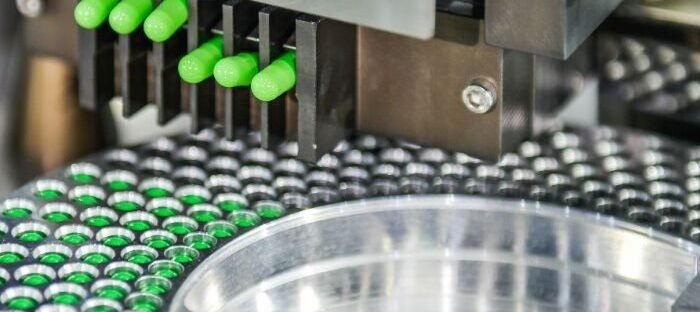
Pharmaceutical equipment may require silicone seals with additional material testing or documentation.
We offer materials associated with USP Class VI silicone rubber requirements, including applicable biological reactivity testing under USP Sections 87 and 88.
We also manufacture platinum-cured silicone rubber tubing for applications such as peristaltic pumping, where the tubing design and compound meet the required specifications.
These are different products with different qualification needs. A material’s suitability for pharmaceutical tubing does not automatically establish compliance for a finished O-ring.
6. Hygienic processing applications
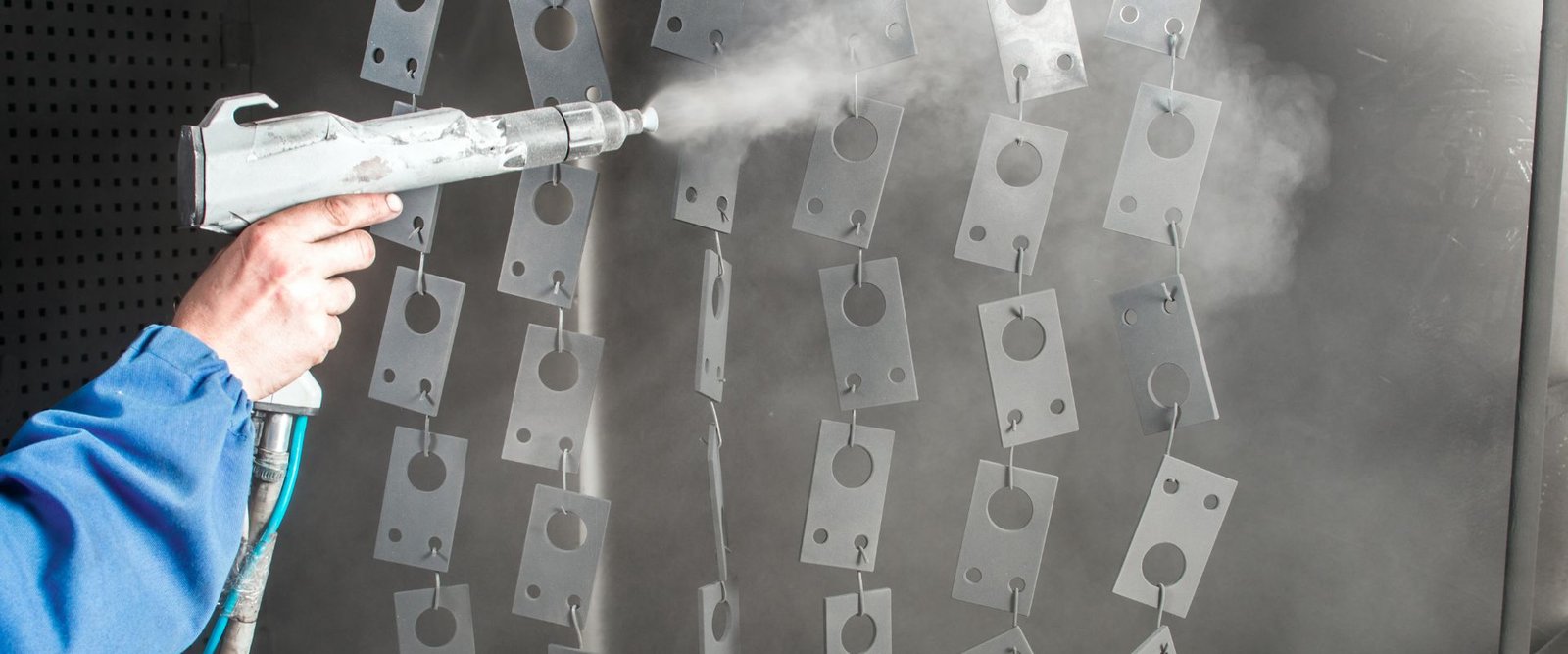
Some food facilities also use metal-detectable and X-ray-detectable silicone rubber as part of foreign-material control programs.
Validate detection performance for the actual product, inspection equipment, and operating conditions.
How Do Temperature, Pressure and Media Affect O-Ring Selection?
The correct silicone O-ring must match more than the equipment’s dimensions.
Operating temperature, internal pressure, and contact media directly affect material selection and sealing performance.
1.Temperature
Silicone rubber can remain flexible across a broad temperature range, but actual limits depend on the specific compound.
High temperatures and repeated thermal cycling may increase aging or compression set.
Our guide to silicone rubber temperature performance explains why service conditions matter when selecting a grade.
2.Pressure
Pressure can push an O-ring toward gaps between mating surfaces.
If the groove clearance is excessive or the compound is too soft for the application, the seal may become damaged or extrude into the gap.
Buyers should provide the operating pressure and groove dimensions when requesting a custom seal.
3. Contact media
Food ingredients, water, oils, cleaning agents, and sanitizers may affect silicone compounds differently.
A material suitable for hot water exposure may not perform the same way in contact with certain oils or aggressive cleaning chemicals.
Where silicone is unsuitable, another elastomer may be needed.
Our comparison of fluorosilicone vs. silicone rubber explains some material differences relevant to chemical exposure.
4. Compression and hardness
The cross-section and durometer must match the groove and expected compression.
Too little compression can cause leakage. Too much can damage the ring or increase permanent deformation.
We help customers evaluate these factors before selecting a custom silicone static seal.
What Causes FDA Silicone Static O-Rings to Fail?
An O-ring can fail even when the silicone compound meets the required food-contact specification.
The most common problems involve incorrect dimensions, unsuitable operating conditions, or installation damage.
| Failure cause | Possible problem | Preventive action |
|---|---|---|
| Insufficient compression | Leakage | Verify groove depth and cross-section |
| Excessive compression | Seal deformation or damage | Review gland dimensions |
| Incorrect O-ring size | Poor fit | Confirm ID and cross-section |
| Chemical incompatibility | Swelling or material deterioration | Check media compatibility |
| Excessive temperature | Aging or compression set | Select a suitable compound |
| Poor groove design | Pinching or extrusion | Review groove geometry |
| Surface damage | Local leakage | Inspect mating surfaces |
| Incorrect installation | Cuts, twisting, or overstretching | Follow suitable installation practices |
| Joint-related defects | Leakage or separation at the splice | Review joint manufacturing and inspection |
Many of these issues are explained in our guide to common O-ring failure causes and prevention.
Incorrect dimensions are particularly important for large custom rings. Buyers should verify the inside diameter, cross-section, and groove geometry rather than relying only on the equipment’s nominal size.
Standard vs. Custom FDA Silicone O-Rings: Which Do You Need?
The simplest way to decide is to start with the required dimensions, material, and quantity.
| Your requirement | Recommended option to evaluate |
|---|---|
| Standard diameter and cross-section available | Standard molded O-ring |
| Large or unusual diameter | Custom hot vulcanized O-ring |
| Non-standard cross-section | Custom extruded and vulcanized profile |
| Low-volume replacement | Custom hot vulcanized O-ring |
| High-volume repeat production | Compare molded and vulcanized manufacturing |
| Unknown original dimensions | Reverse engineering from a sample or equipment drawing |
For standard sizes, verify that the available compound meets the application’s requirements.
For unusual or large dimensions, custom hot vulcanization may provide a practical solution.
We also offer custom silicone bulb seals and extruded profiles that can support specialized sealing requirements.
Select the final manufacturing method after reviewing the operating conditions, required quantity, and quality expectations.
What Specifications Do We Need for a Custom Hot Vulcanized O-Ring Quote?
A complete RFQ helps us evaluate the correct material, manufacturing method, and production requirements.
Custom silicone O-ring quote checklist
| Specification | Information to provide |
|---|---|
| Inside diameter | Required ID and tolerance |
| Cross-section | Diameter or profile dimensions |
| Silicone grade | Required compound or material specification |
| Durometer | Shore A hardness |
| Operating temperature | Minimum and maximum service temperatures |
| Contact media | Food products, liquids, chemicals, or cleaning agents |
| Pressure | Normal and maximum operating pressure |
| FDA requirement | Applicable FDA 21 CFR 177.2600 requirements |
| Quantity | Prototype, replacement, or production volume |
| Drawing or sample | Available technical drawing, sample, or part number |
| Documentation | Material declarations, inspection, or traceability requirements |
| Delivery requirement | Required delivery schedule |
For custom rubber components, dimensional tolerances are an important part of manufacturing planning.
Our RMA precision tolerance guidance can help establish realistic expectations.
If you do not have a complete drawing, we can review a sample or existing seal through our reverse engineering support.
We also provide design assistance and prototype-to-production manufacturing for custom sealing projects.
How to Choose an FDA-Compliant Silicone O-Ring Manufacturer in the USA

Choosing the right FDA-compliant O-ring manufacturer matters when you need a part that fits a custom groove, meets food-contact requirements, and performs reliably in production equipment.
Before ordering, ask the manufacturer these questions:
- Can you manufacture custom and large-diameter O-rings? Confirm the available extrusion and vulcanization capabilities.
- Can you provide FDA documentation? Ask about the specific compound and applicable FDA 21 CFR 177.2600 requirements.
- How are the joints manufactured and inspected? Understand the hot vulcanization process and quality checks.
- Can you support custom cross-sections? Can you manufacture the required profile?
- Can you work from an existing sample? Reverse engineering may be useful for replacement seals.
- Do you support prototypes and production runs? Make sure the supplier can handle the required quantity.
- What is the expected lead time? Ask for a realistic schedule based on material and production availability.
At Elastostar Rubber Corporation, our custom manufacturing capabilities include silicone extrusion, hot vulcanization, large-diameter sealing components, and application support.
Our quality control processes help us manage dimensional and manufacturing requirements, while our USA-based manufacturing operations support customers sourcing custom silicone components domestically.
We work with equipment manufacturers, engineers, maintenance teams, and purchasing departments to evaluate the right sealing solution for each project.
Recommended Reads
1. How Temperature Affects Silicone Rubber Performance
2. O-Ring Size Standards and International Size Charts
3. Seal Damage Root Cause Analysis: Visual Guide to Gasket Failures
Need Custom FDA Silicone Static O-Rings?
At Elastostar Rubber Corporation, we manufacture custom FDA silicone seals, hot vulcanized silicone O-rings, and large-diameter static sealing components for industrial customers across the United States.
Our capabilities include:
- Proudly made in the USA.
- A large manufacturing facility.
- Custom hot vulcanized and spliced silicone O-rings.
- Large-diameter and non-standard sizes.
- Custom silicone compounds and extruded profiles.
- FDA 21 CFR 177.2600 material options for applicable food-contact applications.
- Reverse engineering support.
- Design help and application support.
- Prototype-to-production manufacturing.
- Short lead-time delivery options, depending on project requirements.
We also manufacture other rubber sealing materials, including Viton/FKM Vulcanised O-rings, for applications requiring different chemical or temperature properties.
Whether you need a replacement O-ring for a processing tank or a custom static seal for new equipment, we can review your specifications and discuss the appropriate manufacturing method.
Contact our team with your drawing, sample, dimensions, and quantity to request a quote.
FAQs
Q1. What are FDA-compliant silicone O-rings?
FDA-compliant silicone O-rings are sealing rings manufactured from materials that meet the applicable FDA food-contact requirements for their intended use. For repeated food-contact rubber articles, FDA 21 CFR 177.2600 is an important reference. The specific compound and finished seal should be verified.
Q2. Are all silicone O-rings FDA compliant?
No. Silicone compounds can contain different additives, pigments, and curing systems. Not every formulation is suitable for food contact. Understanding the difference between food-grade FDA silicone and regular silicone helps buyers choose materials with the right documentation.
Q3. What is a hot vulcanized silicone O-ring?
A hot vulcanized silicone O-ring is manufactured by joining the ends of an extruded silicone profile using heat and a controlled vulcanization process. This allows custom rings to be made in large and non-standard diameters.
Q4. Are hot vulcanized silicone O-rings suitable for food processing?
Yes, provided the selected silicone compound, vulcanized joint, and intended contact conditions meet applicable food-contact requirements. For hygienic processing equipment, buyers should also understand the food safety requirements for silicone seals and gaskets before selecting a material.
Q5. What is the difference between hot vulcanized and molded O-rings?
Hot vulcanized O-rings are made by joining extruded rubber profiles. Molded O-rings are formed in a mold. The better option depends on size, quantity, tooling, joint requirements, and operating conditions.
Q6. What is the difference between hot vulcanized and cold-bonded O-rings?
Hot vulcanization uses heat and a vulcanizing process to join the profile ends. Cold bonding generally uses adhesive. Buyers should evaluate joint integrity, temperature limits, chemical compatibility, and food-contact requirements.
Q7. How large can a vulcanized silicone O-ring be?
The achievable diameter depends on the material, profile dimensions, manufacturing process, and handling requirements. Send us the required dimensions so we can review manufacturing feasibility.
Q8. What information is required to order a custom silicone O-ring?
Provide the inside diameter, cross-section, compound, hardness, temperature, contact media, pressure, quantity, and applicable documentation requirements. A drawing or sample helps us evaluate the project.
Q9. How do I choose the right silicone O-ring cross-section?
The correct cross-section depends on groove dimensions, compression, operating pressure, and material hardness. Buyers should also consider whether the seal is stationary or exposed to movement. Our guide to gaskets vs. O-rings and their applications provides additional information about choosing sealing components.
Q10. Where can I source custom FDA-compliant silicone O-rings in the USA?
If you’re looking for where to buy FDA silicone O-rings in the USA, Elastostar Rubber Corporation manufactures custom silicone O-rings in Ohio. We offer hot vulcanized O-rings, large-diameter seals, custom profiles, and material options for applicable FDA food-contact requirements. Request a custom silicone O-ring quote with your specifications.