IATF 16949:2016 Certification
IATF 16949 builds on ISO 9001 with additional automotive requirements for manufacturing control, supplier management, risk reduction, product safety, and quality improvement. Automotive OEMs and suppliers use this certification when qualifying manufacturers for production programs and long-term supply.
Key areas include:
Process control and production planning.
Defect prevention and traceability.
Supplier and risk management.
Inspection and verification.
Corrective action and continuous improvement.
Customer-specific requirements.
Elastostar Rubber Corporation manufactures custom silicone rubber seals, gaskets, tubing, O-rings, extruded profiles, and molded components for automotive applications. Our quality-controlled manufacturing supports custom part development from prototype through repeat production.
Our Accreditations
View Our IATF 16949 Certification
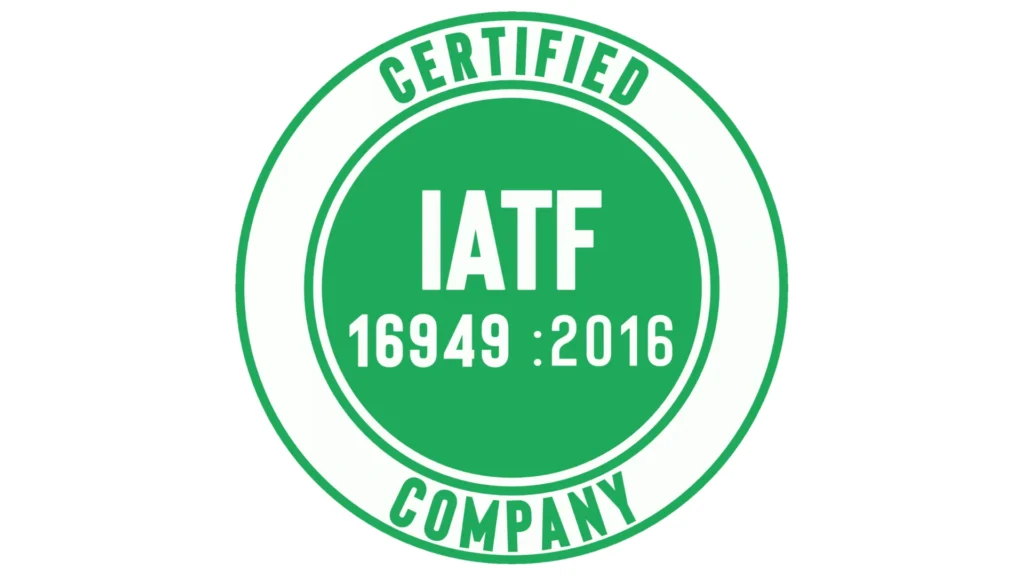
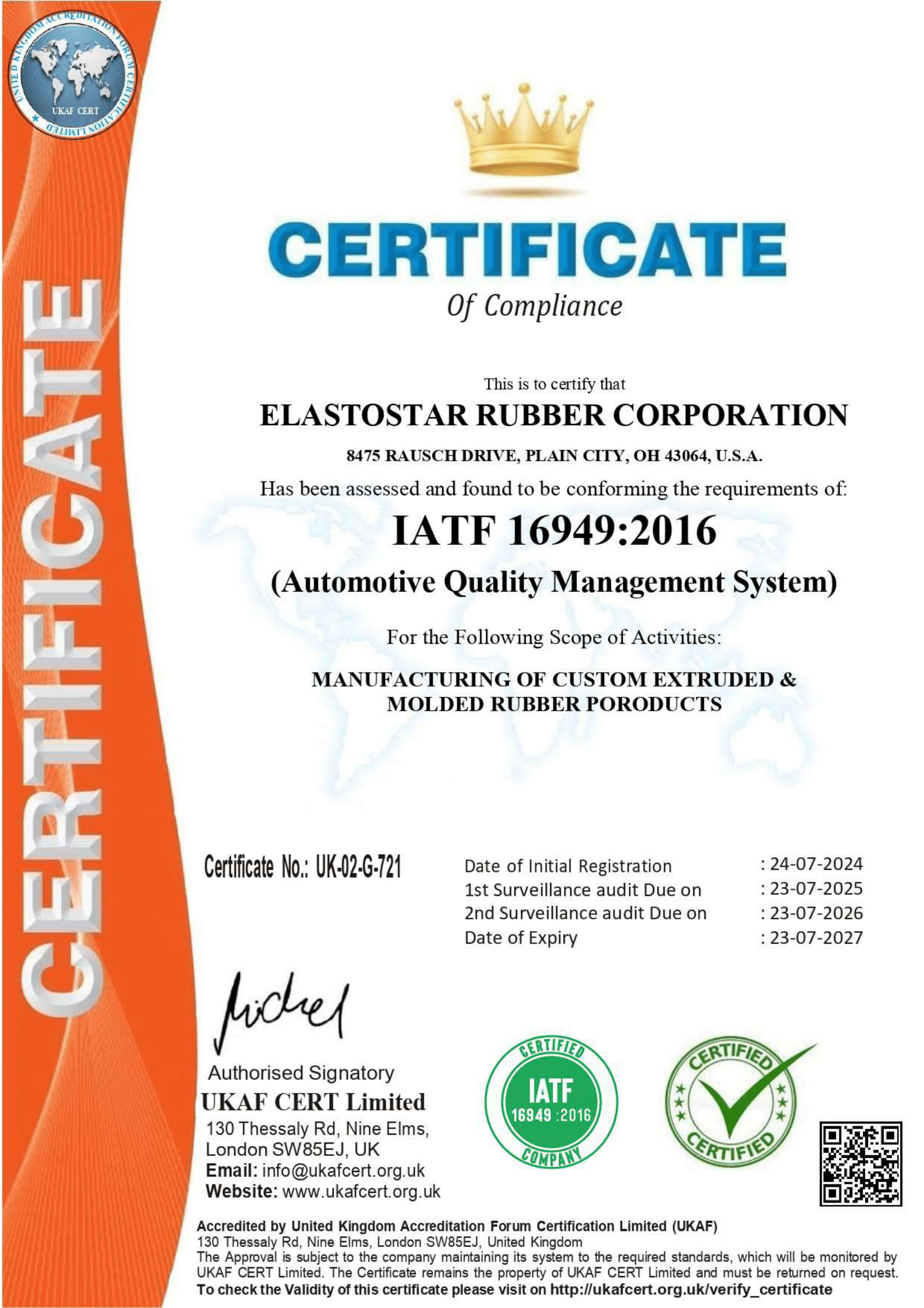
Elastostar Rubber Corporation’s IATF 16949:2016 certificate is displayed below for automotive customers, OEMs, procurement teams, supplier quality engineers, and manufacturing partners. The certificate confirms that Elastostar’s automotive quality management system has been independently assessed for compliance with IATF 16949:2016.
Certificate Details
- Certified Legal Entity: Elastostar Rubber Corporation
- Certified Facility: 8475 Rausch Drive, Plain City, OH 43064, USA
- Certification Standard: IATF 16949:2016 (Automotive Quality Management System)
- Certificate Number: UK-02-G-721
- Certification Scope: Manufacturing of Custom Extruded & Molded Rubber Products
- Date of Initial Registration: July 24, 2024
- First Surveillance Audit Due: July 23, 2025
- Second Surveillance Audit Due: July 23, 2026
- Expiry Date: July 23, 2027
- Issuing Certification Body: UKAF CERT Limited
- Accreditation: United Kingdom Accreditation Forum Certification Limited
Certification Scope
This certification covers Elastostar Rubber Corporation’s quality management system for the manufacturing of custom extruded and molded rubber products.
For applications requiring conductivity, grounding, or EMI control, Electrically Conductive Silicone Rubber may be considered for selected components.
IATF 16949:2016 is an automotive quality-management standard focused on process control, defect prevention, traceability, and continuous improvement.
Compliance with IATF 16949:2016 demonstrates that our manufacturing processes follow internationally recognized automotive quality management requirements.
This help supporting consistent product quality, process control, risk management, and continual improvement for automotive applications.
IATF 16949:2016 Custom Automotive Silicone Rubber Products & Components
We manufacture custom silicone rubber components for automotive OEMs, Tier suppliers, engineering teams, and equipment manufacturers.
Automotive Rubber Seals
● Custom bulb seals, lip seals, channels, and profiles are available.
● Seals can support vibration, moisture, movement, and temperature changes.
● Profiles can be developed for specific vehicle assemblies.
Door and Window Seals
● Door and window systems use silicone profiles for flexible sealing.
● Solid and sponge options can match compression and closure requirements.
● Custom profiles can be developed for specific channels and surfaces.
Rubber Tubing & Custom Components
● Silicone tubing supports fluid transfer and equipment systems.
● Custom molded parts, sleeves, boots, pads, and covers are available.
● Components can be developed from drawings, samples, or specifications.
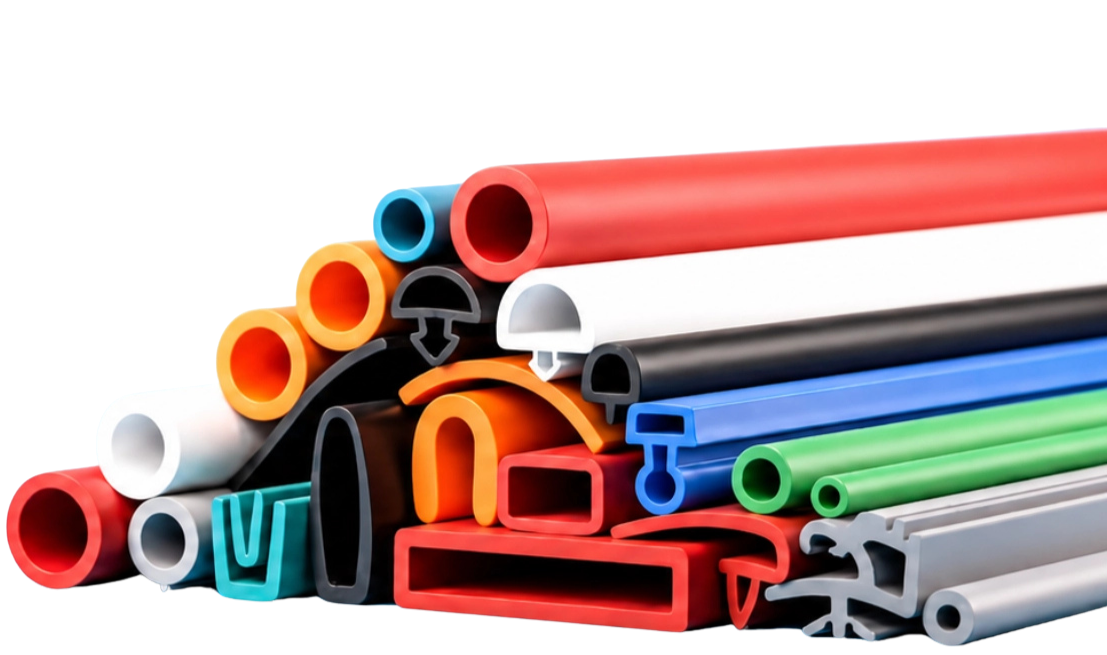
Custom Extruded Profiles
● Custom profiles support non-standard automotive sealing needs.
● Inflatable silicone extrusions and solid profiles are available.
● Cutting, splicing, joining, and vulcanizing can be added as required.
Silicone O-Rings
● Silicone O-rings support connectors, valves, pumps, and housings.
● Standard and custom sizes are available.
● Selection depends on groove design, temperature, pressure, and media.
Silicone Gaskets
● Silicone gaskets support housings, panels, lighting, batteries, and enclosures.
● Die-cut gaskets, molded parts, and vulcanized frames are available.
● Thickness, hardness, and geometry can be customized.
IATF 16949:2016 Automotive Sealing & Equipment Applications
Vehicle Door and Window Sealing
● Custom rubber profiles support doors, windows, trunks, and panels.
● Silicone sponge helps manage compression and recovery.
● Seals can help control moisture, dust, noise, and vibration.
Engine and Equipment Gaskets
● Gaskets support engines, batteries, fixtures, and thermal assemblies.
● Solid Commercial Grade Silicone Rubber is available for general sealing needs.
● Material selection depends on heat, pressure, and exposure conditions.
Thermal and Environmental Protection
● Silicone components can support heat, cold, UV, moisture, and vibration exposure.
● UL 94 V-0 Silicone Rubber may support applicable flame requirements.
● Material choice should match the operating environment.
Interior and Exterior Rubber Profiles
● Rubber profiles support trim, panels, lighting, and protective edges.
● Designs can match compression, movement, and installation space.
● Custom colors and profiles are available.
Custom Automotive Components
● Custom parts support obsolete, unusual, or proprietary designs.
● Components can be developed from drawings or samples.
● Prototypes can be reviewed before production.
FAQ's
Yes, Elastostar Rubber Corporation maintains IATF 16949:2016 certification for the legal entity, facility, and manufacturing activities listed on its current certificate.
The certified facility address and approved activities are stated on Elastostar’s current IATF 16949 certificate. Customers should review the certificate scope to confirm which operations fall within the certified quality-management system.
IATF 16949 shows that Elastostar Rubber Corporation follows an automotive-focused quality-management system covering process control, traceability, defect prevention, inspection, change management, corrective action, and customer-specific requirements within the certified scope.
Yes, Automotive manufacturers, Tier suppliers, procurement teams, and supplier-quality departments can request a current copy of Elastostar’s IATF 16949 certificate and related company documentation.
No. IATF 16949 certifies Elastostar’s quality-management system and covered manufacturing activities. Each rubber product must still be reviewed against the customer drawing, material specification, operating conditions, testing requirements, and approval process.
Need Custom Rubber Products for Automotive Applications?
Elastostar Rubber Corporation works with automotive manufacturers, Tier suppliers, engineers, and procurement teams that require custom rubber components supported by controlled manufacturing and clear quality documentation. Contact our team to discuss your part drawings, material requirements, tolerances, prototypes, production quantities, traceability needs, and supplier-approval documents.
Read More
IATF 16949:2016 Automotive Manufacturing & Quality Controls
Elastostar’s IATF 16949 quality-management system supports controlled automotive manufacturing, traceability, inspection, defect prevention, and documented quality processes within the certified scope.
Controlled Manufacturing Processes
Documented procedures support material handling, tooling, setup, processing, inspection, packaging, and final release for repeatable production.
Customer-Specific Documentation
Customers may request certificates, material records, inspection reports, PPAP documents, control plans, or traceability records based on program requirements.
Inspection Requirements
Dimensional, visual, and functional inspections are completed according to approved drawings, specifications, samples, and quality plans.
Production Consistency
Controlled tooling, approved materials, and documented processes support consistency from prototype through repeat production.
Defect Prevention
Risk review, process monitoring, inspection controls, and corrective actions help reduce defects and manufacturing variation.
Material Traceability
Material and lot records can connect raw materials, production activity, inspection results, and finished components.