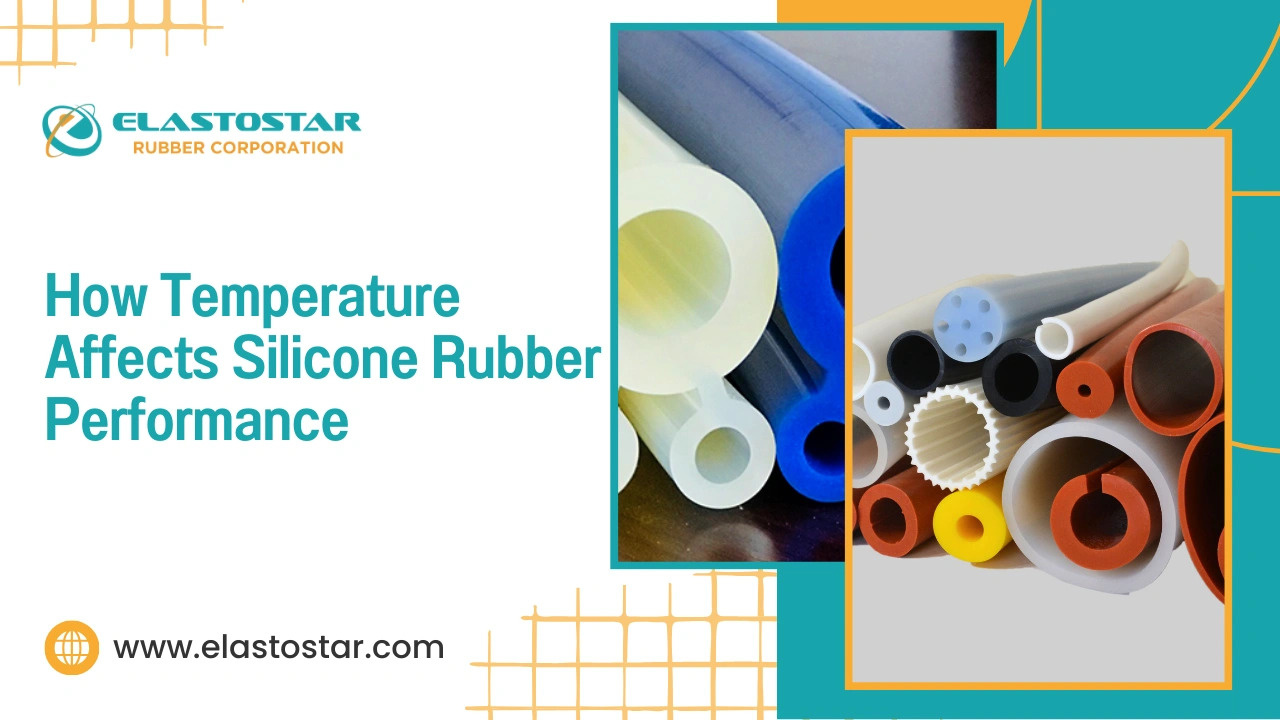
Silicone rubber is engineered to remain stable even in continuous high-temperature environments, making silicone rubber grades the preferred choice for demanding applications. Unlike organic rubbers that degrade above 120°C, heat-resistant silicone maintains elasticity, sealing force, and strength up to 230 °C and above.
Its unique silicon–oxygen backbone provides exceptional resistance to thermal aging, cracking, and compression set. This is why engineers depend on high-temperature silicone for mission-critical gaskets, oven systems, aerospace components, and high-stress equipment. Elastostar ensures consistent material reliability through rigorous quality control.
This guide explores how heat, cold, and extreme environments affect silicone performance and highlights the best Elastostar materials for stable, long-term use.
Key Takeaways
- Silicone works reliably in high heat and cold.
- It stays flexible, strong, and stable where other rubbers fail.
- Exceptional grades are used for fire, chemical, electronic, food, and medical applications.
- Silicone lasts longer because it resists aging, cracking, and deformation.
- Elastostar offers trusted U.S.-made silicone grades for every environment.
Table of Contents
Why Silicone Outperforms Other Elastomers at High Temperatures?
- Maintains elasticity up to +230°C.
- Low compression set even after prolonged exposure.
- Resists thermal shock and rapid heat cycling.
- No melting, charring, or sticky residue.
- Predictable long-term behavior under continuous load.
This makes silicone ideal for both constant heat and rapid temperature shifts.
Elastostar Rubber Corporation High-Temperature Grades
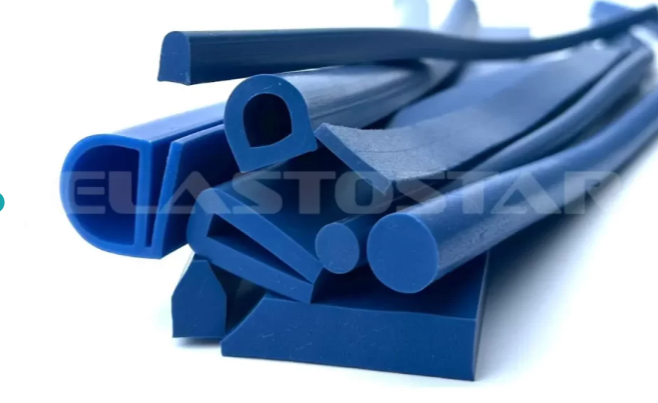
Below is the enhanced explanation of the specific Elastostar grades built for high-heat environments, written more professionally and concisely:
• Solid Commercial Grade Silicone Rubber
A dependable, cost-efficient general high-temperature silicone designed for industrial sealing. It provides consistent elasticity, chemical stability, and long-term performance in heating systems, appliances, and engine compartments.
• Solid Silicone Fiberglass Reinforced Grade
Reinforced with fiberglass to deliver exceptional dimensional stability under prolonged heat and mechanical stress. Ideal for insulation pads, thermal barriers, aerospace assemblies, and applications requiring minimal expansion, shrinkage, or deformation.
• ZZ-R-765 / A-A-59588 Solid Silicone Grade
A premium aerospace/defense specification grade with superior heat aging resistance and very low compression set. This is the preferred choice when long service life, precision tolerance, and performance under repeated thermal cycling are mandatory.
Also Read– High-Temperature Rubber Grades: Properties & Testing
High-Temperature Silicone Grade Comparison Table
| Elastostar Grade | Temperature Performance | Key Strengths | Recommended For |
| Solid Commercial Grade Silicone | Excellent (–60°C to +230°C) | Stable, elastic, reliable under heat | Industrial machinery, ovens, HVAC systems |
| Fiberglass Reinforced Silicone | Excellent–Superior | Reinforced stability, minimal deformation | Aerospace, thermal insulation pads, high-load areas |
| ZZ-R-765 / A-A-59588 Grade | Superior | Very low compression set, long service life | Defense, aerospace, precision high-temp assemblies |
Low-Temperature Flexibility of Silicone
One reason engineers choose silicone over traditional elastomers is its exceptional flexibility in freezing and sub-zero environments.
While many rubbers stiffen, crack, or lose elasticity as temperatures drop, low-temperature silicone maintains softness, rebound, and sealing integrity even at –60°C. This makes silicone ideal for outdoor, aerospace, medical, and industrial systems operating in cold climates or subject to sudden temperature changes.
The silicone polymer backbone remains mobile at low temperatures, allowing components to bend, compress, stretch, and recover without material fatigue.
For engineers, this means flexible silicone rubber can deliver consistent performance where neoprene, nitrile, natural rubber, and TPE materials typically fail.
Why Silicone Performs Better in Cold Conditions?
- Retains flexibility and elasticity at sub-zero temperatures.
- Low risk of cracking, stiffening, or embrittlement.
- Supports reliable sealing during freeze-thaw cycles.
- Ideal for motion-heavy components in cold climates.
- Maintains compression set resistance even outdoors.
These qualities make silicone the preferred material for cold-weather sealing, insulation, and fluid-transfer applications.
Elastostar Grades Designed for Low-Temperature Performance
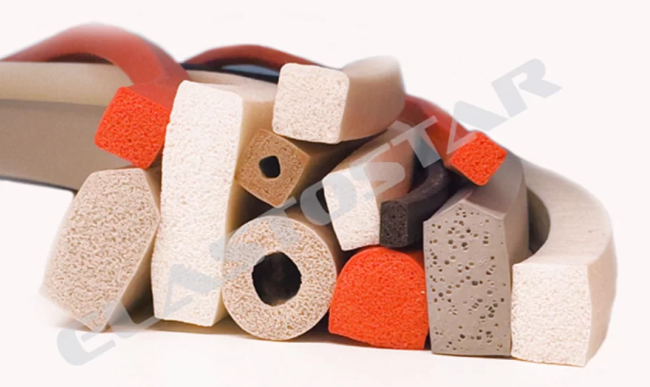
Below are the key Elastostar sponge grades explicitly engineered for cold flexibility, softness, and reliable sealing in low-temperature or variable-temperature environments:
• ASTM D1056 Soft Silicone Sponge
A highly compressible, soft-density sponge ideal for low-pressure sealing. It stays flexible in deep-cold conditions, making it suitable for enclosures, electronics, and outdoor gaskets.
• AMS 3195 Medium Silicone Sponge
A medium-density silicone sponge designed for balanced flexibility and durability. Works well for HVAC systems, aircraft components, and equipment exposed to cold climates.
• AMS 3196 Firm Closed-Cell Silicone Sponge
A firm, closed-cell sponge that provides stable sealing under load, even in sub-zero temperatures. Commonly used in automotive, aerospace, and structural applications needing minimal water absorption.
Low-Temperature Grade Comparison Table
| Silicone Grade | Cold Flexibility | Key Characteristics | Best Applications |
| ASTM D1056 Soft Sponge | Excellent | Soft, compressible, stays flexible in deep cold | Electronics, outdoor enclosures, light sealing |
| AMS 3195 Medium Sponge | Very Good | Balanced density, reliable sealing | HVAC, aerospace, general outdoor use |
| AMS 3196 Firm Sponge | Good | Firm support, low water absorption | Automotive, aerospace, cold-weather machinery |
Why Silicone Excels in Harsh Operating Conditions?
Silicone rubber performs reliably where other elastomers break down due to its unique combination of stability and environmental resistance:
- UV & Ozone Stability: Does not crack, chalk, or harden under sun exposure.
- Moisture Resistance: Waterproof and unaffected by humidity or condensation.
- Chemical Tolerance: Stable against mild solvents, oils, fuels, and cleaning agents.
- Electrical Reliability: Available in conductive silicone and insulating grades.
- Flame Resistance: Specialized grades meet strict fire safety standards.
- Mechanical Consistency: Maintains shape under vibration, pressure, and shock.
This makes silicone the preferred choice for components exposed to unpredictable or extreme working environments.
Also Read– Which Rubber Materials Can Withstand High Heat?
Elastostar Rubber Corporation Specialty Grades for Extreme Conditions
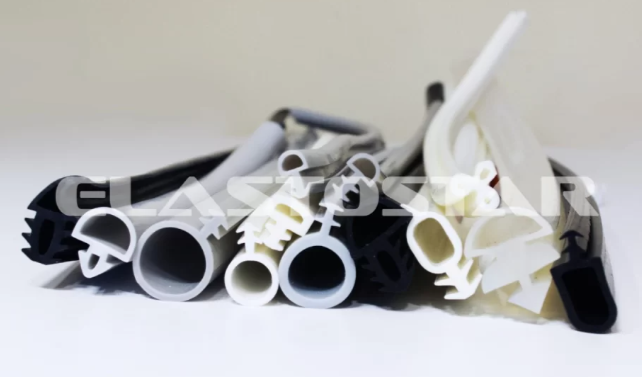
Elastostar offers several engineered silicone grades developed specifically for harsh, high-risk, or sensitive environments. Each one addresses a different type of extreme operating condition.
• UL 94-HB Flame-Retardant Silicone Sponge
A lightweight, silicone tubing to meet UL 94-HB flame rating. Suitable for applications requiring slow-burning, self-extinguishing behavior, such as electronics padding, equipment housings, and thermal insulation.
• UL 94-V0 Flame-Retardant Silicone Sponge
A higher flame-resistance grade offering superior self-extinguishing performance. Ideal for aerospace, military, EV battery systems, control panels, and environments where stringent flame safety is mandatory.
• Solid Silicone Electrically Conductive Grade
Formulated with conductive fillers to provide EMI/RFI shielding while maintaining flexibility. Used in sensors, electronics housings, connectors, and components that require grounding or electromagnetic protection.
• Solid FDA Grade White Silicone Rubber
A food-safe and pharmaceutical-safe material designed for strict sanitary environments. It resists cleaning chemicals, sterilization cycles, and temperature swings for food equipment, processing lines, and medical devices.
Extreme Environment Grade Comparison Table
| Elastostar Grade | Extreme Condition Strength | Key Benefits | Typical Applications |
| UL 94-HB Silicone Sponge | Fire Resistance (Basic) | Slow-burning, lightweight, flexible | Electronics pads, housings |
| UL 94-V0 Silicone Sponge | Fire Resistance (High) | Superior self-extinguishing, safe for mission-critical use | Aerospace, EV, control panels |
| Electrically Conductive Silicone | EMI/RFI Resistance | Protective shielding, maintains flexibility | Sensors, connectors, electronics |
| Solid FDA Grade White Silicone | Chemical & Sanitary Resistance | Food-safe, medical-safe, sterilization-tolerant | Medical tubing, food gaskets, pharma systems |
Silicone Rubber’s Longevity in High-Heat Applications
Silicone rubber is valued not only for its heat tolerance but also for its exceptional long-term durability in high-temperature environments. Organic rubbers that rapidly harden, shrink, or lose sealing force when exposed to prolonged heat, durable silicone rubber O-Rings maintain elasticity, compression recovery, and structural stability for years.
This extended service life stems from silicone’s resistance to thermal aging, which means its physical properties change very slowly even under continuous exposure to elevated temperatures. For engineers, this translates to fewer failures, fewer maintenance cycles, and more predictable system performance.
Why Silicone Lasts Longer in High-Heat Conditions?
- Low compression set maintains sealing force over time.
- Resists hardening, cracking, and deformation.
- Stable under constant mechanical load and vibration.
- Withstands continuous heat without structural breakdown.
- Performs reliably in rapid or repeated temperature cycles.
These characteristics make silicone one of the most long-lasting elastomers available for demanding environments.
Elastostar Grades Known for Long Service Life
The following Elastostar high-durability grades are engineered for systems that operate in elevated temperatures or harsh industrial conditions:
Longevity Performance Comparison Table
| Silicone Grade | Thermal Aging Resistance | Long-Term Behavior | Ideal Applications |
| Solid Commercial Grade | Very Good | Maintains flexibility & sealing force | Ovens, industrial machinery, HVAC |
| Fiberglass Reinforced Silicone | Excellent | Minimal deformation, high dimensional stability | Aerospace, thermal insulation, structural components |
| ZZ-R-765 / A-A-59588 | Superior | Extremely low compression set, stable for years | Military, aerospace, precision high-temp systems |
Also Read– Silicone Rubber: How Long Does It Last?
Comparison Table – Choosing the Right Silicone Grade for Your Project
Engineers often struggle to decide which silicone grade matches their performance requirements.
The table below simplifies the selection process by mapping each grade to the environment or function for which it is best suited, without repeating any properties mentioned earlier.
| Project Requirement | Recommended Elastostar Grade(s) | Reason |
| High-sealing pressure or structural load | AMS 3196 (Firm), Fiberglass Reinforced Solid | Supports consistent pressure without distortion |
| Soft, low-pressure sealing | ASTM D1056 Soft Sponge | Compresses easily for sensitive or lightweight assemblies |
| Applications close to ignition sources | UL 94-V0, UL 94-HB | Meets fire-safety ratings for electronics and EV systems |
| Food or pharma contact | Solid FDA Grade White | Complies with sanitary and hygiene requirements |
| EMI/RFI protection in electronics | Electrically Conductive Solid Silicone | Provides electrical shielding in compact devices |
| Outdoor exposure with minimal maintenance | AMS 3195 / AMS 3196 | Closed-cell structure resists moisture and aging |
| Aerospace or military specifications | ZZ-R-765 / A-A-59588 | Designed for regulated, high-reliability applications |
| Components requiring very tight tolerances | RMA Precision Tolerance Silicone | Provides reliable dimensional consistency |
Also Read– Which Is the Best Type of Rubber for Your Application?
Why Elastostar Rubber Corporation Is a Trusted Silicone Manufacturing Partner?

Engineers choose Elastostar because they can rely on consistent quality, precise manufacturing, and materials that meet strict industry standards. As a made-in-USA silicone manufacturer, the company produces dependable, custom silicone products for regulated and performance-critical applications.
From FDA-grade and UL-rated materials to aerospace-level specifications and certifications, every formulation is designed for accuracy and long-term reliability. We also support projects from prototype to production, helping teams move quickly and confidently.
With a dedicated U.S. facility and strong technical experience, the company provides a stable supply, dependable lead times, and silicone components that perform exactly as expected.
Recommended Reads
- A Complete Guide to High-Temperature Silicone Rubber
- Silicone Rubber Temperature: How Much Heat Can It Withstand?
- Silicone Sponge vs Solid Silicone vs Silicone Foam: What to Choose
Conclusion
Silicone rubber remains one of the most dependable materials for modern engineering because it performs consistently across heat, cold, pressure, and demanding environments. With the right grade, it delivers a long service life and stable performance, even when other materials fail.
Elastostar’s range of certified, U.S.-made silicone grades gives designers and manufacturers reliable options for regulated, high-precision, and long-term applications. If you’re exploring which silicone grade is best for your next project, you can connect with our team for guidance on materials, tolerances, and custom solutions that meet your exact requirements.
FAQs
Q1. How does temperature affect silicone rubber performance?
Silicone rubber stays stable across a wide temperature range. Most rubbers that break down above 120°C, Elastostar’s high-temperature silicone grades maintain elasticity, sealing force, and strength up to +230°C. This temperature stability makes silicone ideal for industrial ovens, engines, aerospace systems, and continuous-heat applications.
Q2. How does silicone perform in cold temperatures?
Silicone stays flexible even in freezing climates. While many rubbers get stiff or crack, Elastostar’s low-temperature sponge grades (ASTM D1056, AMS 3195, AMS 3196) remain soft and compressible at –60°C. This ensures reliable sealing for aerospace, outdoor enclosures, HVAC, and automotive components exposed to cold weather.
Q3. How does silicone perform in extreme environments?
Silicone rubber performs well in conditions where heat, cold, moisture, UV exposure, chemicals, and vibration occur simultaneously. Elastostar specialty grades like UL 94-V0 flame-retardant sponge, conductive silicone, and FDA-grade solid silicone are engineered for demanding environments such as aerospace, EV batteries, medical devices, and industrial machinery.
Q4. How long does silicone last under high temperatures?
Silicone has excellent thermal aging resistance. Even under continuous high heat, Elastostar’s long-life grades (Fiberglass-Reinforced Silicone, Commercial Grade Solid, ZZ-R-765 / A-A-59588) maintain elasticity and shape for years. This long service life reduces failures, making silicone one of the most reliable materials for high-temperature industrial applications.