
Foreign-material control is a major concern for food manufacturers across the USA, especially once products are sealed and ready for distribution.
Rubber fragments from worn seals, gaskets, Viton Vulcanized O-rings, or processing equipment can be difficult to identify because conventional elastomers may not create enough contrast during X-ray inspection.
For U.S. food-processing applications, we manufacture Metal- and X-Ray-Detectable Rubber for components that require improved foreign-material detection.
In this blog, we will explain can X-ray detect rubber in packaged food, what affects detection performance, and how X-ray detectable rubber can support food manufacturers when properly selected and validated on the production line.
Key Takeaways
- X-ray systems can detect some rubber fragments, but results depend on fragment size, food density, packaging, and detector settings.
- Standard rubber may be difficult to identify because it can create limited contrast during X-ray inspection.
- X-ray detectable rubber is formulated to improve visibility compared with conventional elastomers.
- Detection performance should always be validated using the actual food product, final packaging, and production-line settings.
- Seals, gaskets, FKM O-rings, and profiles near product-contact areas should be selected based on both detectability and application conditions.
- Food-grade silicone (177.2600) should meet the applicable food-contact requirements where required.
- X-ray detectable materials work best as part of a broader foreign-material control, inspection, and maintenance program.
Table of Contents
Can X-Ray Systems Detect Rubber in Packaged Food?
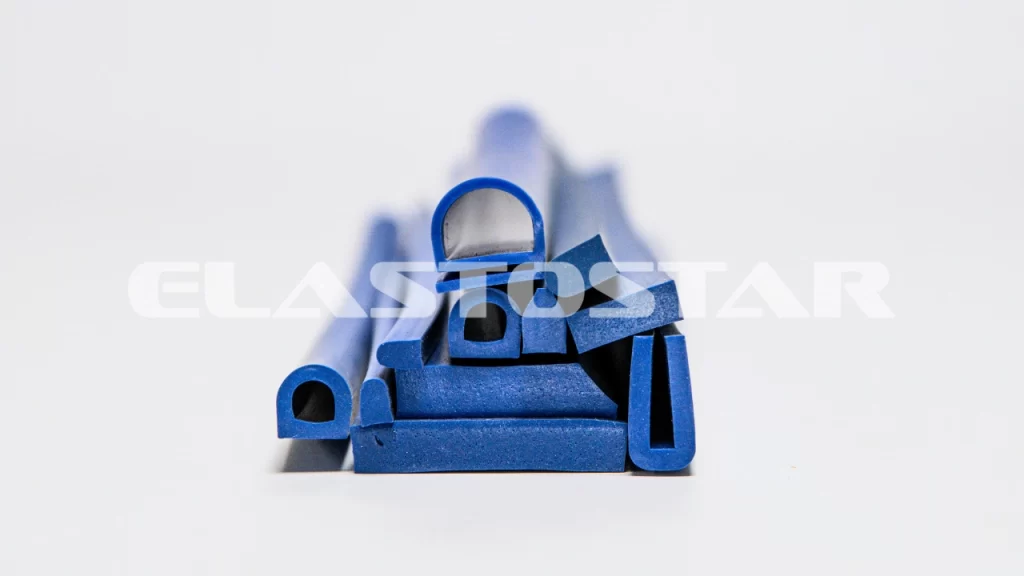
Yes, X-ray systems can detect certain rubber fragments in packaged food, but detection depends on the material, fragment size, food product, packaging, and inspection equipment.
Standard rubber may provide limited contrast against some foods, which is why material selection matters.
1. Fragment Size
Larger fragments are generally easier for an X-ray system to identify than very small or thin pieces.
2. Food Density
Dense or uneven products can make low-contrast contaminants more difficult to distinguish from the surrounding food.
3. Rubber Formulation
Components such as Silicone Rubber Tubing and Hose used around processing equipment need to be assessed according to the application.
Where improved X-ray visibility is required, X-ray detectable silicone rubber may be more appropriate than conventional silicone.
4. Food-Contact Requirements
When food-grade silicone (177.2600) is required, buyers should verify the applicable FDA 21 CFR 177.2600 Silicone Rubber requirements alongside detectability.
5. Inspection Conditions
Detector sensitivity, software settings, fragment position, packaging, line speed, and the food itself can all influence visibility.
For U.S. food manufacturers, the answer to whether X-ray can detect rubber in packaged food is application-specific.
The rubber material and finished component should be evaluated with the actual product, package, and X-ray inspection system.
Why Standard Rubber Is Difficult to Detect by X-Ray
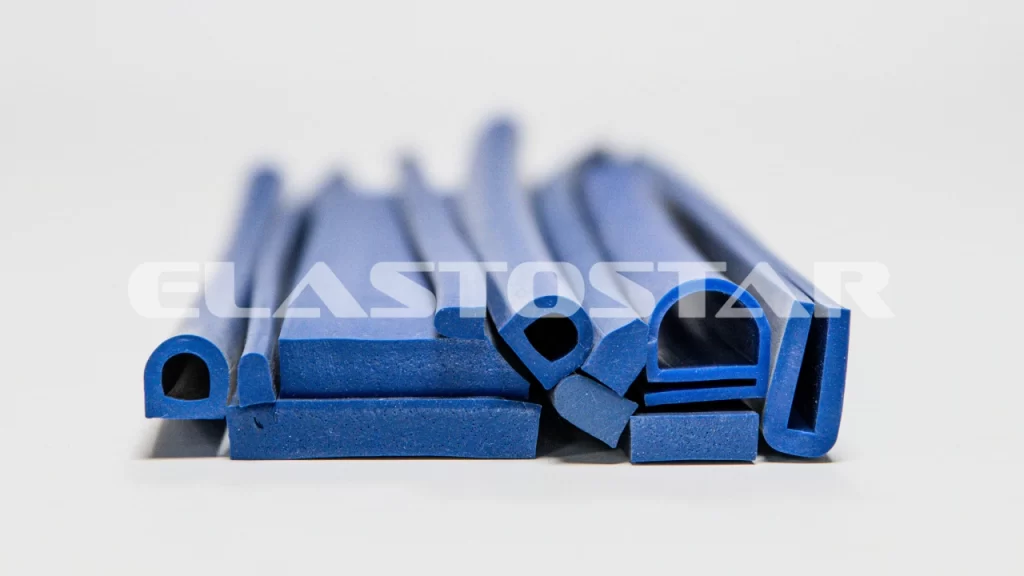
Standard rubber can be difficult to detect because X-ray inspection depends on differences in X-ray attenuation between a contaminant and the surrounding product.
Many conventional elastomers have relatively low density and may create limited contrast against certain foods.
For example, Solid Commercial Grade Silicone Rubber is developed for general silicone performance requirements rather than X-ray visibility.
If a small fragment enters a dense or uneven food product, the contrast may be too low for reliable detection.
1. Product Composition Matters
A rubber fragment inside meat, cheese, a ready meal, or another dense product may be harder to distinguish than the same fragment in a lighter, more uniform product.
2. Packaging Can Add Complexity
The final package can also affect the X-ray image. Different trays, films, multilayer structures, and package thicknesses can change how clearly a contaminant appears.
This is why rubber contamination in packaged food should not be managed on the assumption that every rubber fragment will be visible.
Where detection is required, X-ray detectable rubber should be evaluated under actual production and packaging conditions, particularly because detectable rubber may not be detected in every food product.
How X-Ray Detectable Rubber Improves Visibility

X-ray-detectable rubber is formulated to provide greater X-ray contrast than conventional rubber. This can improve the visibility of damaged fragments when the inspection system and production conditions are suitable.
1. Standard Rubber
Conventional silicone and other elastomers may create limited contrast against certain food products, particularly when fragments are small or surrounded by dense material.
2. X-Ray Detectable Rubber
Specially formulated compounds increase X-ray attenuation, thereby improving visibility during inspection.
This makes X-ray detectable silicone rubber more suitable for components positioned close to food-contact and processing areas.
3. Detectable Finished Components
Detectable materials can be manufactured into Die-Cut Gaskets, seals, Viton Vulcanized O-rings, and custom profiles to meet equipment requirements.
An X-ray detectable gasket can support foreign-material control if part of the component breaks during production.
Improved visibility does not mean every fragment will be detected. Fragment size, food density, packaging, orientation, detector sensitivity, and line settings still affect performance.
For this reason, we recommend validating the finished component using the actual X-ray inspection system used on the production line.
Read More: Metal Detectable vs X-Ray Detectable Rubber: What Should Food Processors Choose?
What Affects X-Ray Detection in Packaged Food?
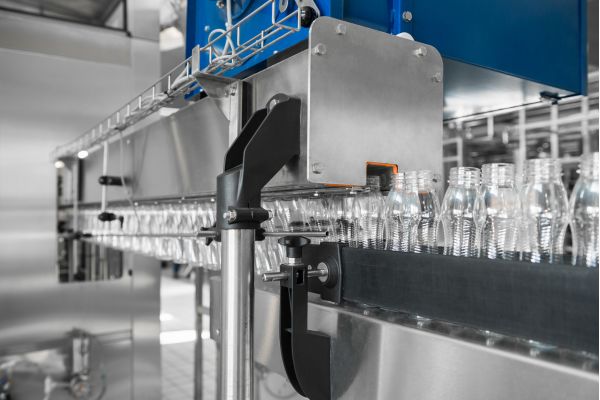
The same rubber fragment may be visible in one packaged product but difficult to identify in another.
X-ray performance depends on the complete inspection setup, so food manufacturers should evaluate the contaminant, food, packaging, and equipment together.
1. Fragment Size and Shape
Larger fragments generally create a stronger X-ray response. Thin, small, or irregular pieces may be more difficult to identify.
2. Food Density and Thickness
Dense or thick foods can reduce the contrast between rubber and the surrounding product. Variation across the package can also influence inspection performance.
3. Packaging Material
Films, trays, foil-containing structures, and multilayer packaging can affect the X-ray image. This makes detectable rubber packaging applications dependent on the final package configuration.
4. Rubber Formulation
The rubber compound itself influences X-ray attenuation. For food-equipment applications, NSF 51 Silicone Rubber may be relevant to material requirements, while X-ray visibility should be addressed through the appropriate detectable formulation.
5. X-Ray Equipment and Settings
Detector resolution, software, sensitivity, line speed, calibration, and inspection settings can all influence whether a fragment is identified.
6. Fragment Position and Orientation
The location of a fragment inside the package can change its visibility. Depth within the food, orientation, and proximity to other dense areas may all affect X-ray contrast.
These variables are why X-ray food inspection rubber should be tested with the actual product, packaging, and production-line settings rather than judged from the material specification alone.
When Food Manufacturers Should Use X-Ray Detectable Rubber

X-ray detectable rubber is most useful when rubber components operate close to exposed food and the production line already relies on X-ray inspection for foreign-material control.
The decision should be based on the equipment, product, packaging, and validated detection capability.
1. Seals and Gaskets Near Product Zones
Rubber gaskets around hoppers, mixers, fillers, pumps, and processing equipment can deteriorate through repeated cleaning, compression, or movement.
Using an X-ray detectable gasket can improve the visibility of fragments if damage occurs.
2. Packaged Products Inspected by X-Ray
Manufacturers producing ready meals, meat, dairy products, or other packaged foods may use X-ray inspection after filling and sealing.
Detectable rubber components upstream can add another layer to the facility’s foreign-material control strategy.
3. Frequent Cleaning and Component Replacement
Applications exposed to repeated washdowns or sanitation cycles may require closer monitoring of rubber condition.
Components used in food processing equipment should be selected with the cleaning environment, operating temperature, and food-contact requirements in mind.
4. Custom Equipment and Non-Standard Seals
Standard components may not fit specialized processing equipment correctly. Depending on the application, we can manufacture custom profiles, gaskets, and FKM Vulcanized Silicone Rubber O-Rings in application-specific dimensions.
Custom X-ray-detectable rubber can then be considered when the component also requires improved visibility during X-ray inspection.
X-ray-detectable materials are most effective when they are part of a broader inspection and maintenance program, alongside routine component checks and validated line controls.
Read More: Detectable Rubber for Food Processing: Safety Guide
Why Line Testing Is Still Required for X-Ray Detectable Rubber
Even when X-ray detectable rubber is formulated for better visibility, detection performance still needs to be confirmed on the actual production line.
A laboratory result or material specification cannot fully represent the food product, package, detector settings, and operating conditions used in production.
A practical line validation should confirm:
- The finished detectable component is made from the approved material.
- Representative fragment sizes are tested through the actual packaged product.
- The X-ray system is checked at normal production speed and settings.
- Results are documented for QA and maintenance teams.
- Testing is repeated when the product, packaging, equipment, or detector setup changes.
For food plants working within a formal hazard-control program, HACCP Silicone Rubber can support material selection within broader food-safety controls.
As an x-ray detectable rubber supplier, we can help with material and component selection, but final detection capability should always be validated using the customer’s own X-ray system and production conditions.
Practical Steps to Improve Rubber Detection
Improving detection starts with the right material, but food manufacturers should also review how the component, inspection system, and production conditions work together.
1. Select the Right Detectable Compound
Use X-ray detectable silicone rubber when X-ray inspection is part of the production line. The compound should also meet temperature, cleaning-chemical, hardness, and food-contact requirements.
2. Use Detectable Components in Higher-Risk Areas
Seals, FKM O-rings, and gaskets located close to exposed product zones should receive greater attention.
For custom sealing applications, Extruded Silicone Rubber Gaskets can be evaluated where that profile suits the equipment design.
3. Validate With the Actual Product
Test representative fragments using the final food product, packaging, normal line speed, and production settings. Detection results should not be assumed from material specifications alone.
4. Maintain and Inspect Rubber Components
Routine inspection helps reduce rubber contamination in packaged food by identifying wear, cracking, or damage before a component breaks.
Regular inspection is particularly important because seal damage and gasket failures can develop from wear, compression, installation issues, or operating conditions.
5. Keep Detection Records
Document test conditions, detector settings, results, and any changes made to the product or packaging. These records help QA teams maintain a consistent validation process.
X-Ray Detectable Rubber Applications in Packaged Food, Ready Meals, Dairy, and Meat
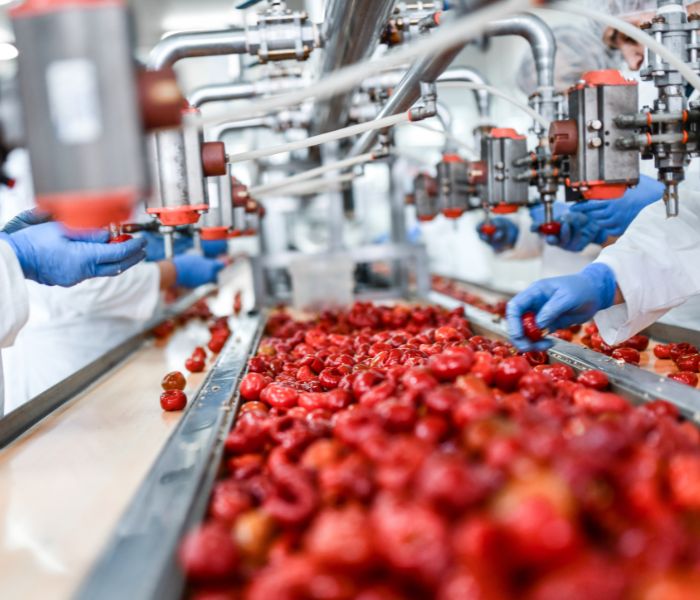
The need for food-grade X-ray detectable rubber varies with the product and processing environment.
Component location, cleaning conditions, packaging, and the X-ray system should all be considered before selecting a detectable material.
1. Packaged Food
Seals and gaskets used around filling, portioning, conveying, and packaging equipment may operate close to exposed products.
Where food-contact requirements apply, 3-A Sanitary Standards Silicone Rubber may be relevant depending on the equipment and application.
2. Ready Meals
Ready meals can contain ingredients with different densities in the same package. This variation can make small rubber fragments more difficult to distinguish, so X-ray food inspection rubber should be validated with the complete meal and final packaging.
3. Dairy Processing
Gaskets and Viton O-rings are widely used around pumps, valves, fillers, and processing equipment.
For dairy applications, we manufacture custom components for Cheese Processing and Dairy Industries, tailored to the required material, dimensions, and sealing conditions.
4. Protein Processing
Meat products can be relatively dense and may vary in thickness across a package. X-ray detectable O-rings and gaskets used around processing equipment should therefore be tested with representative products to confirm achievable detection performance.
Across these applications, detectable rubber works best when material selection, component design, routine inspection, and validated X-ray controls are considered together.
Read More: Detectable Rubber for Dairy Processing: Why Seals and Gaskets Need Extra Control
Why U.S. Food Manufacturers Choose Elastostar Rubber Corporation for Detectable Rubber

We manufacture custom X-ray detectable rubber components for U.S. food-processing applications where improved foreign-material visibility is required.
Our support covers material selection, component design, prototypes, and repeat production.
Our capabilities include:
- Custom extruded profiles, Viton O-rings, gaskets, and sheet materials
We manufacture various component formats to meet equipment and sealing requirements. - Design help and application support
We review drawings, dimensions, operating conditions, and food-contact requirements before production. - Reverse engineering support
Existing parts can be recreated or modified when original drawings are unavailable. - Prototype to production run capability
We support early-stage samples through ongoing production quantities. - Large manufacturing facility
Our production capacity supports custom and repeat manufacturing requirements. - Proudly Made in USA
U.S.-based manufacturing supports direct communication and domestic sourcing. - Shortest lead time delivery
We focus on responsive production planning for custom and repeat orders.
For food-contact applications, we can also support Platinum Cured Silicone Rubber Tubing and other custom silicone components where the application calls for specific material and processing requirements.
As an X-ray-detectable rubber manufacturer, we work with food processors, equipment manufacturers, engineering teams, and procurement teams who need custom parts tailored to their specific production environment.
Recommended Reads
- Why Is FDA-Approved Silicone Rubber Chosen for Gaskets and Seals in the Food Processing Industry?
- How to Differentiate Between Food Grade, FDA Silicone Rubber & Regular Silicone
- Top Silicone Rubber Extrusions in Food Grade Applications

Improve X-Ray Detection with the Right Rubber Components
X-ray inspection can help identify rubber contamination in packaged food, but detection depends on the material, fragment size, product density, packaging, and inspection system.
Selecting X-ray detectable rubber and validating it under actual production conditions gives food manufacturers a more practical approach to foreign-material control.
We manufacture custom detectable seals, gaskets, O-rings, and profiles for U.S. food-processing applications. If you need help selecting a material or developing a custom component, Contact Us to discuss your equipment, food-contact, and X-ray detection requirements.
FAQs
Q1. Can X-ray machines detect rubber in food?
Yes, X-ray systems can detect some rubber fragments, but performance depends on fragment size, food density, packaging, and inspection settings. X-ray detectable rubber is formulated to improve visibility compared with conventional rubber, but line testing is still required.
Q2. Is all rubber X-ray detectable?
No. Standard rubber is not automatically X-ray detectable. A purpose-formulated X-ray detectable silicone rubber is designed to create stronger contrast during X-ray inspection and should be evaluated against the actual product and detector setup.
Q3. Can X-ray detect silicone rubber?
Conventional silicone can be difficult to detect when its density is too similar to that of the surrounding food. For applications requiring better visibility, FDA-compliant X-ray-detectable silicone may be selected when both food-contact suitability and X-ray detectability are required.
Q4. What affects X-ray detection in packaged food?
Detection depends on fragment size, shape, product density, packaging, detector resolution, line speed, software settings, and fragment position. These variables explain why X-ray detection of rubber in packaged food does not have one universal answer for every production line.
Q5. Should food manufacturers use metal detectable or X-ray detectable rubber?
The choice depends on the inspection system already used on the line. An X-ray detectable rubber supplier should help match the material to the detection method, while facilities using metal detection should select an appropriate metal-detectable formulation instead.
Q6. Can X-ray detect rubber through packaging?
Yes, X-ray can inspect many packaged foods, but packaging material can affect the image. Where seals are used around packaged-food equipment, Extruded Rubber U-Channel Manway Seals may be relevant for custom sealing applications, while detectability should be selected separately.
Q7. Why is standard rubber hard to detect by X-ray?
Many conventional elastomers have relatively low density and may produce limited contrast against the surrounding food. This makes rubber contamination in packaged food more difficult to identify, especially when fragments are small or the product is dense.
Q8. What food products are best suited for X-ray detectable rubber?
Applications can include ready meals, dairy, meat, bakery products, and other packaged foods in which X-ray inspection is already part of foreign-material control. For bakery processing equipment, our Bakery Industries capabilities support custom sealing components based on equipment and material requirements.
Q9. Does fragment size affect X-ray detection?
Yes. Larger fragments are generally easier to identify than very small or thin pieces. The minimum detectable size depends on the product, packaging, detector capability, and settings, so X-ray food inspection rubber should always be validated under real line conditions.
Q10. Where can I buy custom X-ray detectable rubber components?
We manufacture custom X-ray detectable rubber components in the USA, including seals, gaskets, Silicone O-rings, molded parts, and custom profiles. Our Extruded Omega Seals and other custom profile capabilities can support specialized equipment designs where standard shapes are not suitable.