Aerospace OEMs need suppliers that consistently meet strict requirements for quality, traceability, documentation, and process control.
For silicone seals, O-rings, and other aerospace rubber components, the manufacturer’s quality management system can be just as important as its production capabilities.
An AS9100D-certified silicone manufacturer operates under an aerospace-focused quality management system that builds on ISO 9001 and adds requirements relevant to risk management, product safety, configuration management, supplier control, and traceability.
Material requirements are equally important. Aerospace applications may specify grades such as AMS 3195 medium silicone sponge depending on the component and application requirements.
For OEM engineers and procurement teams, supplier qualification therefore involves evaluating both the manufacturer’s quality system and technical capabilities. This article explains why AS9100D matters and what to consider when choosing an aerospace silicone manufacturer.
Key Takeaways
- AS9100D certification shows that a manufacturer operates under an aerospace-focused quality management system with controls for risk, traceability, documentation, and product safety.
- AS9100D applies to the manufacturer’s quality management system, not automatically to every silicone component produced.
- Aerospace OEMs should evaluate material specifications, dimensional requirements, traceability, documentation, and manufacturing capabilities alongside certification.
- Specifications such as AMS 3195 and AMS 3196 define silicone sponge material requirements and serve a different purpose from AS9100D. Pasted text
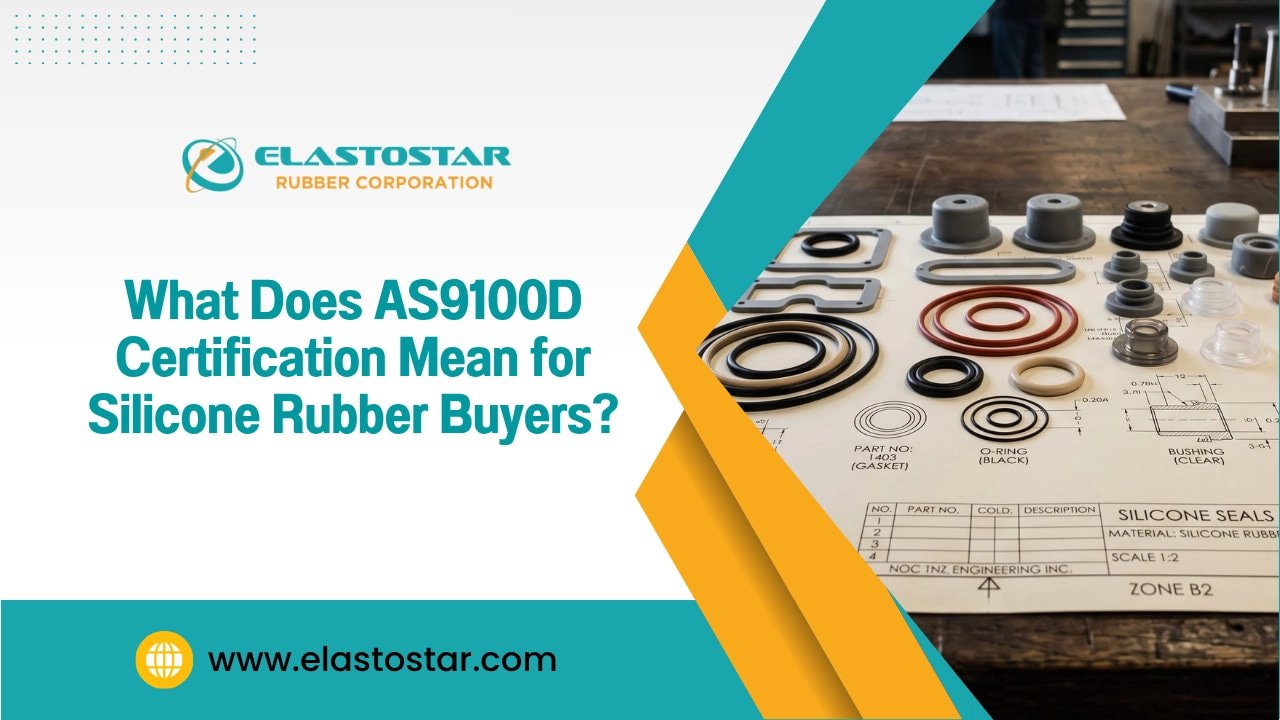
- Custom aerospace components may include silicone seals, gaskets, O-rings, extruded profiles, sponge components, and molded parts.
- We support custom manufacturing, reverse engineering, design assistance, and prototype-to-production for aerospace silicone components.
- Our U.S. manufacturing capabilities help OEMs coordinate engineering, quality documentation, prototypes, and production requirements.
Table of Contents
Why Supplier Qualification Matters for Aerospace Silicone Components
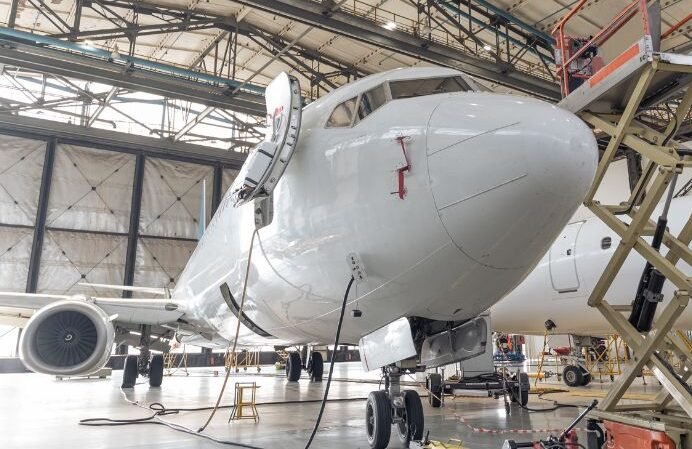
For aerospace OEMs, supplier qualification confirms that a manufacturer has the systems and capabilities to consistently produce aerospace silicone components to specified requirements.
1. Reliability and Consistency
Silicone seals, gaskets, and custom rubber components must be manufactured consistently to the required drawing, material, dimensional, and performance specifications. Controlled manufacturing processes help reduce unwanted variation between production runs.
2. Material Traceability
Aerospace customers may require traceability of raw materials, batches, and manufacturing records. This links finished components to the materials and processes used to manufacture them.
3. Documentation and Process Control
Documented procedures, inspection records, change controls, and quality records support repeatable production and provide information that OEM quality teams may require during supplier evaluation.
4. Supplier Accountability
A qualified supplier should have defined processes for handling nonconforming material, corrective actions, customer requirements, and supplier-related issues.
These controls are particularly important when sourcing custom aerospace silicone parts for ongoing production programs.
Our aerospace silicone manufacturing capabilities support custom rubber components for application-specific material, profile, and dimensional requirements.
What Does AS9100D Certification Mean for a Silicone Manufacturer?
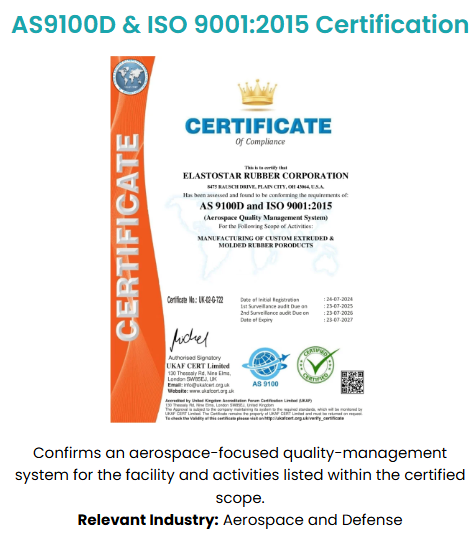
AS9100D certification means a silicone manufacturer operates a quality management system that meets requirements developed for the aviation, space, and defense industries.
It builds on ISO 9001 and adds aerospace-focused requirements for risk management, product safety, configuration management, supplier controls, traceability, and preventing counterfeit parts.
For an aerospace silicone manufacturer, this means documented, controlled processes manage manufacturing and quality activities.
Distinguish quality-system certification from product compliance: AS9100D does not automatically certify every silicone seal, platinum silicone tubing, or extrusion as aerospace-approved.
Individual components must still meet the drawing, material specification, tolerance, testing, documentation, and customer requirements specified for the application.
Why Do Aerospace OEMs Look for AS9100D Certified Suppliers?
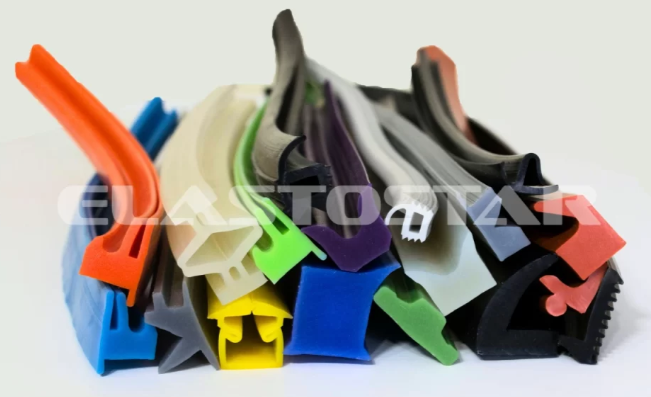
Aerospace OEMs often prefer AS9100D-certified suppliers because controlled manufacturing, traceability, risk management, and documented quality procedures are important when sourcing aerospace silicone components.
1. Controlled Manufacturing Processes
Documented procedures and process controls help maintain consistency when manufacturing aerospace silicone seals, gaskets, and custom extruded silicone profiles to defined drawings and specifications.
2. Risk Management and Product Safety
AS9100D emphasizes operational risk and product safety, helping manufacturers identify and control issues that could affect component conformity.
3. Material and Product Traceability
Aerospace programs may require traceability between raw materials, production batches, inspection records, and finished components.
Material requirements can also be application-specific. For example, AMS 3196 firm-density silicone sponge can be specified where its defined material requirements are appropriate.
4. Supplier and Nonconformance Controls
AS9100D includes controls for external suppliers and processes for identifying, documenting, and managing nonconforming products. Corrective-action procedures also help address the causes of recurring quality problems.
5. Documented Quality Procedures
Controlled drawings, specifications, work instructions, revisions, and inspection records help ensure production follows current requirements.
Our quality control processes support the manufacture and inspection of custom extruded and molded rubber components.
How Does AS9100D Support Silicone Component Quality?
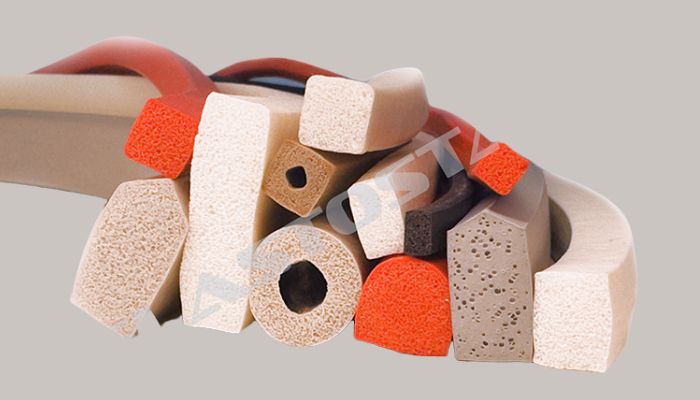
For aerospace OEMs, quality is not limited to inspecting a finished part.
AS9100D supports a controlled manufacturing environment that documents and manages requirements, materials, production processes, inspections, and changes throughout the component lifecycle.
| Aerospace Silicone Component | Key Quality Considerations |
|---|---|
| Silicone seals and gaskets | Material identification, dimensions, hardness, tolerances, and inspection requirements |
| O-rings and continuous seals | Cross-section, diameter, joint quality, material specification, and dimensional conformity |
| Extruded silicone profiles | Profile geometry, dimensional tolerances, surface condition, and consistent material properties |
| Silicone sponge components | Density, thickness, compression characteristics, dimensions, and specified material requirements |
| Custom molded components | Molded geometry, tolerances, material control, inspection, and repeatability |
For custom continuous sealing applications, we can produce spliced and vulcanized silicone O-rings in application-specific sizes and cross-sections.
AS9100D does not guarantee that every component will be defect-free.
Instead, its value comes from requiring a structured quality management system for control processes, maintaining records, addressing nonconformities, managing changes, and supporting continual improvement.
Why Is Material Traceability Important for Aerospace Silicone Parts?
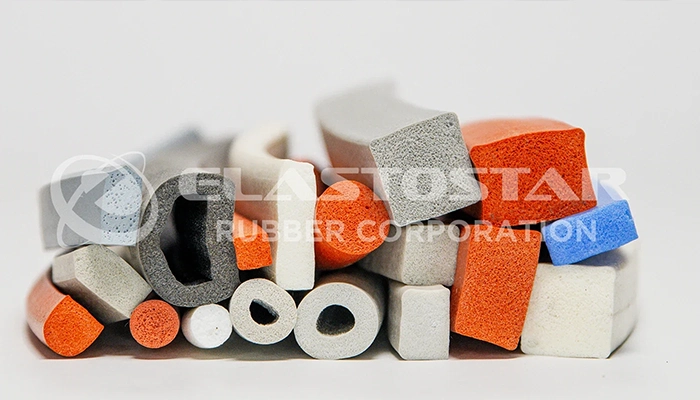
Material traceability gives aerospace OEMs a documented connection between the raw silicone material, manufacturing lot, production records, and finished component.
This becomes especially important when a drawing or purchase order specifies a particular material grade, hardness, density, or aerospace specification.
A typical traceability path is:
Raw Material → Lot/Batch → Manufacturing Records → Inspection → Finished Aerospace Component
Strong traceability can help OEMs verify:
- Raw material identification and specified compound.
- Lot or batch information associated with finished parts.
- Manufacturing and inspection records.
- Drawing and specification revisions.
- Controlled material or process changes.
- Customer-requested documentation.
For aerospace silicone seals, gaskets, silicone sponge components, and custom rubber parts, traceability also supports investigations when material or quality concerns arise.
You can identify the affected production lot without assuming every component or batch is involved.
Material identification should also begin with the correct specification.
Careful material selection for product reliability helps ensure that temperature, environmental exposure, mechanical requirements, and other service conditions are considered before production.
How Does AS9100D Help Reduce Manufacturing and Quality Risks?

For aerospace OEMs, AS9100D provides a structured framework for controlling manufacturing and quality risks throughout production.
This is especially important for custom aerospace silicone components, where material, dimensions, process controls, and documentation must consistently meet specified requirements.
Key risks include:
- Process variation: Controlled manufacturing and inspection procedures help reduce unwanted differences between production lots.
- Incorrect materials: Material identification and traceability help ensure the specified silicone compound is used.
- Supplier-related issues: Controls for externally provided materials and services support better supply-chain oversight.
- Uncontrolled changes: Formal change control helps manage revisions to drawings, materials, specifications, and manufacturing processes.
- Nonconforming components: Defined procedures help identify, document, segregate, and properly dispose of parts that do not meet requirements.
- Recurring quality issues: Root-cause analysis and corrective actions help address problems rather than repeatedly treating the same symptoms.
Risk reduction also begins with selecting a component that fits the actual application.
When standard parts cannot meet specific geometry, material, hardness, or environmental requirements, custom silicone rubber products can be developed around those requirements rather than forcing a standard component into the design.
AS9100D does not guarantee zero defects. It provides the quality-management controls needed to identify, manage, document, and respond to manufacturing risks.
AS9100D vs ISO 9001: What Should Aerospace OEMs Know?
Both AS9100D and ISO 9001 set requirements for a quality management system, but AS9100D adds requirements for aviation, space, and defense organizations.
| Quality Area | ISO 9001 | AS9100D |
|---|---|---|
| Quality management system | Core QMS requirements | Includes ISO 9001 requirements plus aerospace-specific additions |
| Risk management | Risk-based thinking | Additional operational risk controls relevant to aerospace |
| Product safety | General quality framework | Explicit product-safety requirements |
| Configuration management | Not addressed at the same aerospace-specific level | Specific configuration-management requirements |
| Traceability | Based on applicable requirements | Greater aerospace emphasis where traceability is required |
| Counterfeit parts prevention | No aerospace-specific requirement | Includes controls addressing counterfeit or suspect counterfeit parts |
| Supplier controls | External-provider controls | Additional aerospace supply-chain considerations |
For an aerospace OEM, this distinction matters during supplier qualification. A manufacturer may have a strong ISO 9001 quality system, while an AS9100D-certified manufacturer shows its QMS also meets additional aerospace-sector requirements.
You should still evaluate quality-system certification alongside the supplier’s actual technical capabilities.
This is why choosing an extruded rubber manufacturer in the USA involves reviewing manufacturing capabilities, material experience, quality controls, documentation, and the ability to meet the drawing and application requirements, not certification alone.
What Silicone Materials Are Commonly Considered for Aerospace Applications?
Material selection for aerospace silicone components depends on temperature, environmental exposure, sealing requirements, compression, hardness or density, and the material specification identified on the drawing.
There is no single silicone material suitable for every aerospace application.
1. Solid Silicone Rubber
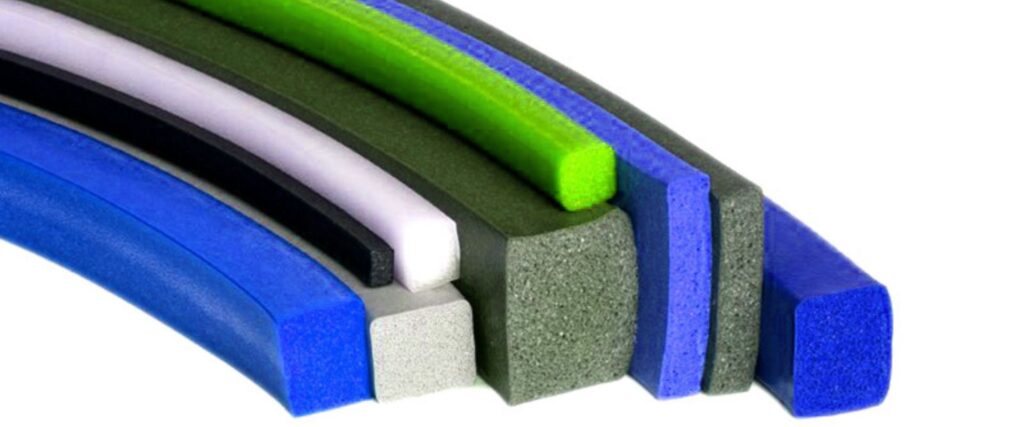
Solid silicone rubber is commonly considered for seals and custom extruded profiles where flexibility and temperature resistance are important. Aerospace programs may also specify materials such as A-A-59588 silicone rubber, depending on the application and drawing.
2. Silicone Sponge
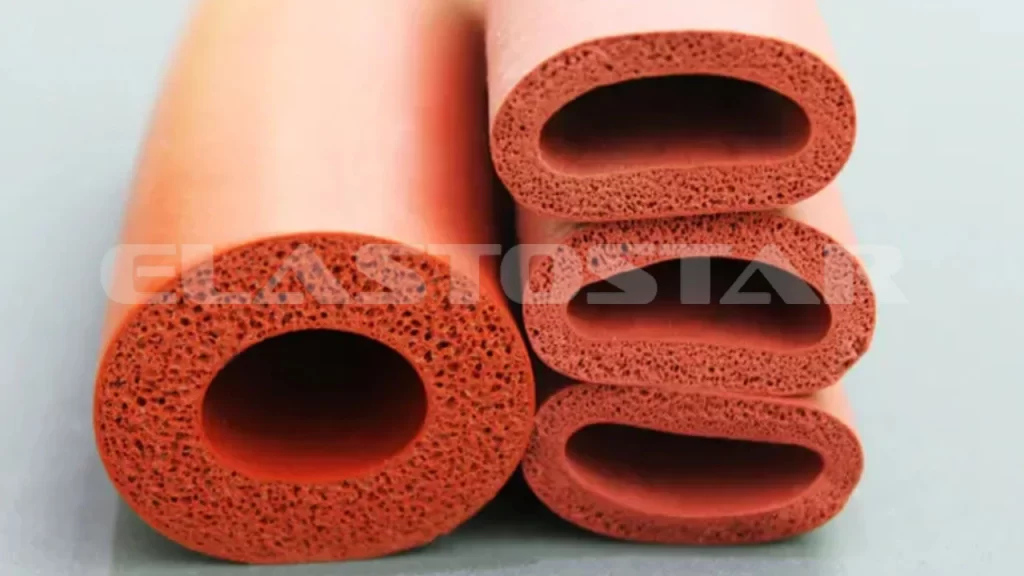
Silicone sponge is more compressible than solid silicone and can be useful for sealing, cushioning, and environmental isolation when lower closure force or greater conformability is needed.
3. Closed-Cell Silicone Sponge
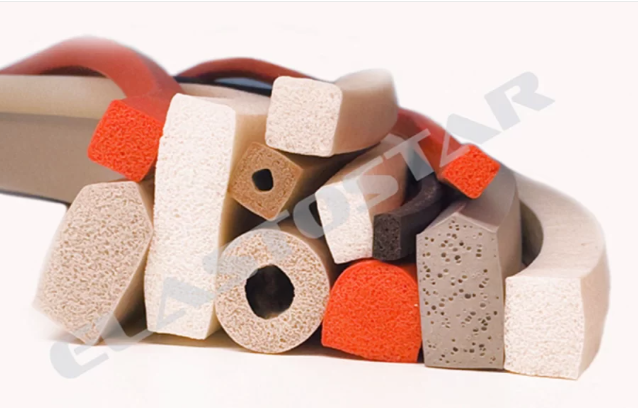
Closed-cell sponge is often considered where a compressible sealing material with low water absorption is required.
Our FDA-compliant closed-cell silicone sponge rubber can be manufactured in different forms for application-specific sealing requirements.
4.Fluorosilicone
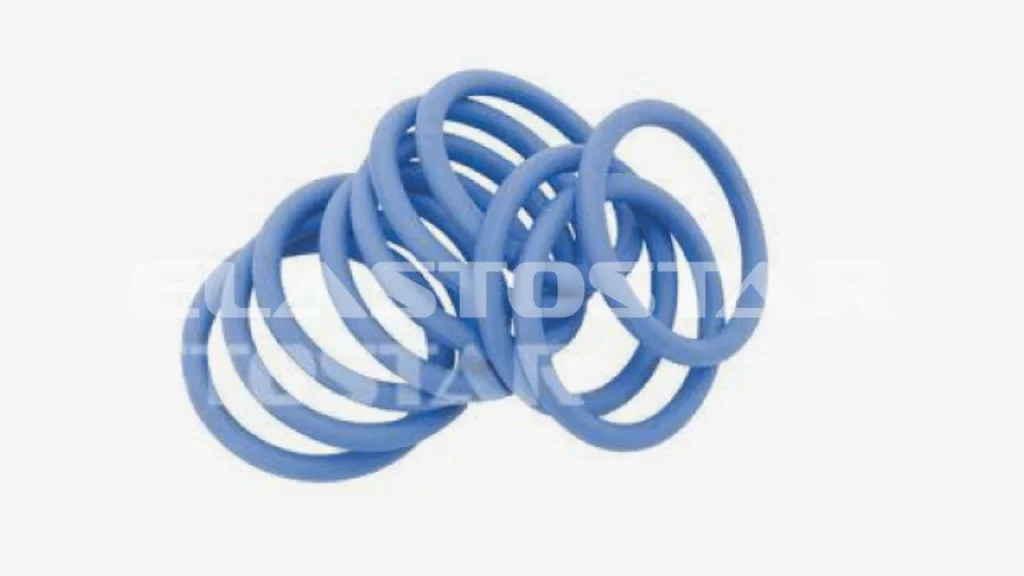
Consider fluorosilicone when aerospace components require improved resistance to fuels, oils, and certain chemicals compared with standard silicone. For circular sealing applications, fluorosilicone O-rings are one available option.
5. High-Temperature Silicone
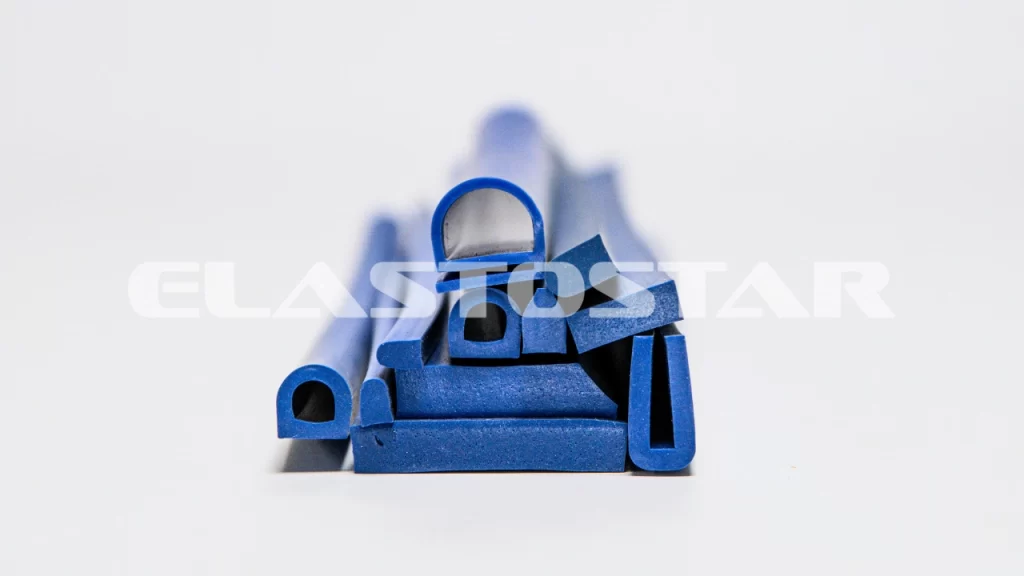
When elevated temperatures are a major design factor, evaluate the selected silicone compound against the actual exposure conditions. Select high-temperature silicone rubber based on the required temperature range and the mechanical, environmental, and sealing requirements.
Where Do AMS 3195 and AMS 3196 Fit into Aerospace Silicone Sourcing?
For aerospace OEMs, AS9100D and AMS material specifications serve different purposes. AS9100D applies to the manufacturer’s quality management system, while AMS 3195 and AMS 3196 define requirements for specific silicone sponge materials.
| Requirement | What It Covers | Sourcing Relevance |
|---|---|---|
| AS9100D | Aerospace quality management system | Process control, traceability, risk management, documentation, and supplier controls |
| AMS 3195 | Medium-density silicone sponge | Used when the drawing/specification requires a more compliant aerospace silicone sponge |
| AMS 3196 | Firm-density silicone sponge | Used when a firmer closed-cell silicone sponge is specified |
Why OEMs Need to Consider Both
An AS9100D-certified silicone manufacturer may have the required aerospace quality-management controls, but this does not mean every silicone material automatically conforms to an AMS specification.
Likewise, specifying AMS 3195 or AMS 3196 addresses the material requirements, not the manufacturer’s complete quality system.
For applications involving medium-density sponge, our AMS3195 aerospace applications article explains how the material is used for aircraft seals, gaskets, access panels, equipment enclosures, vibration cushioning, and environmental sealing.
OEMs should therefore evaluate the supplier’s quality system, required AMS grade, component drawing, compression requirements, and documentation together when sourcing aerospace silicone parts.
What Aerospace Silicone Components Can Be Custom Manufactured?
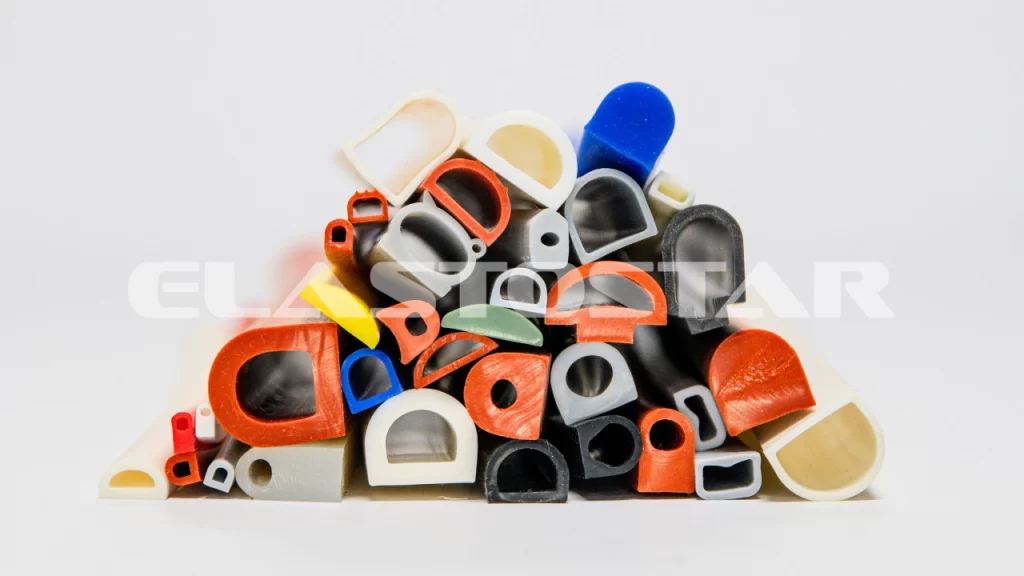
Aerospace assemblies often require sealing components with non-standard dimensions, specific materials, tight dimensional requirements, or unique profile geometries.
Custom manufacturing lets us develop components around the drawing and application rather than adapting a standard part.
Common custom aerospace silicone components include:
- Aerospace silicone seals — Custom sealing profiles can be extruded to match specific gaps, mating surfaces, and compression requirements.
- Silicone gaskets — We can manufacture rubber seal gaskets in application-specific shapes and dimensions from suitable gasket materials.
- Aerospace O-rings — Custom sizes and cross-sections support applications where standard O-ring dimensions aren’t suitable.
- Silicone sponge gaskets — We can fabricate sponge materials into compressible seals and gaskets for panels, enclosures, access points, and cushioning applications.
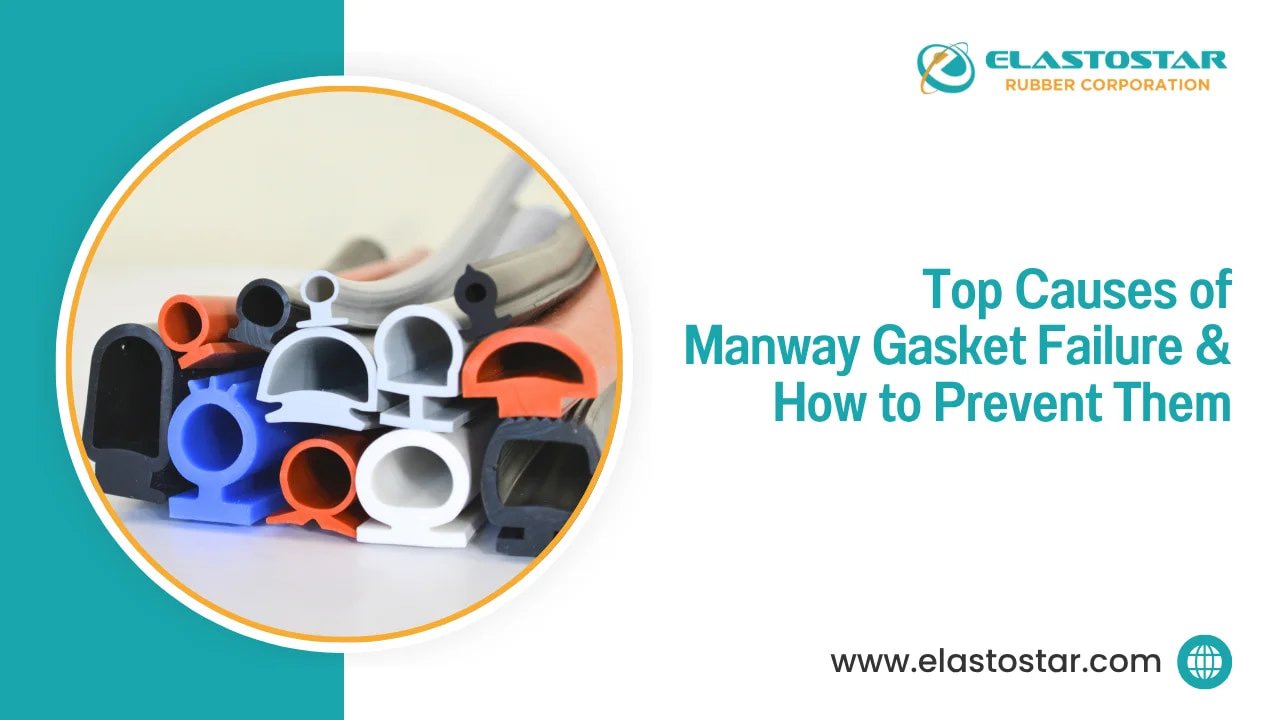
- Extruded profiles — We can manufacture D-shaped, P-shaped, bulb, square, rectangular, and other custom geometries for specific sealing interfaces.
- Custom molded components — Our rubber molded products can support complex geometries that are better suited to molding than extrusion or die cutting.
For specialized aerospace projects, we can work from drawings, dimensions, or existing samples and provide reverse-engineering support where appropriate.
Our custom manufacturing capabilities support development from prototype requirements through production quantities, but you should establish material, tolerance, inspection, and documentation requirements for the specific aerospace program.
The custom silicone rubber molding process also provides engineers and sourcing teams with a closer look at how application-specific molded components move from design requirements into manufacturing.
When Should an OEM Choose a Custom Aerospace Silicone Component?
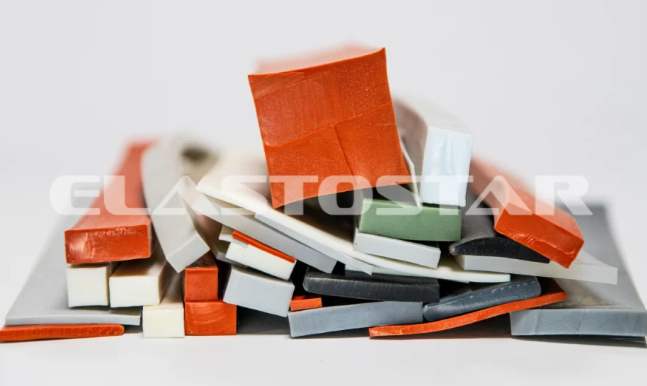
A custom component makes sense when a standard seal, gasket, or O-ring cannot meet the geometry, material, environmental, or performance requirements of the aerospace application.
OEMs should consider custom manufacturing when:
- Non-standard dimensions are required: Aircraft assemblies may have sealing gaps or component dimensions that do not match standard sizes.
- The sealing geometry is unique: We can develop custom D, P, bulb, lip, square & rectangular profiles, or other profiles around the mating surfaces and required compression.
Our custom silicone extrusion process explains how we manufacture continuous profiles. - Temperature requirements are demanding: Material selection should account for the actual minimum and maximum operating conditions rather than choosing silicone based only on general temperature capability.
- Environmental exposure matters: Fuel, oil, ozone, UV, moisture, vibration, and other exposures can influence both material and component design.
- Specific hardness or density is required: Solid silicone hardness or silicone sponge density should match the required sealing force, compression, and application specification.
- A prototype is needed: Prototype quantities allow engineers to evaluate fit, geometry, and application requirements before moving into production.
- An existing component needs replacement: When drawings or tooling are unavailable, reverse engineering can help develop a replacement from an existing sample, dimensions, and application requirements.
We can provide design and application support from prototype through production, helping OEMs develop custom extruded rubber profiles around the required material, geometry, dimensions, and end-use conditions.
What Should OEMs Ask an Aerospace Silicone Manufacturer Before Sending an RFQ?

Before sending an RFQ, aerospace OEMs should qualify the manufacturer on three things:
Quality system, technical capability, and production support.
This helps identify potential issues before drawings, specifications, and pricing move further into the sourcing process.
1. Verify the Quality System
Start by confirming whether the manufacturer is currently AS9100D certified and reviewing the scope of certification. The scope matters because AS9100D applies to the manufacturer’s quality management system—not automatically to every silicone component it produces.
Also establish what material traceability, inspection records, lot documentation, change controls, and customer-requested documentation can be provided for the program.
2. Confirm Material and Manufacturing Capability
The manufacturer should understand the exact silicone material and specification identified on the drawing. Ask whether it can work with the required solid silicone, silicone sponge, fluorosilicone, metal-detectable silicone, AMS specifications, or other aerospace material requirements.
OEMs should also confirm whether they can manufacture the part from a drawing or existing sample and whether the project requires custom extrusion, molding, die cutting, splicing, or secondary fabrication.
Review dimensional requirements early against appropriate rubber precision tolerance guidelines, not after tooling or production begins.
3. Look Beyond the First Order
A capable aerospace silicone manufacturer should support the project as requirements develop. We provide design and application support, reverse engineering, prototype development, and production-run manufacturing for custom silicone components.
Supplier selection should therefore consider more than certification or quoted price.
Our silicone rubber supplier procurement guide covers additional factors OEM purchasing teams can evaluate before selecting a manufacturing partner.
What Information Should You Include in an Aerospace Silicone RFQ?
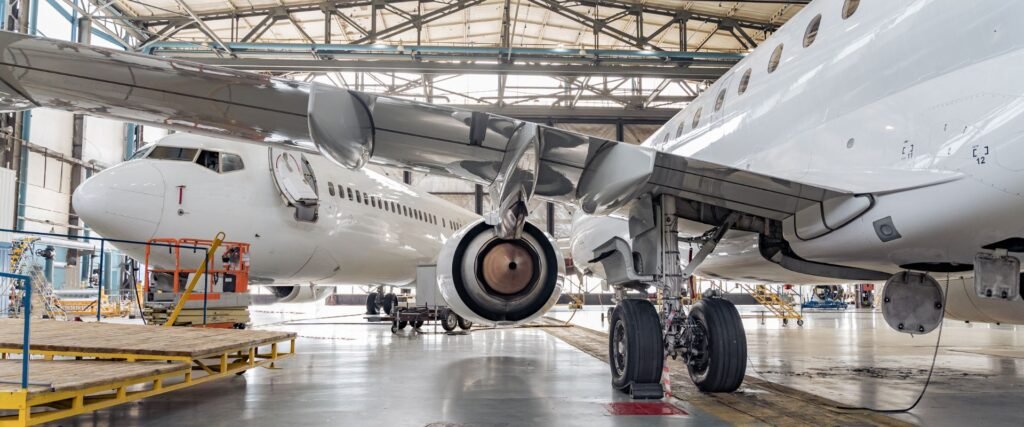
A well-prepared RFQ gives the manufacturer enough technical information to evaluate the material, manufacturing method, tolerances, documentation, and production requirements before quoting.
For custom aerospace silicone components, a drawing alone may not provide every detail needed for accurate manufacturing review.
| RFQ Information | What to Define |
|---|---|
| Drawing / CAD | Current drawing, CAD file, part number, and revision |
| Dimensions & tolerances | Critical dimensions, profile geometry, and acceptable tolerances |
| Material / specification | Silicone type and applicable AMS, A-A-59588, or customer specification |
| Hardness / density | Required durometer for solid silicone or density/firmness for sponge |
| Operating conditions | Required temperature range and expected environmental exposure |
| Quantity | Prototype, initial production quantity, and expected production volume |
| Documentation | Traceability, inspection records, material documentation, or other customer requirements |
| Production stage | New design, prototype, existing production part, or replacement component |
Give the Manufacturer the Application Context
Specifications are essential, but application information can also prevent incorrect assumptions. Tell the manufacturer whether the component will experience compression, vibration, fuels or oils, moisture, UV, repeated opening and closing, or other relevant service conditions.
For an existing component without complete drawings, a physical sample may also let us evaluate reverse-engineering options and develop the required dimensions or profile.
Clear RFQ information helps move a project more efficiently from design review and prototype development into production.
For custom extrusions in particular, understanding the silicone rubber extrusion manufacturing process can help engineering teams identify the dimensional, material, tooling, and production information that should be established before manufacturing begins.
USA-Made vs Offshore Aerospace Silicone Components: What Should OEMs Evaluate?
The manufacturing location alone does not determine the quality of an aerospace silicone component.
OEMs should compare suppliers based on program requirements, including quality systems, technical capability, documentation, communication, and supply-chain needs.
| Evaluation Area | What OEMs Should Consider |
|---|---|
| Lead time | Tooling, prototypes, production schedules, shipping time, and response to design changes |
| Communication | Access to engineering and manufacturing teams when drawings or requirements need clarification |
| Traceability | Ability to provide the material, lot, inspection, and production records required by the program |
| Supply chain | Transportation distance, logistics complexity, inventory strategy, and potential disruptions |
| Engineering collaboration | Support for drawings, material selection, prototypes, reverse engineering, and design changes |
| Quality system | Required certifications, process controls, inspection procedures, and nonconformance management |
For programs that require close engineering coordination, domestic manufacturing can simplify communication during prototype development, drawing revisions, tooling changes, and production planning. It may also reduce some of the logistical complexity associated with longer international supply chains.
However, Made in USA does not automatically mean a component is better or aerospace-compliant. OEMs should still verify the manufacturer’s quality system, material capabilities, certification scope, traceability, and ability to meet the drawing and purchase requirements.
We manufacture custom extruded and molded rubber components in the USA and support projects from prototype through production.
When comparing domestic and offshore sourcing, our article on U.S. silicone rubber vs. offshore products provides additional sourcing considerations for purchasing teams.
How to Choose an AS9100D Certified Silicone Manufacturer in the USA

Choosing an AS9100D-certified silicone manufacturer in the USA should be about more than certification alone.
OEMs need a supplier that combines an aerospace-focused quality system with the technical capability to manufacture the required silicone component.
Focus on four areas:
1. Certification: Verify that the AS9100D certificate is current and that its scope covers the relevant manufacturing activities.
2. Technical capability: Confirm the manufacturer can meet the required material specification, geometry, dimensions, tolerances, and production method.
3. Traceability and documentation: Make sure the supplier can support the material records, inspection information, and documentation required by the aerospace program.
4. Custom manufacturing support: Look for a manufacturer that can support the project from design assistance and reverse engineering through prototypes and production quantities.
We manufacture custom aerospace silicone components in the USA, including seals, gaskets, O-rings, extruded profiles, sponge components, and molded parts.
When evaluating potential suppliers, our guide to choosing a rubber manufacturer in the USA provides additional factors to consider before sending an RFQ.
Recommended Reads
- How AS9100D Certification Helps Reduce Silicone Component Failure in Aerospace Applications
- Applications of AMS 3195 Silicone Rubber in Aerospace Seals, Gaskets, and Aircraft Components
- Role of Certification in Aerospace Rubber Manufacturing
Selecting the Right Aerospace Silicone Manufacturing Partner
For aerospace OEMs, selecting the right silicone manufacturer means evaluating both quality-system controls and manufacturing capability. AS9100D provides an aerospace-focused framework for process control, traceability, risk management, documentation, and continual improvement, while material specifications and drawings define the requirements for the actual component.
As an AS9100D-certified silicone manufacturer, we manufacture custom aerospace silicone seals, gaskets, O-rings, sponge components, extruded profiles, and molded rubber parts in the USA. We also support custom manufacturing, reverse engineering, design assistance, prototypes, and production quantities.
For custom aerospace silicone requirements, contact Elastostar Rubber Corporation to discuss your drawings, specifications, and application requirements.
FAQs
Q1. Why do aerospace OEMs prefer AS9100D certified manufacturers?
Aerospace OEMs often prefer AS9100D-certified manufacturers because the standard adds aerospace-specific quality-management requirements covering operational risk, product safety, configuration management, supplier controls, traceability, and nonconformance management. These controls support more consistent, documented manufacturing of aerospace silicone components.
Q2. What does AS9100D certification mean for a silicone manufacturer?
AS9100D certification means the manufacturer operates an aerospace-focused quality management system that incorporates ISO 9001 requirements along with additional aviation, space, and defense requirements. Our AS9100D quality management system supports manufacturing custom extruded and molded rubber products.
Q3. Does AS9100D certify individual silicone components?
No. AS9100D certifies the manufacturer’s quality management system, not every silicone seal, gasket, O-ring, or extrusion it produces. Individual components must still meet the applicable drawing, material specification, tolerance, inspection, and customer requirements.
Q4. What is the difference between AS9100D and ISO 9001?
ISO 9001 establishes general quality-management requirements applicable across industries. AS9100D incorporates ISO 9001 requirements and adds requirements specifically relevant to the aviation, space, and defense sectors, including product safety, configuration management, operational risk, and counterfeit-parts prevention.
Q5. How does AS9100D support material traceability?
AS9100D requires controlled processes for identification and traceability where applicable. For aerospace silicone components, customer and program requirements may require linking raw material identification, production lots, manufacturing records, inspection information, and finished parts.
Q6. How can an OEM verify a manufacturer’s AS9100D certification?
OEMs should review the current certificate, company and manufacturing location, certification scope, issue and expiration dates, and certification body. Buyers should confirm the scope matches the manufacturing services being purchased, rather than relying only on an AS9100D logo or claim.
Q7. What documentation should aerospace OEMs request from silicone suppliers?
Documentation depends on the program and purchase requirements. It may include material documentation, lot or batch traceability, Certificates of Conformance, inspection records, drawing revisions, and other customer-specified quality records.
Q8. What is the difference between AS9100D and AMS 3195?
AS9100D applies to the manufacturer’s aerospace quality management system, while AMS 3195 silicone sponge defines requirements for medium-density silicone sponge material. An aerospace program may therefore require both an appropriate supplier quality system and a specified material.
Q9. What is the difference between AMS 3195 and AMS 3196?
AMS 3195 applies to medium-density silicone sponge, while AMS 3196 silicone sponge covers firm-density closed-cell silicone sponge rubber. Select based on the drawing or specification and the component’s compression, firmness, geometry, and application requirements.
Q10. What information should OEMs provide when requesting an aerospace silicone quote?
OEMs should provide the drawing or CAD file, dimensions, tolerances, material specification, hardness or sponge density, operating environment, temperature requirements, quantity, and required documentation. They should also identify whether the project is for a prototype, replacement component, or production requirement.