A supplier may deliver the right O-ring sample, but can they maintain the same material, dimensions, and quality across 20,000 production parts?
Choosing the right industrial O-ring supplier means looking beyond price and availability. OEM buyers need reliable manufacturing, consistent materials, proper documentation, and dependable bulk delivery.
This guide explains what to evaluate before selecting an O-ring supplier for custom components, repeat production, and bulk O-ring orders.
Key Takeaways
- Choose an industrial O-ring supplier based on material compatibility, manufacturing capability, quality, and delivery reliability.
- For bulk O-rings, verify production capacity, minimum order quantities, lead times, and consistency between batches.
- Custom O-rings require accurate drawings, suitable materials, and achievable dimensional tolerances.
- Compare total purchasing costs, including tooling, inspection, documentation, and shipping, not just unit price.
Table of Contents
What Should OEMs Look for in an Industrial O-Ring Supplier?
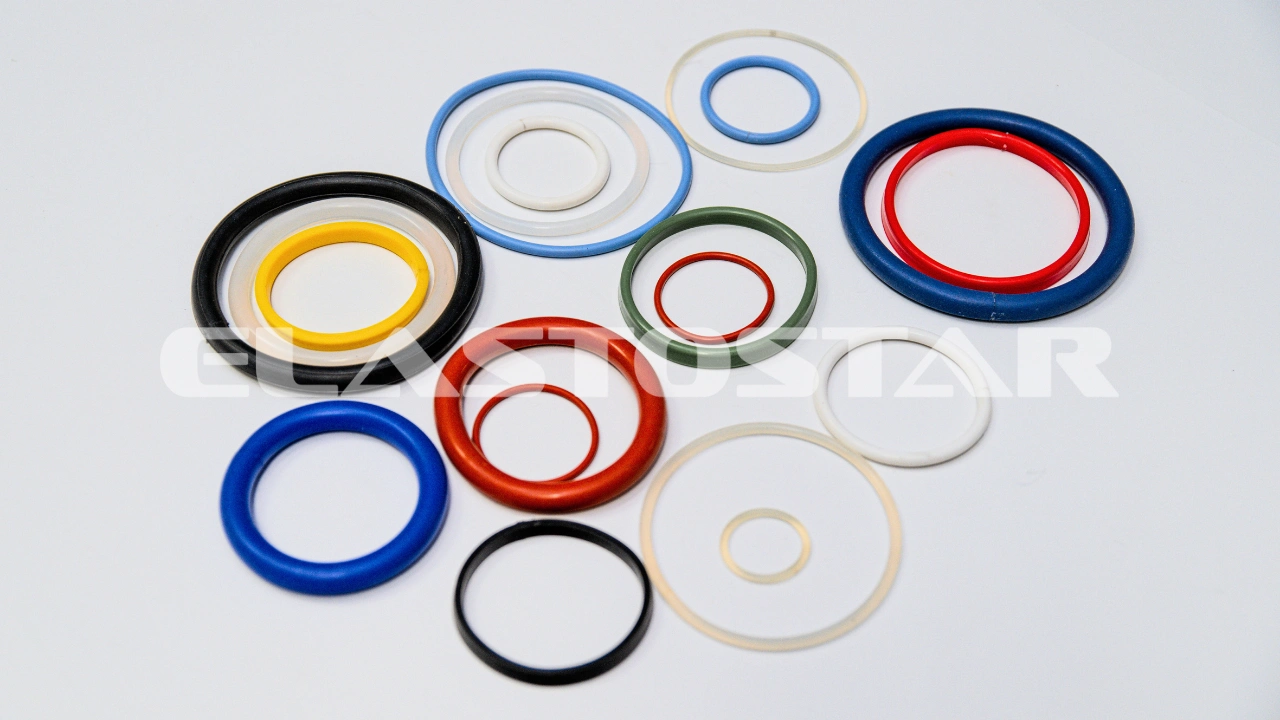
The right supplier should be able to produce or source O-rings that consistently meet your approved specifications.
Before requesting pricing, evaluate five essential capabilities:
- Manufacturing experience: Has the supplier handled similar sealing applications?
- Material selection: Can it provide the required elastomer, hardness, and grade?
- Dimensional capability: Can it achieve the specified sizes and tolerances?
- Production capacity: Can it support prototype quantities and repeat orders?
- Quality control: Can it provide the required inspection and material documentation?
Also confirm where manufacturing takes place and who manages engineering changes.
For applications requiring nonstandard dimensions, our spliced and vulcanized silicone rubber O-rings offer a custom manufacturing option for suitable sealing conditions.
Can the Supplier Provide the Right O-Ring Materials?
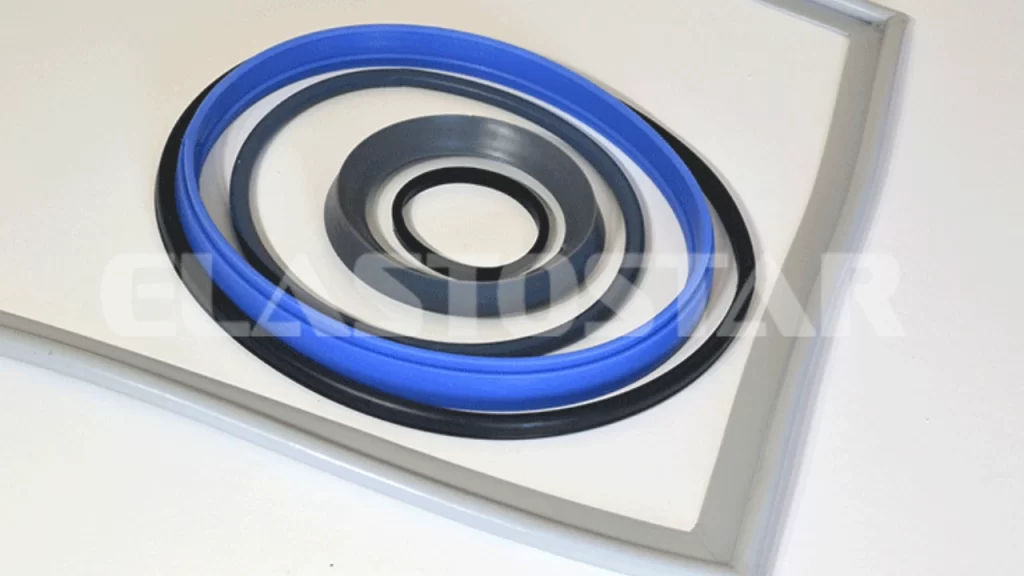
Confirm material compatibility before comparing supplier quotations.
The correct O-ring materials depend on operating temperature, fluid exposure, pressure, movement, and expected service life.
1. Nitrile O-rings (NBR/Buna-N)
Nitrile rubber is commonly used in industrial equipment involving compatible petroleum-based oils and lubricants.
Typical applications:
- Hydraulic systems.
- Industrial pumps.
- Oil-handling equipment.
NBR offers useful oil resistance but is generally less suitable for prolonged ozone exposure.
2. EPDM O-rings
EPDM is often selected for water-based applications, outdoor equipment, and certain chemical environments.
Typical applications:
- Water-handling systems.
- HVAC equipment.
- Outdoor industrial assemblies.
EPDM generally resists ozone and weathering but is usually unsuitable for petroleum oils and fuels.
Read our EPDM vs. silicone rubber comparison for more information.
3. FKM/Viton O-rings
FKM, including compounds sold under the Viton brand, is commonly evaluated for demanding temperature, oil, fuel, and chemical exposure.
Typical applications:
- Chemical processing equipment.
- High-temperature machinery.
- Compatible fuel and oil systems.
Performance varies by compound, particularly with chemicals and low-temperature conditions.
Our Viton vs. silicone rubber guide explains the key differences.
4. Silicone Rubber
Silicone rubber offers flexibility across a broad temperature range and is widely used for suitable static sealing applications.
Typical applications:
- Industrial enclosures.
- Food-processing equipment.
- Medical equipment.
- High- and low-temperature seals.
Silicone may not be suitable for continuous petroleum fuel exposure or abrasive dynamic service.
5. Fluorosilicone O-rings
Fluorosilicone rubber O-rings combine silicone’s temperature flexibility with improved resistance to certain fuels and oils.
Typical applications:
- Aerospace equipment.
- Automotive components.
- Fuel-exposed industrial assemblies.
Material selection tip: Use our O-ring chemical compatibility chart as an initial reference, then confirm suitability for the actual fluid, temperature, and service conditions.
Does the Supplier Offer Standard and Custom O-Ring Sizes?
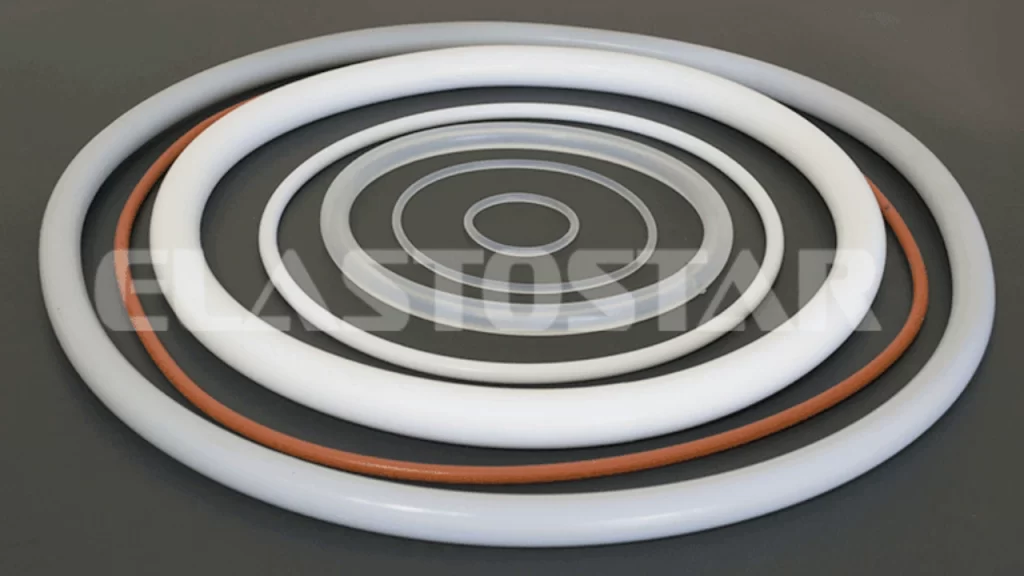
An industrial O-ring manufacturer should confirm dimensional capability before accepting an OEM order.
1. Standard O-Ring Sizes
Many standard O-rings follow AS568 dimensional designations.
These specify recognized inside diameters and cross-sections.
Our AS568 O-ring size chart helps buyers identify standard sizes.
For accurate purchasing, include the dash number, material, hardness, and any additional specifications.
2. Custom O-Ring Sizes
Custom O-rings may be required for large equipment covers, nonstandard grooves, specialized machinery, or obsolete replacement parts.
For suitable static seals, silicone rubber cord can be joined through splicing and vulcanization to create nonstandard O-ring dimensions.
3. Dimensional Tolerances
O-ring dimensions can vary with compound, geometry, and manufacturing method.
Before approving production, confirm the achievable tolerances against your drawing.
Our RMA precision tolerance guide provides a useful reference for rubber dimensional requirements.
Can the Supplier Handle Bulk O-Ring Orders and Repeat Production?
A supplier capable of producing 100 approved samples may not necessarily have the capacity to deliver thousands of components on a recurring schedule.
For bulk O-rings, review:
- Monthly and annual production capacity.
- Material availability.
- Minimum and maximum order quantities.
- Consistency between production batches.
- Inspection procedures.
- Scheduled delivery options.
- Management of engineering changes.
Ask About Production Consistency
An approved prototype should establish clear material, dimensional, and acceptance requirements for future orders.
Ask how the supplier handles material substitutions, drawing updates, and production changes.
A qualified bulk O-ring supplier in the USA should be able to explain its repeat-order process and realistic delivery commitments.
For ongoing OEM programs, providing a six- or twelve-month demand forecast can help suppliers plan capacity and material procurement.
Also Read: Silicone Rubber Frequently Asked Questions
What Quality Standards and Testing Should You Check?
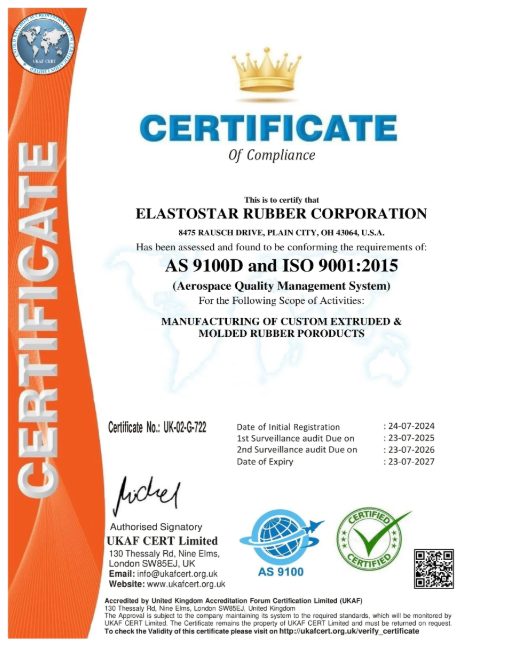
The required quality standards depend on the industry, O-ring application, and purchase order.
For specification-controlled industrial rubber O-rings, verify the applicable material requirements and testing procedures.
1. Material Standards
ASTM D2000 is commonly used to classify rubber materials based on defined properties and test requirements.
2. Industry-Specific Requirements
- Aerospace: Supplier qualification may involve AS9100D quality management requirements and component-specific specifications.
- Automotive: Some programs require applicable IATF 16949 quality-system controls.
- Food equipment: Materials may need to meet applicable FDA 21 CFR 177.2600 requirements or relevant NSF 51 requirements.
- Medical equipment: Certain applications specify materials tested to USP Class VI.
These standards are not interchangeable. Quality-system certification also does not automatically establish material compliance.
3. Common O-Ring Tests
Depending on the project, testing may include hardness, dimensions, compression set, tensile strength, elongation, fluid compatibility, or temperature aging.
Our quality control provides more information about our manufacturing inspection practices.
How Important Are Material Traceability and Documentation?
For repeat OEM orders, traceability helps purchasing and quality teams identify the materials and production batches used in delivered components.
Documents Buyers May Need
| Document | Purpose |
|---|---|
| Certificate of Conformance | Confirms stated conformity to purchase requirements |
| Material test report | Records applicable material test results |
| Lot identification | Connects delivered parts to source material or production batches |
| Dimensional inspection report | Verifies specified part dimensions |
| First Article Inspection / PPAP | Supports qualification when required by the OEM |
Not every industrial order needs every document.
The key step is defining documentation requirements before production begins.
Can the Supplier Manufacture O-Rings From OEM Drawings?

An experienced OEM O-ring manufacturer should be able to review an engineering drawing before recommending a manufacturing method.
A complete drawing should identify:
- Inside diameter and cross-section.
- Material specification and hardness.
- Dimensional tolerances.
- Drawing revision.
- Applicable inspection requirements.
What if No Drawing Exists?
For older machinery, the original O-ring drawing may be unavailable.
A manufacturer may evaluate an existing sample and the equipment’s sealing dimensions.
However, worn O-rings can stretch, swell, or develop compression set, so sample measurements may not represent the original dimensions.
At Elastostar Rubber Corporation, we support custom component development and reverse engineering discussions using available drawings, samples, and application information.
Read More: Top Mistakes to Avoid When Ordering Silicone O-Rings
What Manufacturing Methods Should an O-Ring Supplier Support?
Different manufacturing methods serve different sizes, quantities, and operating conditions.
1. Molded O-Rings

Custom molded rubber O-rings are produced using a mold cavity.
This process may be suitable when the required geometry, tolerances, material, and production volume justify tooling.
2. Spliced and Vulcanized O-Rings
Spliced and vulcanized O-rings are formed by joining rubber cord or an extruded profile into a continuous ring.
This can be useful for:
- Large-diameter static seals.
- Nonstandard O-ring sizes.
- Custom applications where full-ring tooling may be impractical.
Joint strength and sealing performance must be evaluated for the specific application, especially where movement or demanding service conditions are involved.
Read More: What Are Spliced and Vulcanized O-Rings?
3. Other Sealing Geometries

An O-ring is not always the best choice for an equipment enclosure.
Depending on the design, D-shaped silicone rubber seals or other profiles may provide a more appropriate compression geometry.
A manufacturer with broader sealing capabilities can help evaluate these options.
How Do Lead Times and Minimum Order Quantities Affect OEM Purchasing?
Lead times and minimum order quantities (MOQs) directly affect inventory planning and production schedules.
A quotation should distinguish manufacturing time from the complete delivery schedule.
1. Confirm the Full Lead Time
Ask whether the quoted schedule includes:
- Material procurement.
- Tooling or production setup.
- Prototype approval.
- Manufacturing.
- Inspection.
- Shipping.
2. What Determines MOQ?
Minimum quantities vary with material, size, manufacturing process, tooling, and order frequency.
A custom O-ring manufacturer for bulk orders may offer different terms for prototype quantities and repeat production.
OEMs should confirm setup charges, minimum releases, and expected delivery dates before awarding the order.
How Should OEMs Compare O-Ring Supplier Pricing?
The lowest unit price is not always the lowest total purchasing cost.
For wholesale O-rings and custom production orders, compare what each quotation actually includes.
| Pricing factor | What to verify |
|---|---|
| Material | Exact compound and grade |
| Unit price | Cost at realistic order volumes |
| Tooling | One-time and repeat charges |
| Testing | Required inspection and testing costs |
| Documentation | Certificates and reports included |
| Packaging | Labeling and lot-separation requirements |
| Freight | Shipping and applicable import charges |
| Repeat orders | Pricing at forecast production quantities |
Request Volume-Based Quotations
Ask suppliers to price the initial order, expected repeat releases, and forecast annual quantities.
This gives purchasing teams a clearer comparison when deciding where to buy industrial O-rings in bulk.
For custom components, also confirm whether tooling or setup charges will apply again to future orders.
Domestic vs Overseas Industrial O-Ring Suppliers: Which Should You Choose?
Domestic and overseas industrial O-ring suppliers can both support OEM production.
The better choice depends on technical requirements, total cost, manufacturing capability, and delivery reliability.
When a USA Supplier May Help
Working with an industrial O-ring supplier in the USA may offer advantages for US-based purchasing teams, including:
- Easier communication during drawing revisions.
- Fewer international shipping steps.
- Simpler coordination of production schedules.
- More direct discussion of manufacturing requirements.
What to Check With Overseas Suppliers
Confirm production location, freight costs, customs requirements, total lead time, quality documentation, and how rejected components are handled.
Compare the complete delivered cost, not only the unit price.
Our article on shorter lead times with USA silicone gasket manufacturers covers additional sourcing considerations.
Industrial O-Ring Supplier Evaluation Checklist
Use this industrial O-ring sourcing checklist to compare suppliers before awarding an OEM or bulk production order.
| Supplier requirement | Verification question |
|---|---|
| Material | Can the supplier provide the specified compound and hardness? |
| Sizes | Can it produce standard or custom dimensions? |
| Manufacturing | Is the required production method available? |
| Tolerances | Can it meet the approved drawing? |
| Capacity | Can it support forecast order volumes? |
| Quality | Are required inspection procedures in place? |
| Documentation | Can it provide specified certificates and reports? |
| Lead time | Does the schedule include all production stages? |
| Pricing | Are tooling, setup, and shipping charges clear? |
| Repeat orders | How are material and drawing changes controlled? |
Purchasing tip: Send the same technical RFQ to every shortlisted supplier. Otherwise, quotations may differ because suppliers are pricing different requirements.
What Information Should OEMs Include in an O-Ring RFQ?
A clear RFQ helps a custom O-ring supplier for OEMs assess manufacturing feasibility and provide a more accurate quotation.
Include These Details
Part requirements
- Part number and drawing revision.
- Inside diameter and cross-section.
- Standard size designation, if applicable.
- Dimensional tolerances.
Material requirements
- Rubber compound.
- Hardness.
- Applicable material specification.
- Expected temperature and chemical exposure.
Application information
- Static or dynamic sealing.
- Operating pressure.
- Environmental conditions.
Purchasing requirements
- Prototype quantity.
- Initial production quantity.
- Estimated annual demand.
- Required delivery date.
- Inspection and documentation requirements.
What Should a Good Quotation Include?
The supplier should clearly identify the quoted material, manufacturing approach, quantity, lead time, price, and any technical assumptions.
Unresolved drawing or material questions should be addressed before production approval.
For more procurement guidance, see our guide to choosing silicone rubber suppliers.
Looking for an Industrial O-Ring Manufacturer in the USA?

For OEMs purchasing industrial seals and O-rings, manufacturing capability and repeatability are essential.
At Elastostar Rubber Corporation, we manufacture custom silicone and rubber sealing components in Ohio, USA.
Our capabilities include:
- Custom silicone and fluorosilicone O-ring solutions.
- Spliced and vulcanized O-rings for suitable applications.
- Custom rubber molded components.
- Reverse engineering support.
- Prototype-to-production manufacturing.
- Quality inspection and documentation planning.
We support custom sealing applications in industries including aerospace manufacturing, food processing, and chemical and petrochemical equipment.
Recommended Reads
- How Spliced Silicone Rubber O-Rings Cut Continuous Line Downtime?
- Which Industries Use Silicone O-Rings?
- Advantages of Hot Vulcanized Silicone O-Rings as Static Seals: A Complete Engineering Guide
Request a Quote for Custom or Bulk O-Rings
If you’re looking for an industrial O-ring manufacturer USA, bulk rubber O-ring manufacturer, or O-ring supplier for industrial equipment, share your project requirements with our team.
Send us your drawing or sample, material specifications, operating conditions, estimated quantities, and delivery requirements.
We’ll review the information and discuss suitable manufacturing options.
FAQs
Q1. How do I choose an industrial O-ring supplier?
Choose an industrial O-ring supplier based on material compatibility, manufacturing capability, dimensional accuracy, quality controls, production capacity, and delivery reliability.
Q2. What should OEMs check before ordering O-rings in bulk?
For bulk O-rings, confirm the approved material, dimensions, minimum quantities, production capacity, lead time, and required inspection documentation.
Q3. Can industrial O-ring manufacturers supply custom sizes?
Yes. Many O-ring manufacturers produce custom dimensions through molding or suitable spliced and vulcanized manufacturing methods.
Q4. What materials are available for industrial O-rings?
Common materials include nitrile, EPDM, FKM/Viton, silicone, and fluorosilicone. The best choice depends on operating temperature, chemicals, pressure, and sealing movement.
Q5. What is the minimum order quantity for custom O-rings?
MOQs vary by material, size, tooling, manufacturing process, and production volume. Request separate quotations for prototypes and repeat orders.
Q6. What quality documentation should an O-ring supplier provide?
Depending on the application, buyers may require a Certificate of Conformance, material test report, lot traceability, dimensional inspection report, or customer-specific records.
Q7. Can suppliers manufacture O-rings from drawings?
Yes. An experienced industrial O-ring manufacturer can review engineering drawings to assess material requirements, dimensions, tolerances, and production feasibility.
Q8. What affects bulk O-ring pricing?
Bulk O-ring pricing depends on material, dimensions, tooling, order quantity, production method, inspection, documentation, and shipping.
Q9. Where can I find industrial O-ring suppliers in the USA?
Look for O-ring suppliers in the USA with documented manufacturing capabilities and experience in your application. Elastostar Rubber Corporation manufactures custom silicone and rubber sealing components in Ohio, USA.