An aerospace gasket can meet its dimensional requirements and still prevent an equipment cover from closing properly.
The reason may be the force needed to compress the material. That is one of the most important considerations when comparing AMS 3195 vs AMS 3196.
Both are SAE Aerospace Material Specifications for closed-cell silicone sponge rubber. However, they specify different firmness grades:
- AMS 3195: Medium closed-cell silicone sponge.
- AMS 3196: Firm closed-cell silicone sponge.
This difference affects gasket compression, closure force, recovery, and material selection for aerospace equipment. For engineers and procurement teams, choosing the right aerospace silicone sponge requires understanding material performance, manufacturing requirements, and documentation.
Key Takeaways
- AMS 3195 silicone sponge is medium grade, while AMS 3196 silicone sponge is firm grade.
- AMS 3195 generally requires less force to compress than AMS 3196.
- Engineers should compare compression deflection, compression set, temperature performance, and gasket dimensions.
- The two specifications are not automatically interchangeable.
- Aerospace buyers should verify material test results, traceability, and quality documentation before ordering.
Table of Contents
What Are AMS 3195 and AMS 3196 Silicone Sponge Specifications?
AMS 3195 and AMS 3196 are SAE International specifications for silicone sponge rubber.
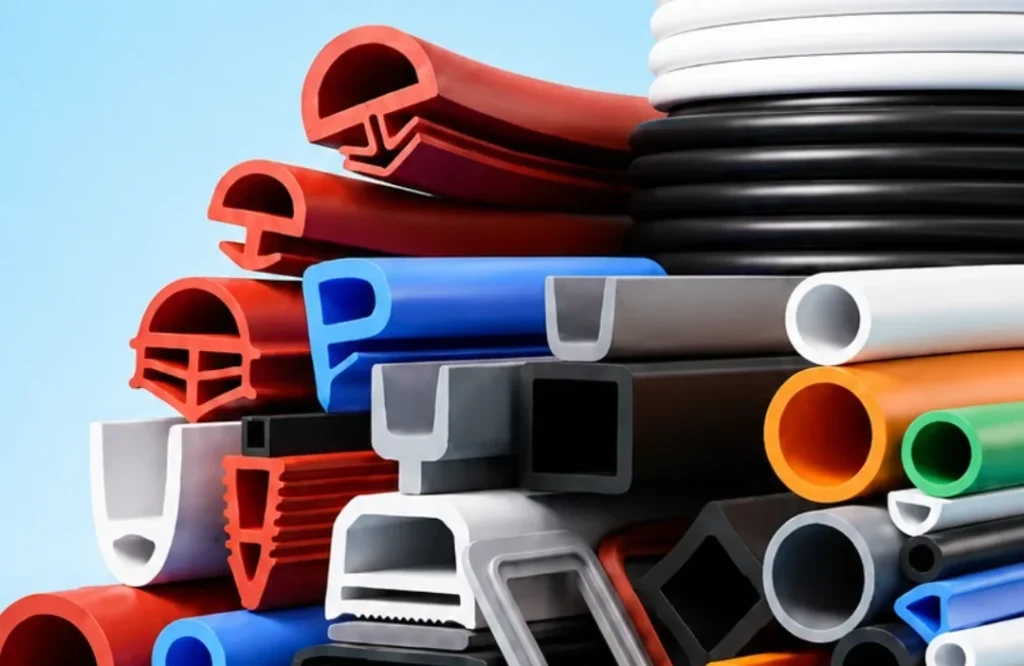
They cover material forms such as sheets, strips, extrusions, and molded shapes.
Both address compressible silicone materials, but their firmness classifications differ.
AMS 3195 covers medium-grade sponge, while AMS 3196 covers firm-grade sponge.
Why Are These Specifications Important?
Aerospace components must meet the material requirements stated in their approved drawings.
Using a general-purpose sponge that looks similar does not establish compliance with an AMS specification.
Engineers and buyers should confirm:
- The specified AMS grade and revision.
- Compression-deflection requirements.
- Material thickness and density.
- Applicable test methods.
- Required material and inspection documentation.
What Is AMS 3195 Silicone Sponge?

AMS 3195 silicone sponge is a medium-grade, closed-cell silicone rubber material.
It is commonly considered for compressible seals, gaskets, and cushioning components where moderate closure force is available.
Key AMS 3195 Silicone Sponge Properties
- Medium compression resistance.
- Closed-cell construction.
- Flexibility under suitable operating conditions.
- Resistance to ozone and ultraviolet exposure.
- Suitability for selected environmental sealing applications.
- Availability in different thicknesses and fabricated forms.
Published supplier data commonly lists a 25% compression-deflection range of 6–14 psi for AMS 3195 material.
However, buyers should verify the actual acceptance requirements and test values for the specified material revision.
When Is AMS 3195 Suitable?
Consider AMS3195 silicone rubber when the assembly requires a gasket that compresses under a moderate applied load.
Potential applications include:
- Avionics enclosure gaskets.
- Lightweight access panel seals.
- Equipment cushioning pads.
- Environmental seals around protective covers.
The gasket must still achieve the required contact pressure and satisfy the approved drawing.
What Is AMS 3196 Silicone Sponge?
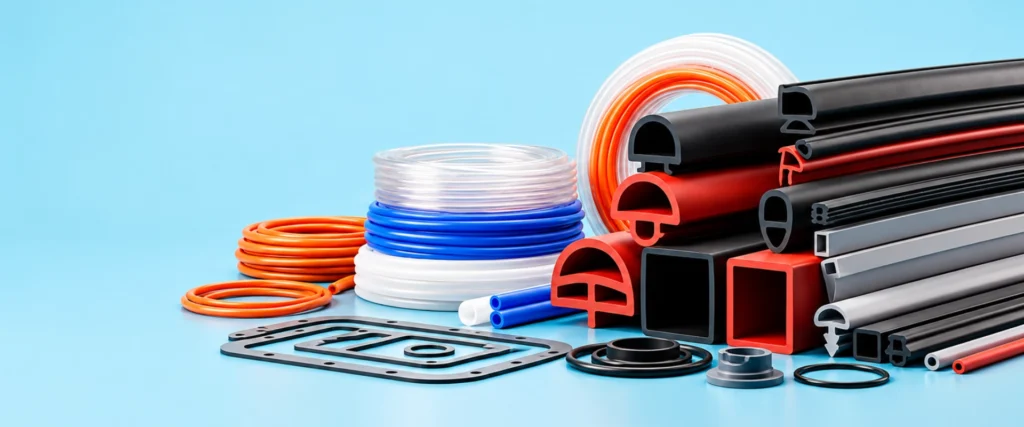
AMS 3196 silicone sponge is a firm-grade, closed-cell silicone rubber material.
It generally requires more force than AMS 3195 to achieve the same compression percentage.
This makes it a candidate for assemblies designed to accommodate a firmer gasket.
Key AMS 3196 Silicone Sponge Properties
- Firm compression response.
- Closed-cell structure.
- Suitability for selected higher-load assemblies.
- Resistance to ozone and ultraviolet exposure.
- Availability in sheets and custom-fabricated shapes.
Published supplier data commonly identifies a 12–20 psi compression-deflection range at 25% compression for AMS 3196.
These figures should be treated as reference values until the applicable SAE requirements and certified material data are verified.
Is Firmer Silicone Sponge Always Better?
No, A firmer material may resist compression more strongly, but that does not automatically improve the seal.
If an enclosure cannot provide sufficient closure force, a firm gasket may remain under-compressed.
The result can be uneven surface contact and reduced environmental sealing performance.
AMS 3195 vs AMS 3196: What Are the Key Differences?
The primary difference between AMS 3195 and AMS 3196 is firmness and compression-deflection behavior.
| Property | AMS 3195 | AMS 3196 |
|---|---|---|
| Material type | Closed-cell silicone sponge | Closed-cell silicone sponge |
| Firmness | Medium | Firm |
| Illustrative compression deflection at 25% | 6–14 psi | 12–20 psi |
| Relative compression force | Lower | Higher |
| Gasket behavior | More compliant | More resistant to compression |
| Typical design consideration | Moderate closure force | Higher available closure force |
| Material forms | Sheets, strips, extrusions, molded shapes | Sheets, strips, extrusions, molded shapes |
The numerical ranges are commonly published supplier reference values, not a replacement for the applicable SAE specification or lot-specific certification.
Example: Comparing Two Aerospace Gaskets
Consider an aerospace enclosure that uses a 0.250-inch-thick silicone sponge gasket.
If the design requires 25% compression, the gasket must compress to approximately 0.188 inch.
Both grades can be evaluated for that geometry, but they will not necessarily require the same closure force.
The firm-grade material generally needs greater applied force.
Before selecting either grade, review:
- Fastener and latch loading.
- Gasket contact area.
- Cover stiffness.
- Compression-stop dimensions.
- Surface flatness.
- Approved material requirements.
Select an AMS grade based on the complete assembly, not just gasket thickness.
How Do Material Properties Affect Aerospace Sealing Performance?

The performance of an aerospace silicone gasket’s performance depends on how the material behaves under actual operating conditions.
Four properties deserve particular attention.
1. Compression and Recovery
A gasket must compress enough to seal.
It also needs to recover appropriately after the applied load changes or is removed.
Two important measurements are:
- Compression deflection: The force required to compress the material by a specified amount.
- Compression set: The permanent deformation remaining after a defined compression and recovery test.
Excessive compression set can reduce gasket thickness and sealing contact over time.
For assemblies exposed to changing pressure, the design must also account for how air and pressure differences affect the enclosure.
Our article on pressure equalization challenges with closed-cell silicone sponge discusses this issue in more detail.
2. Density and Firmness
Density measures the mass of the material per unit volume.
Firmness describes its resistance to compression.
Although these properties may be related, they are not interchangeable.
For AMS 3195 vs AMS 3196, compression-deflection data is more directly useful than choosing a grade by density alone.
If an application requires a different level of compressibility, engineers may also evaluate ASTM D1056 soft silicone sponge.
This is a different material classification and should not replace an AMS-specified grade without engineering approval.
3. Temperature Resistance
Aerospace silicone rubber is commonly selected for applications involving high or low temperatures.
However, published temperature ranges may differ by material formulation, test method, and exposure duration.
Check:
- Continuous operating temperature.
- Short-term temperature peaks.
- Thermal cycling.
- Low-temperature flexibility.
- Compression set after heat exposure.
Our silicone rubber material provides additional information on silicone properties and temperature behavior.
4. Environmental Resistance
Closed-cell silicone sponge can help protect against environmental exposure in properly designed assemblies.
However, closed-cell construction alone does not guarantee a watertight or pressure-tight seal.
Consider:
- Moisture and dust exposure.
- Ozone and ultraviolet exposure.
- Vibration and movement.
- Chemical contact.
- Surface conditions.
- Flammability requirements.
For applications requiring a separately specified flame classification, buyers may review our UL 94 V-0 flame-retardant silicone sponge.
UL 94 testing and aerospace flammability requirements are different. Compliance with one does not automatically establish compliance with the other.
What Are the Aerospace Applications of AMS 3195 Silicone Sponge?

AMS 3195 silicone sponge may suit assemblies where moderate compression force and gasket flexibility are important.
Common Application Areas
1. Avionics Enclosures
Medium-grade sponge may be used in suitably designed electronic equipment housings where a compressible environmental seal is required.
2. Access Panels
Gaskets can help protect equipment compartments from dust and moisture when the cover design provides adequate compression.
3. Instrument Housings
Compressible sponge may accommodate appropriate enclosure interfaces and sealing surfaces.
4. Equipment Cushioning
Sponge pads may help separate contacting components and provide cushioning under specified loads.
5. Protective Covers
Custom gaskets may be used around covers and enclosures exposed to environmental conditions.
Read More: Applications of AMS3195 Silicone Rubber in Aerospace Seals, Gaskets, and Aircraft Components
What Are the Aerospace Applications of AMS 3196 Silicone Sponge?

AMS 3196 silicone sponge may be considered where the drawing requires a firmer material and the assembly provides sufficient compression force.
Potential applications include:
- Rigid equipment-cover gaskets.
- Aircraft access-panel seals.
- Protective electronics housing seals.
- Firm cushioning pads.
- Custom aerospace equipment gaskets.
How Does Gasket Geometry Affect Material Choice?

The correct material grade is only one part of the design.
A flat gasket, rectangular profile, or bulb seal can respond differently under the same closure load.
For example, our square and rectangular silicone rubber gaskets provide options for certain noncircular sealing geometries.
Likewise, extruded silicone rubber bulb seals may be suitable for assemblies that require a different compression profile.
AMS 3195 vs AMS 3196: Which Specification Should OEMs Choose?
The correct material should follow the approved engineering drawing and assembly requirements.
Choose AMS 3195 When:
- Medium closed-cell silicone sponge is specified.
- The assembly has moderate available closure force.
- Greater material compliance is needed.
- The design has been validated for medium-grade sponge.
Choose AMS 3196 When:
- Firm closed-cell silicone sponge is specified.
- The assembly can provide sufficient compression force.
- A firmer gasket response is required.
- The design has been validated for firm-grade sponge.
What if Neither Grade Meets the Application?
A different material or gasket geometry may be necessary.
For example, some aerospace drawings specify A-A-59588 silicone rubber for solid silicone components.
Solid silicone rubber and closed-cell sponge have different mechanical characteristics.
For a more detailed comparison, read our article on closed-cell silicone sponge vs. dense silicone rubber.
Can AMS-Specified Silicone Sponge Be Custom Manufactured?
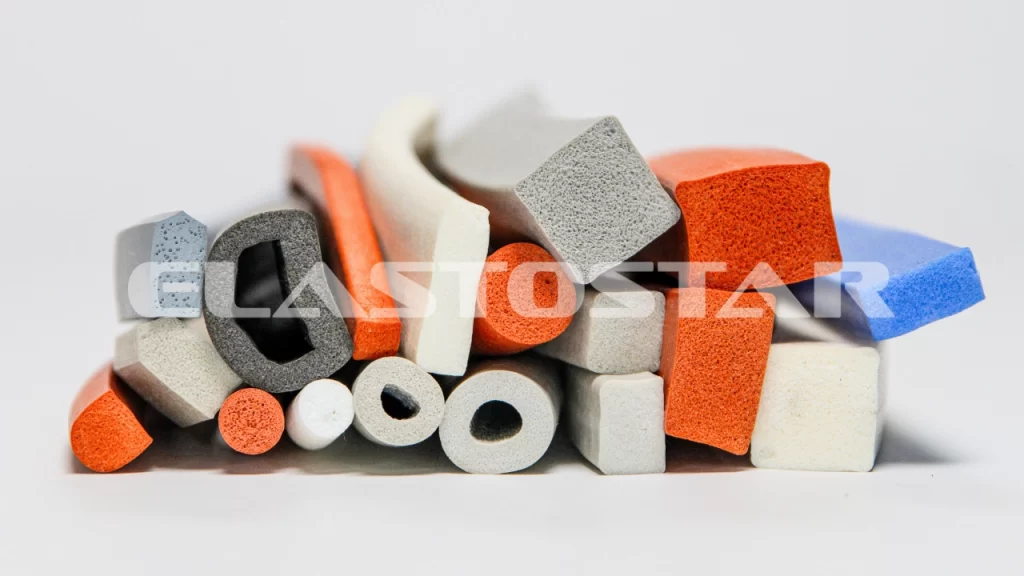
Yes, suitable AMS silicone sponge material can be fabricated into custom components when the manufacturing process supports the required material and finished-part specifications.
OEMs may need nonstandard dimensions, complex cutouts, or specialized sealing profiles.
Custom Manufacturing Options
1. Die-Cut Silicone Sponge Gaskets
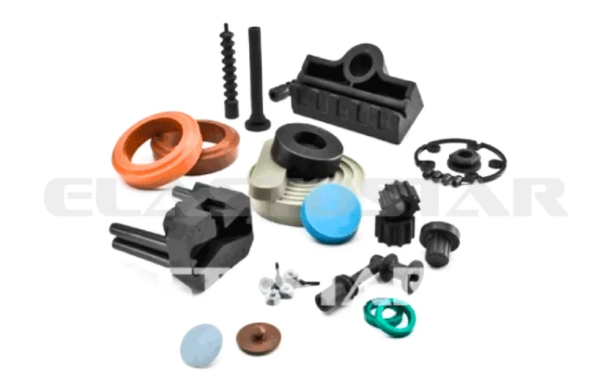
Die cutting is useful for flat gaskets with holes, slots, and defined outer shapes.
Our custom die-cut gasket manufacturing supports application-specific gasket geometries.
2. Extruded Sponge Seals
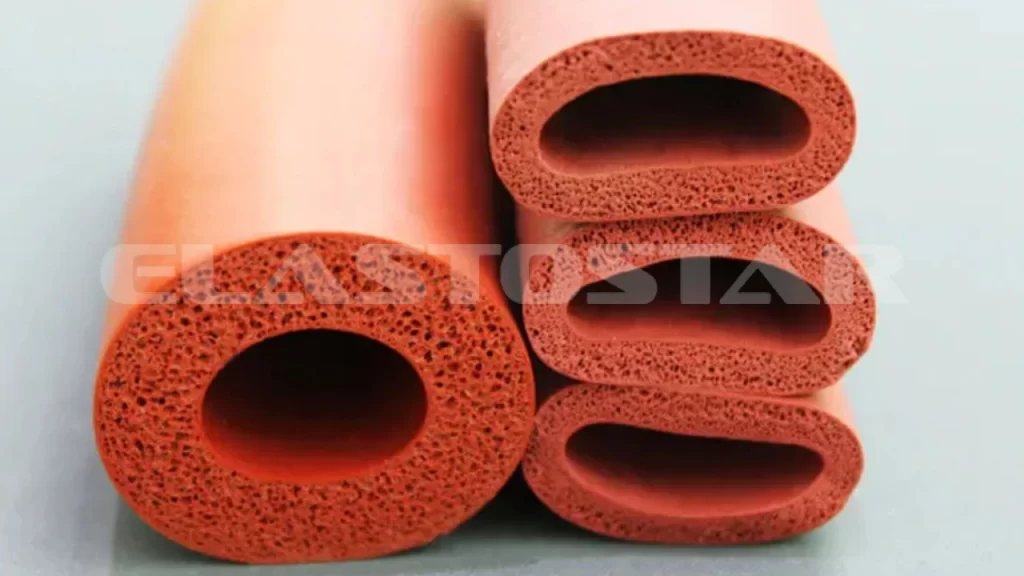
Extrusion can produce continuous profiles with a defined cross-section.
Our sponge extruded rubber seals and gaskets explain available profile-manufacturing options.
3. Custom Molded Components

Some equipment requires molded shapes rather than flat sheet gaskets.
Our rubber molded products provide another manufacturing option for suitable designs.
4. Specialized Sealing Profiles
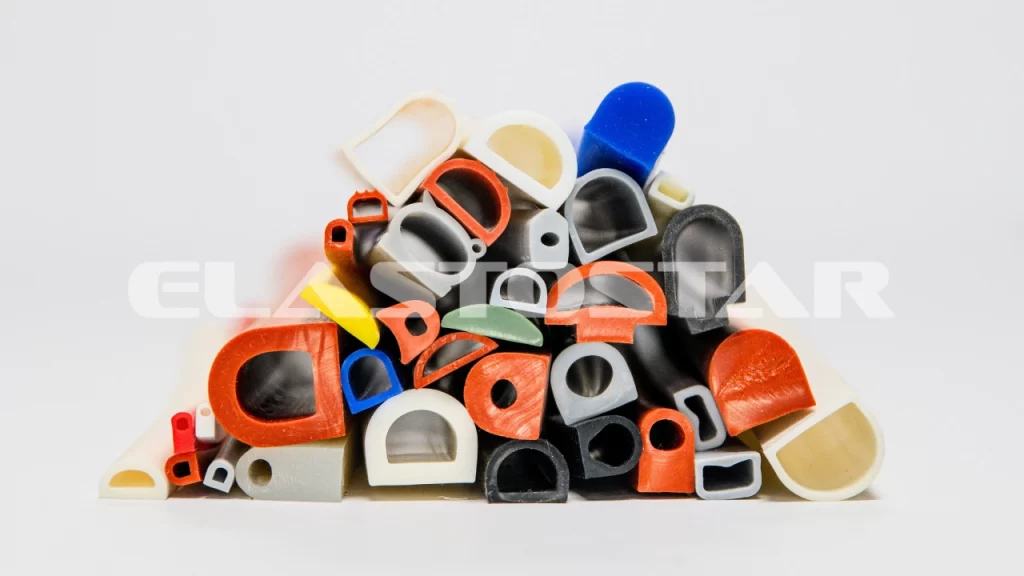
Some assemblies require a shaped compressible seal.
Our D-shaped silicone rubber seals and gaskets are one example of an alternative geometry.
Evaluate these manufacturing capabilities against the required material specification. A product shape or process does not automatically establish AMS compliance.
What Should an OEM Include in the RFQ?
For custom aerospace silicone sponge gaskets, include:
- AMS specification and revision.
- Material grade and thickness.
- Engineering drawing or CAD file.
- Dimensions and tolerances.
- Compression requirements.
- Operating temperature and environment.
- Prototype and production quantities.
- Inspection and material documentation.
Complete requirements help the manufacturer determine material availability, fabrication feasibility, and quotation details.
For dimensional discussions, our RMA precision tolerance guide offers a useful starting reference.
What Documentation Should Buyers Request for AMS Silicone Sponge?
Aerospace silicone sponge material certification is an important part of supplier qualification.
A product label or technical data sheet alone may not establish that a delivered lot meets every requirement of an AMS specification.
Recommended Documentation Checklist
1. Certificate of Conformance
Identifies the delivered material or component and the applicable specification.
2. Material Test Report
Provides measured properties relevant to the specified material requirements.
3. Lot or Batch Traceability
Connects finished components to the source material.
4. Specification Revision
Confirms the exact revision used for material acceptance.
5. Dimensional Inspection
Verifies the finished gasket against its approved drawing.
6. Additional Qualification or Test Reports
May be required for flammability, first article inspection, or other project-specific conditions.
Our quality control processes provide information about Elastostar’s approach to manufacturing inspection.
What Is a Common Procurement Mistake?
A common mistake is accepting a general material data sheet instead of the documentation required by the purchase order.
Buyers should establish documentation expectations before production begins.
Why Does AS9100D Matter When Sourcing Aerospace Silicone Sponge?
AS9100D is a quality management system standard used by organizations serving aviation, space, and defense markets.
It addresses organizational processes such as:
- Material traceability.
- Document and revision control.
- Supplier management.
- Production controls.
- Inspection and verification.
- Nonconformance and corrective action.
For aerospace procurement, it is important to distinguish between quality-system certification and material compliance.
| Requirement | What it covers |
|---|---|
| AMS 3195 / AMS 3196 | Silicone sponge material requirements |
| AS9100D | Organizational quality management system |
| Approved engineering drawing | Finished-component design and acceptance requirements |
An AS9100D silicone manufacturer is not automatically qualified to supply every AMS material grade.
The supplier must separately demonstrate compliance with the specified material and finished-part requirements.
Read More: How AS9100D Certification Helps Reduce Silicone Component Failure in Aerospace Applications
How to Choose an Aerospace Silicone Sponge Manufacturer in the USA

Choosing an aerospace silicone sponge manufacturer USA requires more than comparing material prices.
OEMs should evaluate whether the supplier can meet the complete technical and documentation requirements.
Aerospace Supplier Evaluation Checklist
- Material grades: Can the supplier provide AMS 3195, AMS 3196, or both?
- Specification compliance: Can it verify the required revision and material properties?
- Manufacturing capabilities: Can it produce the required gasket shape and thickness?
- Engineering support: Can it review drawings and application conditions?
- Inspection: Can it meet the specified dimensional requirements?
- Traceability: Can it connect finished parts to source material lots?
- Quality systems: Does the applicable certification scope meet purchasing requirements?
- Production capacity: Can it support prototypes and repeat orders?
- Lead times: Are material procurement, fabrication, inspection, and shipping included?
- Documentation: Are required certificates and reports included in the quotation?
Why Choose a USA-Based Manufacturer?
Working with a domestic manufacturer may simplify communication between US-based engineering, purchasing, and production teams.
It may also reduce some international shipping and customs complications.
For additional purchasing considerations, read our guide to shorter lead times with USA silicone gasket manufacturers.
Looking for AMS 3195 or AMS 3196 Silicone Sponge?
At Elastostar Rubber Corporation, we manufacture custom silicone and rubber sealing components in Ohio, USA.
We work with OEM customers who need:
- Custom silicone sponge gaskets and seals.
- Die-cut and extruded components.
- Material and application discussions.
- Prototype-to-production manufacturing.
- Engineering drawing review.
- Dimensional inspection and documentation planning.
Recommended Reads
- A Complete Guide – What Is Rubber Silicone O-Rings?
- Top 5 Commercial Applications of Silicone Rubber Products
- Plastic Gaskets vs Rubber Gaskets: Material Selection Decision Matrix
Request a Custom Silicone Sponge Quote
Whether you’re looking for an AMS 3195 silicone sponge manufacturer, AMS 3196 silicone sponge supplier, or AMS 3195 silicone sponge supplier USA, we can review your project requirements.
Send us the specification revision, engineering drawing, material thickness, operating conditions, quantity, and required documentation. Contact Elastostar Rubber Corporation to discuss your custom silicone sponge requirements.
FAQs
Q1. What is AMS 3195 silicone sponge?
AMS 3195 silicone sponge is a medium-grade closed-cell silicone rubber material covered by an SAE Aerospace Material Specification. It is used for suitable compressible gaskets, seals, and cushioning components.
Q2. What is AMS 3196 silicone sponge?
AMS 3196 silicone sponge is a firm-grade closed-cell silicone sponge material. It generally requires greater force to achieve the same compression as a comparable medium-grade material.
Q3. What is the difference between AMS 3195 and AMS 3196?
The main difference is firmness and compression-deflection behavior. AMS 3195 is medium grade, while AMS 3196 is firm grade.
Q4. Are AMS 3195 and AMS 3196 interchangeable?
No. They have different material requirements and compression characteristics. Substitution requires engineering review and approval.
Q5. What properties should aerospace engineers compare?
Engineers should compare compression deflection, compression set, density, gasket thickness, temperature capability, environmental resistance, and the required material specification.
Q6. Can AMS silicone sponge be manufactured in custom shapes?
Yes, we can fabricate suitable materials into custom gaskets, strips, pads, and profiles. Finished components must satisfy the approved drawing and applicable material requirements.
Q7. What documentation is needed for aerospace silicone sponge?
Buyers may require a Certificate of Conformance, material test reports, lot traceability, specification revision records, dimensional inspection reports, and other project-specific documentation.
Q8. Does AS9100D certification mean a silicone material meets AMS specifications?
No. AS9100D addresses the supplier’s quality management system. Compliance with AMS 3195 or AMS 3196 must be verified separately.
Q9. Where can I source AMS 3195 silicone sponge in the USA?
OEMs searching for where to buy AMS 3195 silicone sponge can contact Elastostar Rubber Corporation in Ohio to discuss material availability, custom fabrication, and documentation requirements.