Silicone components used in aerospace applications must perform reliably under demanding operating conditions. Material variation, dimensional inconsistencies, process deviations, or inadequate inspection can increase the risk of silicone component failure.
AS9100D certification provides a structured aerospace quality management framework for controlling these risks throughout manufacturing.
At Elastostar Rubber Corporation, our AS9100D-certified quality management system supports material traceability, supplier control, process consistency, inspection, risk management, and corrective action for aerospace silicone components.
As a U.S.-based custom manufacturer, we produce aerospace silicone seals, gaskets, sponge components, O-rings, and custom profiles.
This guide explains how AS9100D helps reduce component failures and improve the quality of aerospace silicone components.
Key Takeaways
- AS9100D helps reduce failures in aerospace silicone components through controlled manufacturing, inspection, traceability, risk management, and corrective action.
- Common causes of failure include incorrect materials, dimensional variations, improper compression, manufacturing inconsistencies, and uncontrolled changes.
- Material and batch traceability help identify, isolate, and investigate quality issues.
- Process control and dimensional inspection help maintain consistent silicone components from prototype through production.
- AS9100D controls the quality management system, while specifications such as AMS 3195, AMS 3196, and A-A-59588 define material requirements.
- Buyers should verify material specifications, dimensions, tolerances, traceability, inspection requirements, and documentation before ordering aerospace silicone components.
Table of Contents
Why Do Silicone Components Fail in Aerospace Applications?
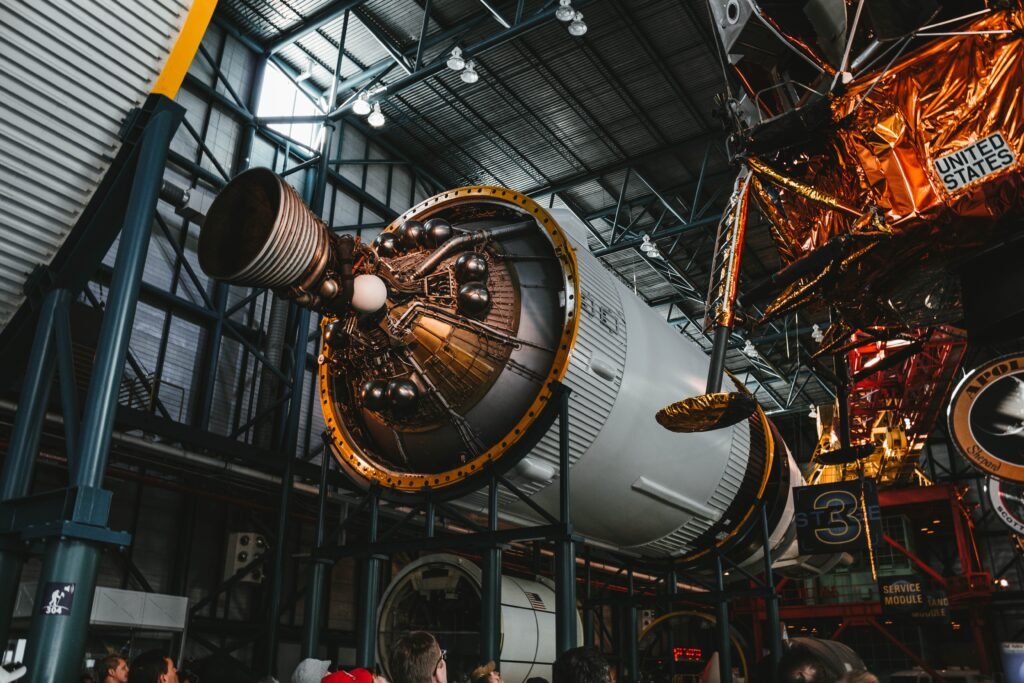
Silicone component failure in aerospace applications can result from a combination of material, design, manufacturing, and service conditions.
Even high-performance aerospace silicone rubber may not perform as intended when the material or finished component does not match the application requirements.
Common causes include:
- Incorrect silicone compound or hardness.
- Dimensional variation outside specified tolerances.
- Improper seal or gasket geometry.
- Excessive or insufficient compression.
- Compression set and loss of sealing force.
- Extreme temperature or environmental exposure.
- Manufacturing or curing inconsistencies.
- Uncontrolled material or process changes.
- Installation-related damage.
Selecting the correct silicone rubber material and maintaining controlled manufacturing requirements are therefore essential for reducing silicone rubber failure in aerospace seals, gaskets, O-rings, and custom components.
Read More: How Early Material Decisions Impact Product Reliability
What Does AS9100D Require From Aerospace Manufacturers?

AS9100D establishes an aerospace quality management system designed to control how requirements move from the customer and engineering documentation into purchasing, manufacturing, inspection, release, and corrective action.
For aerospace silicone components, this matters because component reliability depends on much more than the final inspection.
1. Risk and Product Safety Controls
Manufacturers must identify risks that could affect product conformity and product safety. For silicone components, those risks can include incorrect material selection, dimensional variation, processing inconsistencies, unapproved changes, or failure to meet drawing requirements.
2. Supplier and Material Control
Raw materials and externally provided processes must be appropriately controlled. This helps reduce the possibility of material substitutions, inconsistent incoming materials, or supplier-related changes reaching production.
For aerospace rubber applications, material selection also depends on the operating environment.
Our guide to rubber used in aircraft explains why different elastomers may be selected for different aircraft applications. The article is part of our existing aerospace content library.
3. Traceability and Configuration Management
AS9100D emphasizes documented controls that link the finished component to applicable production information. Configuration management is equally important when drawings, dimensions, materials, tolerances, or revisions change.
A controlled sequence may look like:
Customer Drawing → Approved Material → Controlled Process → Inspection → Traceability Records → Product Release
4. Nonconformance and Corrective Action
When a component does not meet specified requirements, it must be identified and controlled rather than simply allowed to continue through production.
Corrective-action processes then help determine the root cause and reduce the likelihood of the same issue recurring.
This is particularly important for aerospace rubber components, where seemingly small deviations in dimensions, hardness, density, or profile geometry can affect fit and sealing performance.
Read More: Why We Are Certified Aerospace Rubber Suppliers
How AS9100D Quality Controls Help Reduce Silicone Component Failure
Reducing silicone component failure requires quality control throughout manufacturing, not just an inspection after the component has been produced.
Under an AS9100D quality management system, requirements, materials, processes, inspections, and production records are managed through a controlled workflow.
From Requirement to Product Release
A typical control path for aerospace silicone components looks like:
Customer Requirements → Approved Material → Controlled Manufacturing → Inspection → Traceability → Product Release
Each stage helps address a different source of potential failure. Material controls help prevent incorrect compounds from entering production, while process controls reduce manufacturing variation.
Inspection then verifies that applicable dimensional and quality requirements have been met before release.
How Quality Controls Reduce Manufacturing Risk
| Quality Control | Why It Matters |
|---|---|
| Material verification | Confirms the specified material is used |
| Process control | Improves consistency between production runs |
| Dimensional checks | Identifies parts outside required tolerances |
| Traceability | Connects components with production and material records |
| Nonconformance control | Prevents unacceptable components from being released |
| Corrective action | Addresses root causes of recurring quality issues |
At Elastostar Rubber Corporation, our quality control processes support custom extrusion, molding, gasket manufacturing, and other aerospace rubber production requirements.
AS9100D cannot guarantee that a silicone component will never fail.
Instead, it provides systematic controls designed to reduce variation, identify nonconforming output, manage manufacturing risk, and improve production consistency.
How Material and Batch Traceability Help Identify Quality Issues
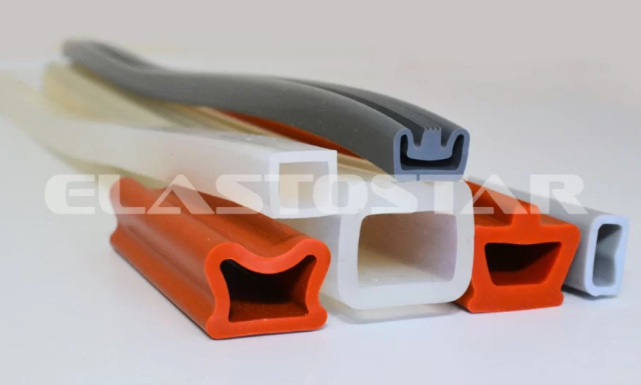
For aerospace silicone components, traceability helps connect a finished part back to the material and manufacturing records associated with its production.
This becomes especially important when a dimensional, material, or performance issue is discovered after manufacturing.
What Traceability Typically Connects
Raw Material Lot → Manufacturing Batch → Inspection Records → Finished Component → Customer Order
This record chain can help us identify which material lot was used, when the component was produced, which inspection results were recorded, and which parts may be affected by the same issue.
Why Batch Traceability Matters
When a nonconformance is detected, strong aerospace material traceability can make it easier to:
- Isolate the affected production batch,
- Review incoming material documentation,
- Compare inspection results,
- Investigate process conditions,
- Determine whether other components may be affected,
- Support containment or corrective-action activities.
At Elastostar Rubber Corporation, traceability works alongside controlled manufacturing and documented inspection to support consistent custom aerospace production.
This is especially valuable for components made from closed-cell silicone sponge rubber, where material density, dimensions, and compression characteristics may be important to the application.
Why Supplier and Raw-Material Controls Matter for Aerospace Silicone Components
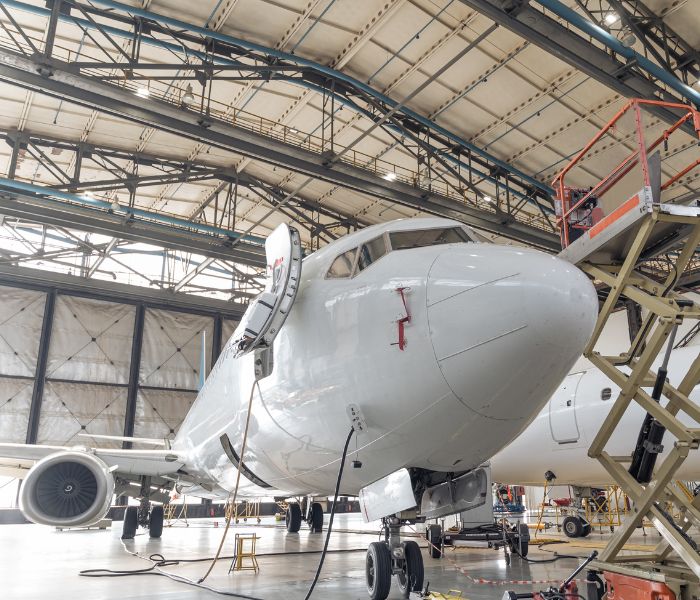
The performance of aerospace silicone components begins before extrusion, molding, or cutting starts.
If the incoming material does not match the specified compound, hardness, grade, or customer requirement, even a well-controlled manufacturing process cannot correct that mismatch.
1. Controlling Quality Before Production
Under AS9100D supplier quality requirements, manufacturers need controls for externally provided materials, products, and services.
For silicone manufacturing, this means establishing clear purchasing requirements and verifying that incoming materials correspond to the approved specifications.
A strong material-control process should address:
Approved Supplier → Purchase Specification → Material Identification → Incoming Verification → Lot Documentation → Production Release
This helps us reduce the risk of incorrect material, undocumented substitutions, supplier changes, or material lots entering production without the required controls.
2. Why Raw-Material Control Matters
For an AS9100D silicone rubber manufacturer, supplier control and production control work together. The selected material must meet the drawing and application requirements, and the manufacturing system must maintain them throughout production.
For example, legacy aerospace and defense drawings may still reference ZZ-R-765 silicone rubber classes. Because ZZ-R-765 has been superseded by A-A-59588, these requirements should be reviewed carefully rather than assuming one silicone compound can be substituted for another.
AS9100D controls the quality management system; it does not replace the material specification required by the aerospace drawing.
Read More: Why Elastostar Is a Certified Aerospace Rubber Supplier
How Process Control Improves Consistency in Silicone Manufacturing
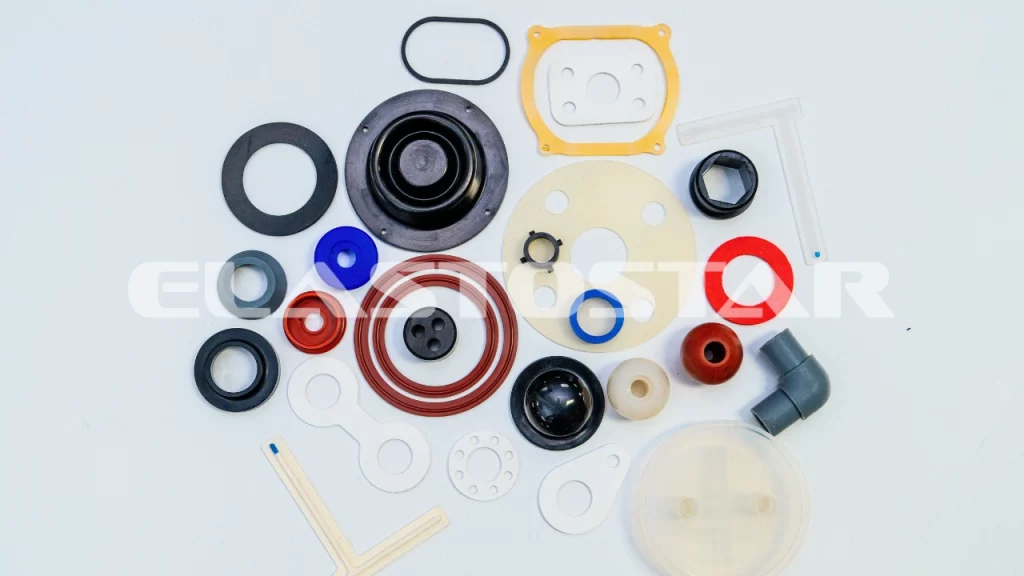
For aerospace silicone rubber, consistency depends on controlling the manufacturing process from the first approved sample through the final production run.
Variations in tooling, processing conditions, curing, material handling, or setup can change dimensions and physical characteristics even when the same silicone compound is used.
Controlling Extrusion and Molding Processes
At Elastostar, process control is especially important when producing complex custom rubber molded products and precision silicone components. Depending on the part and specification, manufacturing controls may address:
- Tooling and equipment setup.
- Processing and curing parameters.
- Material identification and handling.
- Critical dimensions and tolerances.
- In-process and final inspection.
- Documented production requirements.
These controls help us maintain repeatability between batches and reduce manufacturing variation that could contribute to silicone component failure.
From Prototype to Production
Aerospace components often require validation before moving into higher-volume manufacturing. We support customers through a controlled development path:
Design Review → Prototype → Inspection & Evaluation → Adjustment → Production
For extruded applications, our sponge extruded rubber seals and gaskets can be manufactured in custom profiles based on application and drawing requirements.
Why Dimensional Tolerances Matter for Aerospace Silicone Components
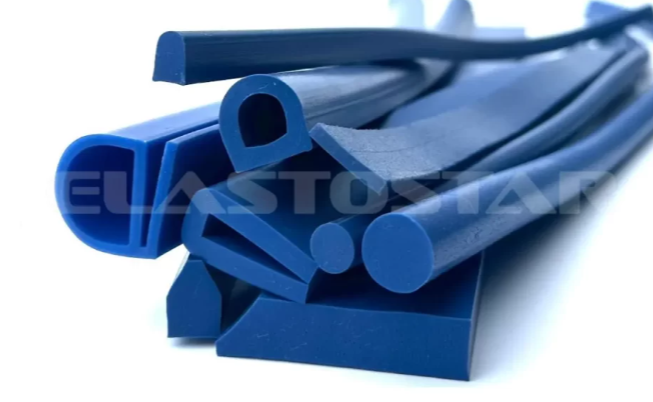
For aerospace silicone components, a material can meet the required specification and still create problems if the finished part does not meet the required dimensions. Seal height, wall thickness, gasket thickness, cross-sectional geometry, and other critical dimensions directly influence how a component fits and compresses in an assembly.
Small Dimensional Changes Can Affect Seal Performance
Consider a silicone seal designed for a specific installation gap. If the profile is oversized, it may experience excessive compression and installation stress. If it is undersized, it may not generate enough sealing force.
This relationship makes tolerance control especially important:
Part Dimension → Installed Compression → Contact Pressure → Sealing Performance
For custom extrusions and molded aerospace rubber components, engineers should define critical dimensions and acceptable tolerances directly on the drawing rather than relying on nominal dimensions alone.
Applying the Right Manufacturing Tolerance
Not every silicone feature can—or needs to—be manufactured to the same tolerance. Part geometry, material hardness, manufacturing method, and cross-sectional size can all influence achievable dimensional variation.
Our rubber manufacturing tolerance guidelines provide useful guidance for evaluating precision requirements during component design.
How Inspection and Testing Help Identify Nonconforming Components
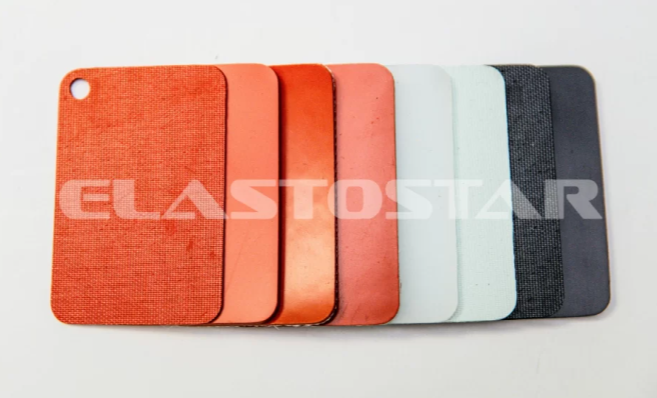
Even with controlled manufacturing processes, aerospace silicone components must be verified against defined requirements before release.
Inspection provides an important checkpoint for identifying dimensional, visual, material, or workmanship issues that could affect fit or performance.
What Should Be Verified?
Depending on the drawing, specification, and customer requirements, inspection may include:
| Inspection Area | What We May Verify |
|---|---|
| Dimensions | Cross-section, thickness, diameter, length and other critical dimensions |
| Visual condition | Surface defects, damage or workmanship issues |
| Material requirements | Specified compound, hardness or sponge density |
| Part configuration | Profile and features against the approved drawing |
| Documentation | Applicable lot, batch and inspection records |
| Acceptance criteria | Customer- or drawing-specific requirements |
For gasket applications, our die-cut rubber gaskets can be produced to customer drawings and application-specific dimensional requirements.
How AS9100D Addresses Risk Management and Product Safety
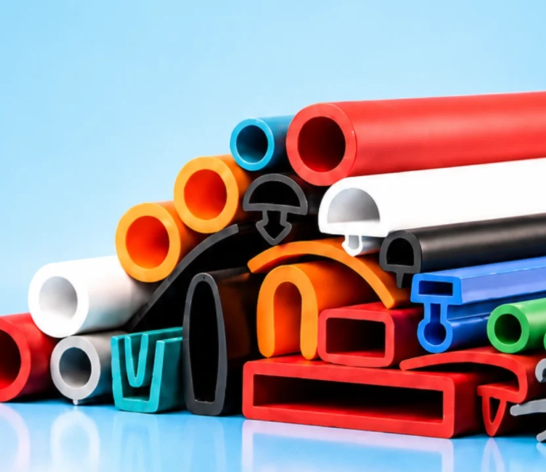
In aerospace manufacturing, quality control should address potential problems before they become component failures.
AS9100D places strong emphasis on risk-based thinking and product safety, helping manufacturers identify conditions that could affect conformity, reliability, or the intended function of aerospace silicone components.
Identifying Component Risk Before Production
For a silicone seal, gasket, or sponge profile, risk can originate from several areas:
- Incorrect material or hardness.
- Insufficient or excessive seal compression.
- Dimensional variation affecting assembly.
- Incorrect sponge density.
- Temperature or environmental exposure.
- Unapproved material, tooling, or process changes.
- Requirements are being misinterpreted between the drawing and production teams.
For example, the design of D-shaped silicone rubber gaskets must account for the required profile dimensions and compression conditions.
A seemingly small dimensional change can alter how the seal contacts and compresses against its mating surface.
Corrective Action and Nonconformance Control: Preventing Repeat Failures
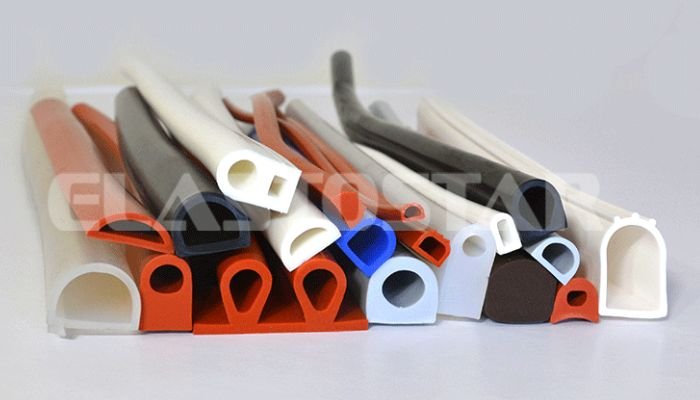
Finding a defective silicone component is only the first step. In AS9100D aerospace manufacturing, the more important question is: why did the nonconformance occur, and what controls can prevent it from happening again?
From Nonconformance to Root Cause
When an aerospace silicone seal or gasket does not meet requirements, a structured response may follow:
Identify → Segregate → Investigate → Determine Root Cause → Correct → Verify Effectiveness
The investigation may uncover issues such as incorrect material, tooling variation, processing conditions, dimensional requirements, drawing interpretation, or supplier-related variation.
Corrective action should address the underlying cause rather than simply replacing the rejected component.
When the Existing Part or Drawing Is the Problem
Not every failure begins on the production floor. Aerospace teams may need to replace an aging seal when the original tooling is unavailable, the drawing is incomplete, or a legacy component no longer performs as expected.
In these situations, our reverse-engineering and application-support capabilities can help evaluate the existing component, profile geometry, dimensions, material requirements, and intended sealing conditions.
For complex custom geometries, extruded silicone rubber bulb seals demonstrate the range of profiles we can manufacture to meet application-specific requirements.
Read More: Seal Damage Root Cause Analysis and Gasket Failure Guide
How Configuration and Change Control Protect Aerospace Component Quality
A silicone component that performs correctly can become unreliable when its material, dimensions, tooling, or manufacturing process changes without proper review.
AS9100D configuration and change control help ensure that approved requirements remain consistent throughout production.
Changes That Can Affect Component Performance
Changes may involve:
- Silicone compound or hardness.
- Sponge density.
- Drawing or revision level.
- Cross-sectional dimensions.
- Manufacturing tolerances.
- Tooling.
- Material supplier.
- Manufacturing or curing process.
For example, changing the dimensions of an extruded P-shaped silicone rubber seal can alter compression, fit, and sealing force even when the same silicone material is retained.
Aerospace Silicone Products: Sponge, Seals, Gaskets and O-Rings
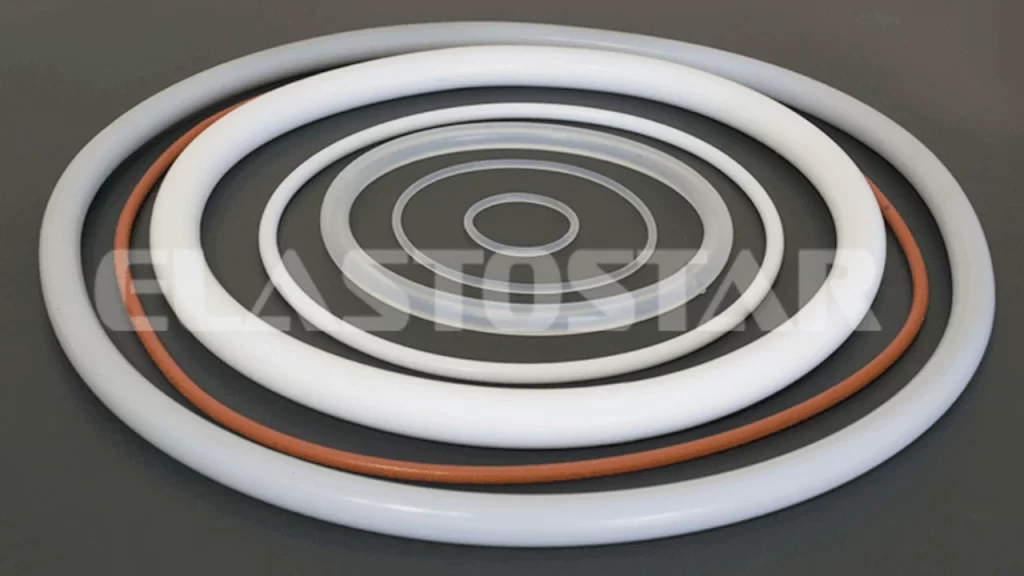
Different aerospace applications require different component constructions.
Material specification, geometry, compression, temperature, and environmental exposure should determine which aerospace silicone component is appropriate.
1. Silicone Sponge Components
Silicone sponge rubber is commonly considered where cushioning, conformability, and compression sealing are required. Density and compression characteristics must be matched to the application.
2. Aerospace Silicone Seals and Profiles
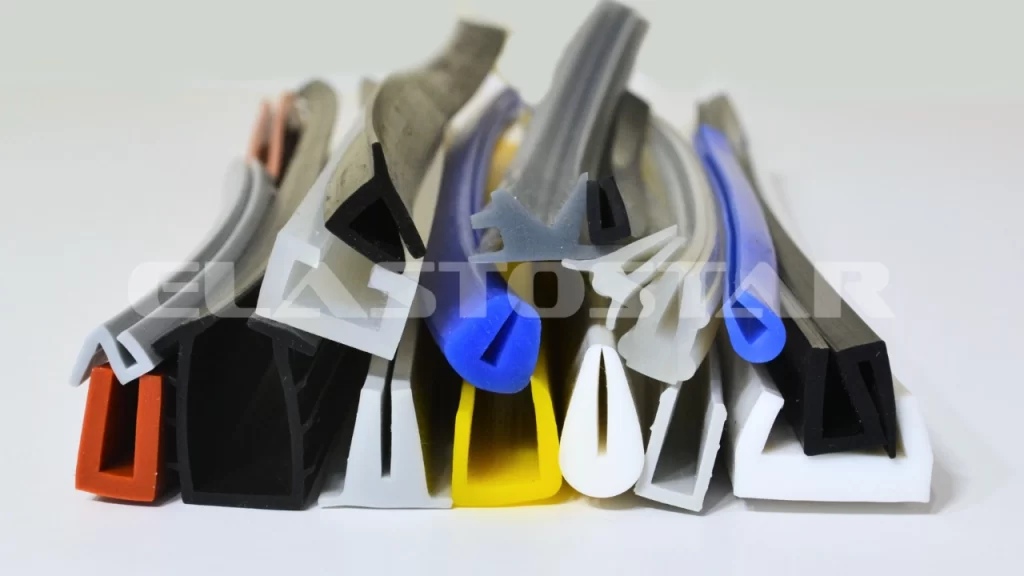
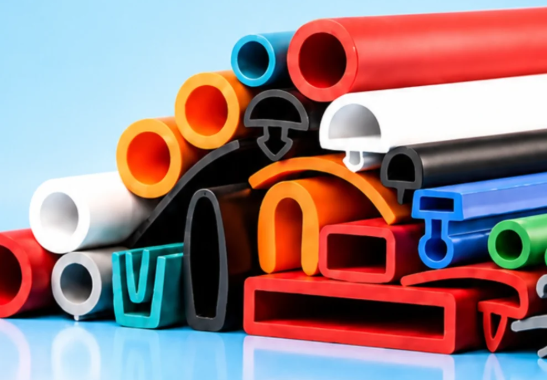
We manufacture custom extruded profiles for application-specific sealing requirements, including bulb, D, P, T, rectangular, and custom geometries.
Profile selection should account for installation space, mating surfaces, and required compression.
3. Aerospace Silicone Gaskets
Aerospace silicone gaskets can be manufactured in custom shapes and dimensions to match equipment drawings and sealing surfaces. Depending on the design, production may involve extrusion, molding, or precision cutting.
4. Aerospace Silicone O-Rings
Our spliced vulcanized silicone rubber O-rings provide an option for custom sizes and large-diameter sealing applications where standard molded sizes may not meet the requirements.
When Fluorosilicone Is Required
Standard silicone is not suitable for every aerospace environment. Where resistance to fuels, oils, or certain hydrocarbons is required, fluorosilicone rubber O-rings may be a more appropriate option, subject to the application specification.
Selecting the right aerospace silicone component requires evaluating material properties, profile geometry, dimensional tolerances, compression requirements, and the operating environment before production.
Where AMS 3195, AMS 3196, and Other Silicone Specifications Fit
AS9100D governs the aerospace quality management system, but it does not specify the physical properties of silicone itself.
Aerospace drawings may specify separate material standards that establish requirements for density, hardness, physical properties, or material classification.
1. AMS 3195 Silicone Sponge
AMS 3195 medium-density silicone sponge applies to medium-density silicone sponge material used in forms such as sheets, strips, extrusions, and molded shapes.
2. AMS 3196 Silicone Sponge
Where a firmer sponge is required, AMS 3196 firm-density silicone sponge provides the requirements for a firm-density closed-cell silicone sponge.
3.A-A-59588 and Legacy ZZ-R-765 Requirements
Aerospace and defense drawings may also reference A-A-59588 or the older ZZ-R-765 designation.
The applicable class, grade, and material requirements should always be confirmed against the current drawing and purchase specification rather than assumed from the general material type.
The key distinction is:
AS9100D → controls the quality management system
AMS 3195 / AMS 3196 / A-A-59588 → define applicable material requirements
Both sides of this equation matter when controlling the quality of aerospace silicone rubber components.
What Aerospace Buyers Should Verify Before Ordering Silicone Components
Before ordering aerospace silicone components, buyers should ensure that the RFQ, drawing, and purchase requirements clearly define the conditions that can affect manufacturing and the final part’s performance.
Aerospace Silicone Component Checklist
| Verify | Information to Define |
|---|---|
| Part configuration | Drawing number and current revision |
| Material | Silicone, fluorosilicone, or other specified elastomer |
| Material specification | Applicable AMS, A-A, or customer specification |
| Hardness / density | Required durometer or sponge density |
| Dimensions | Complete profile and component dimensions |
| Tolerances | Critical and general dimensional tolerances |
| Operating temperature | Minimum and maximum service conditions |
| Environment | Air, ozone, moisture, fuel, oil, or other exposure |
| Traceability | Required lot or batch documentation |
| Inspection | Defined acceptance and verification requirements |
| Documentation | Required certificates or inspection reports |
| Quantity | Prototype, short run, or production volume |
Providing these requirements early helps reduce specification questions, manufacturing delays, and the risk of receiving a component that does not match the intended application.
For engineers and purchasing teams preparing an RFQ, our product brochures provide additional information on available silicone rubber products and custom manufacturing capabilities.
Why Choose an AS9100D-Certified Silicone Manufacturer?

Choosing an AS9100D-certified silicone manufacturer helps aerospace buyers source components through controlled processes for quality, traceability, risk management, and production consistency.
Our Aerospace Silicone Manufacturing Capabilities
We support custom aerospace silicone components from initial design through production, with:
- AS9100D-certified quality management.
- Custom silicone extrusion and molding.
- Reverse engineering and design support.
- Prototype-to-production capabilities.
- Large U.S. manufacturing facility.
- Proudly Made in the USA.
- Short lead times.
Whether the requirement is for aerospace silicone seals, gaskets, O-rings, sponge profiles, or custom-molded parts, we can support application-specific dimensions, materials, and production requirements.
Recommended Reads
- How AS9100D Certification Ensures Safety in Aerospace Rubber Manufacturing
- How Certified Silicone Rubber Products Improve Aerospace Reliability
- Why Elastostar Is a Trusted AS9100D-Certified Aerospace Rubber Supplier
Conclusion
AS9100D helps reduce the risk of failures in aerospace silicone components through controlled manufacturing, material traceability, inspection, risk management, and corrective action.
These quality controls work alongside the correct material specifications, dimensions, and application requirements to support consistent aerospace production.
At Elastostar Rubber Corporation, our AS9100D-certified quality management system supports the production of custom aerospace silicone seals, gaskets, O-rings, sponge components, and profiles from prototype through production.
Contact us to discuss your aerospace silicone component requirements.
FAQs
Q1. How does AS9100D help reduce component failures?
AS9100D helps reduce silicone component failure by establishing controls for risk management, supplier quality, traceability, manufacturing processes, inspection, change management, nonconformance, and corrective action. These controls help identify variation and potential quality problems before components are released.
Q2. Does AS9100D apply to silicone rubber manufacturers?
Yes, an AS9100D silicone rubber manufacturer can use the standard to manage quality processes for components supplied to aviation, space, and defense programs. AS9100D governs the quality management system; it does not define a specific silicone material grade.
Q3. What are the most common causes of aerospace silicone component failure?
Common causes include incorrect material selection, dimensional variation, improper hardness or sponge density, compression set, incorrect seal geometry, manufacturing inconsistencies, installation problems, and exposure to temperatures or environments beyond the material’s specified capabilities.
Q4. Does AS9100D require material traceability?
AS9100D includes identification and traceability controls where applicable. Aerospace material traceability can connect raw-material lots, manufacturing batches, inspection records, and finished components, making it easier to investigate and contain quality issues.
Q5. What is the difference between AS9100D and aerospace silicone material specifications?
AS9100D governs the aerospace quality management system, while specifications such as AMS 3195, AMS 3196, and A-A-59588 define applicable requirements for silicone materials. A component may therefore need to meet a specific material specification while being manufactured within an AS9100D-controlled quality system.
Q6. Does AS9100D guarantee that a silicone component will not fail?
No. AS9100D cannot guarantee zero failures. It establishes systematic controls designed to reduce variation, manage risk, detect nonconforming components, maintain traceability, control changes, and prevent recurring quality problems.
Q7. Where can I source AS9100D-certified silicone components in the USA?
We manufacture custom aerospace silicone and rubber components in the USA, including seals, gaskets, O-rings, sponge profiles, extrusions, and molded components. We also support reverse engineering, design assistance, prototypes, and production runs for application-specific aerospace requirements.
Q8. How can buyers verify whether a silicone manufacturer is AS9100D-certified?
Buyers should verify the supplier’s current AS9100D certification and scope, and evaluate manufacturing capabilities, material controls, traceability, inspection procedures, documentation, and experience in producing aerospace silicone components.