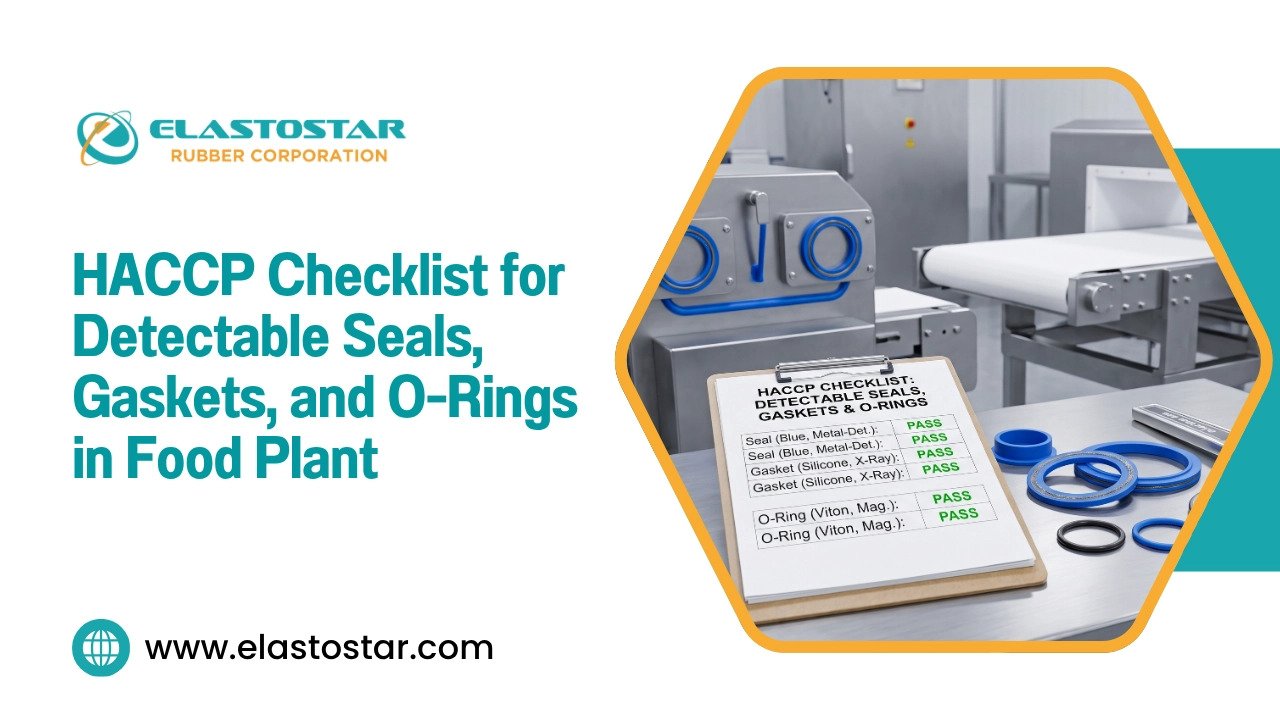
In food processing, small rubber parts can create serious contamination risks if they wear, crack, or break during production. Seals, gaskets, and rubber O-rings are found in pumps, valves, mixers, fillers, and pipe connections, making them important parts of any HACCP plan.
Using HACCP detectable rubber helps food plants improve visibility, traceability, and inspection control. Elastostar Rubber Corporation’s HACCP-compliant silicone rubber is designed for demanding food-processing environments where hygiene and compliance are essential.
This HACCP checklist for detectable seals explains what food safety teams should verify before installation, during production, and after maintenance to reduce contamination risks and support audit readiness.
Key Takeaways
- HACCP detectable rubber helps reduce contamination risks and strengthen food safety programs.
- Regular inspection of detectable seals, gaskets, and O-rings helps prevent equipment failures and product contamination.
- Follow a structured checklist for installation, daily inspections, maintenance, and documentation to improve traceability.
- Select FDA-compliant detectable rubber that matches your equipment, operating conditions, and cleaning procedures.
- Validate components using your facility’s metal detection or X-ray inspection systems before production.
- Partner with an experienced manufacturer of detectable rubber for custom solutions, engineering support, and long-term reliability.
Table of Contents
Why Rubber Components Matter in HACCP Plans
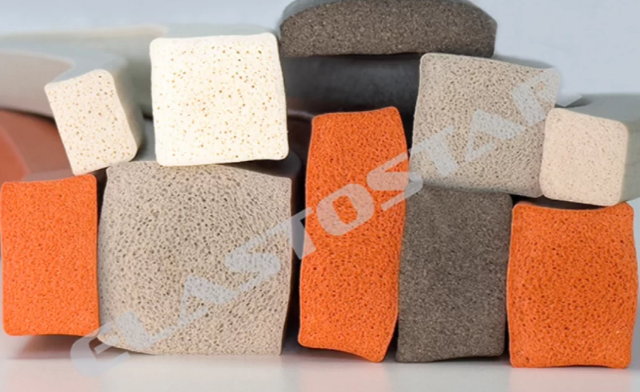
Every component that comes into contact with food or food-processing equipment has the potential to affect product safety.
While pumps, valves, and mixers receive regular attention, smaller components such as seals, gaskets, and vulcanized O-rings are equally important because their failure can introduce foreign material into the production line.
This makes HACCP-detectable rubber an essential part of an effective contamination-prevention strategy.
Why These Components Should Never Be Overlooked
- They maintain leak-free connections throughout the production process.
- They withstand repeated cleaning, sanitation, and temperature changes.
- They help reduce the risk of product contamination caused by worn or damaged components.
- They support consistent equipment performance during continuous operation.
Because every processing environment is different, selecting the right material is just as important as regular inspection.
Elastostar Rubber Corporation develops custom silicone solutions for a wide range of food-processing and industrial applications, helping manufacturers select components that meet both operational and food-safety requirements.
When properly specified, installed, and maintained, contamination control rubber components become an important part of a successful HACCP program rather than simply another replacement part.
Also Read: 5 Major Seal Challenges in Food Processing
Common Equipment That Uses Detectable Seals, Gaskets, and O-Rings
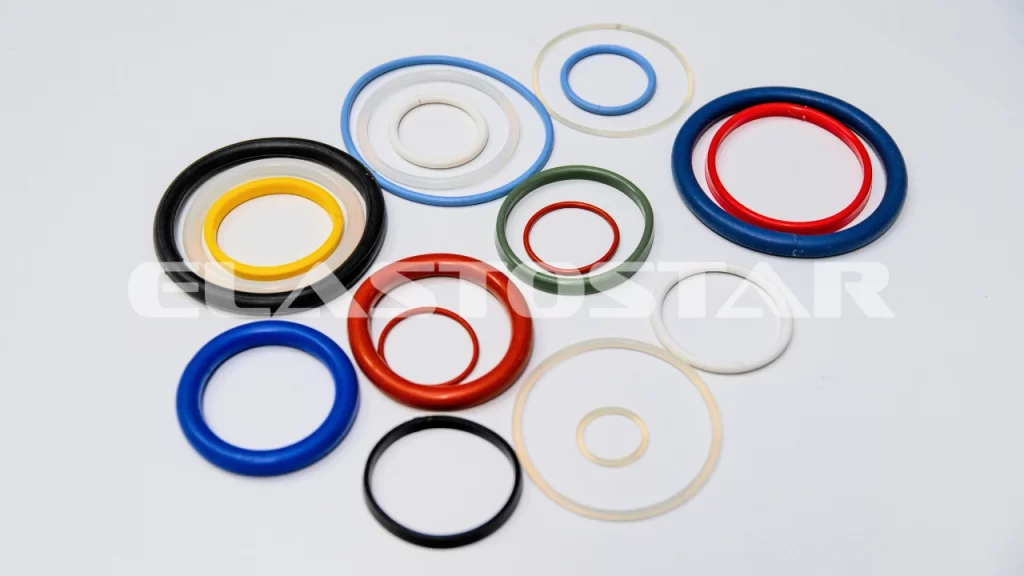
Detectable rubber components are installed throughout food processing facilities to help maintain equipment performance while reducing contamination risks.
Selecting the correct material for each application is essential, especially for equipment that comes into direct contact with food.
Components manufactured from FDA 21 CFR 177.2600-compliant silicone rubber are commonly specified for food-contact applications that require regulatory compliance.
1.Pumps
Pumps rely on detectable O-rings in food plant applications to create reliable seals, prevent product leakage, and withstand frequent cleaning and sanitizing cycles.
2.Valves
Valves contain sealing components that experience repeated opening and closing. Durable food safety rubber seals help maintain consistent performance while reducing the risk of component failure.
3. Mixers and Blenders
Mixing equipment is exposed to continuous movement, pressure, and varying temperatures. Detectable gaskets in food processing applications help maintain secure seals during demanding production cycles.
4. Fillers and Packaging Equipment
High-speed filling lines depend on accurately fitted seals and gaskets to minimize product loss while supporting hygienic operation.
5. Pipe Connections and Heat Exchangers
Pipe joints, sanitary fittings, and heat exchangers use sealing components that must resist cleaning chemicals, temperature fluctuations, and continuous production.
Choosing application-specific materials helps improve equipment reliability and supports long-term food safety objectives.
High-Risk HACCP Points Where Rubber Components Can Fail
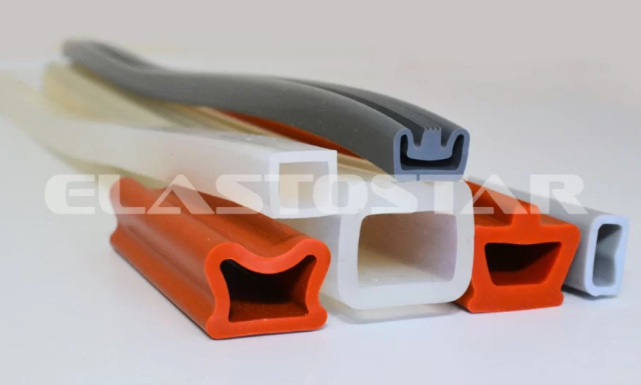
Not every rubber component presents the same level of risk.
Components exposed to continuous movement, pressure, cleaning chemicals, or high temperatures are more likely to wear over time.
Identifying these high-risk points allows food manufacturers to prevent failures before they become contamination events.
| Equipment Area | Potential Failure | Recommended HACCP Control |
| Pumps and valves | Seal wear, cracking, or deformation | Inspect sealing components during scheduled maintenance. |
| Mixers and blenders | Gasket fatigue from constant movement | Replace worn components before visible damage occurs. |
| Filling equipment | O-ring deterioration | Verify component condition before each production run. |
| CIP systems | Chemical degradation | Use materials compatible with repeated cleaning and sanitizing cycles. |
| High-temperature equipment | Hardening or loss of elasticity | Select compounds designed for the operating environment. |
Selecting replacement components is just as important as inspecting them.
Manufacturers should verify that replacement parts meet the same material and performance requirements as the originals.
Supported by a rigorous quality-control process, we also provide reverse-engineering support for legacy or discontinued components, helping food manufacturers replace critical sealing parts without compromising performance or food safety.
When combined with preventive maintenance, these practices strengthen contamination control rubber strategies and reduce the risk of unexpected production downtime.
Installation Checklist Before Approving Detectable Rubber Components
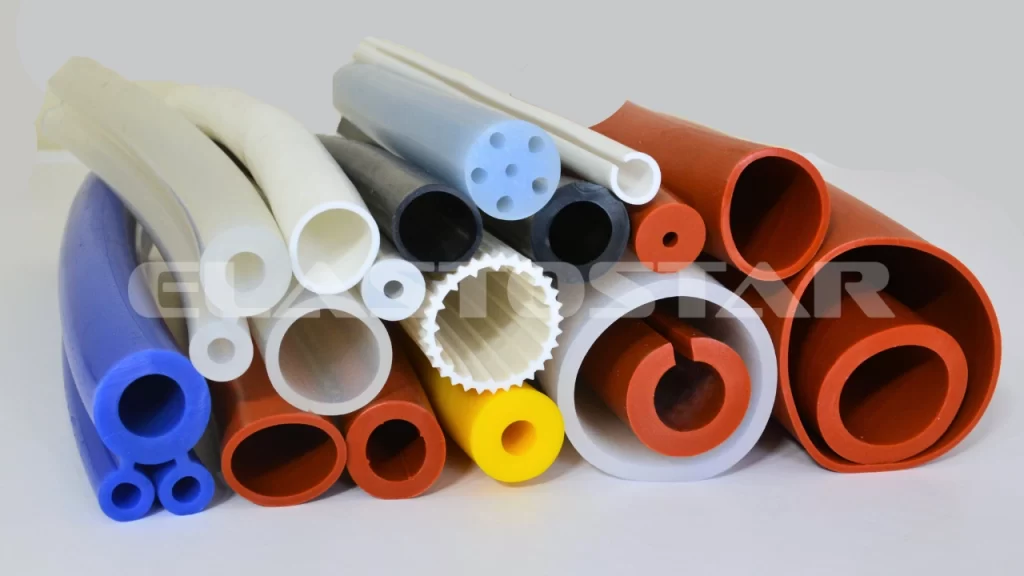
Installing a detectable seal, rubber gasket, or O-ring without proper verification can increase the risk of contamination and lead to premature component failure.
Before introducing a component into production, food manufacturers should confirm that it is suitable for the equipment, operating conditions, and food safety requirements.
Pre-Installation Checklist
☐ Verify that FDA-compliant detectable gaskets meet the required food-contact and operational specifications.
☐ Confirm the component dimensions match the equipment design and sealing surfaces.
☐ Check compatibility with operating temperatures, pressure, cleaning chemicals, and sanitizing procedures.
☐ Validate the component using the facility’s metal detection or X-ray inspection system before production begins.
☐ Record the installation date, component location, and inspection schedule to support traceability.
☐ If an original part is unavailable or obsolete, use reverse engineering support to reproduce a component with equivalent fit and performance.
Choosing the right component starts with the right engineering approach.
Backed by decades of engineering expertise, we develop custom detectable sealing solutions, offering prototype-to-production capabilities and short lead times for demanding food processing applications.
Also Read: How to Validate Metal Detectable Silicone Rubber Safely
Production Checklist for Daily HACCP Inspections
Daily checks help food plants catch worn or missing components before they become contamination risks.
During production, operators should review both the condition of the rubber parts and the inspection system’s performance.
| Daily Check | What to Verify |
| Seal condition | Look for cracks, cuts, swelling, or loose edges. |
| Gasket placement | Confirm all gaskets are seated correctly after cleaning or assembly. |
| O-ring wear | Inspect detectable O-rings in food plant applications for flattening, stretching, or breakage. |
| Detector performance | Run approved test pieces through the line at scheduled intervals. |
| Product leakage | Check for leaks around pumps, valves, fillers, and pipe joints. |
| Cleaning impact | Watch for material changes after sanitizing cycles. |
For hygiene-critical equipment, 3-A sanitary silicone rubber can support sanitary design requirements in food and dairy processing environments.
A consistent inspection routine helps teams identify food safety rubber seals that need replacement before they affect production.
Also Read: Metal-Detectable vs X-Ray-Detectable Rubber – What Should Food Processors Choose?
Maintenance Checklist for Detectable Seals and Gaskets
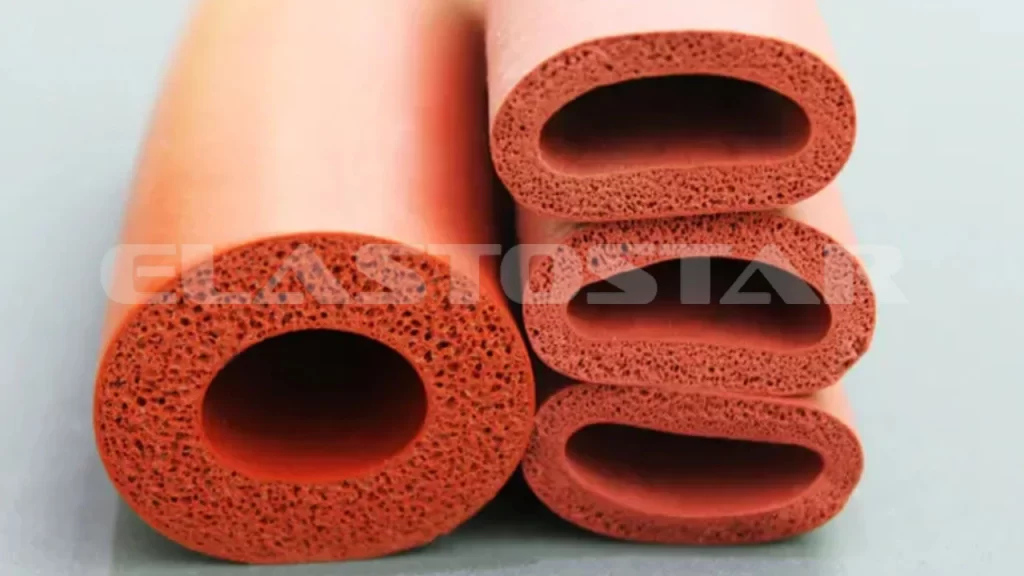
Routine maintenance extends component life while reducing the risk of unexpected failures.
Rather than waiting for visible damage, food plants should inspect sealing components at scheduled intervals based on operating conditions and production demands.
Scheduled Maintenance Workflow
Monthly
- Inspect seals and gaskets for cuts, abrasion, swelling, or hardening.
- Verify that sealing surfaces remain clean and undamaged.
Quarterly
- Check components exposed to high temperatures, steam, or aggressive cleaning chemicals for signs of deterioration.
- Review maintenance records to identify recurring wear patterns.
During Planned Shutdowns
- Replace worn food safety rubber seals before restarting production.
- Confirm that replacement components match the original specifications and equipment requirements.
- If replacement parts are no longer available, reverse engineering support can help reproduce equivalent components without requiring equipment modifications.
After Maintenance
- Validate the repaired equipment using approved inspection procedures before returning it to service.
- Update maintenance records, replacement dates, and component traceability for future audits.
Maintaining consistent component dimensions throughout replacement cycles is equally important.
We manufacture silicone components to RMA precision tolerances, helping food manufacturers achieve reliable fit, sealing performance, and repeatability across maintenance intervals.
Also Read: Top 7 Reasons O-Rings Fail and How to Prevent Them
Documentation Every Food Plant Should Maintain
A well-maintained HACCP program depends on accurate documentation as much as properly selected materials. Keeping complete records improves traceability, supports internal quality reviews, and simplifies third-party audits.
1. Material Records
Maintain specifications for every seal, gasket, and high-temperature O-ring used in production, including material grade, installation location, supplier information, and replacement intervals.
2. Inspection Logs
Record routine inspections, detector verification results, visual observations, and any signs of wear or damage identified during production.
3. Maintenance History
Track every replacement, repair, and preventive maintenance activity. These records help identify recurring failure patterns and improve maintenance planning over time.
4. Validation Reports
Document the results of metal detector and X-ray validation tests whenever new components are introduced or equipment settings are changed.
5. Compliance Documentation
Supporting records should be readily available during audits.
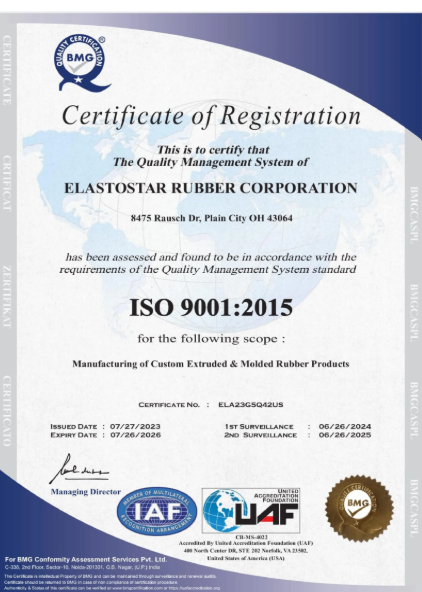
Elastostar Rubber Corporation’s manufacturing certifications demonstrate the quality systems behind its silicone manufacturing operations, helping customers maintain confidence in the components they specify.
Maintaining complete documentation alongside routine inspections strengthens HACCP detectable rubber programs by improving traceability, supporting corrective actions, and simplifying compliance verification.
What to Do When a Detectable Gasket or Seal Fails
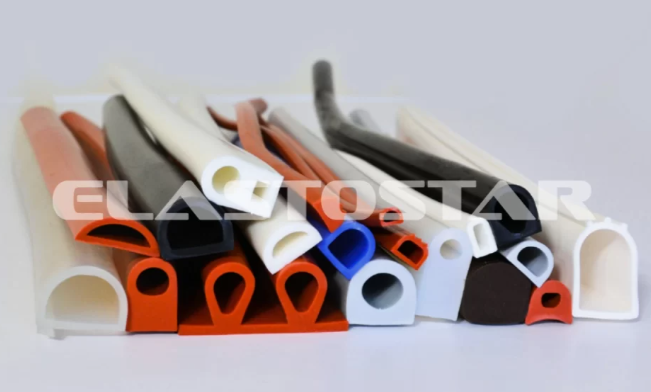
A failed gasket or seal should be treated as a potential contamination event. A structured response helps reduce product risk, restore equipment safely, and maintain HACCP compliance.
1. Stop Production and Isolate the Affected Product
Immediately stop the affected production line and isolate any products that may have been exposed after the component failure.
Preventing additional processing allows the issue to be assessed before more products are affected.
2. Replace the Damaged Component
Inspect the failed component to determine the cause of the damage before installing a replacement. Reviewing technical product brochures can help maintenance teams confirm material properties and suitability for application prior to replacement.
3. Verify Inspection Equipment
Before restarting production, confirm that the metal detector or X-ray inspection system is operating correctly. Validation testing should be completed using approved procedures and documented in accordance with the facility’s HACCP program.
4. Document the Corrective Action
Record the root cause of the failure, replacement details, inspection results, and any corrective or preventive actions taken. Maintaining accurate records improves traceability and supports future audits.
5. Prevent Future Failures
If the original component is obsolete or no longer available, we provide reverse engineering support, custom manufacturing, and prototype-to-production capabilities to help food manufacturers replace critical sealing components while maintaining equipment performance and minimizing downtime.
How Detectable Rubber Supports HACCP Audit Readiness
Preparing for a HACCP audit involves more than reviewing documentation.
Auditors also evaluate how effectively a facility manages contamination risks, verifies preventive controls, and maintains food-contact equipment throughout its lifecycle.
1. Demonstrates Preventive Risk Management
Routine inspection and timely replacement of seals, gaskets, and O-rings show that contamination risks are managed proactively rather than reactively.
This strengthens contamination control rubber practices and supports continuous food safety improvement.
2. Improves Traceability
Maintaining installation records, maintenance logs, detector validation reports, and replacement histories allows every critical component to be traced throughout its service life. These records are often reviewed during internal and third-party audits.
3. Supports Material Compliance
Using properly specified food-grade silicone solutions helps facilities demonstrate that critical sealing components have been selected for demanding food processing environments where detectability and material performance are important considerations.
4. Builds Audit Confidence
A combination of preventive maintenance, documented inspections, validated replacement procedures, and application-specific material selection provides auditors with clear evidence that contamination risks are being actively controlled rather than simply corrected after failures occur.
Also Read: Top 10 Properties of Rubber That Make it Ideal for Seals & Gaskets
Why Food Manufacturers Trust Elastostar Rubber Corporation

Every food processing application presents unique challenges, from regulatory compliance and contamination control to equipment compatibility and production efficiency.
Elastostar Rubber Corporation works closely with manufacturers to develop application-specific detectable rubber components that perform reliably in demanding processing environments.
1. Custom Solutions for Complex Applications
Whether you need custom detectable seals, precision gaskets, O-rings, or custom silicone profiles, every component is engineered to match your equipment, operating conditions, and food safety requirements.
2. Engineering Support at Every Stage
From replacing obsolete components to developing entirely new sealing solutions, we provide reverse-engineering support, prototype-to-production capabilities, and engineering expertise to simplify product development and reduce downtime.
3. Proudly Made in the USA
Operating from a large manufacturing facility, Elastostar Rubber Corporation delivers metal-detectable rubber manufacturer USA solutions with consistent quality, manufacturing flexibility, and short lead times for both standard and custom projects.
4. Built Around Your Food Processing Requirements
As a trusted food-grade rubber gasket manufacturer, we develop silicone solutions tailored to each application.
If you’re looking for custom detectable rubber components, contact Elastostar Rubber Corporation to discuss your project with our engineering team.
Recommended Reads

Conclusion
HACCP-detectable rubber helps food plants reduce contamination risks, improve traceability, and strengthen audit readiness. Seals, gaskets, and O-rings may be small components, but their performance directly affects hygiene, equipment reliability, and food safety compliance.
By following a clear checklist for installation, daily inspection, maintenance, documentation, and corrective action, manufacturers can identify risks before they lead to product contamination or downtime.
Elastostar Rubber Corporation provides custom detectable rubber components for demanding food processing applications, backed by FDA-compliant silicone materials, reverse engineering support, prototype-to-production capability, and short lead times.
FAQs
Q1. What is HACCP detectable rubber?
HACCP-detectable rubber is formulated to help food manufacturers identify foreign-material contamination using compatible metal-detection or X-ray inspection systems. It supports HACCP programs by improving contamination control, but it should always be validated under actual production conditions.
Q2. Why are detectable seals and gaskets important in food processing?
Detectable gaskets in food processing applications help reduce the risk of foreign-material contamination if a component is damaged or worn. They also support preventive maintenance and traceability within HACCP programs.
Q3. How often should detectable O-rings be inspected?
The inspection frequency depends on operating conditions, cleaning cycles, temperature, pressure, and equipment usage. Components installed in high-wear areas should be inspected more frequently as part of the facility’s preventive maintenance schedule.
Q4. Are FDA-compliant detectable gaskets required for every food plant?
Material requirements vary depending on the application and regulatory obligations. Many food-contact applications specify FDA-compliant detectable gaskets. Depending on the processing environment, manufacturers may also require NSF 51-compliant silicone for food equipment applications.
Q5. Can detectable rubber withstand CIP and sanitation processes?
Yes, provided the material has been selected for the operating environment. Temperature, cleaning chemicals, pressure, and production conditions should all be considered when choosing detectable rubber components.
Q6. How do detectable seals support HACCP audits?
Detectable seals improve traceability, support preventive maintenance, and help demonstrate effective contamination control procedures. Selecting materials that meet recognized standards, such as A-A-59588 silicone rubber where appropriate, can also support material consistency and documentation.
Q7. When should detectable seals or O-rings be replaced?
Replacement should occur whenever components show signs of cracking, swelling, deformation, excessive wear, or loss of sealing performance. Waiting until a component fails can increase the risk of contamination and unplanned downtime.
Q8. What records should food plants keep for detectable rubber components?
Food manufacturers should maintain installation records, inspection logs, maintenance history, validation reports, and replacement documentation. Keeping supporting manufacturing certifications readily available can also simplify customer and third-party audit reviews.
Q9. Can Elastostar Rubber Corporation manufacture custom detectable sealing components?
Yes, we design and manufacture custom detectable seals, gaskets, O-rings, and other silicone components for demanding food processing applications. Backed by a large manufacturing facility, prototype-to-production capabilities, and short lead times, the team can also assist with replacement and legacy components through reverse engineering support.
Q10. How do I choose the right metal detectable gasket supplier?
Choose a supplier with experience in custom manufacturing, engineering support, reverse engineering capabilities, quality-controlled production, and application-specific material development.