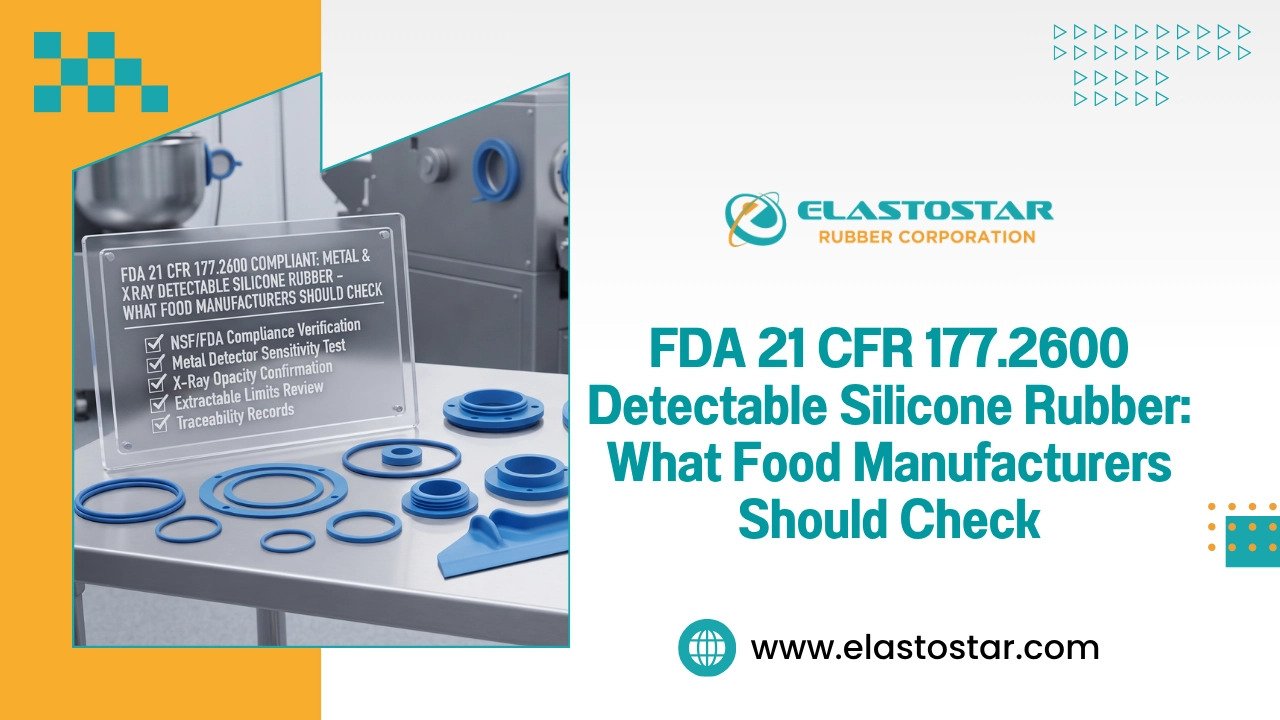
Food manufacturers often assume that if a rubber component is FDA compliant, it is also suitable for contamination detection. In reality, FDA compliance and detectability serve different purposes, and confusing the two can lead to incorrect material selection.
This is where FDA 21 CFR 177.2600 metal- and X-ray-detectable rubber becomes important. Seals, gaskets, O-rings, rubber sheets, and custom profiles used in food equipment must be selected carefully because FDA compliance and detectability are not the same thing.
A material may be suitable for food contact, but that does not automatically mean it can be detected by metal or X-ray inspection systems.
In this blog, we will explain what FDA 21 CFR 177.2600 means, how it applies to detectable rubber, and what manufacturers should check before approving a supplier.
Key Takeaways
- FDA 21 CFR 177.2600 compliance and detectability are different material requirements.
- A food-contact rubber material is not inherently metal- or X-ray-detectable.
- Always evaluate compliance, detectability, and application performance before selecting a component.
- Request FDA declarations, material data sheets, traceability records, and quality certifications from suppliers.
- Validate the detectability of rubber under actual production conditions using your products, equipment, and inspection systems.
- Select rubber components based on operating temperature, cleaning methods, pressure, and equipment requirements.
- Partner with an experienced manufacturer that provides custom manufacturing, engineering support, and reverse-engineering solutions for food-processing applications.
Table of Contents
Understanding FDA 21 CFR 177.2600 for Food-Contact Rubber
Food processing equipment relies on rubber components that come into direct or indirect contact with food throughout the production process.
To help protect product safety, these materials must meet applicable food-contact requirements. FDA 21 CFR 177.2600 is one of the key regulations referenced for rubber articles intended for repeated food contact.
What Does the Regulation Cover?
The regulation applies to rubber components used in food processing, including seals, gaskets, silicone rubber O-rings, tubing, and other food-contact rubber components that may come into contact with food during manufacturing.
Why It Matters
- Helps manufacturers select materials intended for repeated food-contact applications.
- Supports regulatory compliance when specifying rubber components.
- Provides confidence that the material has been formulated for food-contact use.
- Serves as one part of a broader food safety and quality program.
Materials manufactured from FDA 21 CFR 177.2600-compliant silicone rubber are commonly specified where FDA rubber for food contact is required.
However, compliance with this regulation should always be considered alongside equipment requirements, operating conditions, and validation procedures.
What Is the Difference Between Detectable Rubber and FDA-Compliant Rubber?
One of the most common misconceptions in food processing is that FDA compliance and detectability mean the same thing. In reality, they address two different requirements.
A rubber material can be FDA compliant without being detectable, and it can be detectable without automatically meeting food-contact requirements.
| FDA-Compliant Rubber | Detectable Rubber |
| Intended for food-contact applications in accordance with applicable regulations. | Formulated to improve detection by compatible metal-detection or X-ray inspection systems. |
| Focuses on material suitability for food contact. | Focuses on contamination detection if a component becomes damaged. |
| Does not guarantee the material is detectable. | Does not automatically indicate FDA compliance. |
| Should be selected based on food-contact requirements. | Should be selected based on the facility’s inspection process and validation requirements. |
For food manufacturers, the ideal solution is often FDA-metal-detectable rubber, combining food-contact compliance with improved contamination detection.
Understanding the capabilities of Metal- & X-Ray-Detectable Silicone Rubber helps engineers select materials that meet both regulatory and production requirements.
Also Read: Metal-Detectable vs X-Ray-Detectable Rubber – What Should Food Processors Choose?
What Is the Difference Between Food-Grade Rubber, Blue Rubber, and Detectable Rubber?
Terms such as food-grade, blue, and detectable rubber are often used interchangeably, but they refer to different material characteristics.
Understanding these differences helps food manufacturers choose the right component for their production environment rather than relying on color or terminology alone.
| Material Type | Primary Purpose | Key Consideration |
| Food-Grade Rubber | Designed for food-contact applications. | Supports food-grade rubber compliance but is not automatically detectable. |
| Blue Rubber | Makes components easier to identify during visual inspections. | Blue color alone does not indicate FDA compliance or metal detectability. |
| Detectable Rubber | Improves the likelihood of identifying damaged rubber using compatible inspection systems. | Detection performance depends on fragment size, equipment sensitivity, and production conditions. |
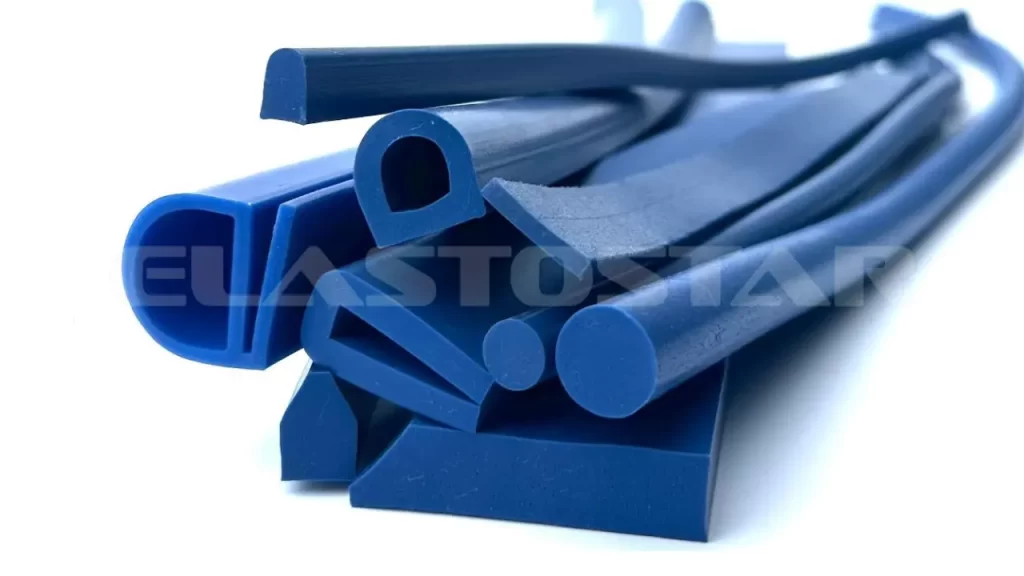
Selecting the right material begins with understanding its intended purpose. An extruded silicone material can help engineers compare material characteristics before specifying rubber components for food processing equipment.
Rather than selecting a material based solely on color or a single property, manufacturers should evaluate food-contact requirements, inspection methods, operating conditions, and application-specific performance before making a final decision.
What Should Food Manufacturers Ask Before Choosing a Detectable Rubber Supplier?
Choosing a supplier involves more than comparing prices or product availability.
The right supplier should understand your application, regulatory requirements, operating conditions, and production environment.
Asking the right questions early can help prevent material selection issues and improve long-term equipment reliability.
1. Material Compliance
Ask whether the material is suitable for your food-contact application and, where applicable, request supporting documentation for FDA-compliant silicone rubber.
2. Detection Capability
Confirm whether the rubber has been formulated for metal detection, X-ray inspection, or both. Detection performance should be validated using your production equipment and products.
3. Application Support
Not every sealing application requires the same material. Suppliers should be able to recommend compounds based on operating temperature, pressure, cleaning procedures, and equipment design.
4. Custom Manufacturing Capabilities
If your application requires non-standard dimensions or the replacement of obsolete parts, ask about custom FDA rubber parts, reverse-engineering support, and prototype-to-production capabilities.
5. Technical Documentation
Before approving a material, review the supplier’s technical product brochures to compare material properties, application recommendations, and available product options.
Choosing a knowledgeable supplier helps simplify material selection while reducing the risk of unexpected performance issues after installation.
Also Read: Procurement Guide for Silicone Rubber Suppliers
Common Detectable Rubber Components Used in Food Processing

Detectable rubber components are used throughout food processing facilities to maintain hygienic operation, prevent product leakage, and support contamination control.
The correct component depends on the equipment design, operating conditions, and food-contact requirements.
1. Seals and Gaskets
FDA detectable gaskets and sealing profiles are widely used in processing equipment, tanks, valves, pumps, and pipe connections to maintain reliable sealing performance in food-contact applications.
2.O-Rings
Vulcanized O-rings provide dependable sealing in pumps, fittings, filling equipment, and sanitary connections where pressure, temperature, and repeated cleaning cycles are common.
3. Silicone Tubing
Food-grade silicone tubing is used for transferring ingredients and finished products.
For applications such as peristaltic pumps, platinum-cured silicone tubing offers flexibility and consistent performance under repeated use.
4. Extruded Profiles and Sheet Materials
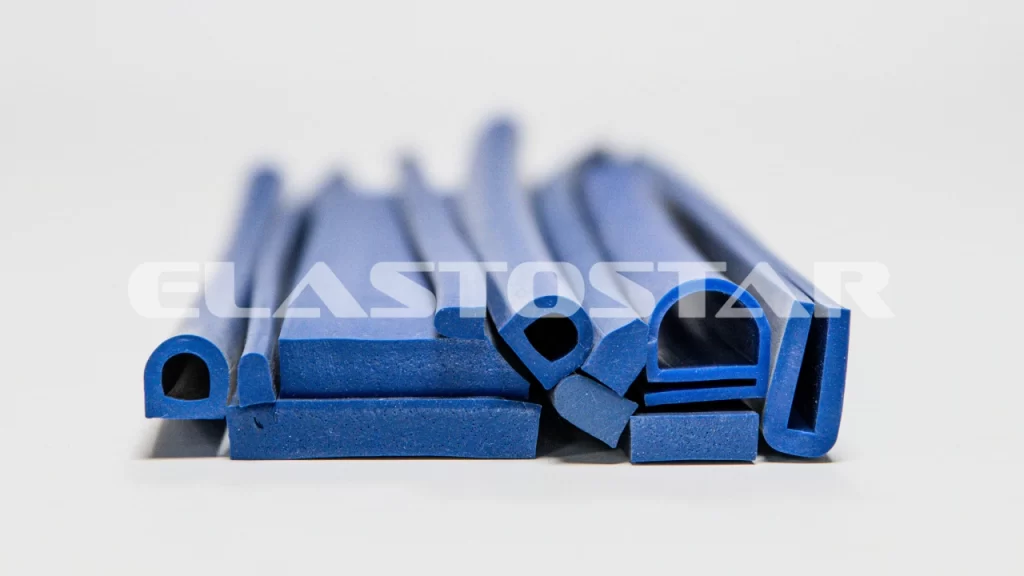
Many food processing systems require custom extruded profiles, silicone strips, and sheet materials that are manufactured to match specific equipment dimensions and sealing requirements.
5. Custom Components for Food Applications
As an experienced FDA-compliant detectable silicone manufacturer, we produce food-contact rubber components, including custom extrusions, seals, gaskets, O-rings, and sheet materials for demanding food-processing applications.
Components manufactured from NSF 51-compliant silicone are commonly specified where hygienic performance is essential, while engineering support, reverse engineering, and prototype-to-production capabilities help customers develop application-specific solutions.
Also Read: FDA Metal Detectable Silicone Rubber O-Rings, Seals & Gaskets
Which Documents Should You Request from Your Detectable Rubber Supplier?
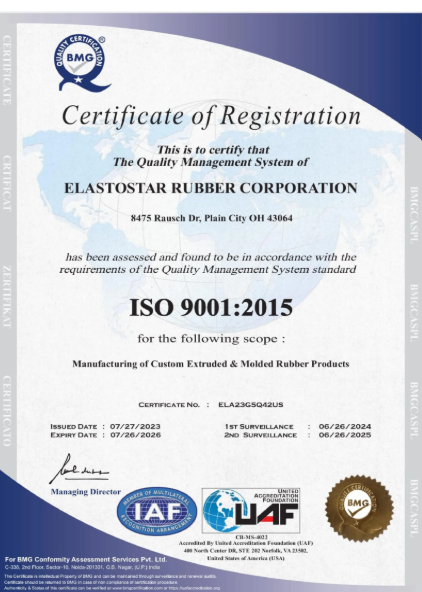
Selecting a rubber component based on a product description alone can create unnecessary risks.
Before approving FDA-compliant detectable rubber, food manufacturers should request technical documentation that verifies material suitability, quality, and traceability.
These documents help purchasing, engineering, and quality teams make informed decisions before components are installed on the production line.
1. FDA Food-Contact Declaration
Request documentation confirming that the material complies with applicable food-contact requirements.
This helps verify that the component is intended for the proposed application.
2. Material Data Sheet
A material data sheet outlines key properties such as operating temperature, hardness, tensile strength, compression set, and recommended applications.
Reviewing these specifications helps determine whether the material is suitable for your production environment.
3. Batch Traceability Records
Ask whether the supplier can provide batch identification and production traceability. These records become valuable during audits, maintenance reviews, or product investigations.
4. Engineering & Application Support
Technical documentation should be supported by engineering expertise, application guidance, and manufacturing capabilities to help specify the right material for each application.
Why Compliance Documents Don’t Replace Production Line Validation
Compliance documents are an important part of supplier qualification, but they should not be the only basis for approving a rubber component.
Actual production conditions vary from one facility to another, so every material should be validated within the intended application before full-scale use.
| Common Assumption | What Food Manufacturers Should Know |
| An FDA-compliant material will perform the same in every application. | Performance depends on operating temperature, pressure, cleaning procedures, and the production environment. |
| A detectable rubber compound will always be identified. | Detection depends on fragment size, product characteristics, detector sensitivity, and inspection settings. |
| Compliance documents eliminate the need for production testing. | Production line validation remains essential to confirm sealing performance and detection capability under actual operating conditions. |
| One material works for every food processing application. | Different equipment and products may require different material formulations and sealing solutions. |
Alongside supplier documentation, manufacturers should verify material performance through installation trials, inspection testing, and routine quality checks.
Supported by a rigorous quality control process, we help customers select materials that match their application while supporting reliable production performance.
Common Mistakes When Buying FDA Detectable Rubber
Selecting FDA-compliant detectable rubber involves more than checking a specification sheet.
Many purchasing decisions are based on assumptions that can lead to premature component failure, unnecessary downtime, or food safety concerns.
Avoiding these common mistakes helps manufacturers choose materials that perform reliably in real production environments.
1. Assuming FDA Compliance Means the Material Is Detectable
A material that meets food-contact requirements is not automatically metal- or X-ray-detectable. Both characteristics should be confirmed independently before approval.
2. Choosing Components Based Only on Price
Lower-cost materials may not provide the performance required for demanding food processing environments.
Material quality, operating conditions, and service life should all be considered during supplier evaluation.
3. Ignoring the Operating Environment
Temperature, cleaning chemicals, steam, pressure, abrasion, and product contact all influence long-term sealing performance. Selecting materials without considering these factors can reduce component life.
4. Overlooking Engineering Support
Not every application can be solved with a standard catalog product.
Working with a supplier that provides engineering expertise, reverse engineering support, and custom manufacturing helps ensure components are matched to the equipment rather than adapted after installation.
5. Skipping Production Validation
Even when documentation is complete, every new component should be evaluated under actual production conditions before full-scale implementation.
Validation remains an essential part of a successful food safety program.
Why Food Manufacturers Trust Elastostar Rubber Corporation

Selecting the right detectable silicone component requires more than regulatory compliance.
It also requires a manufacturing partner that understands food processing applications, engineering requirements, and long-term equipment performance.
1. A Trusted Food Processing Partner
As an experienced FDA-compliant rubber manufacturer, we help food manufacturers develop reliable sealing solutions for demanding processing environments.
2. Custom Manufacturing
We manufacture custom FDA rubber parts, including seals & gaskets, O-rings, extruded profiles, tubing, and sheet materials for food-contact applications.
3. Engineering Support
From new equipment designs to the replacement of obsolete components, we provide engineering expertise, reverse-engineering support, and application guidance to help customers choose the right solution.
4. From Prototype to Production
Whether you need a prototype for testing or full-scale production, we offer flexible manufacturing capabilities, consistent quality, and short lead times from our large Made in USA manufacturing facility.
To discuss your application requirements, contact Elastostar Rubber Corporation and speak with our engineering team.
Recommended Reads
Conclusion
Choosing FDA 21 CFR 177.2600 detectable rubber requires more than confirming food-contact compliance. Food manufacturers must also check detectability, material performance, supplier documentation, line validation, and application suitability before approving any component.
The right material should always be selected based on food-contact requirements, inspection methods, operating conditions, and production needs rather than a single specification.
As a custom manufacturer, we support food processors with custom FDA-compliant rubber parts, engineering expertise, reverse-engineering support, prototype-to-production capabilities, short lead times, and a large Made in USA manufacturing facility for reliable food-contact silicone components.
FAQs
Q1. What is FDA 21 CFR 177.2600?
FDA 21 CFR 177.2600 is a U.S. regulation that specifies requirements for rubber articles intended for repeated food contact. It helps manufacturers select materials suitable for food processing applications.
Q2. Does FDA compliance mean that rubber is metal-detectable?
No, FDA compliance and metal detectability are different properties. A material may comply with food-contact requirements yet still require a separate detectable formulation for use with metal-detection or X-ray inspection systems.
Q3. Is detectable rubber always food-grade?
Not always. FDA-compliant detectable rubber is specifically formulated to combine food-contact compliance with detectability, while some detectable materials may be intended for non-food industrial applications.
Q4. What is the difference between FDA-approved and FDA-compliant rubber?
For rubber materials, the correct term is generally “FDA compliant” rather than “FDA approved”. Compliance means the material has been formulated to meet the applicable requirements for food-contact applications under regulations such as FDA 21 CFR 177.2600.
Q5. What documents should food manufacturers request from suppliers?
Request food-contact declarations, material data sheets, quality certifications, and batch traceability records. Reviewing a supplier’s manufacturing certifications can also provide confidence in its quality management system.
Q6. Does FDA compliance replace production line validation?
No, FDA compliance confirms material suitability for food contact, but production line validation is still required to verify sealing performance, detectability, and compatibility with your equipment and products.
Q7. What rubber components need FDA compliance in food plants?
Common food-contact rubber components include seals, gaskets, O-rings, silicone tubing, diaphragms, valve seals, extruded profiles, and sheet materials used in food-processing equipment.
Q8. Can FDA-compliant rubber be custom manufactured?
Yes, manufacturers often require custom FDA-compliant rubber parts designed to match specific equipment dimensions, operating conditions, and food-processing applications.
Q9. Can FDA-compliant rubber also be X-ray detectable?
Yes, some silicone formulations combine food-contact compliance with X-ray detectability. Material selection should always match the inspection technology and production environment used by the facility.
Q10. Where can I buy FDA-compliant detectable rubber components?
Food manufacturers can partner with Elastostar Rubber Corporation for FDA-compliant detectable rubber components, including custom seals, gaskets, O-rings, extruded profiles, tubing, and other food-contact silicone products. Our team also provides engineering support, reverse engineering, and prototype-to-production manufacturing for food processing applications.