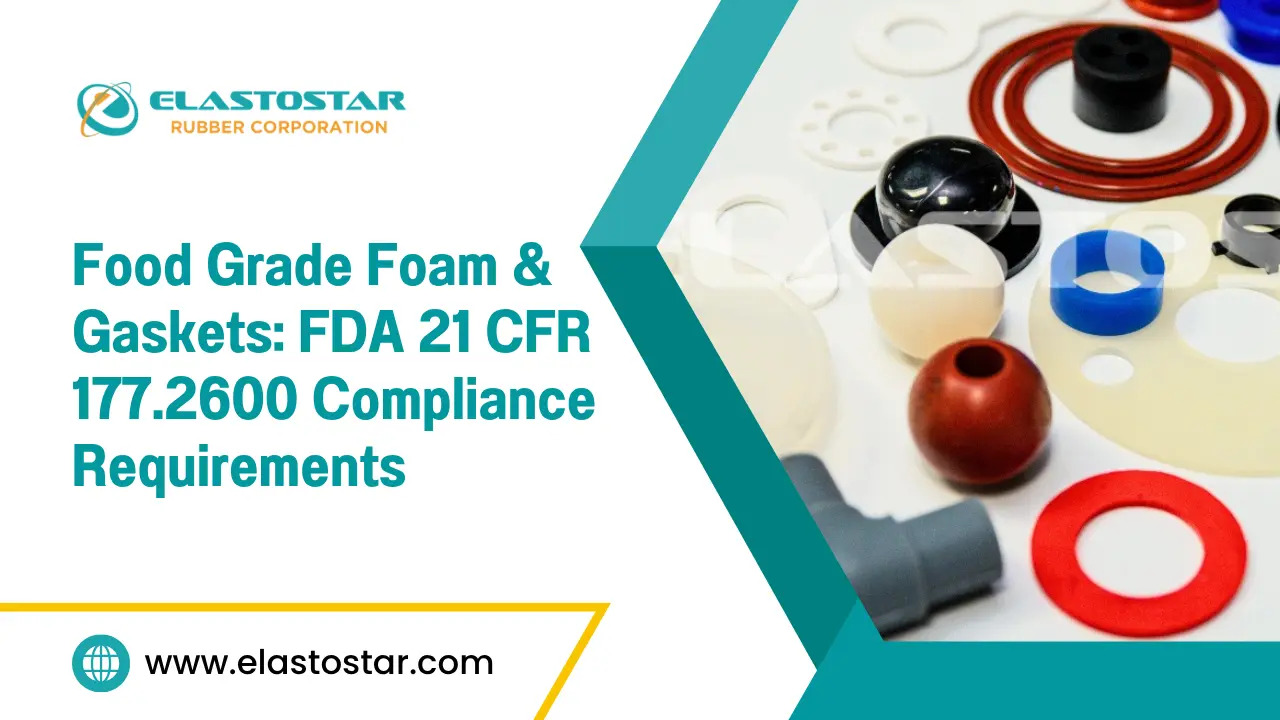
Food processing equipment must meet strict hygiene and safety standards, which makes material selection extremely important. Components such as food-grade foam, gaskets, seals, and tubing are widely used in sealing systems, processing lines, and sanitary equipment where food comes into direct contact with these materials.
To maintain safety and compliance, manufacturers must follow regulations such as FDA 21 CFR 177.2600, NSF/ANSI 51, and 3-A sanitary standards. These standards define how food-contact silicone and FDA-compliant rubber materials should perform in regulated processing environments.
In this blog, we will review these compliance requirements, along with testing methods, material specifications, certification practices, and documentation requirements used for food-contact rubber components.
Key Takeaways
- Food-grade rubber materials must meet strict regulations such as FDA 21 CFR 177.2600, NSF 51, and 3-A standards for safe food-contact use.
- Materials must pass extraction and migration testing to confirm they do not release harmful substances during processing.
- Platinum-cured silicone is often preferred in hygienic applications because of its higher purity and cleaner cure system.
- Certification involves formulation review, laboratory testing, manufacturing validation, and documentation control.
- Traceability and lot control are essential for tracking materials and maintaining compliance in regulated food systems.
- Rubber components must withstand repeated cleaning, high temperatures, and sanitation procedures without degrading.
- For many food-processing applications, manufacturers also look for NSF 51-approved compounds, metal-detectable silicone, X-ray-detectable silicone, and customized gaskets.
Table of Contents
Understanding FDA 21 CFR 177.2600 Requirements for Rubber Materials Used in Food Contact Applications
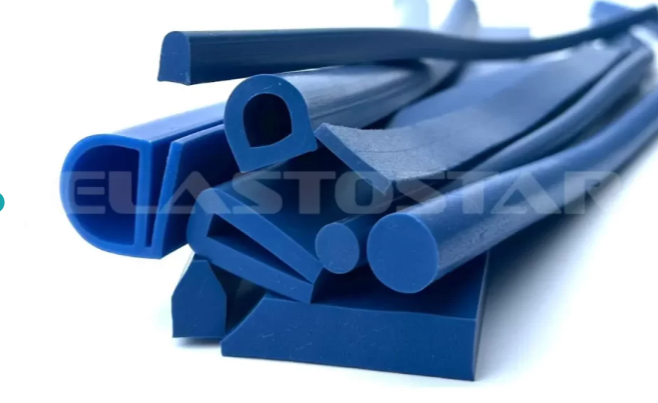
The regulation FDA 21 CFR 177.2600 establishes safety requirements for rubber materials used in repeated contact with food. It defines the types of ingredients that can be used in rubber compounds and sets extraction limits to confirm that these materials remain safe during food processing operations.
Sealing components used in food equipment must meet these requirements before they are used on production lines. Manufacturers often rely on food-grade silicone (177.2600) for its chemical stability, temperature resistance, and long-term performance in hygienic environments.
Closed-cell silicone sponge rubber is commonly used to produce compressible sealing materials for food processing equipment. Its structure helps maintain sealing performance while supporting regulatory expectations for food-contact applications.
Key Compliance Requirements
Materials used in food-contact equipment must follow several regulatory conditions:
- Only ingredients permitted under FDA 21 CFR 177.2600 can be used in rubber compounds.
- Rubber components must not release harmful substances during repeated use.
- Materials must remain stable when exposed to food oils, moisture, and temperature changes.
- Compliance must be verified through standardized testing procedures.
Extraction Testing
Extruded Rubber materials must undergo extraction testing to confirm that chemical migration remains within safe limits.
| Test Type | Purpose |
| Water extraction testing | Simulates contact with water-based food products |
| Oil extraction testing | Evaluates behavior with fatty food environments |
| Heat exposure testing | Confirms stability under processing temperatures |
| Migration analysis | Measures long-term chemical release |
These testing procedures ensure that rubber components used in food processing equipment meet regulatory safety requirements.
Read More: Top Applications of FDA Silicone Rubber in Food Processing Industries
NSF/ANSI Standard 51 Requirements for Materials Used in Food Processing Equipment
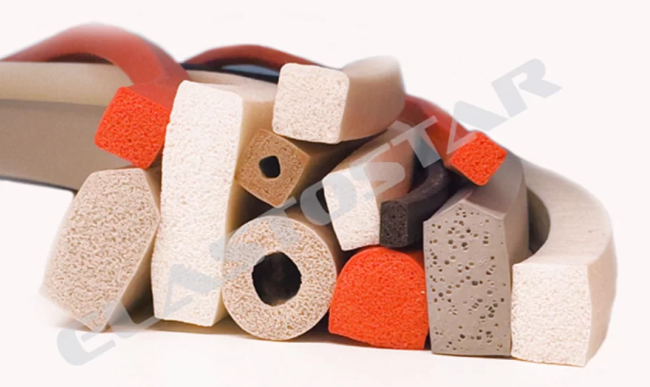
NSF 51 certification applies to materials used in food processing equipment. The standard ensures that materials used in seals, tubing, and components do not contaminate food during processing and can handle repeated cleaning and sanitation cycles.
For rubber and silicone components used in food systems, NSF 51 certification verifies that the material is safe for use in equipment that handles food, beverages, and ingredients.
Materials must remain stable under temperature changes, moisture, and the cleaning chemicals commonly used in food processing facilities.
Silicone Rubber Tubing is commonly used in food processing equipment for transferring liquids and ingredients because it maintains flexibility, durability, and hygienic performance in regulated environments.
3-A Sanitary Standards and Their Role in Hygienic Dairy Processing Equipment Design
The 3-A sanitary standards are widely used in the dairy and beverage processing industries to ensure that food equipment is hygienically designed and easy to clean.
These standards focus on preventing contamination by requiring smooth surfaces, cleanable components, and materials that remain stable during frequent sanitation cycles.
Key Requirements for Rubber Components
- Materials must not absorb food particles or liquid.
- Surfaces must be smooth and easy to clean.
- Components must hold repeated washdowns and sterilization.
- Materials must prevent bacterial buildup.
Rubber sealing components used in dairy systems must meet these hygienic requirements to maintain safe food processing conditions.
Common Components Used in Dairy Equipment
| Component | Purpose |
| O-rings | Seal connections in pipelines and valves |
| Gaskets | Prevent leaks in processing equipment |
| Seals | Maintain airtight equipment operation |
For example, Silicone Rubber O-Rings are commonly used in dairy processing equipment because they provide reliable sealing and maintain the hygienic performance required under 3-A sanitary standards.
Our Elastostar certifications help us understand the quality and compliance standards followed during manufacturing.
Extraction and Migration Testing Requirements for Food Contact Rubber Components
To ensure rubber materials are safe for food contact, manufacturers must conduct specific tests to verify compliance with FDA 21 CFR 177.2600. These tests evaluate whether substances from rubber components could migrate into food during processing.
In many food processing systems, components such as Platinum Cured Silicone Tubing are used for transferring liquids and ingredients because the material offers high purity and stability required for regulated environments.
Materials such as food-contact silicone (177.2600) are commonly selected for their reliability in these compliance tests.
Two important evaluations used for food-contact rubber materials include extraction testing and migration testing.
1. Extraction Testing
This test measures the amount of substances that may be released from rubber materials when exposed to liquids that simulate food environments.
2. Migration Testing
This test evaluates whether chemicals from rubber materials move into food during prolonged contact under operational conditions.
Typical Testing Conditions
| Testing Condition | Purpose |
| Water extraction | Simulates contact with water-based foods |
| Oil extraction | Evaluates behavior with fatty food products |
| Heat exposure | Confirms material stability at processing temperatures |
| Long-term exposure | Measures material safety during repeated use |
These testing procedures help confirm that the materials used in food-processing equipment remain stable and safe for food-contact applications.
For more information on testing and manufacturing standards, review our quality control process.
Also Read: How to Test the Quality of Rubber
Material Specifications for Food Contact Silicone: Platinum-Cured vs Peroxide-Cured Compounds
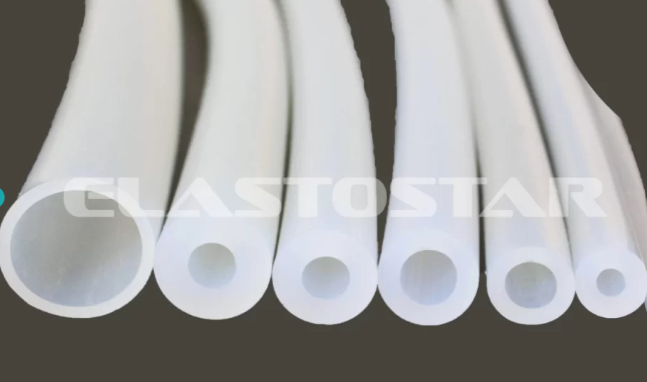
Silicone materials used in food processing equipment are typically produced using two curing systems: platinum-curing and peroxide-curing.
Both methods are used to manufacture food-contact silicone (177.2600), but they differ in purity, residual byproducts, and suitability for more demanding hygienic environments.
In applications where hygiene and material purity are critical, platinum-cured silicone is commonly preferred.
You can also explore our web story on medical-grade silicone profiles to understand how high-purity silicone materials are used in regulated environments that require strict material performance and compliance standards.
Silicone Tubing is widely used in food processing lines for transferring liquids and ingredients because the curing process produces a cleaner material with minimal residual compounds.
Comparison of Curing Methods
| Property | Platinum Cure | Peroxide Cure |
| Purity level | Higher purity | Moderate purity |
| Residual by-products | Minimal | May contain trace residues |
| Suitability for food contact | Highly suitable | Suitable for general applications |
| Odor or taste transfer | Very low | Possible in some cases |
Because platinum curing produces a cleaner, more stable material, it is often chosen for applications requiring FDA-compliant rubber and safe performance in food-processing systems.
These materials are manufactured as part of our range of silicone rubber products used in regulated industries.
Steps Involved in the Certification Process for Food-Grade Rubber Materials
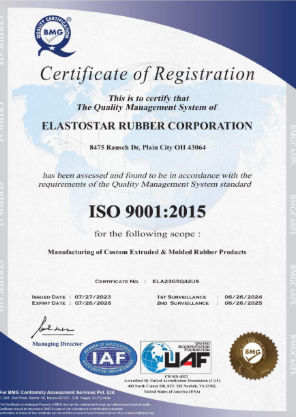
Before rubber materials can be used in food processing equipment, manufacturers must complete a structured certification and compliance process.
This process ensures that materials meet regulatory requirements, including FDA 21 CFR 177.2600, NSF 51 certification, and other food safety standards.
Typical Certification Steps
1. Material Formulation Review
The first step in the certification process is to verify that the silicone rubber compound complies with regulatory requirements, such as FDA 21 CFR 177.2600.
Manufacturers review the formulation to ensure that only approved ingredients are used in materials intended for food contact.
2. Laboratory Testing
After formulation approval, materials are tested under controlled laboratory conditions. These tests confirm that the material does not release harmful substances in food processing environments.
3. Manufacturing Validation
Once the material passes testing, production processes are validated to ensure consistency. Silicone Rubber Cord is manufactured under controlled conditions to maintain uniform material quality and performance.
4. Documentation and Compliance Records
Manufacturers maintain detailed documentation, including test reports, batch records, and compliance certificates. These records confirm that the material meets regulatory standards required for food-contact applications.
5. Certification and Product Approval
After completing testing and documentation, the material can be approved for use in food processing equipment.
Product specifications and technical details are typically provided through our product brochures, which help customers review material properties and compliance information.
Importance of Traceability and Lot Control Documentation in Food Contact Manufacturing
Traceability is essential in the food processing industry to ensure that every material used in equipment can be traced back to its source of production.
For components made from food-contact silicone, traceability helps manufacturers verify compliance with safety standards and quickly identify the materials used in production.
Lot Control in Manufacturing
Lot control allows manufacturers to track each production batch of rubber materials.
This system ensures that every batch used in food-grade gaskets or sealing components can be traced to its raw materials, manufacturing date, and testing records.
Information Typically Recorded
| Documentation Type | Purpose |
| Batch number | Identifies the specific production lot |
| Raw material records | Tracks ingredients used in the compound |
| Manufacturing date | Confirms production timeline |
| Test reports | Verifies compliance with regulatory standards |
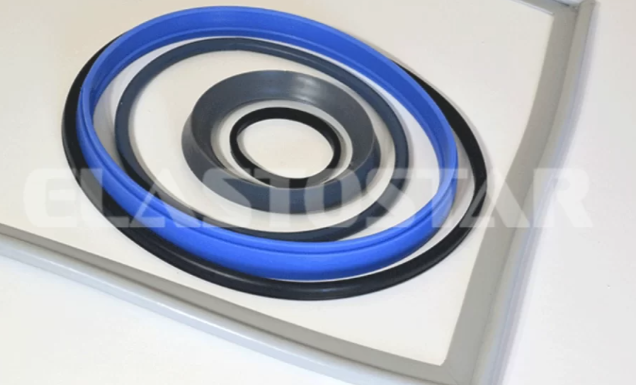
During manufacturing, products such as Extruded Silicone Rubber Seals are produced with batch identification and documentation records to ensure traceability throughout the supply chain.
For dimensional consistency and manufacturing standards, materials are produced in accordance with RMA precision tolerance standards used for rubber components.
Read More: What Process Engineers Check First in Silicone Components
Cleaning and Sanitation Requirements for Food-Grade Foam and Rubber Sealing Components
Food processing equipment is cleaned and sanitized frequently to prevent contamination.
Rubber components used in these systems must handle repeated exposure to cleaning chemicals, hot water, and sterilization processes without degrading.
Material Performance During Cleaning
Materials used for food-grade foam and sealing components must remain stable even after repeated washdowns.
Silicone materials are commonly used because they resist moisture absorption and remain stable under temperature fluctuations.
Silicone Sponge Rubber is widely used in food equipment seals because its closed-cell structure helps prevent liquid absorption while maintaining reliable sealing performance.
Key Sanitation Requirements
- Materials should resist cleaning chemicals and detergents.
- Surfaces should prevent the buildup of food residue.
- Components must tolerate high-temperature wash cycles.
- Materials must maintain flexibility and sealing performance.
These characteristics are important for ensuring that rubber components used in food equipment remain safe and reliable throughout their service life.
Manufacturers requiring compliant sealing solutions can contact us for technical guidance on materials used in food processing applications.
Why Choose Elastostar Rubber Corporation for Food-Grade Silicone Components?

Manufacturers working with regulated food processing systems require materials that meet strict compliance, quality, and performance standards.
As a Silicone rubber Manufacturer, we manufacture silicone components designed for demanding industries where material safety, traceability, and reliability are critical.
Our capabilities support customers who require consistent material performance and regulatory compliance for food processing equipment.
Key advantages of working with us include:
- We manufacture food-grade silicone (177.2600) for applications that require compliant material performance in food-contact environments.
- We can support projects requiring NSF 51-approved compounds, metal-detectable food-grade silicone, and X-ray-detectable food-grade silicone where those specifications are relevant.
- We develop custom compounds and customized gasket profiles for food-processing applications with specific sealing, temperature, and sanitation requirements.
- We provide custom manufacturing backed by a large manufacturing facility that supports specialized production needs.
- We offer reverse engineering support, along with design and application support, to address fit, function, and material challenges.
- We support programs from prototype to production run, helping customers move efficiently from development to full-scale manufacturing.
- We focus on the shortest possible lead time to support production schedules and supply continuity.
- Our products are Proudly Made in the USA, which supports quality control, traceability, and dependable supply.
With extensive experience in silicone extrusion and sealing solutions, we support manufacturers that require compliant materials for food processing and other regulated applications.
Recommended Reads
1. Where Detectable Silicone Should Be Used and Where It Adds No Value
2. Why Long-Term Sealing Performance Matters More Than Initial Specs
3. Plastic Gaskets vs Rubber Gaskets: Material Selection Decision Matrix
Conclusion
Selecting the right materials for food processing equipment is essential to maintain safety, hygiene, and regulatory compliance. Standards such as FDA 21 CFR 177.2600, NSF 51 certification, and 3-A sanitary standards ensure that rubber components used in food-contact environments meet strict performance and safety requirements.
Materials such as food-contact silicone (177.2600) are widely used for their durability, temperature resistance, and reliable sealing performance in hygienic systems.
At Elastostar Rubber Corporation, we manufacture high-quality custom silicone sponge components for regulated industries and demanding applications. Our focus on quality manufacturing, traceability, and consistent material performance supports reliable food processing operations.
FAQs
1. What is FDA 21 CFR 177.2600?
FDA 21 CFR 177.2600 is a regulation that defines the requirements for rubber materials used in repeated contact with food. It specifies approved ingredients, extraction limits, and testing procedures to ensure that rubber components used in food processing equipment remain safe for food contact.
2. What does NSF/ANSI Standard 51 require?
NSF/ANSI Standard 51 establishes safety requirements for materials used in food equipment. It ensures that materials such as food-contact silicone used in tubing, seals, and flexible connectors do not contaminate food and can tolerate repeated cleaning and sanitization.
3. What are the 3-A Sanitary Standards for dairy equipment?
3-A Sanitary Standards focus on hygienic equipment design for dairy and beverage processing. These standards require materials that are easy to clean, resistant to bacterial buildup, and suitable for sanitary environments where rubber sealing components are commonly used.
4. How do you test food-grade gaskets for compliance?
Compliance testing for food-grade gaskets typically includes extraction, migration, and temperature stability testing. These procedures verify that rubber materials used in food equipment do not release harmful substances into food during repeated use.
5. Is platinum-cured silicone always food grade?
Platinum-cured silicone is often preferred for food contact silicone applications because it produces fewer by-products during manufacturing. However, the material must still meet regulatory requirements, such as 21 CFR 177.2600, before it can be classified as food-grade.
6. What is the difference between FDA-compliant and FDA-approved?
FDA-compliant means the material formulation complies with regulations such as 21 CFR 177.2600. FDA-approved usually refers to products that have undergone formal FDA review. Most rubber materials used in food equipment are considered FDA-compliant rather than FDA-approved.
7. What documentation is required for food contact materials?
Manufacturers typically provide documentation such as compliance certificates, material safety data sheets, and testing reports. These records confirm that rubber components used in food processing meet required regulatory standards.
8. How do you maintain traceability for food-grade gaskets?
Traceability is maintained by assigning batch numbers and maintaining production records for each manufacturing lot. This allows manufacturers to track materials used in food-grade gaskets back to their raw material sources and testing documentation.
9. Can peroxide-cured silicone be food grade?
Yes, peroxide-cured silicone can be used in food applications if the formulation complies with FDA 21 CFR 177.2600 and passes required safety testing. However, platinum-cured materials are often preferred for applications requiring higher purity.
10. What cleaning methods are safe for food-grade rubber?
Cleaning methods such as hot-water washdowns, steam cleaning, and approved sanitizing chemicals are commonly used for food-grade foam and rubber components. Materials like Silicone Rubber Sheets are often used in food equipment because they maintain stability during repeated cleaning cycles.