Learn why long-term sealing performance matters more than initial specs. Explore aging, compression set, and real-world factors affecting seal reliability.
When selecting seals, decisions are often based on datasheets and initial test results. While these specifications are important, they rarely reflect long-term sealing performance in real operating conditions.
Over time, factors such as compression, aging, and environmental exposure can significantly affect seal performance, leading to unexpected failures and higher costs. Understanding spec sheet limitations, silicone rubber aging, and seal durability is essential for improving sealing reliability.
In this blog, we will explore why real-world sealing behavior often differs from lab results, how materials change in service, and what design considerations help extend silicone seal lifespan in demanding applications.
Key Takeaways
- Initial seal specifications reflect new-material performance, not long-term behavior.
- Real-world sealing performance is shaped by compression, aging, and environmental exposure over time.
- Silicone rubber aging occurs gradually and often without visible damage.
- Compression set is a leading cause of long-term sealing failure, even when seals appear intact.
- Environmental stressors interact, accelerating material degradation beyond laboratory conditions.
- Standard seals may meet specifications but fail to deliver consistent lifecycle performance.
- Designing for long-term sealing reliability requires evaluating service conditions, not just datasheets.
- Working with an experienced sealing manufacturer helps align material, design, and performance over the full lifecycle.
Table of Contents
Why Initial Specs Look Good on Paper?
Initial material specifications help compare sealing options, but they rarely predict long-term sealing performance. Spec sheets describe how a material behaves when new and when tested in controlled environments.
In real applications, seal performance over time depends on sustained compression, exposure, and service conditions. Standard components such as silicone O-rings, extruded profiles, or molded gaskets may meet initial requirements but still experience a gradual loss of sealing force.
This is where spec sheet limitations become clear. True seal durability is influenced by material formulation, profile design, and operating stress. Evaluating silicone T-seal lifespan requires looking beyond first-use data to how seals perform throughout their service life.
Also Read– Elastostar Rubber Corporation Is a BABA-A-A Compliant Manufacturer
Real-World vs Lab Performance Gap

Laboratory testing provides consistency, but it simplifies conditions that are far more complex in service. Most tests are short-term and static, while real applications involve continuous load, movement, and exposure.
This lab testing vs field use gap explains why seal performance over time often deviates from expectations.
In operating environments, seals are affected by:
- Repeated thermal cycling.
- Pressure variation during operation.
- Environmental contact over long durations.
These factors contribute to gradual material degradation that is difficult to capture in controlled testing.
| Testing Environment | What It Evaluates | What It Misses |
| Laboratory conditions | Initial material response | Long-term sealing behavior |
| Short-duration tests | Compliance with standards | Cumulative fatigue effects |
| Static loading | First-use sealing | Performance under real motion |
Understanding this gap is essential for designing reliable sealing systems.
Also Read: Which Rubber Materials Can Withstand High Heat?
Aging Mechanisms That Affect Silicone Seals Over Time
Silicone is selected for long service life, but silicone rubber aging is unavoidable once a seal is in operation. Aging typically progresses slowly and is rarely visible in the early stages.
Over time, commonly used components such as silicone O-rings, extruded silicone profiles, and molded silicone seals can degrade due to sustained heat, compression, and environmental exposure.
Key aging mechanisms include:
- Gradual loss of flexibility under continuous load.
- Molecular changes caused by long-term heat exposure.
- Surface degradation from UV or atmospheric contact.
These changes lead to progressive material degradation, reducing sealing reliability even when the seal appears intact.
Understanding how aging affects silicone seal lifespan is critical when designing systems expected to perform consistently over extended service periods.
Compression Set and Loss of Elasticity
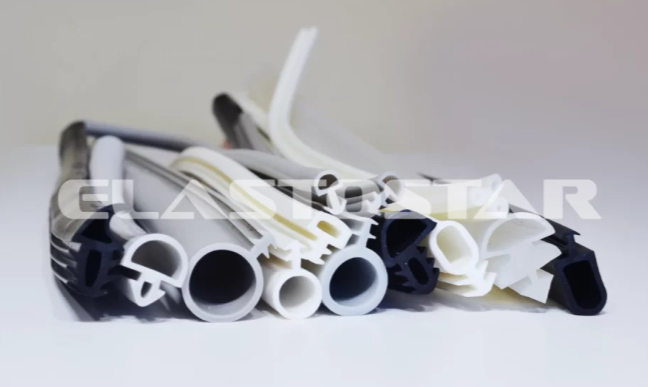
A compression set in silicone is one of the most common causes of long-term sealing failure. It occurs when a seal is unable to recover its original shape after being compressed for extended periods. Even when a component appears undamaged, loss of elastic recovery reduces contact pressure and can lead to leakage.
This behavior is especially relevant for extruded sealing profiles used in static or semi-static joints. Over time, sustained load and thermal cycling contribute to rubber fatigue and seal deformation.
Common indicators include:
- Reduced sealing force after prolonged compression.
- Permanent deformation without visible cracking.
- Increased sensitivity to pressure variation.
Managing the compression set is essential for maintaining sealing performance over time in critical applications.
Also Read– What’s the Difference Between Shore A and Shore D?
Environmental Stress Factors That Influence Sealing Performance
Seals rarely operate in stable environments. In real systems, environmental sealing stress comes from multiple sources acting simultaneously. Temperature fluctuations, chemical contact, moisture ingress, and pressure variation all influence how a seal behaves over time.
Platinum silicone tubing, extruded profiles, and molded sealing components are often selected for their resistance to harsh conditions; however, prolonged exposure can still accelerate performance degradation.
Thermal cycling causes repeated expansion and contraction, while chemicals and humidity gradually affect surface integrity. UV exposure further contributes to material fatigue in outdoor or exposed applications.
These combined stresses shorten effective sealing life, even when individual conditions remain within acceptable limits. Accounting for environmental interaction is essential when evaluating long-term sealing performance in demanding applications.
Designing for Lifecycle Sealing Requires the Right Manufacturing Partner
Long-term sealing performance is not achieved through material selection alone. It depends on how seals are engineered, manufactured, and supported throughout their lifecycle. At Elastostar, we approach sealing as a system-level responsibility, not a component sale.
We are a custom silicone manufacturer with a large, fully equipped facility, allowing us to control quality, consistency, and turnaround times. Our seals are proudly Made in the USA, supporting reliable supply and responsive collaboration.
Our capabilities include:
- Custom extruded profiles, O-rings, gaskets, and sheet materials.
- Platinum-cured silicone tubing manufactured using peristaltic pump processes.
- FDA-approved products meeting USP Class VI, Section 87 & 88 requirements.
- Reverse engineering, design support, and prototype-to-production runs.
- Short lead-time delivery backed by in-house manufacturing.
By combining custom manufacturing with technical expertise, we help customers design sealing solutions that perform reliably throughout their service life, not just at installation.
When Custom Sealing Becomes Necessary?
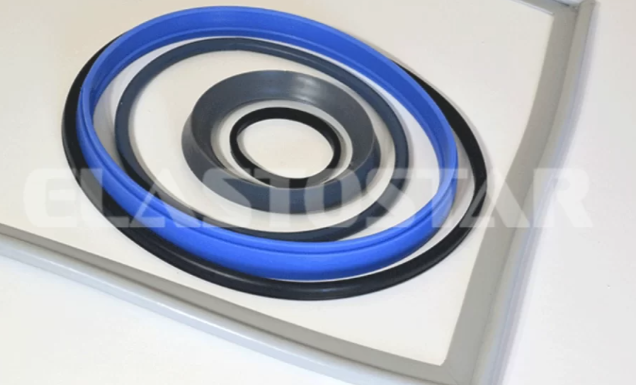
Standard sealing solutions work well in predictable conditions, but many applications fall outside those limits. As operating demands increase, factors such as geometric constraints, environmental exposure, and service life expectations begin to challenge off-the-shelf options. This is where custom silicone seals become essential.
At Elastostar, we see this most often when customers face repeated sealing failures, shortened replacement cycles, or performance inconsistencies that specifications alone cannot solve. Application-specific sealing allows material formulation, profile design, and manufacturing methods to align with real operating conditions. By focusing on engineered silicone solutions rather than generic components, long-term sealing reliability can be improved across demanding industrial environments.
Recommended Reads
- Top 10 Properties of Rubber That Make It Ideal for Seals & Gaskets
- Gaskets vs Seals: What’s the Difference Between Them?
- Which Is the Best Rubber Material for Gaskets?

Conclusion
Initial specifications provide a useful starting point, but they do not define how seals perform in service. Long-term sealing performance is shaped by aging behavior, compression set, environmental exposure, and the extent to which a sealing solution is engineered for its application. Overlooking these factors often leads to premature failure, increased maintenance effort, and unplanned downtime.
At Elastostar, we focus on sealing reliability across the entire lifecycle, not just first-use performance. Our team works closely with customers to evaluate real operating conditions and develop solutions that perform consistently over time. If you are facing recurring sealing issues or planning a new application, contact us to discuss your requirements and explore the right sealing approach.
FAQs
Q1.Why are initial seal specifications misleading?
Initial seal specifications describe material performance at the time of testing, under controlled laboratory conditions. They do not account for long-term effects, such as sustained compression, aging, or environmental exposure, that affect sealing reliability in real-world applications.
Q2.Why do seals perform differently in real-world conditions?
Real-world sealing environments involve thermal cycling, pressure variation, movement, and continuous exposure that cannot be fully replicated in short-term lab tests. Over time, these combined stresses cause the material to deviate from its initial performance.
Q3.What causes silicone seals to degrade?
Silicone rubber seals degrade gradually due to prolonged heat exposure, sustained mechanical load, and environmental factors such as UV, moisture, and chemicals. These conditions drive material aging, reducing flexibility and long-term sealing effectiveness.
Q4.How does compression set impact sealing?
A compression set occurs when a seal loses its ability to recover after prolonged compression, reducing contact pressure. Even without visible damage, this loss of elasticity increases the risk of leakage and premature seal failure.
Q5.How do environmental conditions contribute to seal failure?
Environmental stresses, including temperature fluctuations, chemical exposure, humidity, and pressure changes, accelerate material fatigue. When multiple stress factors act together, they significantly reduce seal service life and increase the risk of failure.
Q6.Why do seal failures become costly over time?
Seal failures often trigger unplanned downtime, emergency maintenance, and production losses that far exceed the cost of the seal itself. Repeated replacements and reactive repairs increase operational costs and disrupt maintenance planning.
Q7.How can sealing performance be improved over the full lifecycle?
Improving long-term sealing performance requires selecting materials and designs based on real operating conditions rather than initial specifications alone. Lifecycle-focused sealing design helps reduce unexpected failures and extend service intervals.
Q8.When should custom sealing solutions be considered?
Custom sealing becomes necessary when standard components fail to meet durability or performance requirements in demanding environments. Application-specific design and material selection help align sealing solutions with actual service conditions.