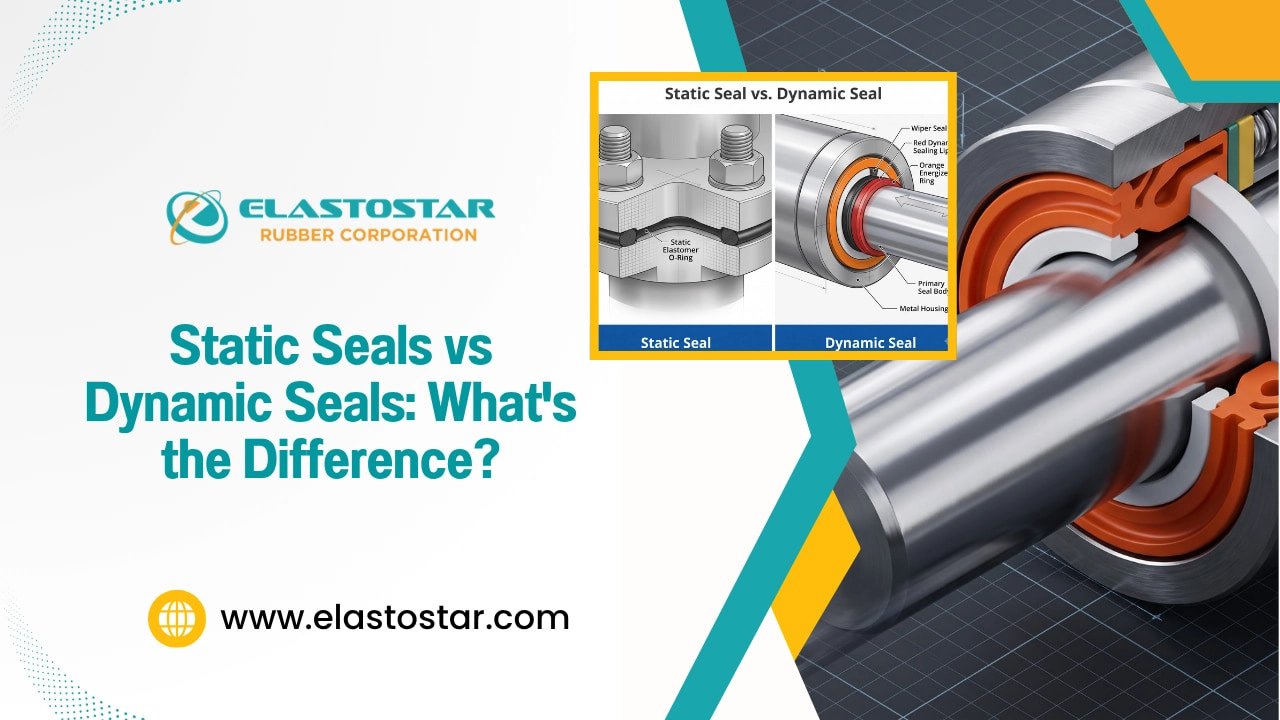
Choosing between static and dynamic seals starts with understanding how the sealing surfaces move during operation. Static seals are used between surfaces with no intended relative movement, while dynamic seals are used where movement occurs.
This difference affects compression, friction, wear, groove design, pressure conditions, and material selection.
At Elastostar Rubber Corporation, we manufacture custom Rubber O-Rings, seals, gaskets, and sealing profiles in Silicone, Viton/FKM, EPDM, Nitrile, and Neoprene, including custom-sized and spliced vulcanized O-Rings.
With our Made in USA custom manufacturing, reverse engineering, design support, and prototype-to-production capabilities, we help customers develop sealing components around their drawings, samples, dimensions, and application requirements.
Key Takeaways
- Static and dynamic seals differ mainly in their movement: static seals operate between stationary surfaces, while dynamic seals operate where relative motion occurs.
- Static O-Rings generally experience less friction and wear, while dynamic O-Rings require greater attention to speed, lubrication, surface finish, and repeated movement.
- Seal material should be selected according to temperature, pressure, media, movement, and application requirements. Options include Silicone, Viton/FKM, EPDM, Nitrile, and Neoprene.
- Custom, large-diameter static O-Rings can be manufactured when standard sizes do not meet equipment requirements.
- Custom sealing solutions can be developed for non-standard dimensions, large diameters, unusual profiles, and application-specific requirements.
Table of Contents
What Are Static and Dynamic Seals?
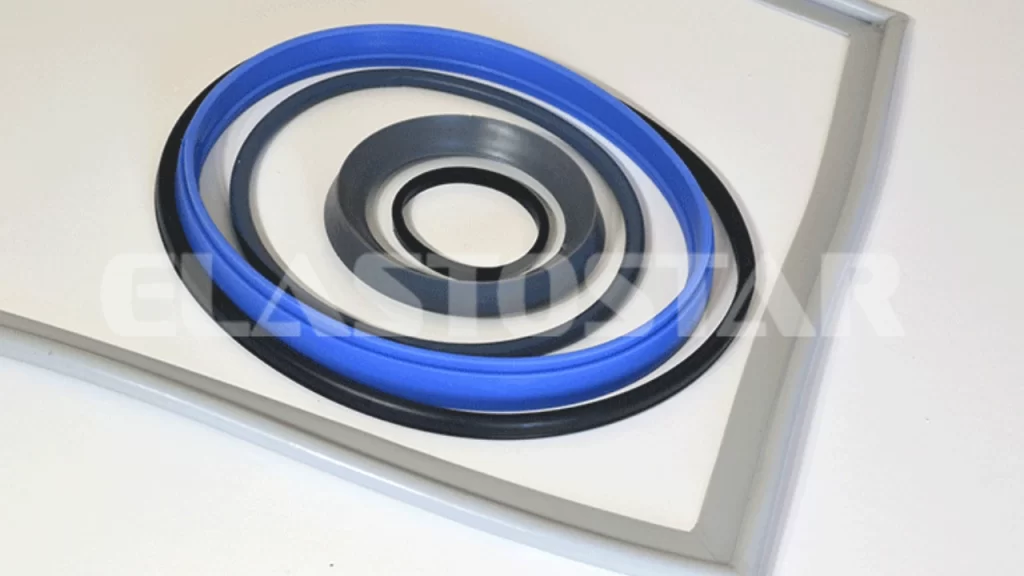
Static seals and dynamic seals both prevent leakage between mating surfaces, but they operate under different conditions. The main difference is the presence or absence of relative movement at the sealing interface.
A static seal operates between surfaces that remain stationary after assembly. Typical examples include seals used between flanges, covers, housings, and fixed connections.
A dynamic seal operates where relative movement occurs between sealing surfaces. This movement may be rotary, reciprocating, or oscillating, depending on the equipment.
Because movement introduces friction and wear, dynamic sealing generally requires additional consideration of speed, lubrication, surface finish, pressure, and material behavior compared with static sealing.
Read More: Gaskets vs Seals: What’s the Difference Between Them?
What Is a Static Seal and How Does It Work?
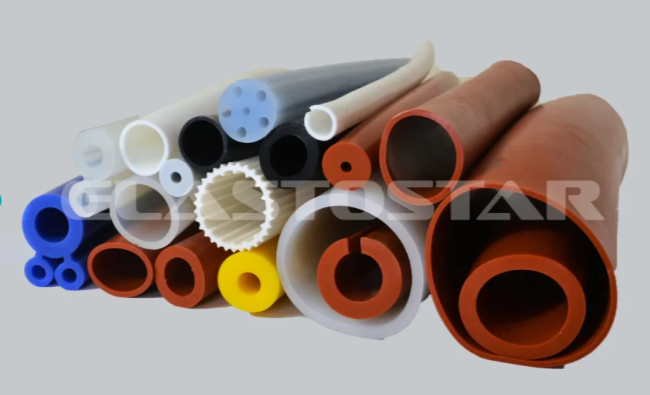
A static seal is used between two surfaces that remain stationary relative to each other during normal operation.
Once the assembly is tightened or closed, the seal is compressed to block the passage of liquids or gases.
Static sealing is common in:
- Flanges and covers.
- Equipment housings.
- Pipe and fitting connections.
- Stationary O-ring grooves.
- Access panels and enclosures.
Because there is no continuous sliding or rotating motion, static seals generally experience less friction and wear than dynamic seals.
However, the seal still needs the correct compression, groove dimensions, material hardness, pressure capability, and chemical compatibility to perform reliably.
For applications that require a custom flat or profile seal rather than an O-ring, die-cut gaskets are a common static sealing option.
Read More: Gasket vs O-Ring: Meaning, Differences & Applications
What Is a Dynamic Seal and How Does It Work?
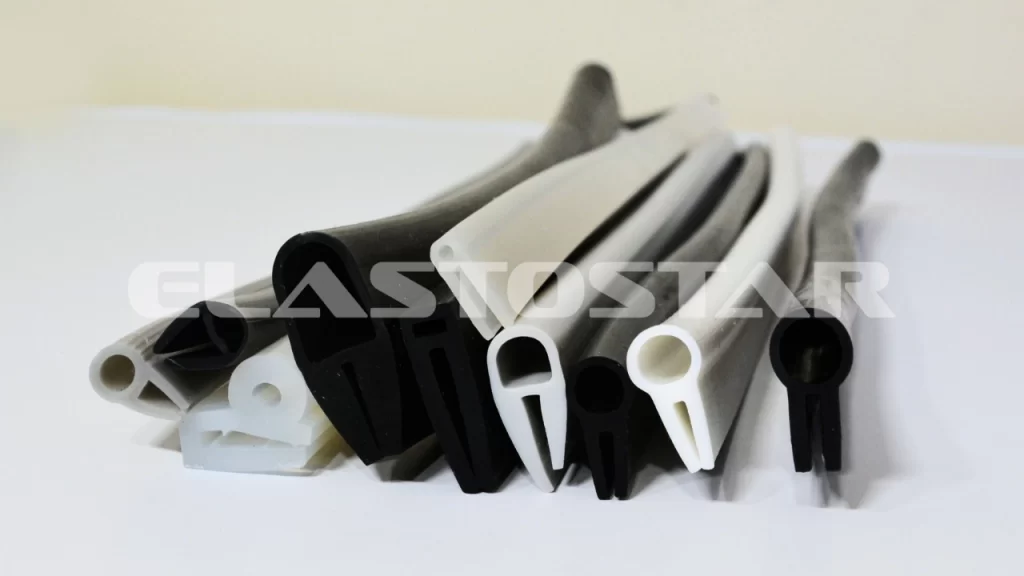
A dynamic seal operates where one surface moves relative to another during use. The movement may be rotary, reciprocating, or oscillating, depending on the equipment design.
Unlike static sealing, dynamic sealing must account for:
- Friction and wear at the sealing interface.
- Speed and direction of movement.
- Lubrication and surface finish.
- Pressure and temperature changes during operation.
- Material behavior under repeated motion.
Dynamic seals are commonly used around shafts, rods, pistons, and moving equipment components.
Because the seal is exposed to motion, the material, groove design, compression, and operating conditions must be matched carefully to the application.
Static Seals vs Dynamic Seals: Key Differences
The biggest difference between a static seal and a dynamic seal is the presence of movement at the sealing interface.
That movement changes how the seal must handle friction, wear, lubrication, and repeated contact.
| Factor | Static Seal | Dynamic Seal |
|---|---|---|
| Movement | No intended relative movement between sealing surfaces | Relative movement occurs during operation |
| Typical Motion | Stationary | Rotary, reciprocating, or oscillating |
| Friction | Generally a lower concern after assembly | Important due to continuous or repeated movement |
| Wear | Typically lower | Greater potential for wear |
| Lubrication | Often less critical | May be important depending on the application |
| Seal Design | Focuses on compression, pressure, and maintaining contact | Must also account for speed, friction, wear, and movement |
| Common Examples | Flanges, covers, housings, static O-rings, gaskets | Shafts, rods, pistons, and dynamic O-rings |
Neither sealing method is inherently better. Choosing between static vs dynamic seals depends on movement, pressure, temperature, media, material compatibility, and dimensional requirements.
For rubber components where dimensional control is important, our RMA Precision Tolerance information provides guidance on dimensional tolerances for molded and extruded rubber products.
Types of Static Seals and Common Applications
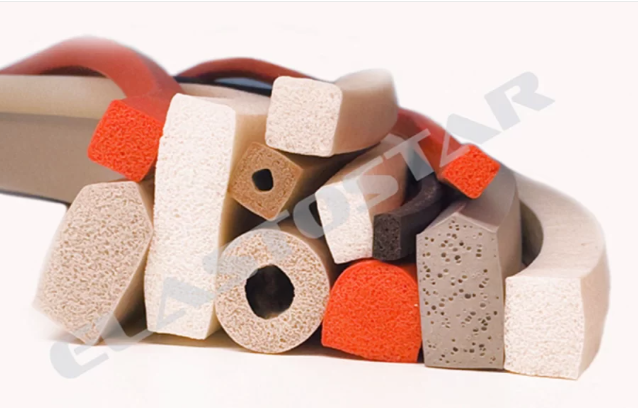
Static seals come in different forms depending on the sealing surface, available space, pressure, and equipment design.
1. Static O-Rings
Static O-rings are compressed between stationary surfaces and are commonly used in housings, fittings, flanges, covers, and equipment connections.
2. Flat Gaskets
Flat gaskets seal between two stationary mating surfaces and can be produced in custom shapes, thicknesses, and materials for equipment and enclosure applications.
3. Extruded Profile Seals
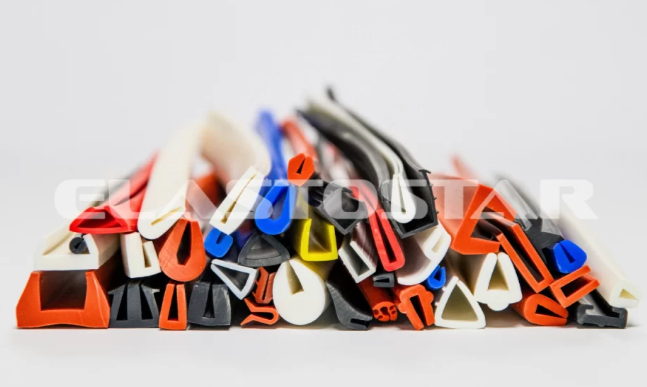
Custom extruded profiles are useful where standard O-rings or flat gaskets do not match the required geometry. Options can include bulb, D, P, U-channel, square, rectangular, and custom profiles.
4. Vulcanized and Large-Diameter Seals
Extruded rubber cord or profiles can be joined to create custom and large-diameter static O-rings for non-standard sealing requirements. Silicone rubber cord is one relevant option for custom-joined ring applications.
5. Material Grade Considerations
For aerospace static sealing applications, specifications such as A-A-59588 or ZZ-R-765 Class 2A, 2B, 3A, and 3B may be relevant when required by the drawing or application.
Types of Dynamic Seals and Common Applications

Dynamic seals are used where one surface moves relative to another during operation. The seal design must therefore account for friction, wear, speed, lubrication, pressure, and surface finish.
1. Reciprocating Seals
Used where components move back and forth, such as rods and pistons. Seal performance depends heavily on groove design, lubrication, and repeated motion.
2. Rotary Seals
Used around rotating shafts and similar equipment. Material selection must consider rotational speed, heat generation, pressure, and wear at the sealing surface.
3. Dynamic O-Rings
Dynamic O-rings can be used in selected reciprocating or oscillating applications when the material, groove, lubrication, and operating conditions are suitable.
They generally require tighter attention to friction and wear than static O-rings.
4. Material Considerations
For demanding fluid or temperature environments, materials such as Viton/FKM, Nitrile, EPDM, or Silicone may be considered depending on the actual media and motion conditions.
Where aerospace or specification-grade silicone is required, the material should be matched to the drawing or applicable specification rather than selected by material name alone.
Read More: How to Select the Right Silicone O-Rings for Industrial Applications
Static O-Rings vs Dynamic O-Rings: What Changes?
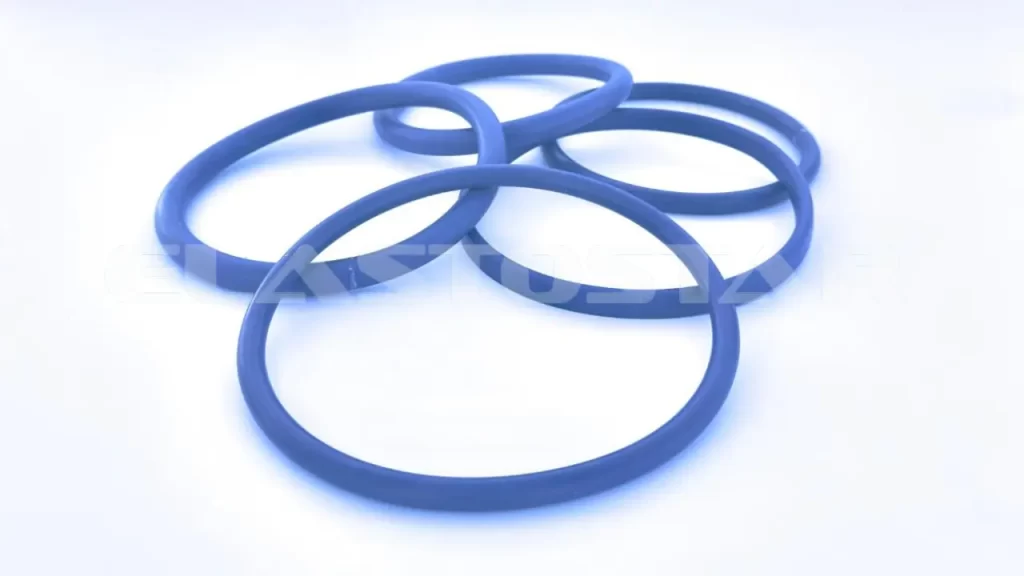
An O-ring can be used as either a static or dynamic seal, depending on whether relative movement occurs at the sealing interface.
The basic O-ring shape may be similar, but the operating conditions and design requirements are different.
| Design Factor | Static O-Ring | Dynamic O-Ring |
|---|---|---|
| Movement | No intended relative movement | Sliding, reciprocating, or oscillating movement |
| Compression | Maintains sealing contact between stationary surfaces | Must seal without creating excessive friction |
| Friction | Generally a lower concern | A major design consideration |
| Wear | Typically lower | Greater due to repeated movement |
| Lubrication | Often less critical | May be required to control friction and wear |
| Surface Finish | Important for reliable sealing | Especially important because the seal moves against the surface |
| Material Selection | Based on pressure, temperature, media, and compression | Must also consider speed, friction, wear, and lubrication |
For static O-rings, silicone can be a strong option where flexibility, temperature resistance, weather resistance, or specification-grade materials are required.
Dynamic O-rings require more careful material selection because repeated movement increases friction and wear.
Best Rubber Materials for Static and Dynamic Seals
The right elastomer depends on more than whether the application uses a static seal or a dynamic seal.
Temperature, pressure, fluid exposure, weathering, movement, friction, and required service life should all be considered before selecting an O-ring material.
| Rubber Material | Key Properties | Common Sealing Applications |
|---|---|---|
| Silicone | Excellent temperature flexibility and resistance to ozone and weathering; generally better suited to static than high-wear dynamic service | Static O-rings, high-temperature seals, aerospace components, food-processing and medical equipment when the appropriate grade is specified |
| Viton/FKM | Strong resistance to high temperatures, oils, fuels, and many chemicals | Viton/FKM Vulcanized O-Rings, automotive, chemical-processing, fuel-system, and industrial seals |
| EPDM | Good resistance to water, steam, ozone, and outdoor weathering; generally unsuitable for petroleum oils and fuels | Water systems, outdoor equipment, HVAC, and weather seals |
| Nitrile (NBR) | Good resistance to petroleum-based oils and fuels with useful abrasion resistance | Hydraulic and pneumatic equipment, pumps, machinery, and O-ring seals |
| Neoprene (CR) | Balanced weather, ozone, and general-purpose mechanical properties | Industrial equipment, outdoor sealing, enclosures, and general-purpose seals |
For applications requiring silicone, we can also manufacture parts using different silicone rubber grades based on the required temperature, hardness, regulatory specification, and operating environment.
There is no single best rubber material for static seals or dynamic seals. The correct choice should be based on the actual media, temperature, pressure, movement, and specification requirements of the application.
Why Silicone O-Rings Are Widely Used for Static Sealing
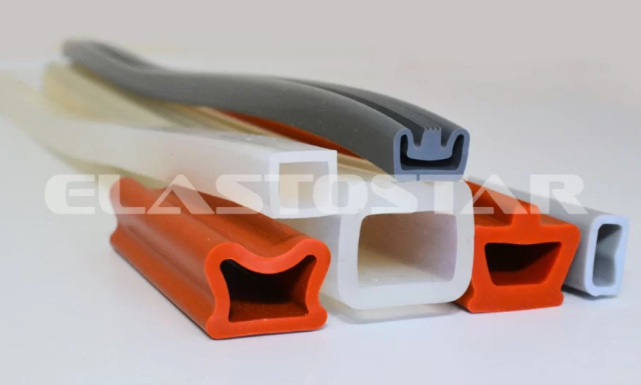
Vulcanized Silicone O-rings are well suited to many static sealing applications because the seal remains compressed between stationary surfaces rather than being continuously exposed to sliding friction and wear.
Silicone also maintains flexibility across a broad temperature range and offers good resistance to ozone, UV, and weathering.
For static applications, silicone O-rings can be particularly useful where buyers need:
- High- and low-temperature sealing performance.
- Good flexibility and compression characteristics.
- Resistance to ozone, UV, and outdoor exposure.
- Custom sizes and large-diameter O-rings for non-standard equipment.
- Application-specific silicone compounds and hardness options.
- Specialized grades for aerospace, food, medical, or flame-resistant applications where the appropriate specification is required.
For example, aerospace projects may specify A-A-59588 silicone rubber, while food-contact applications may require Food Grade Silicone (177.2600) compliant with FDA 21 CFR 177.2600.
The required grade should always be selected based on the drawing, operating environment, and applicable specifications.
Advantages of Hot-Vulcanized Silicone O-Rings for Static Seals
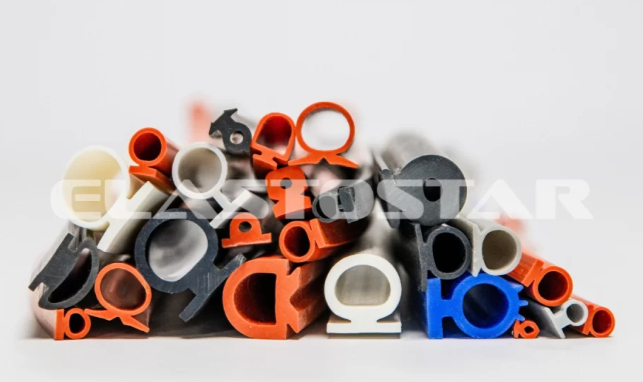
Hot-vulcanized silicone O-rings are a practical option for static sealing applications where standard molded O-ring sizes are unavailable or where custom and large diameters are required.
They are produced from extruded silicone cord, with the ends joined through a controlled vulcanization process to form a continuous ring.
Key advantages include:
- Custom sizes for non-standard sealing dimensions.
- Large-diameter O-rings for housings, covers, flanges, and equipment.
- Vulcanized joints for a durable, continuous sealing ring.
- Reduced tooling requirements compared with producing a new custom-molded O-ring size.
- Prototype and production flexibility for custom equipment designs.
- Multiple cross-section and hardness options based on application requirements.
We manufacture custom vulcanized O-rings to customer dimensions and application requirements, with Made in USA manufacturing, in-house capabilities, short lead times, and prototype-to-production support.
Read More: Spliced Silicone Rubber O-Rings Reduce Downtime
Static and Dynamic Seal Failure: Common Causes to Consider
Seal failure is not always caused by the rubber material itself. Incorrect seal dimensions, installation, pressure, temperature, chemical exposure, and operating conditions can all affect sealing performance.
Dynamic seals also face additional challenges because of continuous or repeated movement.
| Static Seal Failure Causes | Dynamic Seal Failure Causes |
|---|---|
| Insufficient or excessive compression | Excessive friction and heat |
| Incorrect groove or gland dimensions | Abrasion and repeated wear |
| Pressure-related extrusion | Inadequate lubrication |
| Material incompatibility with the media | Improper surface finish |
| Excessive temperature exposure | Excessive operating speed |
| Compression set over time | Pressure-related extrusion |
| Cuts, twisting, or installation damage | Misalignment or installation damage |
For both static O-rings and dynamic O-rings, material selection should consider the actual temperature range, pressure, contact media, seal geometry, and expected movement.
A material that performs well in a static application may not provide the same service life under continuous dynamic motion.
Where dimensional requirements are especially demanding, custom rubber seals and O-rings should be designed around the actual equipment and operating conditions rather than selected only by nominal size.
How to Choose Between a Static and Dynamic Seal for Your Application
Choosing the right seal starts with understanding how the sealing surfaces behave during operation. If there is no intended relative movement, a static seal is usually appropriate.
If sliding, reciprocating, rotary, or oscillating movement occurs, the application requires a dynamic sealing approach.
Before selecting the seal, buyers should review:
- Type of movement: Static, rotary, reciprocating, or oscillating.
- Pressure: Confirm the operating and peak pressure conditions.
- Temperature: Match the material to the actual service range.
- Media exposure: Check compatibility with oils, fuels, chemicals, water, steam, or other fluids.
- Seal geometry: Review groove dimensions, squeeze, clearance, and available space.
- Friction and wear: Especially important for dynamic sealing.
- Material: Compare Silicone, Viton/FKM, EPDM, Nitrile, and Neoprene based on the application.
- Production method: Determine whether a standard, molded, custom, spliced, or vulcanized seal is required.
For non-standard designs, we can support custom O-rings, rubber seals, and sealing profiles from drawings, dimensions, or existing samples.
Applications involving changing gaps or specialized movement may also require inflatable rubber seals and gaskets, depending on the equipment design and operating conditions.
When Should You Consider a Custom Silicone Static Seal?

A standard seal may not always match the dimensions, geometry, or operating requirements of an assembly.
Custom silicone static seals are useful when the sealing solution needs to be designed around the equipment rather than selected from a standard size.
A custom seal may be appropriate when:
- Standard O-ring sizes do not fit the existing groove or assembly.
- Large-diameter static O-rings are required for covers, housings, vessels, or equipment.
- An unusual cross-section or custom extruded profile is needed.
- An obsolete seal must be reproduced from an existing sample through reverse engineering.
- Specific hardness, compression, temperature, or environmental performance is required.
- Prototype parts need to be evaluated before moving into a full production run.
We manufacture custom silicone seals from drawings, CAD files, dimensional specifications, and physical samples.
Our capabilities support design and application assistance, reverse engineering, custom manufacturing, and prototype-to-production runs for non-standard sealing requirements.
Read More: 6 Reasons Why Custom Silicone Rubber Products Perform Better
Why Choose Elastostar Rubber Corporation as Your Custom Silicone Seal Manufacturer in the USA?

Choosing the right static rubber seal manufacturer involves more than finding the correct material or O-ring size.
Buyers also need dependable manufacturing, engineering support, repeatable quality, and the ability to move efficiently from a custom design into production.
At Elastostar Rubber Corporation, we support custom sealing projects with:
- Made in USA manufacturing from our U.S. facility.
- Custom O-Rings, silicone seals, gaskets, and extruded profiles manufactured to application requirements.
- Large manufacturing capacity for prototype and production quantities.
- Reverse engineering from existing samples when drawings are unavailable.
- Design and application support for custom sealing requirements.
- Prototype-to-production capabilities for new and repeat projects.
- Short lead-time support for custom manufacturing.
- Multiple elastomer options, including Silicone, Viton/FKM, EPDM, Nitrile, and Neoprene.
Our Made in USA silicone rubber manufacturing capabilities help OEMs, engineers, and purchasing teams source custom rubber seals and O-Rings with direct manufacturing and technical support.

Recommended Reads
- Top Mistakes to Avoid When Ordering Silicone O-Rings
- Viton vs Silicone O-Rings: Which Is the Best Choice?
- High-Temperature O-Rings for Industrial Applications
Find the Right Seal for Your Application
Choosing between a static seal and a dynamic seal depends on movement, pressure, temperature, media exposure, seal geometry, and material compatibility.
Whether you need a standard design or a custom O-ring, gasket, or sealing profile, the seal should be matched to the equipment’s actual operating conditions.
Contact us with your drawings, dimensions, samples, material requirements, and quantities to discuss your custom sealing application.
FAQs
Q1. What is the difference between a static seal and a dynamic seal?
A static seal works between surfaces with no intended relative movement, while a dynamic seal operates where sliding, rotary, reciprocating, or oscillating movement occurs. Dynamic sealing therefore requires greater attention to friction, wear, lubrication, and surface finish.
Q2. What is an example of a static seal?
A gasket between two stationary housings or a static O-ring compressed in a fixed groove are common examples. Custom silicone square and rectangular seals can also be used for non-standard static sealing requirements.
Q3. Is an O-ring a static or dynamic seal?
An O-ring can be used for both static and certain dynamic applications. Static O-rings remain compressed between stationary surfaces, while dynamic O-rings must maintain sealing contact during movement.
Q4. What materials are commonly used for static seals?
Common materials include Silicone, Viton/FKM, EPDM, Nitrile, and Neoprene. Material selection should consider temperature, pressure, fluids, chemicals, compression, and environmental exposure. ASTM D2000 rubber materials can also be relevant when a drawing or specification defines particular elastomer requirements.
Q5. Why are silicone O-rings suitable for static sealing?
Silicone O-rings offer good flexibility, temperature capability, and resistance to ozone and weathering. Static applications also avoid the continuous sliding friction that can increase wear in dynamic service.
Q6. What are the advantages of custom large-diameter static seals?
Custom large-diameter seals are useful when standard O-ring sizes do not fit the equipment. Depending on the design, custom molded rubber products or vulcanized sealing solutions can be developed around specific dimensions and application requirements.
Q7. When should a custom static seal be used?
A custom static seal may be appropriate when the assembly requires an unusual shape, non-standard dimensions, a replacement for an obsolete component, or application-specific material and performance requirements.
Q8. Can a silicone sponge be used for static sealing?
Yes. Closed-cell silicone sponge rubber can be suitable for static sealing where compressibility, recovery, and sealing around uneven surfaces are important. The correct density and compression should match the application.
Q9. Which seal is better for high-temperature applications?
High-temperature performance depends mainly on the seal material and operating conditions, not simply whether the seal is static or dynamic. Silicone and Viton/FKM may both be considered for elevated-temperature service, depending on the media, pressure, movement, and specified temperature range.
Q10. Where can I buy custom silicone static seals in the USA?
We manufacture custom silicone static seals, O-rings, bulb seals & gaskets, molded components, and extruded profiles in the USA.