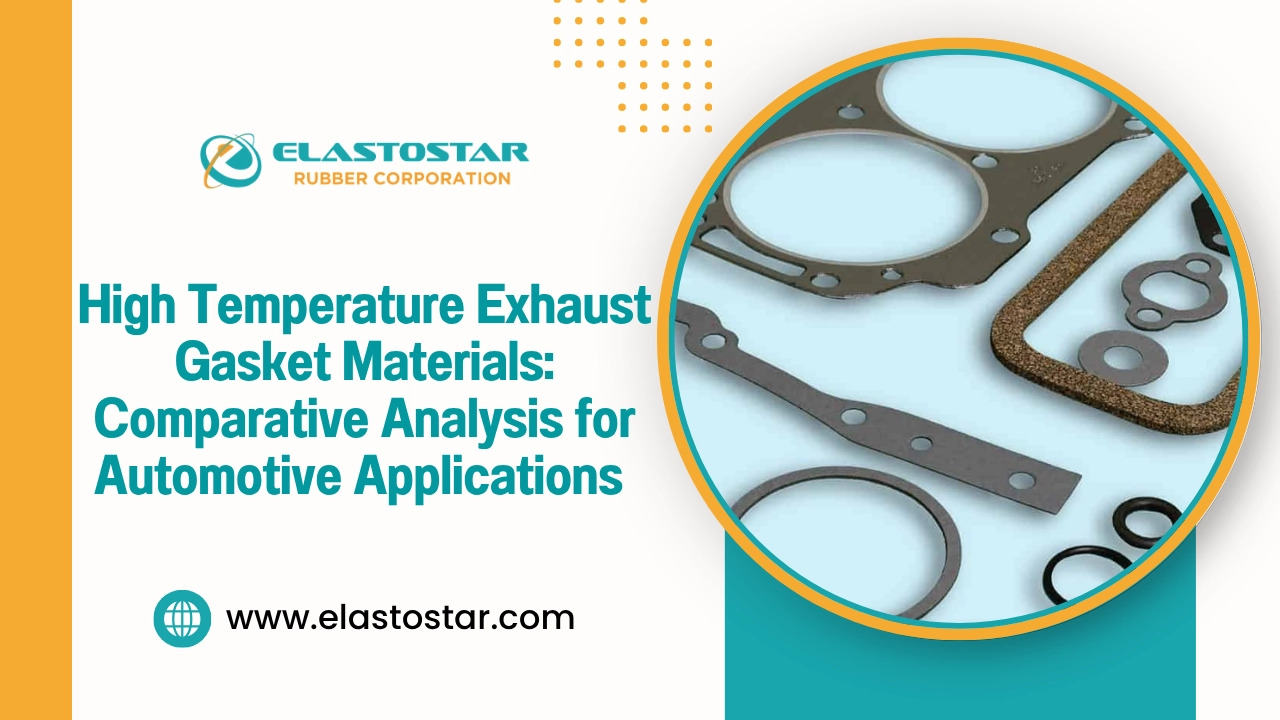
A high-temperature exhaust gasket operates in one of the harshest sealing environments found in automotive and industrial equipment. Extreme heat, thermal cycling, vibration, compression stress, oil exposure, and exhaust pressure can quickly damage low-performance sealing materials.
This is why selecting the correct exhaust gasket materials is critical for maintaining long-term sealing reliability and exhaust system performance.
Different applications require different sealing properties. An exhaust manifold gasket may operate between 300°F and 500°F, while a turbo gasket material can experience temperatures exceeding 1000°F near turbocharger systems.
Material selection must consider heat resistance, compression recovery, chemical exposure, and sealing stability under continuous operating conditions.
In this blog, we will compare common high-temperature gasket materials used in automotive, heavy equipment, and marine exhaust-sealing applications.
Key Takeaway
- High-temperature exhaust gaskets must resist heat, vibration, pressure, oil exposure, and thermal cycling.
- The right gasket material depends on the application, as manifold, turbo, automotive, heavy equipment, and marine systems have different sealing needs.
- Silicone sponge, fluorosilicone, FKM/Viton, and graphite composite materials each offer different benefits for heat resistance, compression recovery, and fluid resistance.
- Good compression set resistance helps the gasket maintain sealing pressure and prevent exhaust leaks over time.
- Proper flange condition, bolt torque, surface preparation, and gasket thickness are important for long-term exhaust gasket performance.
Table of Contents
Understanding Exhaust Temperature Requirements
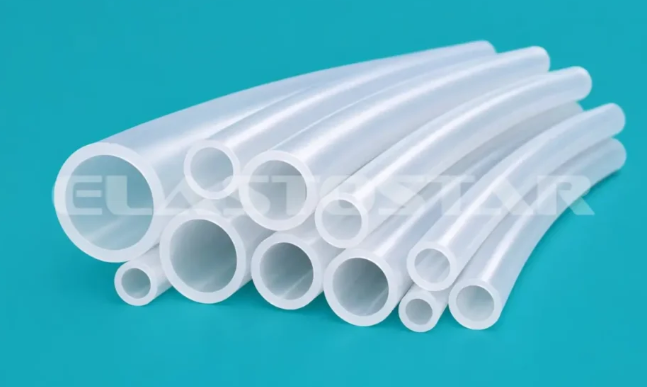
Exhaust systems operate under continuous heat, pressure, vibration, and thermal cycling, making material selection extremely important for long-term sealing reliability.
Different areas within the exhaust assembly experience different temperature ranges, so selecting the correct exhaust gasket materials depends heavily on the operating environment and system design.
Exhaust Manifold Temperature Ranges
An exhaust manifold gasket is commonly exposed to temperatures between 300°F and 500°F during standard engine operation.
These sealing systems must maintain compression strength and sealing stability through repeated heating and cooling cycles.
In automotive applications, gasket materials must also resist:
- Continuous vibration.
- Pressure fluctuations.
- Surface expansion and contraction.
- Long-term compression stress.
For exhaust sealing applications involving rubber and silicone materials, understanding material behavior under heat is important.
Turbocharger Exhaust Temperature Requirements
A turbo gasket material operates under significantly higher temperatures than standard exhaust systems. Turbocharger assemblies may exceed 1000°F near turbine housings and high-performance exhaust zones.
These applications require gasket materials capable of handling:
- Extreme thermal exposure.
- High exhaust pressure.
- Oil and fuel contamination.
- Aggressive thermal cycling.
For demanding sealing environments, materials such as Closed Cell Silicone Sponge Rubber and engineered gasket constructions are often selected where flexibility, compression recovery, and thermal resistance are important.
Why Thermal Cycling Matters
Thermal cycling occurs when exhaust systems repeatedly heat and cool during operation.
Over time, poor gasket materials may harden, crack, shrink, or lose compression strength under these conditions.
This can lead to:
- Exhaust leakage.
- Reduced sealing pressure.
- Gasket deformation.
- Increased maintenance requirements.
At Elastostar Rubber Corporation, we support high-temperature sealing applications with custom manufacturing, prototype-to-production capabilities, and engineered sealing solutions for industrial and automotive environments.
Comparing Common Exhaust Gasket Materials
Different exhaust gasket materials offer different levels of heat resistance, compression recovery, oil resistance, and long-term sealing durability.
Selecting the correct high-temp gasket material depends on operating temperature, exposure conditions, flange pressure, and the type of exhaust system being sealed.
1: Closed-Cell Silicone Sponge Materials
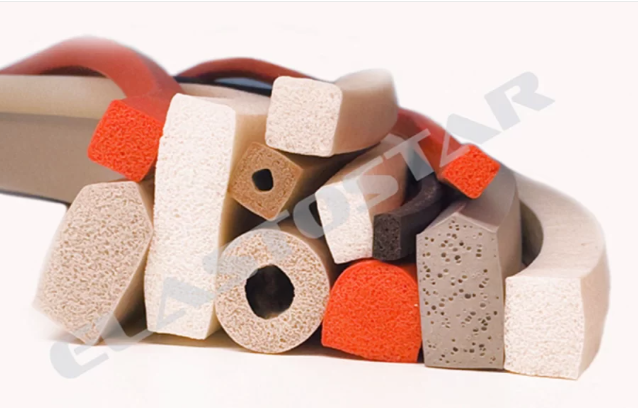
Closed-cell silicone sponge is commonly used in sealing applications that require flexibility, compression recovery, and stable performance under elevated temperatures.
It provides reliable sealing against moisture, air, and environmental exposure while maintaining flexibility through repeated thermal cycling.
These materials are often used in:
- Automotive exhaust seals.
- Industrial sealing systems.
- Equipment enclosures.
- High-temperature gasket assemblies.
For applications requiring consistent compression recovery and thermal stability, manufacturers often use materials such as ASTM D1056 soft silicone sponge in high-temperature sealing assemblies.
2: Fluorosilicone Gasket Materials
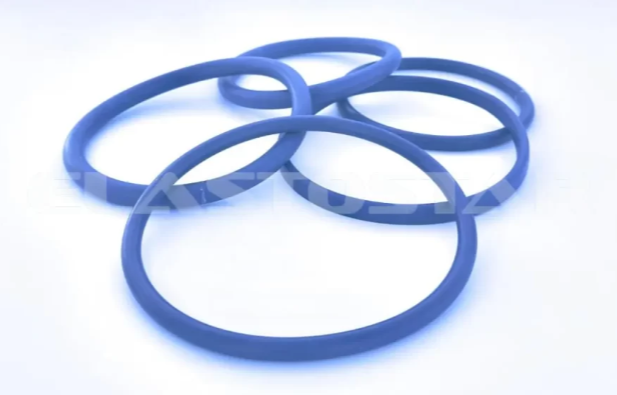
Fluorosilicone O-ring materials combine temperature resistance with improved resistance to fuel and oil.
These materials are commonly selected for automotive and turbocharged systems, where exhaust-sealing components may encounter fuel vapors, oils, or chemical exposure during operation.
They are often used in:
- Turbocharger sealing systems.
- Fuel-exposed gasket assemblies.
- Automotive exhaust applications.
- High-performance engine systems.
3: FKM / Viton High-Temperature Materials
FKM and Viton materials are widely used where both extreme temperature and chemical resistance are required.
These gasket materials perform well in harsh automotive and industrial operating environments that involve oils, fuels, and other aggressive fluids.
Common applications include:
- Turbo gasket systems.
- Heavy-duty industrial sealing.
- Oil-resistant gasket assemblies.
- High-pressure exhaust systems.
4: Graphite Composite Gasket Materials
Graphite composite materials are commonly used in exhaust systems that operate at very high temperatures and flange pressures.
These materials can withstand high-temperature exposure while maintaining sealing stability across uneven flange surfaces.
They are often selected for:
- Exhaust manifold gasket applications.
- Heavy equipment exhaust systems.
- Marine exhaust assemblies.
- High-temperature industrial equipment.
Read More: What Is the Best Rubber Material for Gaskets?
| Material Type | Key Strength | Oil/Fuel Resistance | Common Use |
| Closed-cell silicone sponge | Flexible sealing and compression recovery | Moderate | Automotive exhaust seals and industrial gasket assemblies |
| Fluorosilicone | Heat resistance with better fluid resistance | High | Turbocharged and fuel-exposed sealing systems |
| FKM / Viton | Strong heat and chemical resistance | Very high | High-performance exhaust and oil-exposed applications |
| Graphite composite | Extreme heat handling | Good | Exhaust manifold gasket and heavy equipment exhaust systems |
Compression Set Resistance at Elevated Temperatures
Compression set resistance is one of the most important factors in a high-temperature exhaust gasket.
When a gasket remains compressed for extended periods under heat and pressure, lower-quality materials may lose the ability to return to their original shape.
This loss of recovery can reduce sealing pressure and eventually lead to exhaust leakage.
1: How Compression Set Affects Exhaust Sealing
Exhaust systems continuously expand and contract during operation. If the gasket material cannot maintain compression recovery, the seal may weaken over time.
Common issues caused by poor compression set resistance include:
- Exhaust gas leakage.
- Reduced sealing pressure.
- Gasket hardening and shrinkage.
- Increased maintenance and replacement frequency.
This becomes more critical in applications exposed to high vibration, pressure fluctuations, and continuous thermal cycling.
2: Silicone vs Traditional Fiber Materials
Traditional fiber gasket materials may become brittle or lose sealing consistency after repeated exposure to elevated temperatures. Silicone-based sealing materials generally provide better flexibility and compression recovery under changing thermal conditions.
This makes materials such as Silicone Rubber Cord and custom silicone gasket profiles useful for demanding exhaust environments.
| Factor | Silicone-Based Materials | Traditional Fiber Materials |
| Flexibility | Maintains better flexibility under heat. | Can become stiff or brittle over time. |
| Compression Recovery | Supports better recovery after compression. | May lose sealing pressure faster. |
| Thermal Cycling | Handles repeated heating and cooling well. | More prone to cracking under thermal stress. |
| Sealing Stability | Better for long-term gasket performance. | May need more frequent replacement. |
For applications requiring tighter dimensional consistency and controlled gasket tolerances, our RMA Precision Tolerance Guide provides additional information about gasket manufacturing standards and tolerance considerations.
4: Material Stability Under Continuous Heat
A reliable high-temp gasket material must remain stable under continuous operating temperatures without excessive hardening, cracking, or compression loss.
Material stability is especially important in turbocharged systems, heavy-equipment exhaust assemblies, and industrial engines operating under constant-load conditions.
We manufacture custom gasket materials and engineered sealing components with custom manufacturing support, application assistance, and prototype-to-production capabilities for demanding high-temperature sealing applications.
Read More: Why Long-Term Sealing Performance Matters More Than Initial Specs
Oil and Fuel Resistance Requirements for Exhaust Gaskets
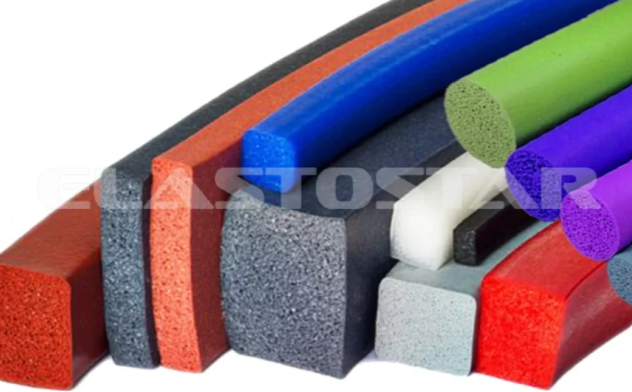
Many exhaust sealing applications operate near oils, fuels, grease, and chemical contaminants that can affect gasket durability over time.
In turbocharged systems and high-performance automotive environments, selecting the correct exhaust gasket materials requires balancing heat resistance with strong resistance to oil and fuel.
1: Why Fluid Resistance Matters
Exposure to oil and fuel can gradually weaken lower-grade gasket materials. Swelling, softening, cracking, and reduced sealing pressure may occur when the material is not compatible with the operating environment.
Common exposure sources include:
- Engine oil leakage.
- Fuel vapor exposure.
- Grease contamination.
- Chemical cleaning agents.
- Turbocharger lubrication systems.
For reliable long-term sealing, the gasket material must maintain compression strength and dimensional stability even after repeated exposure to fluids and elevated temperatures.
2: Fluorosilicone and FKM Performance
Fluorosilicone and FKM materials are widely used in applications requiring both temperature resistance and fluid compatibility.
These materials provide greater resistance to fuels, oils, and other aggressive automotive fluids than many standard rubber compounds.
They are commonly selected for:
- Turbocharger sealing systems.
- Automotive exhaust seals.
- Oil-exposed gasket assemblies.
- High-performance engine applications.
For demanding sealing environments, custom gasket constructions and engineered rubber components can help improve long-term sealing reliability.
Our Quality Control process supports consistent material inspection and production performance across industrial gasket applications.
3: Selecting Materials for Automotive Exhaust Seals
Material selection depends on operating temperature, exhaust pressure, fluid exposure, and compression requirements. In many automotive systems, a turbo gasket material must handle both extreme heat and chemical exposure without losing sealing performance.
Rubber Lip Seals & Gaskets, Custom Rubber Gaskets & Seals, and engineered sealing profiles are often manufactured to meet the specific operating conditions of the exhaust system.
Automotive vs Heavy Equipment vs Marine Exhaust Applications
Different exhaust systems operate under varying environmental and mechanical conditions, so the required exhaust gasket materials can vary significantly across automotive, heavy equipment, and marine applications.
Factors such as operating temperature, vibration levels, moisture exposure, pressure load, and continuous runtime all influence gasket performance and material selection.
1: Automotive Exhaust Applications
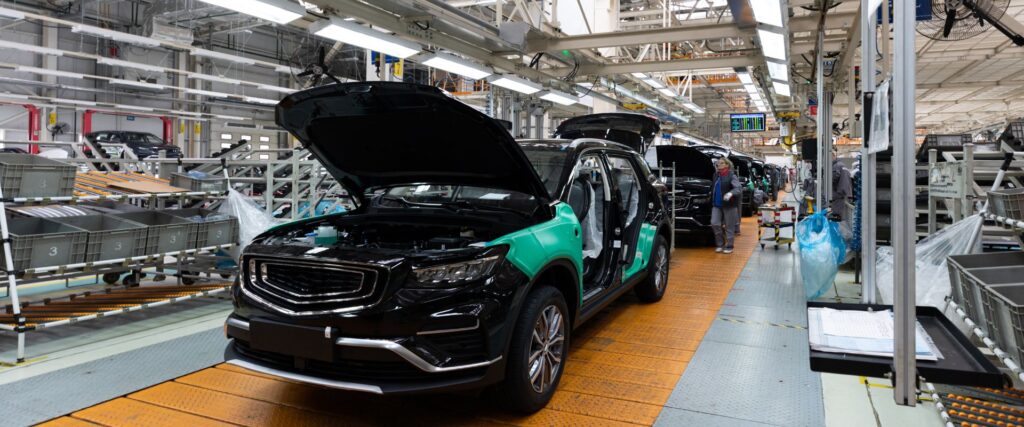
Automotive exhaust systems experience frequent thermal cycling, vibration, and fluctuating engine loads under normal driving conditions.
In these systems, gasket materials must maintain sealing stability while handling repeated expansion and contraction around exhaust manifolds and turbocharger assemblies.
Common requirements include:
- Compression recovery under heat.
- Resistance to vibration and movement.
- Reliable sealing around compact flange surfaces.
- Long-term durability under thermal cycling.
Metal-detectable silicone rubber and custom gasket profiles are often chosen when flexibility and consistent sealing are important.
2: Heavy Equipment Exhaust Systems
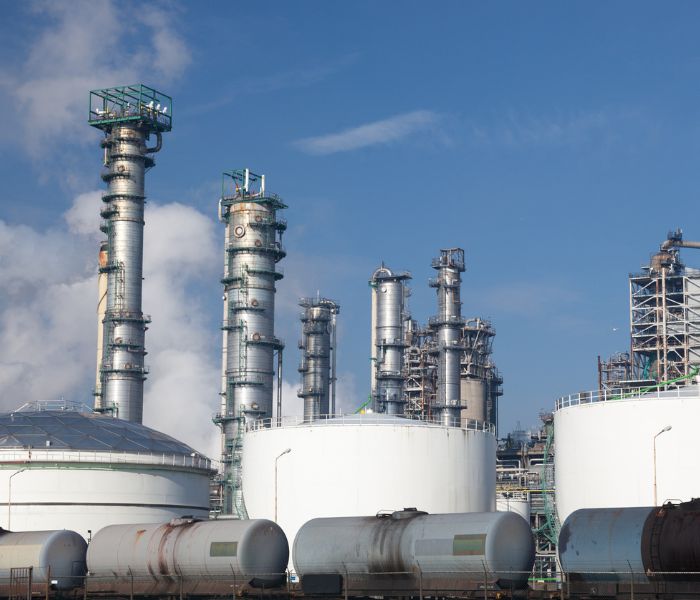
Heavy equipment exhaust systems typically operate under higher continuous loads and longer operating cycles than passenger vehicles.
These applications may involve larger flange assemblies, higher compression forces, and continuous exposure to elevated exhaust temperatures.
Important considerations include:
- Continuous high-temperature operation.
- Larger gasket dimensions.
- Strong compression resistance.
- Heavy vibration and pressure loads.
Rubber Molded Parts and custom industrial sealing components are often manufactured for demanding heavy-duty applications.
3: Marine Exhaust Environments

Marine exhaust systems introduce additional environmental challenges because sealing materials may also be exposed to moisture, humidity, and corrosion at elevated operating temperatures.
Marine sealing systems often require:
- Moisture resistance.
- Corrosion resistance.
- Long-term sealing durability.
- Stable compression performance under vibration and movement.
At Elastostar Rubber Corporation, we manufacture custom gasket materials, silicone sealing components, and engineered rubber products with custom manufacturing support, application assistance, and proudly Made in USA production capabilities.
Read More: Boat Window Gaskets: Marine Grade Material Selection & UV Resistance
| Application Type | Main Challenge | Gasket Material Need |
| Automotive exhaust systems | Frequent heat cycling and vibration. | Flexible automotive exhaust seals with stable compression recovery. |
| Heavy equipment exhaust systems | Long runtime, heavy vibration, and higher pressure loads. | Durable exhaust gasket materials with strong compression resistance. |
| Marine exhaust systems | Heat, moisture, humidity, and corrosion exposure. | Moisture-resistant high-temp gasket material with long-term sealing stability. |
Design Considerations for Exhaust Gasket Performance
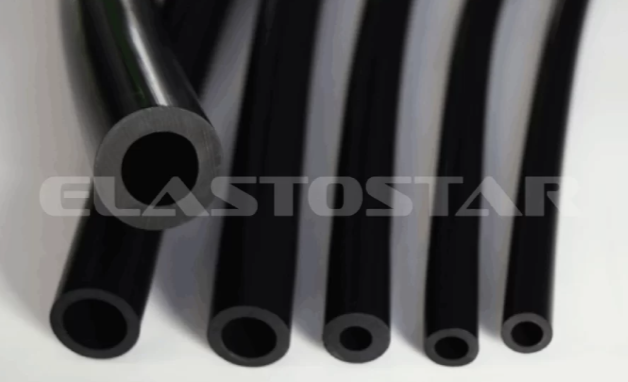
Even the best high-temperature flame-retardant gasket material can fail if the gasket design and installation conditions are not properly controlled.
Factors such as flange flatness, bolt torque, gasket thickness, and surface condition all affect sealing pressure and long-term gasket reliability in exhaust systems.
1: Flange Flatness and Surface Condition
Uneven flange surfaces can create gaps that reduce sealing pressure across the gasket. Scratches, warping, corrosion, and surface irregularities may lead to exhaust leakage even when high-performance gasket materials are used.
Proper flange preparation helps improve:
- Gasket contact consistency.
- Sealing pressure distribution.
- Long-term exhaust sealing performance.
- Resistance to leakage under vibration and heat.
2: Bolt Torque and Compression Load
Correct bolt torque is important because uneven compression can damage the gasket or reduce sealing effectiveness.
Excessive torque may crush softer gasket materials, while insufficient torque can lead to pressure loss and leakage around the exhaust assembly.
This becomes especially important for:
- Exhaust manifold gasket systems.
- Turbocharger sealing assemblies.
- Multi-bolt flange connections.
- High-vibration industrial exhaust systems.
3: Gasket Thickness Selection
Gasket thickness affects compression behavior, sealing pressure, and the ability to compensate for flange irregularities. Thicker gasket materials may improve gap filling, while thinner materials can provide more controlled sealing pressure in precision applications.
Custom Rubber Gaskets & Seals are often manufactured with application-specific thickness and compression requirements depending on the operating environment.
For complex sealing applications, our custom manufacturing capabilities support engineered gasket solutions with material selection assistance, reverse engineering support, and prototype-to-production manufacturing services.
Case Study: Upgrading From Fiber to Silicone Exhaust Gaskets
Many exhaust systems still use traditional fiber gaskets due to cost and availability. However, in demanding automotive and industrial environments, these materials may lose sealing performance after repeated exposure to heat, vibration, and compression stress.
Upgrading to silicone-based sealing materials can help improve long-term gasket durability and reduce maintenance frequency.
1: Challenges With Traditional Fiber Gaskets
Traditional fiber gasket materials may gradually harden, crack, or lose compression recovery after continuous thermal cycling. This can create sealing gaps around exhaust flanges, increasing the risk of leakage over time.
Common problems include:
- Reduced sealing pressure.
- Compression loss under heat.
- Surface cracking and brittleness.
- Frequent gasket replacement cycles.
These issues become more noticeable in turbocharged systems and high-load industrial exhaust applications.
2: Benefits After Switching to Silicone Materials
Silicone-based gasket materials offer greater flexibility and compression recovery under varying thermal conditions.
Key improvements may include:
- Better compression recovery
- Improved thermal stability
- Reduced gasket hardening
- Longer sealing life under vibration and movement
For additional information about silicone sealing materials and performance characteristics, our extruded Extruded Silicone rubber explains how silicone compounds perform across industrial applications.
3: Long-Term Sealing Improvements
After upgrading to silicone-based sealing materials, many exhaust systems experience improved sealing consistency and reduced maintenance requirements. Better material recovery can also help maintain sealing pressure over longer operating periods.
We manufacture engineered gasket materials, silicone sealing components, and custom exhaust sealing solutions, with application support, reverse-engineering assistance, and prototype-to-production manufacturing capabilities for demanding industrial and automotive environments.
For custom gasket design support and material selection assistance, contact our team.
Why Choose Elastostar Rubber Corporation for High-Temperature Gasket Solutions?

At Elastostar Rubber Corporation, we support high-temperature gasket applications with custom silicone rubber sealing solutions engineered for heat, vibration, compression, and demanding operating conditions.
- Custom manufacturing
We manufacture gasket materials, rubber seals, silicone profiles, and custom sealing components. - Large manufacturing facility
Our setup supports prototypes, short runs, and larger production needs. - Proudly Made in the USA
We provide reliable USA-based manufacturing and supply support. - Reverse engineering support
We recreate gasket profiles from samples, drawings, or application needs. - Prototype to production capability
We support projects from testing to full production. - Design help and application support
We help customers select suitable materials and gasket constructions. - Shortest lead time delivery
We support urgent industrial and automotive sealing requirements.
As a trusted silicone rubber manufacturer, we manufacture custom gaskets and sealing solutions for automotive, marine, heavy equipment, and industrial applications.
Recommended Reads
- A Complete Guide to High Temperature Silicone Rubber
- High Temperature O-Rings for Industrial Applications
- Material Selection Impact on Product Reliability

Conclusion
Selecting the right high-temperature exhaust gasket material is essential for long-term sealing performance in automotive, heavy equipment, turbo, and marine exhaust systems. Heat resistance, compression set, oil resistance, flange condition, bolt torque, and gasket thickness all affect how well the seal performs under continuous stress.
Materials such as silicone sponge, fluorosilicone, FKM/Viton, and graphite composite each serve different exhaust environments. The best choice depends on temperature range, fluid exposure, vibration, and sealing pressure.
At Elastostar Rubber Corporation, we manufacture custom exhaust gasket materials and engineered sealing components with application support, reverse engineering assistance, and proudly Made in USA manufacturing capabilities.
You can also explore our certification standards to learn more about our quality-focused production capabilities for demanding industrial sealing applications.
FAQs
Q1. What Material Is Best for Exhaust Gaskets?
The best exhaust gasket materials depend on temperature, pressure, vibration, and fluid exposure. Silicone sponge works well for flexible sealing and compression recovery, while FKM/Viton, fluorosilicone, and graphite composite materials are used for higher-temperature, oil-exposure, or aggressive exhaust conditions.
Q2. What Temperature Can Silicone Exhaust Gaskets Withstand?
A silicone-based high-temperature exhaust gasket can handle elevated temperatures, but the exact range depends on the compound, gasket design, and operating environment. For automotive and industrial use, materials such as Closed Cell Silicone Sponge Rubber and Silicone Rubber Cord are often selected where flexibility and heat stability are important.
Q3. Is FKM/Viton Better Than Silicone for Exhaust?
FKM/Viton may be better when the gasket is exposed to oils, fuels, and aggressive fluids. Silicone is often preferred where flexibility, compression recovery, and thermal cycling resistance are more important. The right high-temp gasket material depends on the actual exhaust location and exposure conditions.
Q4. What Is the Difference Between Manifold and Turbo Gasket Materials?
An exhaust manifold gasket typically operates at 300°F to 500°F, while a turbo gasket material may face much higher temperatures, pressures, and exposure to oil. Turbo applications often require greater heat resistance, improved compression stability, and enhanced fluid compatibility.
Q5. Can Silicone Gaskets Replace Fiber Exhaust Gaskets?
Yes, silicone gaskets can replace fiber gaskets in some exhaust and high-temperature sealing applications when the design, temperature range, and compression requirements are suitable. Silicone materials often provide better flexibility and compression recovery than traditional fiber materials.
Q6. What Is Compression Set in High-Temperature Gaskets?
Compression set is the amount of permanent deformation a gasket retains after being compressed for a period of time. In a high-temperature exhaust gasket, low compression set is important because it helps the gasket maintain sealing pressure after repeated heat cycles, vibration, and load changes.
Q7. Do Exhaust Gaskets Need Oil Resistance?
Many exhaust gaskets need oil resistance, especially in turbocharger areas, engine compartments, and high-performance automotive systems. Oil exposure can soften or damage some materials. For automotive exhaust seals, fluorosilicone and FKM/Viton are often selected when oil and fuel resistance are important.
Q8. How Do You Prevent Exhaust Gasket Blowout?
Exhaust gasket blowout can be reduced by selecting the correct material, maintaining proper bolt torque, checking flange flatness, and using a gasket design that can handle pressure and heat. Custom profiles, Rubber Sheets and Mats, and engineered Custom Rubber Gaskets & Seals may be used when standard gasket options do not fit the application.
Q9. What Are Graphite Composite Exhaust Gaskets?
Graphite composite exhaust gaskets are sealing materials composed of graphite and reinforcement layers to withstand extreme heat and exhaust pressure. They are often used in exhaust manifolds, heavy equipment, turbochargers, and industrial engine applications where very high temperature resistance is required.