Thermal movement, vibration, and misalignment are common challenges in HVAC and piping systems. Without proper flexibility, these forces can stress equipment, loosen connections, and shorten system life. Neoprene expansion joints provide an effective solution by absorbing movement while maintaining a secure, sealed connection.
Commonly used as rubber expansion joints in HVAC ductwork and piping, they help reduce noise, isolate vibration, and protect connected components. From air-handling units to chilled-water lines, HVAC expansion joints act as flexible connectors that support reliable operation.
This guide explains how neoprene expansion joints are designed, specified, and installed in mechanical systems.
Key Takeaways
- Neoprene expansion joints absorb thermal movement, vibration, and misalignment, helping protect HVAC and piping systems from stress and damage.
- They play a key role in improving system life by reducing noise, isolating vibration, and preventing failure of rigid connections.
- Neoprene is widely used due to its balanced properties, including weather resistance, flexibility, and suitability for typical HVAC temperature ranges.
- Proper design and sizing are critical, as joints must handle axial, lateral, and angular movement without exceeding limits.
- In HVAC ductwork and chilled water systems, expansion joints improve performance, reduce wear, and support reliable long-term operation.
- Correct installation and regular inspection are essential to avoid premature failure and maintain consistent sealing performance.
Table of Contents
Expansion Joint Function in HVAC and Piping Systems
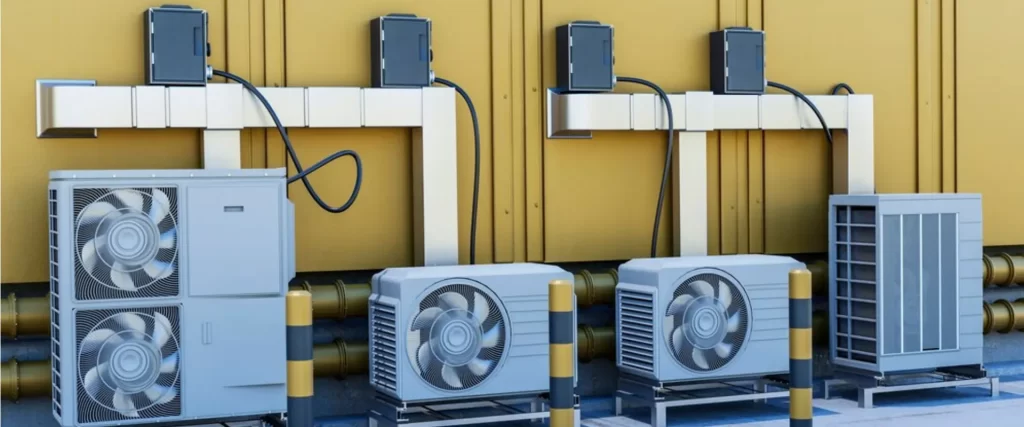
Expansion joints are installed in mechanical systems to absorb movement and protect connected equipment.
In HVAC and piping networks, rigid connections alone cannot accommodate the stresses caused by temperature changes, vibration, and alignment variation.
1. Thermal Expansion and Contraction
As fluids or air heat up and cool down, piping and ductwork expand and contract. Without flexibility, this movement can lead to:
- Cracked welds or joints.
- Excess stress on pumps, fans, and coils.
- Premature failure of rigid connections.
Rubber expansion joints allow controlled movement, reducing stress on the overall system.
2. Vibration Isolation
Rotating equipment, such as pumps, chillers, and air handling units, generates vibration. If transmitted through rigid piping or ductwork, vibration can cause noise, fatigue, and component wear.
A neoprene expansion joint acts as a vibration isolator by separating equipment movement from the rest of the system, improving comfort and extending equipment life.
3. Misalignment Compensation
Perfect alignment is difficult to maintain during installation and operation. Structural movement and settling can also shift connections over time.
Expansion joints accommodate:
- Axial movement (in-line).
- Lateral movement (side-to-side).
- Angular movement (offset rotation).
By serving as flexible connectors, expansion joints help maintain system integrity even when minor misalignment occurs.
Also Read– Why Is Silicone Rubber Popular for Use in HVAC Systems?
What are the Advantages of Neoprene Expansion Joints?
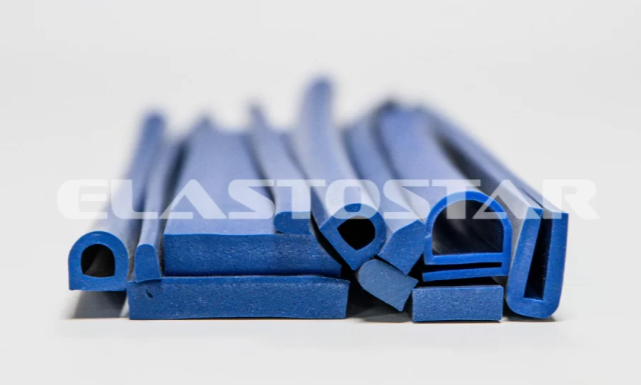
Material selection plays a major role in how an expansion joint performs over time.
Neoprene is widely used in HVAC and general piping applications because it offers a balanced combination of flexibility, durability, and environmental resistance.
1. Weather and Ozone Resistance
Neoprene performs well in both indoor and outdoor installations. It resists:
- Weathering from rain and humidity.
- Ozone exposure from outdoor air and rooftop equipment.
- Cracking caused by long-term environmental exposure.
This makes a neoprene expansion joint suitable for rooftop HVAC units, outdoor ductwork, and exposed piping systems.
2 . Temperature Operating Range
Neoprene expansion joints typically operate within a temperature range of –40°F to +180°F, which covers most HVAC and chilled water applications.
Within this range, the material maintains:
- Flexibility under low temperatures.
- Stable sealing performance at elevated temperatures.
- Consistent movement absorption over time.
Balanced Chemical and Mechanical Properties
Neoprene offers moderate resistance to oils, greases, and common industrial fluids, making it a practical choice for mixed-use environments.
As a result, neoprene rubber expansion joints are commonly specified when a reliable, cost-effective solution is needed without requiring specialty elastomers.
Also Read- Top 5 Pros and Cons of Nitrile Rubber
Key Design Parameters for Neoprene Expansion Joints
Correct sizing and specification are essential for expansion joints to perform reliably. Designers must evaluate movement capability, pressure limits, and system conditions before selecting a neoprene expansion joint.
1. Movement Range Considerations
Expansion joints are designed to absorb different types of movement within HVAC and piping systems:
- Axial movement – Expansion and contraction along the pipe or duct axis.
- Lateral movement – Side-to-side displacement caused by thermal growth or structural shift.
- Angular movement – Small rotational offsets between connected components.
A properly selected rubber expansion joint must accommodate all expected movements without exceeding material limits.
2. Pressure Rating and System Conditions
Pressure capability is influenced by joint construction, reinforcement, and flange design. When specifying a piping expansion joint, designers should consider:
- Maximum operating pressure and vacuum conditions.
- Surge pressures during startup or shutdown.
- Whether control rods or tie rods are required for pressure restraint.
Ignoring pressure ratings can lead to overextension or premature joint failure.
Typical Design Parameters (Illustrative)
| Design Factor | Consideration |
| Axial Movement | Expansion and contraction allowance |
| Lateral Movement | Offset between connected equipment |
| Angular Movement | Rotational misalignment tolerance |
| Pressure Rating | Operating and surge pressure limits |
| Safety Factors | Use of control rods or limiters |
What are the Neoprene Expansion Joints in HVAC Ductwork?
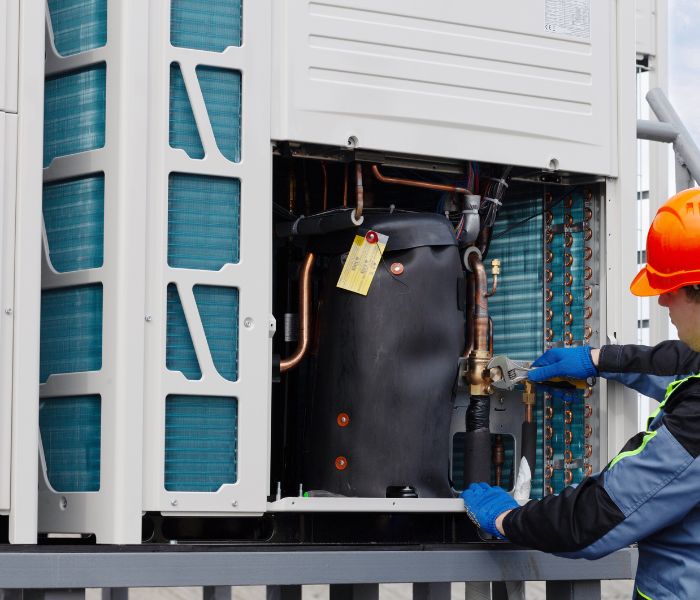
HVAC duct systems experience constant movement due to temperature changes, air pressure, and equipment vibration. Without flexibility, these forces can transmit noise and stress throughout the building.
1. Role in Ductwork Systems
HVAC expansion joints are commonly installed at:
- Connections to air handling units (AHUs).
- Supply and return duct transitions.
- Fan and blower outlets.
In these locations, a ductwork expansion joint absorbs movement while maintaining an airtight seal.
2. Noise and Vibration Control
Fans and blowers generate vibration that can travel through rigid ductwork. Rubber expansion joints help isolate this vibration, reducing noise transmission into occupied spaces and minimizing fatigue in duct connections.
Thermal Movement Accommodation
Temperature differences between supply air, return air, and ambient conditions cause ductwork to expand and contract. A neoprene expansion joint allows controlled movement, preventing:
- Duct distortion or cracking.
- Stress at flange connections.
- Air leakage at joints and seams.
Benefits for HVAC Contractors and Building Owners
Properly installed duct expansion joints improve system performance by:
- Enhancing occupant comfort through reduced noise.
- Protecting equipment from vibration-related wear.
- Extending the service life of HVAC duct systems.
Neoprene Expansion Joints in Chilled Water Piping Systems

Chilled water systems are sensitive to thermal movement, vibration, and pressure changes. Rigid piping connections can transfer stress to pumps, valves, and heat exchangers, increasing the risk of leaks and mechanical failure.
1. Role in Chilled Water Loops
A neoprene expansion joint is commonly installed:
- At the pump suction and discharge connections.
- Near chillers and heat exchangers.
- Along long pipe runs where thermal expansion is expected.
In these locations, the joint functions as a piping expansion joint, protecting equipment while maintaining system integrity.
2. Managing Thermal Movement and Vibration
As chilled water temperatures fluctuate, piping expands and contracts. Rubber expansion joints absorb this movement and help:
- Reduce stress on flanges and supports.
- Isolate vibration generated by pumps and rotating equipment.
- Prevent noise transmission through rigid piping networks.
Why Neoprene Works Well in Chilled Water Systems?
Neoprene performs reliably across typical chilled-water temperature ranges and offers good resistance to moisture and common HVAC chemicals.
This makes it a practical material choice for long-term operation in closed-loop systems.
Benefits for Mechanical Systems
Using neoprene expansion joints in chilled water piping helps:
- Extend equipment life.
- Reduce maintenance caused by vibration-related wear.
- Improve overall system reliability and performance.
Flange vs Grooved-End Connections for Rubber Expansion Joints
The connection style of an expansion joint affects installation time, pressure capability, and long-term maintenance.
In HVAC and piping systems, rubber expansion joints are commonly supplied with either flanged or grooved ends.
1. Flanged Connections
Flanged neoprene expansion joints are bolted directly between mating flanges. This connection style provides a secure seal and uniform compression for chilled water systems and higher-pressure piping applications. Proper alignment and controlled bolt tightening are essential to avoid over-compression.
2. Grooved-End Connections
Grooved-end joints connect using mechanical couplings rather than bolts.
They are faster to install and easier to remove, which makes them popular in HVAC piping systems and retrofit projects. These joints act as a flexible connector while simplifying maintenance, though they typically support lower pressure ratings than flanged designs.
Connection Type Comparison
| Feature | Flanged Expansion Joint | Grooved-End Expansion Joint |
| Installation Speed | Moderate | Fast |
| Pressure Capability | Higher | Moderate |
| Typical Applications | Chilled water and process piping | HVAC piping and retrofit projects |
| Maintenance Access | Requires unbolting | Easier removal |
| Connection Method | Bolted flanges | Mechanical grooved couplings |
Selecting the Right Connection
Flanged connections are preferred where pressure stability and long-term installation are critical. Grooved-end connections are better suited for systems that require faster installation and easier future maintenance.
Also Read– Square Gaskets vs Round Gaskets Under High Pressure
Installation Procedures and Best Practices
Proper installation is critical to ensure a neoprene expansion joint performs as intended and achieves its full service life. Most failures are caused by misalignment or improper tightening rather than material issues.
1. Pre-Installation Checks
Before installation:
- Verify joint size, pressure rating, and movement capability.
- Ensure piping or ductwork is properly aligned.
- Remove debris, weld slag, or sharp edges from mating surfaces.
Expansion joints should never be used to correct major misalignment.
2. Installation Guidelines
- Do not twist or over-compress the joint during installation.
- Tighten bolts evenly using a cross-pattern to ensure uniform compression.
- Do not exceed recommended bolt torque values.
- Ensure the joint is installed at its neutral length unless otherwise specified.
For pressure systems, install control rods or limiters if required by design.
3 . Post-Installation Inspection
After system startup:
- Check for leaks or abnormal movement.
- Inspect bolt tightness after initial operation.
- Confirm the joint is not under excessive strain or distortion.
Routine visual inspection helps prevent premature failure and extends the life of rubber expansion joints.
Also Read– How to Test the Quality of Rubber
A Reliable Silicone Rubber Manufacturer for Expansion Joint Applications

Elastostar Rubber Corporation is a U.S.-based silicone rubber manufacturer and custom rubber components supplier supporting HVAC and piping applications.
Why do customers work with us?
- We support custom manufacturing for flexible rubber and silicone components.
- Our large manufacturing facility supports both development and production needs.
- We provide reverse engineering support for replacement and legacy parts.
- We offer prototype-to-production-run capability for evolving system requirements.
- We provide design help and application support to improve fit, performance, and service life.
- We focus on the shortest possible lead time to support urgent project schedules.
- Our products are Proudly Made in the USA, supporting traceability, consistency, and dependable supply.
For broader sealing and flexible-connection programs, we also manufacture custom extruded profiles, O-rings, gaskets, and sheet materials to meet application requirements.

Recommended Reads
- Shorter Lead Time With USA Silicone Gasket Manufacturers
- Top Reasons to Choose U.S. Silicone Rubber Over Offshore Products
- Procurement Guide for Silicone Rubber Suppliers
FAQs
Q1. What are neoprene expansion joints used for?
Neoprene expansion joints are used to absorb thermal expansion, isolate vibration, and accommodate minor misalignment in HVAC ductwork and piping systems. They help protect connected equipment and reduce stress on rigid connections.
Q2. Why use neoprene instead of EPDM for expansion joints?
Neoprene offers good resistance to weather and ozone, along with moderate resistance to oils and greases, making it suitable for general HVAC and mechanical applications. EPDM is often selected for higher-temperature or hot water systems.
Q3. What movement can neoprene expansion joints accommodate?
Neoprene expansion joints can accommodate axial, lateral, and angular movement. The exact movement capacity depends on the joint design, size, and system conditions.
Q4. What is the temperature range of neoprene expansion joints?
Neoprene expansion joints typically operate within a temperature range of –40°F to +180°F, which covers most HVAC ductwork and chilled water piping applications.
Q5. How do you size an expansion joint for HVAC?
Sizing an expansion joint depends on duct or pipe diameter, expected thermal movement, operating pressure, and temperature. Proper sizing ensures the joint absorbs movement without excessive strain.
Q6. What is the pressure rating of rubber expansion joints?
The pressure rating varies based on joint construction, reinforcement, and connection type. Rubber expansion joints are commonly designed for low- to moderate-pressure applications in HVAC and chilled water systems.
Q7. How do you install neoprene expansion joints?
Neoprene expansion joints should be installed without twisting or over-compression. Bolts should be tightened evenly, and the joint should be installed at its neutral length unless otherwise specified.
Q8. What are flanged vs grooved-end expansion joints?
Flanged expansion joints are bolted between mating flanges and provide higher pressure capability. Grooved-end expansion joints use mechanical couplings, allowing faster installation and easier maintenance.
Q9. How often should expansion joints be inspected?
Expansion joints should be visually inspected during routine maintenance and after initial system startup. Regular inspection helps identify wear, cracking, or abnormal movement early.
Q10. Can neoprene expansion joints be used in chilled water systems?
Yes. Neoprene expansion joints are widely used in chilled water piping systems because they provide flexibility, moisture resistance, and reliable performance within typical chilled water temperature ranges.