Lamination adhesives play an important role in gasket manufacturing by bonding rubber, foam, silicone, and metal layers used across industrial sealing applications. The performance of a pressure-sensitive adhesive, heat-activated adhesive, or transfer adhesive directly affects peel strength, temperature resistance, sealing durability, and long-term product reliability.
Different adhesive systems are selected based on substrate compatibility, operating environment, and assembly requirements.
At Elastostar Rubber Corporation, we manufacture custom rubber gaskets & seals, adhesive-backed components, and silicone sealing products for demanding industrial applications.
Our team supports projects from prototype to production with custom manufacturing, application support, reverse engineering assistance, and proudly Made in USA manufacturing capabilities.
In this blog, we will compare pressure-sensitive adhesive and heat-activated adhesive systems used in multi-layer gasket assemblies.
Key Takeaways
- Gasket adhesives are not chosen by strength alone. The material, surface, heat, compression, and working environment all matter.
- Pressure-sensitive adhesives are useful when the gasket needs quick bonding during assembly or installation.
- Heat-activated adhesives are better for multi-layer gasket assemblies that face heat, vibration, pressure, or long-term stress.
- Acrylic PSA is usually a stronger choice for outdoor, high-temperature rubber, or long-life sealing applications.
- Rubber-based PSA works well when fast grip and easy placement are more important than extreme performance.
- Poor surface preparation can weaken even a good adhesive, especially when oil, dust, moisture, or release agents are present.
- Silicone, foam, rubber, and metal surfaces may each need a different adhesive approach.
- The best adhesive-backed gasket is one designed around the actual application, not a generic bonding system.
Table of Contents
Understanding Different Types of Lamination Adhesives
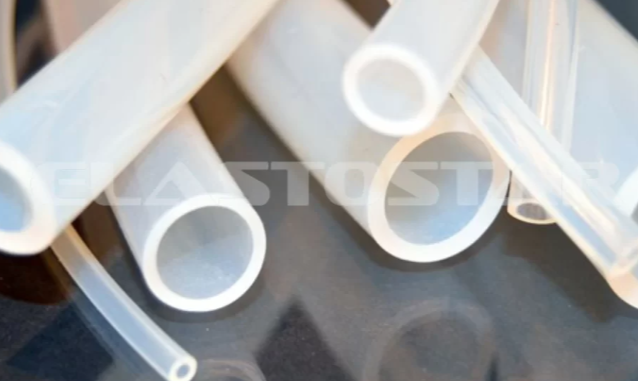
Different lamination adhesives are used to meet specific bonding, sealing, and environmental requirements in gasket manufacturing.
The selection of a pressure-sensitive adhesive, acrylic PSA, transfer adhesive, or heat-activated adhesive depends on substrate compatibility, temperature exposure, compression performance, and assembly method.
In multi-layer gasket applications, the right adhesive system helps maintain strong bonding across rubber, foam, silicone, and metal surfaces.
1: Acrylic PSA for Long-Term Stability
An acrylic PSA is commonly used when the application requires aging resistance, UV stability, and dependable long-term bonding.
It is often suitable for outdoor sealing products, such as Rubber Window & Door Seal, where adhesive performance must remain stable through moisture, temperature changes, and regular compression.
For silicone-based sealing applications, material selection is also important. You can explore our Extruded Silicone rubber to better understand how silicone materials perform across different industrial environments.
2: Rubber-Based PSA for High Initial Tack
Rubber-based pressure-sensitive adhesive systems provide strong initial tack and fast surface bonding.
These adhesives are useful for general gasket assemblies, rubber strips, and sheet materials where quick placement and immediate adhesion are important during production or installation.
3: Heat-Activated Adhesive Systems
A heat-activated adhesive requires controlled heat and pressure to form a stronger bond.
This type is often used in demanding multi-layer gasket assemblies where long-term adhesion, heat resistance, and structural bonding are more important than quick initial tack.
4: Transfer Adhesive Constructions
A transfer adhesive uses a thin adhesive layer without a carrier material, making it suitable for precision gasket lamination.
It is commonly used for die-cutting gaskets and custom gasket applications where clean adhesive placement, tight dimensions, and smooth assembly are important.
Read More: Form-In-Place Gaskets (FIPG): Technology Overview & ROI Analysis
Bonding Mechanisms and Adhesive Activation Methods
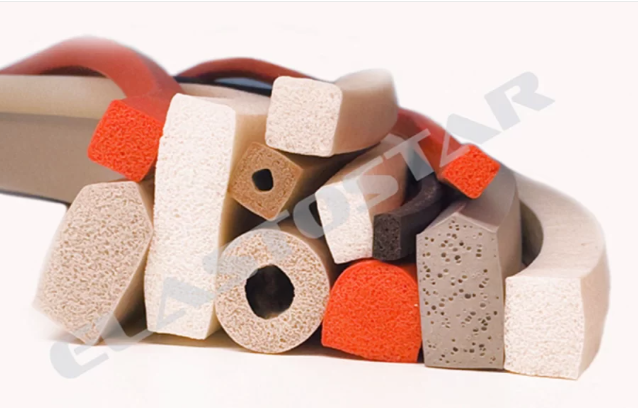
The bonding method behind an adhesive directly affects sealing performance, durability, and long-term reliability in gasket assemblies.
A pressure-sensitive adhesive bonds through applied pressure and surface contact, while a heat-activated adhesive requires controlled heat and pressure to develop its final bond strength.
In industrial gasket manufacturing, selecting the appropriate bonding method helps ensure consistent adhesion across rubber, foam, silicone, and metal substrates.
1. How Pressure-Sensitive Adhesive Bonds Work?
A pressure-sensitive adhesive forms adhesion when pressure allows it to flow across the substrate surface. This process, known as wet-out, helps increase surface contact and improve bond performance.
Applications commonly include:
- Custom rubber square & seals requiring fast assembly.
- Adhesive-backed rubber strips and sealing profiles.
- Multi-layer foam and rubber laminations.
- Die-cut gasket components need clean adhesive placement.
2. How Heat-Activated Adhesive Bonds Work
A heat-activated adhesive remains inactive until heat and pressure are applied during assembly.
Once activated, the adhesive softens, bonds to the substrate surface, and develops stronger long-term adhesion after curing or cooling.
| Bonding Factor | Pressure Sensitive Adhesive | Heat Activated Adhesive |
| Activation Method | Pressure applied by installer | Heat and pressure required |
| Initial Tack | High | Low before activation |
| Final Bond Strength | Moderate to high | Very high |
| Production Speed | Faster assembly | Additional processing required |
| Common Use | PSA backing and gasket assembly | Structural multi-layer bonding |
Heat-activated systems are commonly used in demanding gasket assemblies exposed to heat, compression, vibration, and continuous movement.
3. Why Surface Preparation Matters?
Surface condition plays a major role in adhesive performance. Oil, dust, moisture, release agents, and uneven surfaces can reduce bond strength and create long-term adhesion issues.
For better adhesive performance, manufacturers typically focus on:
- Cleaning contaminants before bonding.
- Improving surface energy for stronger adhesion.
- Maintaining consistent pressure during lamination.
- Using controlled production and inspection processes.
At Elastostar Rubber Corporation, we support custom gasket manufacturing with application support, prototype-to-production capability, and reliable quality inspection processes for industrial rubber and silicone sealing components.
For additional information about our inspection standards and production processes, explore our Quality Control resources.
Peel Strength Requirements in Multi-Layer Gasket Assemblies
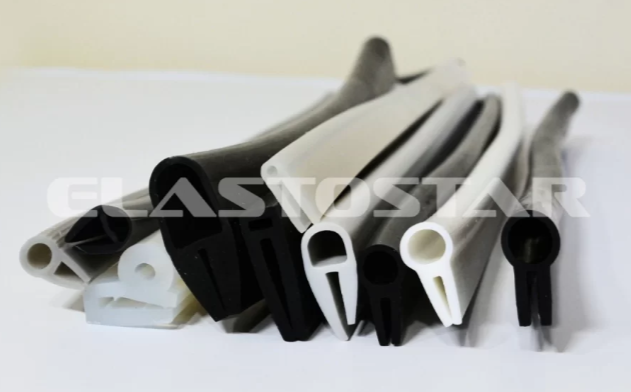
Peel strength testing helps measure how well an adhesive remains bonded when force is applied to separate two surfaces.
In gasket manufacturing, peel strength is important because adhesive-backed materials often experience movement, compression, vibration, moisture, and temperature changes during operation.
The right gasket adhesive backing helps maintain reliable bonding performance across rubber, closed-cell silicone foam, silicone, and metal assemblies.
1. 90° Peel Strength Testing
A 90° peel test measures the force required to remove a bonded material at a right angle from the surface. This testing method is commonly used for flexible gasket materials and thinner adhesive constructions.
Typical applications include:
- Foam gasket laminations.
- Flexible sealing strips.
- Thin rubber profiles.
- Adhesive-backed sheet materials.
This type of testing helps manufacturers evaluate adhesive flexibility and bonding consistency under normal operating conditions.
2.180° Peel Strength Testing
An 180° peel test pulls the bonded material directly back against itself to measure adhesive strength.
This method is often used for aggressive bonding systems and high-performance psa backing applications.
| Peel Test Type | Common Purpose | Typical Applications |
| 90° Peel Test | Flexible material evaluation | Foam and thin gasket assemblies |
| 180° Peel Test | High-strength adhesive evaluation | Industrial gasket laminations |
| Static Peel Testing | Long-term bond monitoring | Compression sealing applications |
Higher peel strength is often required in gasket assemblies exposed to continuous movement, vibration, or elevated operating temperatures.
3. Factors That Affect Peel Strength
Several factors influence adhesive bonding performance in multi-layer gasket assemblies:
- Surface texture and cleanliness.
- Adhesive thickness and coating consistency.
- Temperature and humidity exposure.
- Compression and mechanical stress.
- Substrate compatibility between rubber, foam, silicone, and metal surfaces.
We manufacture custom sealing components with controlled production standards and precision material processing for demanding industrial applications.
For additional information about dimensional control and gasket tolerances, you can explore our RMA Precision Tolerance Guide.
Tack vs Ultimate Bond Strength in Adhesive Selection
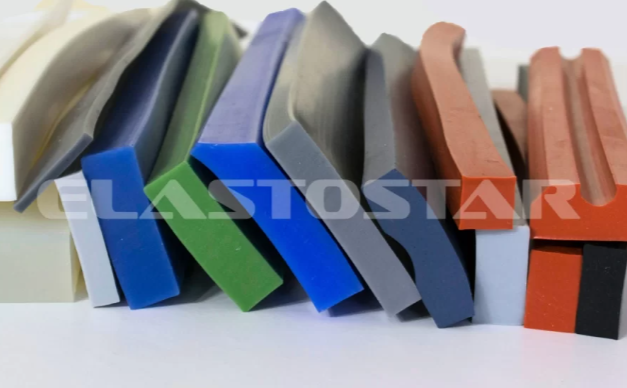
When selecting a pressure-sensitive adhesive for gasket manufacturing, it is important to understand the difference between initial tack and ultimate bond strength.
Some applications require immediate surface grab for fast assembly, while others need stronger long-term adhesion under heat, compression, vibration, or environmental exposure.
The correct adhesive balance supports sealing reliability and product durability in multi-layer gasket assemblies.
Understanding Initial Tack
Initial tack refers to how quickly an adhesive bonds after light pressure is applied. High-tack adhesive systems are useful in production environments where faster placement and assembly efficiency matter.
Common applications include:
- Adhesive-backed rubber strips.
- Foam sealing components.
- Lightweight gasket assemblies.
- Temporary positioning during installation.
A high-tack psa adhesive can help reduce installation time and improve handling during production.
Understanding Ultimate Bond Strength
Ultimate bond strength measures the adhesive’s strength after full curing, dwell time, or complete bonding. In demanding industrial environments, long-term adhesion is often more important than fast initial grab.
This matters in applications exposed to:
- Continuous compression.
- Vibration and movement.
- Temperature cycling.
- Moisture or chemical exposure.
- Edge lifting or peel stress.
Selecting the Right Adhesive Balance
The ideal adhesive system depends on the substrate, assembly process, operating environment, and product requirements.
Some gasket applications need aggressive tack for quick placement, while others require stronger cohesive strength for long-term durability.
We support industrial sealing applications with custom manufacturing, application support, and prototype-to-production capabilities for adhesive-backed rubber and silicone components.
Read More: Why Long-Term Sealing Performance Matters More Than Initial Specs
Temperature Resistance Ranges for Adhesive Systems
Temperature exposure can change how an adhesive performs over time. In gasket manufacturing, the selected pressure-sensitive adhesive, acrylic PSA, or heat-activated adhesive must stay stable through heat, cold, compression, and environmental movement.
This is especially important for rubber and silicone sealing products used in industrial appliance equipment, enclosures, HVAC systems, and machinery.
1. Low-Temperature Adhesion Performance
Low-temperature conditions can reduce adhesive flexibility and make bonding layers more brittle. For gasket assemblies used in cold environments, the adhesive must remain flexible enough to resist cracking, lifting, or edge separation.
A.Rubber window & door seals
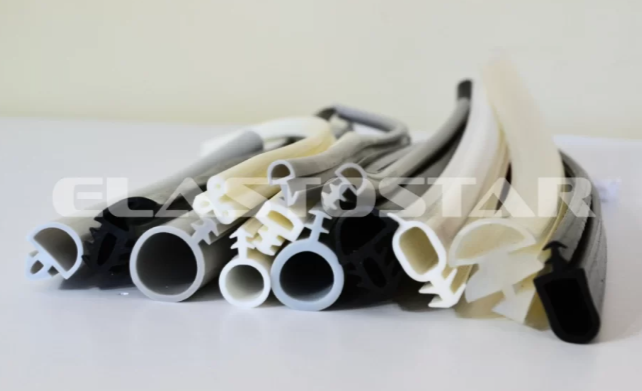
B.Rubber bulb seals
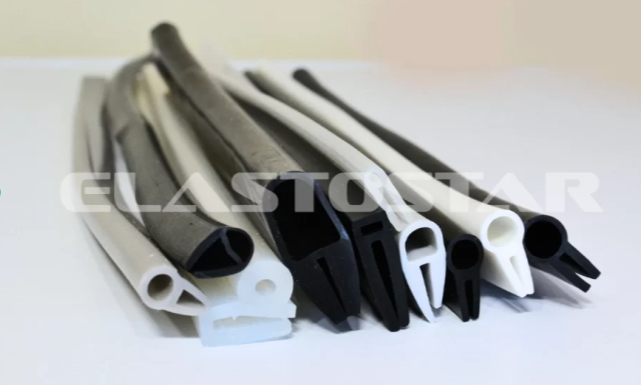
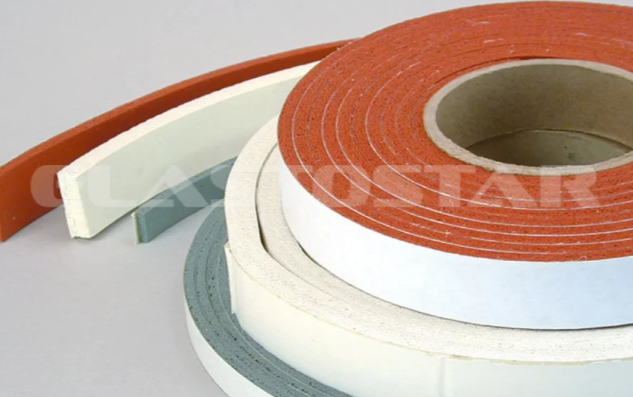
C.Rubber extruded strips
2. High-Temperature Resistance of Acrylic PSA
An acrylic PSA is often chosen when the gasket requires greater aging resistance and better thermal stability than a general-purpose adhesive. It can support long-term bonding in applications exposed to heat, moisture, and outdoor conditions.
Acrylic PSA systems may be suitable for adhesive-backed silicone sponge materials, rubber profiles, and gasket assemblies where consistent bond strength is required over time.
3. Heat-Activated Adhesives for Demanding Conditions
A heat-activated adhesive is often used when the application requires higher final bond strength and greater resistance to demanding operating conditions.
Once activated through heat and pressure, it can create a durable bond for multi-layer gasket assemblies.
These systems are useful for applications involving:
A. Closed-cell silicone sponge rubber
B. Rubber molded parts
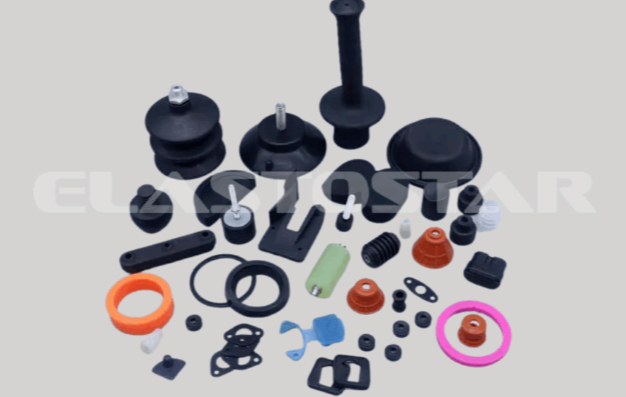
C. Multi-layer gasket constructions
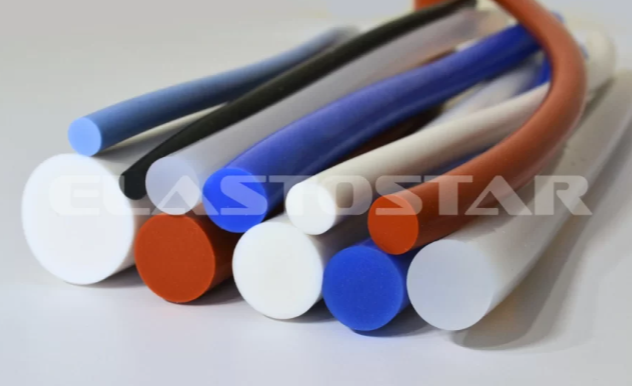
Common Applications of Lamination Adhesives in Gasket Manufacturing
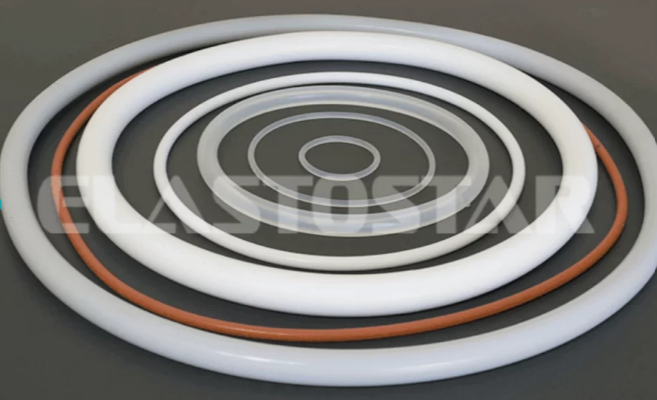
Different lamination adhesives are used across gasket manufacturing depending on the substrate material, operating environment, and sealing requirements.
The correct adhesive system helps improve assembly stability, bonding performance, and long-term durability in industrial sealing applications involving rubber, foam, silicone, and metal components.
1.Gasket-to-Metal Bonding Applications
Gasket-to-metal bonding is commonly used in industrial enclosures, HVAC systems, automotive assemblies, and equipment sealing applications.
In these environments, the adhesive must maintain strong bond strength while withstanding vibration, compression, and temperature changes.
A pressure-sensitive adhesive is often chosen for faster assembly operations, whereas stronger bonding systems may be required for heavy-duty industrial applications subject to continuous stress and movement.
2. Multi-Layer Foam and Rubber Assemblies
Multi-layer gasket assemblies frequently combine foam, AMS 3195 sponge rubber, and solid rubber materials to improve sealing, cushioning, insulation, and vibration control.
Adhesive selection becomes important because different materials expand, compress, and react differently under operating conditions.
Applications commonly involve:
- Closed-cell silicone sponge rubber.
- Rubber sheets and mats.
- Rubber bulb seals.
- Custom extruded sealing profiles.
For demanding industrial sealing applications, we manufacture custom gaskets and extrusion solutions, with application support, reverse-engineering assistance, and short lead times.
3.Foam-to-Substrate Bonding Systems
Foam-to-substrate bonding applications require adhesives that maintain flexibility while resisting lifting, edge failure, and long-term compression stress.
These bonding systems are commonly used in appliance sealing, electrical enclosures, transportation equipment, and industrial insulation systems.
A transfer adhesive is often selected for precision gasket lamination, where thin adhesive placement and clean, accurate dimensions are important. These systems are widely used for die-cut gasket assemblies and custom sealing components requiring reliable adhesive consistency.
Adhesive Selection Guide by Substrate and Environment
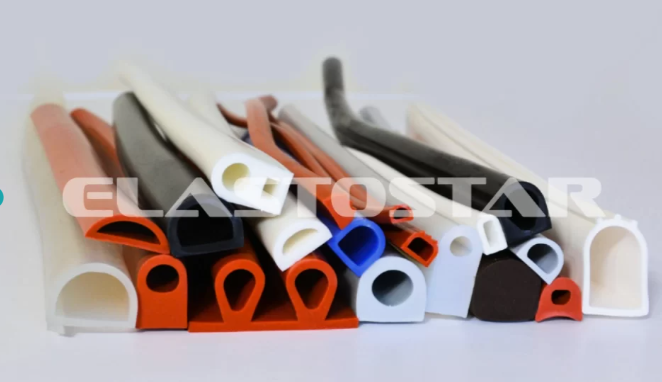
Selecting the right adhesive system depends on more than just bond strength. Factors such as substrate material, operating temperature, moisture exposure, compression levels, and environmental conditions all influence long-term adhesive performance.
In gasket manufacturing, the correct combination of material and adhesive helps improve sealing reliability, durability, and assembly consistency.
1. Choosing Adhesives for Metal Surfaces
Metal surfaces often require adhesives with stronger shear strength and reliable long-term bonding performance.
In these applications, an acrylic PSA is commonly selected because it provides better resistance to temperature changes, moisture exposure, and aging.
These adhesive systems are frequently used in:
- Industrial equipment sealing.
- Electrical enclosures.
- HVAC gasket assemblies.
- Rubber-to-metal bonding applications.
2. Adhesive Selection for Foam and Sponge Materials
Foam and sponge materials compress differently from solid rubber, so the adhesive must remain flexible during repeated movement and compression cycles.
A bonding system that becomes too rigid may eventually create lifting or separation around the gasket edges.
For silicone-based sponge materials, understanding compression performance and material behavior is equally important.
For softer sealing applications, materials such as ASTM D1056 silicone sponge are commonly used because they offer flexibility and compression recovery across a wide range of industrial environments.
3. Environmental Factors That Affect Adhesive Performance
Several operating conditions can affect adhesive durability over time:
- High and low temperature exposure
- Moisture and humidity
- UV exposure
- Chemical contact
- Continuous vibration and compression
A heat-activated adhesive may perform better in applications exposed to higher operating temperatures and continuous mechanical stress, whereas a pressure-sensitive adhesive may be more suitable for faster assembly and flexible sealing.
Read More: Will Silicone Bond To Rubber? The Complete Adhesion Guide for Elastomers
Why Elastostar Rubber Corporation Is a Trusted Partner for Adhesive-Backed Gasket Solutions

We support gasket manufacturers and industrial buyers with custom rubber and silicone components built for reliable bonding, sealing, and long-term performance.
As a silicone rubber manufacturer, we help customers choose suitable materials, gasket profiles, and adhesive-backed constructions based on substrate type, compression needs, and operating conditions.
Here is why customers choose us for multi-layer gasket and sealing projects.
- Custom manufacturing
We manufacture adhesive-backed gaskets, rubber seals, silicone profiles, and custom sealing components based on application needs. - Large manufacturing facility
Our production setup supports prototype samples, short runs, and larger production requirements with consistent quality. - Proudly Made in the USA
We manufacture rubber and silicone components in the USA for dependable supply and better production control. - Reverse engineering support
We can recreate gasket profiles, seals, and bonding constructions from samples, drawings, or application requirements. - Prototype to production capability
We support projects from early sample development to full production runs. - Design help and application support
Our team helps with material selection, adhesive compatibility, profile design, and gasket performance needs. - Shortest lead time delivery
We focus on fast production support for time-sensitive gasket and sealing applications.
Recommended Reads
- What Is RTV Silicone? Understanding Room Temperature Vulcanizing Materials
- Dieless Cutting vs Steel Rule Die Manufacturing Cost & Lead Time Analysis
- Seal Damage Root Cause Analysis & Visual Identification Guide for Gasket Failure
Conclusion
Selecting the right lamination adhesives for multi-layer gasket assemblies depends on several performance factors, including bond strength, temperature resistance, substrate compatibility, compression behavior, and environmental exposure.
Both pressure-sensitive adhesive systems and heat-activated adhesive constructions offer different advantages depending on the application requirements and production process.
In gasket manufacturing, adhesive performance directly affects long-term sealing reliability, assembly consistency, and product durability.
Factors such as peel strength, initial tack, surface preparation, and operating conditions should always be considered before selecting a bonding system for rubber, foam, silicone, or metal assemblies.
FAQs
Q1. What are lamination adhesives?
Lamination adhesives are bonding systems used to join rubber, foam, silicone, film, and metal layers in gasket assemblies. They support sealing performance, assembly stability, and long-term durability in industrial applications such as adhesive-backed gasket materials, sealing strips, Rubber Lip Seal & Gaskets, and custom laminated rubber components.
Q2. What is the difference between PSA and heat-activated adhesive?
A pressure-sensitive adhesive bonds when pressure is applied to the surface, while a heat-activated adhesive requires heat and pressure during installation to create the final bond strength. PSA systems are often selected for faster assembly, while heat-activated systems are used for stronger bonding in demanding gasket applications.
Q3. What is peel strength for gasket adhesives?
Peel strength measures the force required to separate the adhesive from the bonded surface. It helps evaluate how a gasket adhesive backing performs under movement, compression, vibration, and environmental exposure. This is important for sealing products such as Rubber E-Channel, Rubber P-Channel/P-Shape, and adhesive-backed rubber profiles.
Q4. What is tack in pressure-sensitive adhesives?
Tack refers to how quickly a pressure-sensitive adhesive bonds after light pressure is applied. High tack supports faster handling, placement, and assembly during gasket installation. It is useful for rubber strips, die-cut gasket parts, and lightweight sealing components.
Q5. What temperature can adhesive backing withstand?
Temperature resistance depends on the adhesive type, substrate material, and operating environment. An acrylic PSA usually offers better heat resistance and aging stability than general-purpose rubber-based adhesives. For silicone materials such as Silicone Rubber Cord and sponge profiles, adhesive selection must match the expected heat, compression, and exposure conditions.
Q6. What is a transfer adhesive?
A transfer adhesive is a thin adhesive layer without a carrier material. It is commonly used in precision gasket lamination, die-cut gasket assemblies, and thin-profile sealing applications where clean adhesive placement and dimensional accuracy are important. For custom gasket support, material selection help, and application guidance, contact our team.
Q7. How do you select an adhesive for rubber-to-metal bonding?
Rubber-to-metal bonding depends on surface condition, temperature exposure, compression levels, and environmental stress. Stronger adhesive systems, such as acrylic-based constructions, are often used for industrial gasket assemblies requiring long-term durability. Extruded Omega Seal and custom rubber profiles may need adhesive selection based on movement, surface type, and sealing pressure.
Q8. What is acrylic PSA vs rubber-based PSA?
An acrylic PSA generally provides better UV resistance, aging stability, and temperature performance. Rubber-based PSA systems usually offer stronger initial tack and faster surface grab. The right selection depends on the operating environment, gasket material, and installation requirements.
Q9. Can adhesive-backed gaskets be repositioned?
Some adhesive-backed gaskets can be repositioned during initial installation, depending on the adhesive construction. High-tack adhesive systems usually bond faster, while lighter PSA systems may allow limited repositioning before final pressure is applied. For custom parts such as Silicone Rubber O-Rings or shaped sealing components, repositioning depends on the adhesive design and application surface.
Q10. What substrates work best with PSA backing?
PSA backing commonly bonds well with rubber, foam, silicone, metal, plastics, and coated industrial surfaces. Proper surface preparation helps improve bonding consistency and long-term adhesive performance. For specialty applications involving Metal Detectable Rubber or Medical Grade Rubber, adhesive selection should match the substrate, compliance needs, and operating environment.