Selecting the right cutting method plays a major role in controlling manufacturing cost, lead time, and part consistency for rubber and silicone components.
From traditional steel rule die tooling to modern dieless cutting machine technologies, each approach serves a different production purpose.
Options such as waterjet cutting gaskets, laser systems, and rotary knife cutting offer speed and flexibility, while die-based processes support repeatability at scale.
This blog breaks down laser cutting vs die cutting, tooling investment, tolerances, and break-even quantities, giving manufacturers a clear framework to decide when to stay agile and when tooling becomes the smarter long-term choice.
Key Takeaways
- Choosing the right cutting method directly affects cost, lead time, and part consistency in rubber and silicone manufacturing.
- Dieless cutting methods like waterjet and laser offer flexibility, fast turnaround, and no tooling cost, making them ideal for prototypes and short runs.
- Steel rule die cutting becomes more cost-effective for high-volume production once designs are stable and repeat orders are expected.
- Break-even depends on both quantity and design stability, not just cost calculations, especially when revisions are likely.
- Tolerance and edge quality impact sealing performance, with precision cutting methods offering better consistency for critical applications.
- The best approach often combines both methods, starting with dieless cutting and shifting to tooling as production scales.
Table of Contents
Cutting Methods Comparison: Traditional vs Modern Gasket Cutting
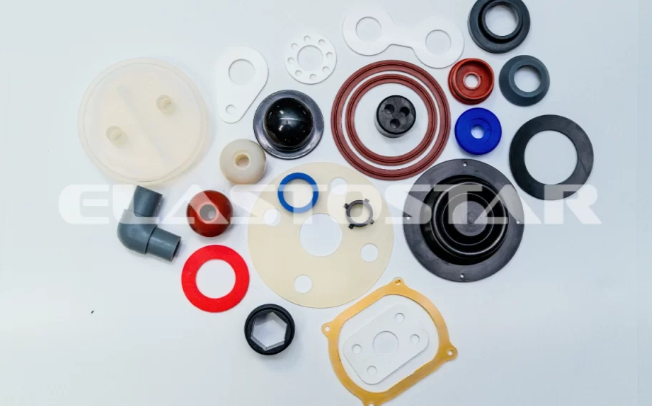
Manufacturers use several gasket cutting technologies depending on production volume, urgency, and design stability.
Each method offers a different balance of speed, precision, and scalability, making early process selection critical.
Common Gasket Cutting Technologies Used in Manufacturing
Before choosing a cutting approach, it helps to understand how each performs in real production environments.
- Steel rule die cutting uses a physical die to stamp parts from rubber sheets and is best suited for finalized designs and repeat production.
- Waterjet cutting gaskets use high-pressure streams up to 60,000 PSI to cleanly cut material without heat or tooling, enabling fast turnaround and design changes.
- Laser cutting enables detailed geometries and quick processing, but may introduce thermal effects on certain elastomers.
- Rotary knife cutting works well for continuous shapes and softer rubber materials in steady production runs.
These methods are commonly used across U.S.-based silicone and rubber manufacturing environments, where material behavior, dimensional accuracy, and production efficiency are tightly controlled throughout the process, as outlined in our manufacturing approach and capabilities.
How do these methods compare in Real Production?
| Cutting Method | Tooling Required | Typical Use Case | Flexibility |
| Steel Rule Die | Yes | High-volume, fixed designs | Low |
| Waterjet Cutting | No | Prototypes, short runs | High |
| Laser Cutting | No | Detailed parts, fast turnaround | Medium |
| Rotary Knife Cutting | No | Continuous profiles, soft rubber | Medium |
Read More: All About Silicone Rubber Die-Cut Gaskets: Its Cutting Method
Cost Breakdown Analysis: Tooling Investment vs No-Tooling Production
Manufacturing cost is often the deciding factor when choosing between traditional and modern cutting methods. The biggest cost difference appears between upfront tooling and no tooling.
Where Tooling Costs Come From?
Steel rule die cutting requires a physical die to be designed, fabricated, and tested before production can begin.
Depending on size, complexity, and material thickness, tooling costs typically range from $500 to $5,000. Any design change usually means modifying or replacing the die, adding more cost and downtime.
In contrast, a dieless cutting machine eliminates tooling entirely. Parts are cut directly from digital files, allowing immediate production without capital investment.
This makes dieless methods especially attractive for early-stage projects, design revisions, and low-volume requirements.
These cost structures align closely with how we support custom rubber and silicone production, offering flexibility for short runs while maintaining cost control through documented material data and process transparency available in its technical brochures.
Cost Comparison by Cutting Method
| Cost Element | Steel Rule Die Cutting | Dieless Cutting |
| Upfront Tooling Cost | $500–$5,000 | $0 |
| Cost of Design Changes | High | Minimal |
| Per-Part Cost (Low Volume) | Lower accuracy benefit | Higher but flexible |
| Per-Part Cost (High Volume) | Very low | Less economical |
What does this mean for Buyers?
For low quantities, tooling costs dominate total spend, making dieless cutting the more economical choice.
As quantities increase, tooling costs are spread across more parts, eventually lowering the per-unit cost for the point where die cutting makes financial sense.
Understanding this cost behavior early prevents overspending on tooling before designs are fully validated.
Read More: Procurement Guide for Silicone Rubber Suppliers
Lead Time Comparison: Tool Fabrication vs Same-Day Cutting
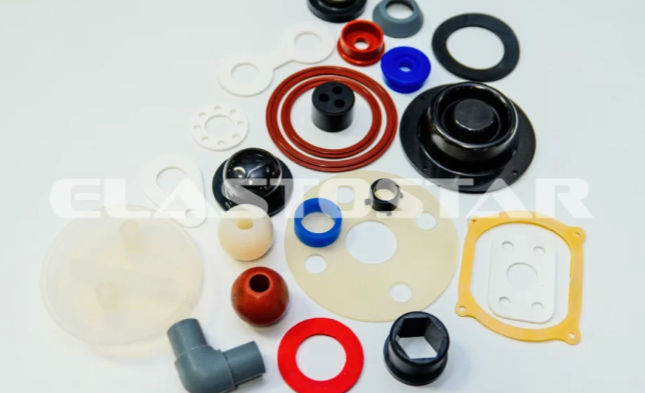
Lead time plays a major role in production planning, especially for projects with tight schedules or frequent design changes.
The difference between tool-based and dieless cutting methods is often measured in weeks versus hours.
1. Lead Time for Steel Rule Die Cutting
Steel rule die cutting begins with tool design and fabrication. This process typically takes 2 to 4 weeks, depending on the complexity and approval cycles.
Production can only start once the die is completed and validated, so any tooling delay directly impacts delivery timelines.
2. Lead Time for Dieless Cutting Methods
Dieless processes, including waterjet cutting, allow production to begin almost immediately. Because there is no physical tool to build, parts can often be cut the same day from approved CAD files.
This makes waterjet cutting gaskets particularly effective for urgent builds, prototypes, and time-sensitive replacements.
This fast turnaround is supported by controlled manufacturing workflows and in-house inspection practices that ensure accuracy even when production moves quickly, as reflected in our quality control and process validation approach used across its rubber and silicone operations.
Lead Time Comparison at a Glance
| Cutting Method | Typical Lead Time | Impact of Design Changes |
| Steel Rule Die | 2–4 weeks | Requires tool rework |
| Waterjet Cutting | Same day–1 day | Immediate implementation |
| Laser Cutting | 1–2 days | Immediate implementation |
| Rotary Knife Cutting | 1–2 days | Minimal delay |
Why Lead Time Often Overrides Cost?
When schedules are tight, the ability to move from design to production without waiting for tooling can outweigh per-unit cost savings.
Faster lead times reduce downtime, speed up validation, and help manufacturers respond quickly to changing requirements.
Break-Even Quantity Calculations: When Volume Changes the Economics?

Choosing between dieless and tool-based cutting becomes clearer when production quantity is factored in.
The key question buyers face is how many parts are needed before tooling pays for itself.
1. Understanding the Break-Even Point
For low volumes, the absence of tooling keeps the total project cost predictable. As quantities increase, the upfront cost of a die is spread across more parts, reducing per-unit cost.
Once production crosses a certain threshold, die-cutting gaskets become more economical despite the initial tooling expense.
Manufacturers typically evaluate break-even by comparing total spend, not just part price, across expected order quantities, revisions, and future repeat runs.
This approach aligns with how precision rubber manufacturers evaluate cost efficiency using documented dimensional standards and tolerance expectations during planning.
Example Break-Even Cost Comparison
| Production Quantity | Dieless Cutting (No Tooling) | Steel Rule Die Cutting |
| 50–200 parts | Lowest total cost | High due to tooling |
| 500–1,000 parts | Moderate | Near break-even |
| 2,000+ parts | Higher total cost | Lowest per-unit cost |
Why Break-Even Is Not Just a Math Exercise?
Break-even calculations must also consider design stability. If part geometry is likely to change, tooling costs may be incurred more than once, shifting the break-even point higher.
Manufacturers that follow established dimensional tolerance frameworks and production validation practices can better predict when volume truly justifies tooling investment, reducing long-term cost risk.
Break-Even Quantity Calculations: When Volume Changes the Economics?
Production volume is often the deciding factor when choosing between dieless cutting and steel rule die cutting. The question most manufacturers ask is simple: how many parts justify the cost of tooling?
How Break-Even Works in Practical Terms?
For low quantities, dieless cutting keeps costs predictable because there is no upfront tooling investment. This approach is commonly used for custom silicone gaskets, seals, and short-run rubber components, especially when designs are still being tested or adjusted.
As quantities increase and designs stabilize, tooling costs are spread across more parts. At this stage, die-cutting gaskets begin to offer a lower per-unit cost, even though the initial investment is higher.
This shift typically happens once repeat orders and long-term production are confirmed.
This cost logic is especially relevant for flat gaskets, seals, and sheet-based silicone seal parts, where consistent geometry and repeatability allow tooling to deliver long-term savings
Typical Break-Even Ranges (Illustrative)?
- 50–200 parts
Dieless cutting is usually the most cost-effective option due to zero tooling cost. - 500–1,000 parts
Costs begin to balance out. This is the evaluation zone where tooling may start to make sense if the designs are final. - 2,000+ parts
Steel rule die cutting generally delivers the lowest per-unit cost for stable, repeat production.
Why Break-Even Is Not Only About Quantity
Break-even calculations should also factor in design stability. If a part is likely to change even slightly, tooling costs may be incurred more than once, pushing the break-even point higher.
For products such as silicone gaskets, sponge seals, or precision-cut rubber parts, accounting for revisions is just as important as volume when deciding whether to invest in tooling.
Tolerance Comparison: Precision Limits Across Cutting Methods
Tolerance plays a direct role in how well a gasket seals, fits, and performs over time. Even small dimensional variations can affect compression, leakage risk, and assembly consistency, especially in engineered rubber and silicone applications.
Typical Tolerance Capabilities by Cutting Method
Tool-based cutting methods rely on physical dies, which introduce slight material movement during stamping.
As a result, steel rule die cutting typically achieves tolerances around ±0.010″, which is acceptable for many industrial sealing applications where minor variation does not affect performance.
Dieless cutting methods, particularly waterjet cutting, operate without mechanical compression or heat.
This allows tighter dimensional control, with tolerances commonly reaching ±0.005″, making them better suited for precision Rubber gaskets and tight-fit components.
| Cutting Method | Typical Tolerance Range |
| Steel Rule Die | ±0.010″ |
| Waterjet Cutting | ±0.005″ |
| Laser Cutting | Material dependent |
| Rotary Knife | Moderate |
Why Tolerance Matters More Than It Seems?
Tighter tolerances are especially important for Rubber square seals and custom-cut rubber parts used in applications where uniform compression and repeatable fit are critical. When tolerances drift, parts may require higher clamp force, wear unevenly, or fail prematurely.
This is why manufacturers often align their selection of cutting methods with established dimensional control practices and material behavior guidelines, similar to those referenced in industry-standard tolerance frameworks for rubber product design and validation.
Choosing the Right Tolerance for the Application
Not every gasket requires extreme precision. For high-volume, non-critical sealing applications, die cutting may be sufficient and cost-effective.
For engineered seals, low-volume builds, or applications with strict fit requirements, dieless cutting methods provide greater confidence in dimensional accuracy without committing to tooling too early.
Read More: Why Long-Term Sealing Performance Matters More Than Initial Specs
Edge Quality Differences: How Cut Finish Affects Performance?
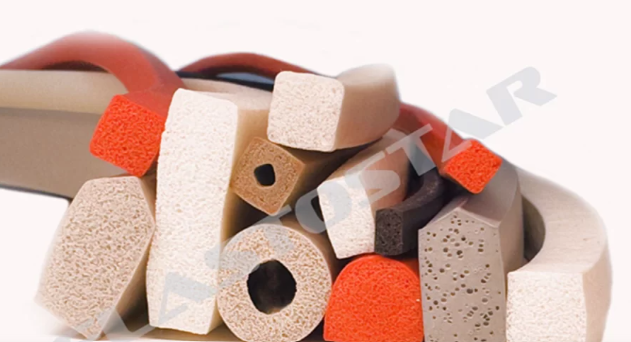
Edge quality is often overlooked, but it plays an important role in how gaskets perform during installation and service life. The way a part is cut directly affects sealing consistency, fit, and long-term durability.
Edge Finish by Cutting Method
1. Steel rule die cutting applies mechanical force to stamp parts from sheet material. This can slightly compress or deform the edge, especially on softer elastomers or thicker materials. While acceptable for many standard applications, these compressed edges may vary slightly from part to part.
2. Waterjet cutting produces clean, uniform edges because it uses a focused stream of water rather than pressure or heat. This method is particularly effective for Inflatable gaskets and precision-cut rubber parts, where consistent edge definition helps maintain even compression across the seal.
3. Laser cutting rubber offers fast, detailed cuts but may leave a heat-affected edge on certain elastomers. Depending on the material type, this can slightly alter surface texture or hardness near the cut line.
4. Rotary knife cutting creates smooth edges on softer materials and continuous shapes, but may struggle with tight internal corners or intricate geometries.
Why Edge Quality Matters in Sealing Applications?
In gasket applications, uneven or distorted edges can lead to inconsistent compression, increased wear, or localized leakage paths.
Clean edges help parts seat properly, reduce installation issues, and improve repeatability, especially in applications where gaskets are replaced frequently or installed in high-precision assemblies.
Matching Edge Quality to the Application
For high-volume, non-critical sealing, edge variation from die cutting may be acceptable. For engineered seals, prototypes, or parts with tight dimensional and performance requirements, cutting methods that preserve edge integrity often deliver better long-term results.
Read More: What Is a Rubber Gasket Benefits and Applications
When to Invest in Tooling vs Dieless Cutting?
The choice between tooling and dieless cutting ultimately depends on volume, design stability, and production goals. There is no one-size-fits-all answer, but clear patterns emerge when these factors are evaluated together.
1. When Tooling Makes Sense?
Investing in a steel rule die becomes practical when:
- The part design is finalized and unlikely to change.
- Production volumes are high, and repeat orders are expected.
- Lower per-unit cost is more important than upfront investment.
- Tolerances and edge quality provided by die cutting meet application needs.
In these cases, tooling helps deliver consistency and cost efficiency over long production runs.
2. When Dieless Cutting Is the Better Choice?
Dieless cutting is typically the smarter option when:
- Quantities are low or unpredictable.
- Design revisions are still expected.
- Fast turnaround is critical.
- Parts such as custom silicone gaskets, seals, or kiss-cutting rubber need flexibility without tooling delays.
This approach allows manufacturers to move quickly, validate designs, and avoid unnecessary tooling costs early in the product lifecycle.
Making the Decision with Confidence
Successful manufacturers often use both approaches at different stages, starting with dieless cutting during development and transitioning to tooling once designs and volumes are confirmed.
Evaluating cost, lead time, tolerance, and edge quality together ensures the cutting method supports not just production, but long-term performance and scalability.
Manufacturing Capabilities, Compliance, and Strengths of a Silicone Rubber Manufacturer

Elastostar Rubber Corporation is a U.S.-based silicone rubber manufacturer that supports manufacturers, with a strong focus on material compliance, production flexibility, and reliable delivery timelines.
- USP Class VI compliant materials
Products meet USP Class VI, Sections 87 & 88, making them suitable for regulated and performance-critical applications. - Custom rubber and silicone product range
Includes custom extruded profiles, O-rings, gaskets, and sheet materials designed for industrial and engineered use cases. - Support from design through production
Capabilities cover reverse engineering, prototyping, design assistance, and full-scale production runs. - Short and dependable lead times
Faster turnaround helps manufacturers reduce downtime and maintain project schedules. - Large-scale custom manufacturing facility
Equipped to handle both low-volume development work and high-volume production with consistent quality. - Proudly Made in the USA
Domestic manufacturing supports tighter quality control and supply-chain reliability.
Recommended Reads
- What Is a Die Cutting Gasket Applications of Die Cut Gasket
- Top 5 Things About Gaskets Designs You Need to Know About
- Top Mistakes to Avoid Ordering Silicone O-Rings
Conclusion
Choosing between dieless cutting and steel rule die cutting depends on volume, lead time, tolerance needs, and design stability. Dieless methods offer speed, flexibility, and zero tooling cost, making them ideal for prototypes, short runs, and design changes. Tooling-based cutting delivers consistency and lower per-unit costs once volumes stabilize.
By understanding these trade-offs, manufacturers can control cost without compromising performance. Elastostar Rubber Corporation supports both development and production needs with precision and reliability. Contact us to discuss your application, timelines, and the right cutting approach for your project.
FAQs
Q1. What is dieless cutting?
Dieless cutting is a manufacturing process in which rubber and silicone parts are cut directly from digital files without a physical die. This method is commonly used for custom silicone gaskets, sheet materials, and prototype seals, allowing faster turnaround and easy design changes with no tooling investment.
Q2. How does waterjet cutting compare to steel rule die cutting?
Waterjet cutting uses high-pressure water to cut rubber without heat or compression, making it ideal for waterjet cutting gaskets that require clean edges and tight tolerances. Steel rule die cutting relies on a physical tool and is better suited for high-volume production once designs are finalized.
Q3. What are the cost advantages of dieless cutting?
The biggest advantage is the absence of tooling costs. Dieless cutting reduces upfront investment and risk, especially for custom silicone gaskets and short production runs, where designs may still evolve.
Q4. At what quantity should I invest in steel rule die tooling?
Steel rule die tooling typically becomes cost-effective at 1,000–2,000 parts or more, provided the design is stable. For lower volumes or frequently revised parts, dieless cutting remains the more economical option.
Q5. What tolerances can waterjet achieve for gaskets?
Waterjet cutting can typically achieve tolerances of ±0.005″, making it suitable for precision-cut silicone gaskets, flat seals, and engineered rubber components where consistent fit and compression are critical.
Q6. Is laser cutting better than die cutting for rubber?
Laser cutting offers high speed and fine detail, but heat can affect certain elastomers. Die cutting works well for repeatable, high-volume parts such as standard gaskets. The best choice depends on material type, tolerance needs, and production volume.
Q7. What is the lead time for steel rule die fabrication?
Steel rule die fabrication usually takes 2–4 weeks, including design and validation. Production begins only after the die is completed, which can impact timelines for urgent projects.
Q8. Can dieless cutting produce high-volume parts?
Dieless cutting is best suited for low- to medium-volume, prototype, and development runs. For long-term, high-volume production of silicone gaskets or rubber seals, tooling-based methods generally offer lower per-unit cost.
Q9. What edge quality does waterjet cutting provide?
Waterjet cutting produces smooth, uniform edges without heat damage. This edge quality is especially beneficial for window silicone gaskets and sealing components, helping ensure even compression and reliable performance.
Q10. When should I use rotary die-cutting vs. waterjet?
Rotary die cutting is ideal for continuous shapes and consistent, high-speed production. Waterjet cutting is better for complex profiles, tighter tolerances, and custom parts where flexibility is required.