V-channel weatherstripping is engineered to deliver reliable sealing where consistent compression, movement tolerance, and long-term durability are required. The V-shaped profile functions like a spring, flexing under load to maintain continuous contact across varying gap sizes and surface conditions.
This makes it a practical solution for doors, panels, and enclosures exposed to vibration, thermal expansion, or repeated cycling.
In this guide, we examine how v weatherstrip profiles work from a design and manufacturing standpoint, covering geometry, material options, compression force, deflection requirements, installation methods, and custom extrusion considerations.
The objective is to help designers specify rubber profiles that seal effectively without overloading assemblies or compromising service life.
Key Takeaways
- V-channel weatherstripping seals gaps using a spring-like V-shaped profile that flexes under compression and maintains contact.
- The V-geometry creates progressive sealing force, helping prevent excessive load on doors, panels, and frames.
- Proper material selection, such as EPDM, silicone, or TPE, affects durability, temperature resistance, and long-term elasticity.
- Compression force and deflection range must be carefully specified to ensure reliable sealing without overloading the assembly.
- V-channel profiles perform well in applications with vibration, thermal expansion, or repeated opening and closing cycles.
- Installation methods such as adhesive backing or mechanical retention influence alignment and long-term sealing stability.
- Custom extrusion options allow designers to adjust profile dimensions, wall thickness, and material hardness for specific applications.
Table of Contents
How Does V-Channel Geometry Create an Effective Sealing Mechanism?
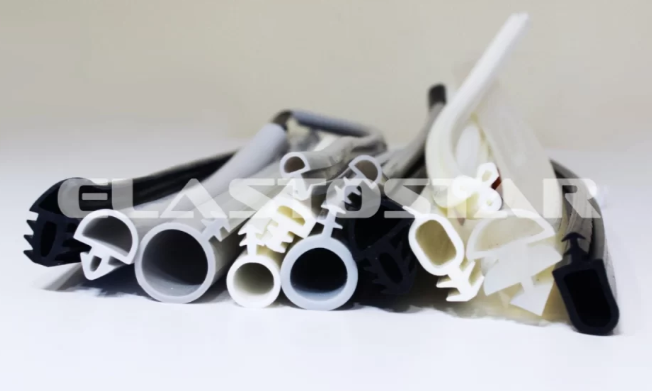
The sealing performance of a V-profile comes from its ability to act as a spring rather than a solid barrier.
When compressed, the angled legs of the profile flex inward, generating controlled contact pressure along the sealing surfaces.
This geometry allows a V-channel seal to adapt to variable gaps while maintaining consistent force over repeated cycles.
1. Spring Action and Contact Points
The V-shape converts vertical compression into lateral sealing force.
- Initial contact occurs at the profile tips.
- As compression increases, the legs flex and widen the contact area.
- Stored elastic energy helps the profile rebound when the load is released.
This spring-like behavior allows the seal to maintain contact even when gaps change due to vibration or thermal movement.
2. Progressive Sealing Under Load
Unlike flat profiles, V-channels seal progressively.
- Light compression produces a low closing force.
- Increased compression raises sealing pressure gradually.
- The profile avoids sudden load spikes on mating parts.
This progressive response reduces the risk of overloading hinges, frames, or fasteners while still achieving reliable sealing.
3. Gap Accommodation and Misalignment Tolerance
V-channel profiles are designed to handle real-world variation.
- Tolerates uneven surfaces and minor misalignment.
- Maintains sealing force across a range of gap sizes.
- Compensates for wear and long-term movement.
This makes V-profiles especially effective in dynamic assemblies rather than rigid, perfectly aligned joints.
4. Material Behavior Within the Geometry
The effectiveness of the geometry depends on material elasticity and recovery.
Silicone profiles channels provide a stable flexural response, allowing the V-shape to cycle repeatedly without permanent deformation.
Geometry Performance Summary
| Design Feature | Functional Role | Sealing Benefit |
| V-angle | Enables spring action | Consistent contact force |
| Flexible legs | Absorb compression | Gap adaptability |
| Progressive load response | Controls sealing pressure | Reduced component stress |
| Elastic recovery | Supports rebound | Long service life |
Read More: Top 10 Properties of Rubber That Make It Ideal for Seals and Gaskets
Which Materials Are Best Suited for V-Channel Weatherstripping Profiles?
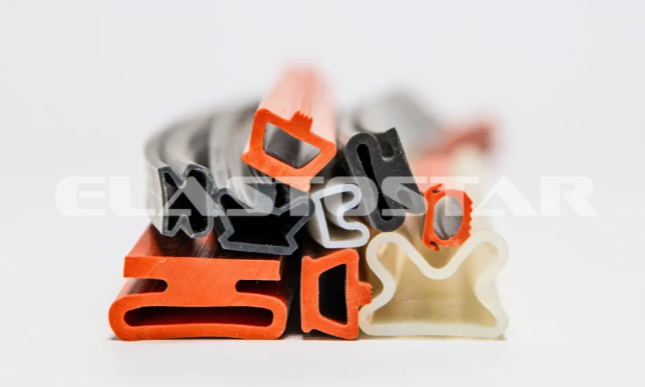
Material selection directly affects sealing force, durability, and long-term performance in V-channel designs.
Choosing the correct elastomer ensures a rubber v-channel maintains consistent contact pressure across temperature changes, repeated compression cycles, and environmental exposure.
1. EPDM for Outdoor and Cost-Sensitive Applications
EPDM gasket is widely used in weather-exposed sealing applications.
- Good resistance to UV, ozone, and moisture.
- Stable performance in moderate temperature ranges.
- Cost-effective for high-volume production.
EPDM V-channel profiles are commonly specified for architectural frames and appliance housings where environmental resistance is the primary requirement.
2. Silicone for Wide Temperature Range and Long-Term Elasticity
Custom Silicone materials provide superior flexibility and compression recovery over a broad temperature range.
- Maintains elasticity at both low and high temperatures.
- Excellent rebound after repeated compression cycles.
- Suitable for dynamic or long-life sealing applications.
V-channel profiles manufactured as Rubber D Channels from Elastostar are preferred where consistent sealing performance and durability are critical.
3. TPE for Process Efficiency and Controlled Environments
Thermoplastic elastomers offer a balance between rubber-like performance and manufacturing efficiency.
- Easier extrusion and dimensional consistency.
- Recyclable and process-friendly.
- Moderate resistance to heat and outdoor exposure.
TPE is typically selected for indoor or controlled environments with predictable service conditions.
4. Material Selection Considerations
Selecting the right material requires evaluating actual service conditions rather than relying on nominal specifications.
- Operating temperature range and thermal cycling.
- Frequency of compression and release.
- Environmental exposure to moisture, UV, or chemicals.
- Required service life and maintenance access.
For V-channel designs requiring tighter dimensional control and consistent extrusion quality, we manufacture silicone extrusions that allow designers to balance elasticity, compression recovery, and profile stability.
How Is Compression Force Determined for V-Channel Weatherstripping?
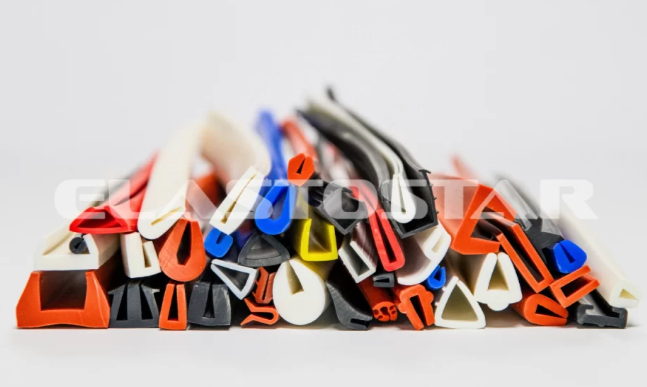
Compression force is the amount of load a V-channel applies to the mating surface once installed.
Too little force leads to leakage, while excessive force can cause frame distortion, difficult closure, or premature wear in a V-channel seal.
1. Understanding Compression Force Behavior
The compression force in a V-profile is not linear. It increases progressively as the profile legs flex inward.
Key influences include:
- V-angle geometry.
- Wall thickness of the profile.
- Material elasticity.
- Installed compression percentage.
Because of this, force must be evaluated at the installed deflection, not at full compression.
2. Where Designers Often Make Mistakes?
Common errors seen during specification:
- Designing for full closure instead of working deflection.
- Ignoring progressive force increase.
- Selecting material hardness without force data.
- Over-compressing to “ensure sealing”.
These mistakes often result in high closing effort or long-term compression set.
3. Practical Force Evaluation Approach
Instead of complex equations, force is typically evaluated using controlled compression testing.
Design teams usually:
- Define target compression range (for example, partial leg deflection).
- Measure the force per unit length at that compression.
- Validate against the allowable closure force of the assembly.
Profiles produced as Silicone U Channels are often selected here because their elastic response remains stable across repeated compression cycles.
Force vs Deflection Relationship (Conceptual)
| Compression Level | Seal Response | Design Implication |
| Low compression | Initial contact | Air/water blocking begins |
| Moderate compression | Stable sealing force | Optimal operating range |
| High compression | Rapid force increase | Risk of overloading |
This relationship is why V-profiles are preferred over flat seals in variable-gap applications.
Material Influence on Compression Force
Material choice significantly affects force output:
- EPDM produces a higher force at lower deflection.
- Silicone rubber offers smoother force progression.
- Softer compounds reduce closing effort.
Read More: What’s the Difference Between Shore A and Shore D
What Deflection Range Is Required for Reliable V-Channel Sealing?
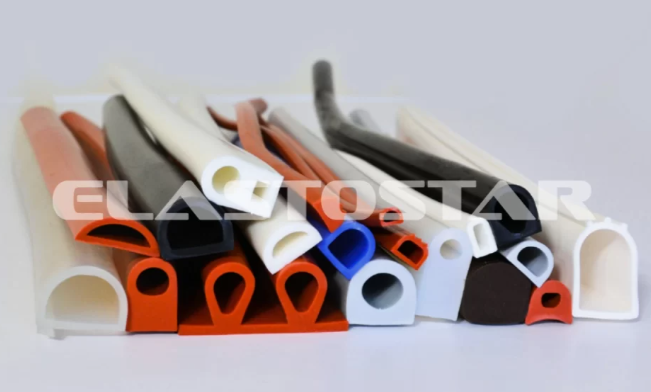
Deflection is the amount of movement a V-profile must absorb while maintaining contact pressure.
Designing for the correct deflection range ensures a V-shaped seal performs consistently despite tolerance stack-up, thermal expansion, and repeated cycling.
1. Why Deflection Matters More Than Gap Size
V-channels are not designed to fill a fixed gap; they are designed to flex.
Key reasons deflection must be specified:
- Actual gaps vary due to manufacturing tolerances.
- Doors and panels move during operation.
- Materials expand and contract with temperature.
A seal designed for only a nominal gap often fails when real-world movement occurs.
2. Working Deflection vs Maximum Deflection
Designers should distinguish between two conditions:
- Working deflection
The normal compression range during daily operation is where sealing is stable, and force is controlled. - Maximum deflection
The upper limit that the profile can tolerate during misalignment or peak movement without damage.
V-profiles perform best when most operations occur within the working deflection range rather than at the limit.
3. Typical Sources of Deflection in Applications
Deflection is introduced by multiple factors, not just installation.
- Door or panel movement during opening and closing.
- Thermal expansion of frames or housings.
- Long-term settling or wear of hinges and mounts.
- Assembly variation across production lots.
These factors should be accounted for early in the profile selection process.
4. Material Recovery and Deflection Stability
A V-channel must recover its shape after repeated deflection to maintain sealing force.
Profiles manufactured as Silicone Sponge Rubber Profiles are often used where:
- A lower closing force is required.
- Larger deflection ranges must be accommodated.
- Long-term compression recovery is critical.
Sponge structures allow greater absorption of movement without excessive buildup of force.
5. Deflection Design Checklist
Use this checklist during specification:
- Define minimum, nominal, and maximum gap.
- Identify expected movement during operation.
- Set a working deflection range below material limits.
- Verify recovery after repeated compression cycles.
Design validation should confirm performance across all conditions, not just initial fit.
Where Are V-Channel Weatherstripping Profiles Commonly Applied?
V-channel profiles are selected where controlled compression, movement tolerance, and long-term durability are required across repeated opening and closing cycles.
Their spring-like behavior makes weatherstrip profiles effective across multiple industries with different sealing demands.
1. Automotive Closures and Compartments

In automotive applications, V-channels are used to manage dynamic gaps and vibration.
- Door frames and access panels.
- Trunk and hood interfaces.
- Interior compartment sealing.
Here, the profile must accommodate body flex and repeated cycling without losing contact pressure. Silicone Profiles & Channels manufactured by Elastostar Rubber Corporation are commonly specified where temperature variation and long service life are critical.
2. Architectural Doors, Windows, and Facades
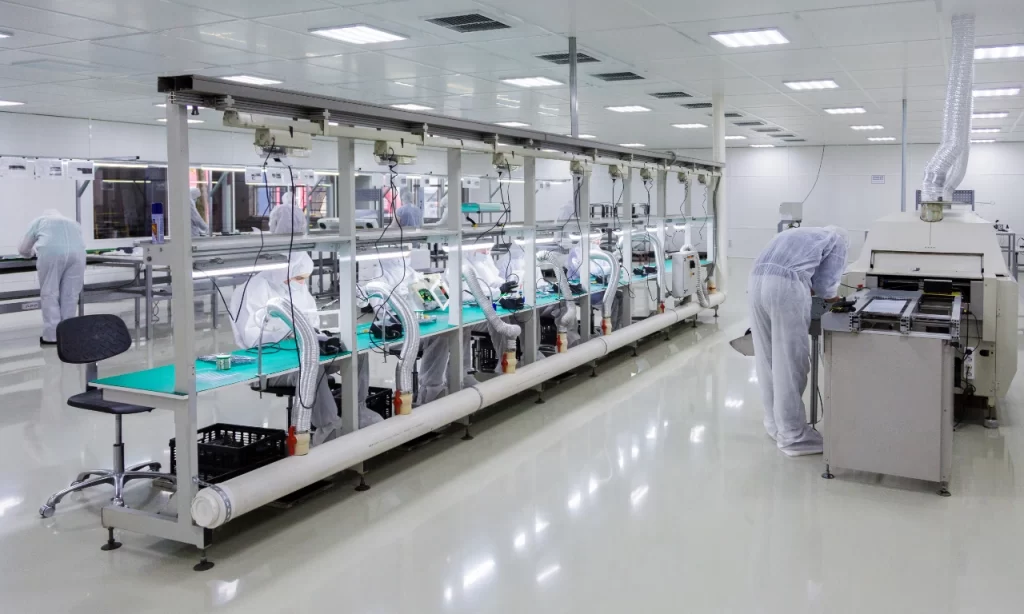
Building systems require weatherstripping that performs in harsh environmental conditions.
- Window frames and curtain wall systems.
- Exterior doors and access hatches.
- Sliding and folding assemblies.
Architectural applications benefit from profiles that tolerate misalignment and thermal movement while maintaining consistent sealing force over time.
3. Appliances and Equipment Enclosures
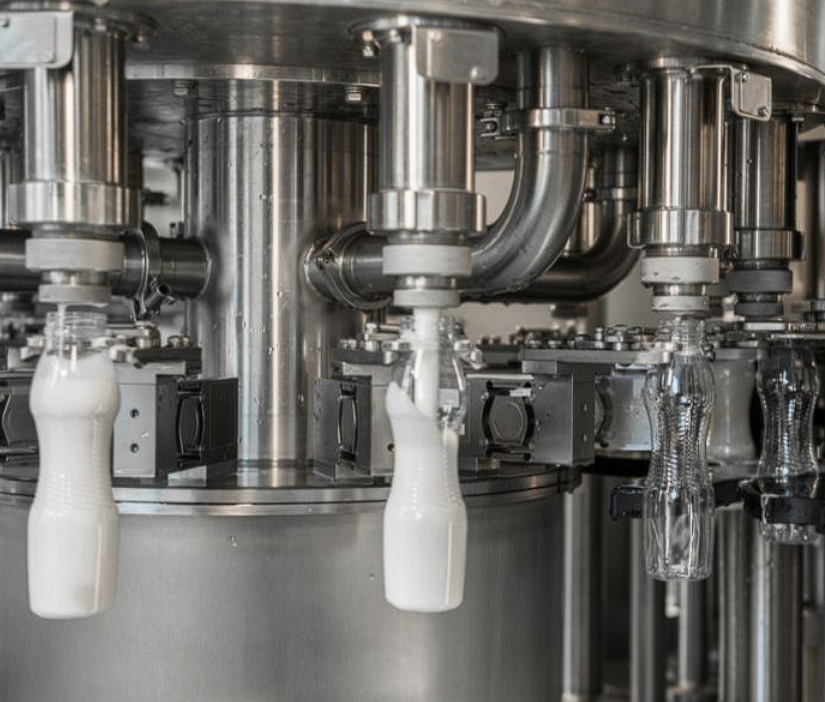
Appliances rely on repeatable sealing without excessive closing force.
- Electrical cabinets and control panels.
- HVAC housings and service doors.
- Consumer and industrial appliances.
In these applications, V-channels help balance sealing effectiveness with ease of operation, especially where panels are opened frequently.
4. Why V-Channels Perform Well Across Industries
V-channel profiles succeed across diverse applications because they:
- Adapt to variable gaps.
- Maintain progressive sealing force.
- Reduce stress on frames and hinges.
- Recover after repeated compression.
This versatility is why they are chosen across automotive, architectural, and appliance sectors.
Read More: 6 Benefits of Rubber Weather Stripping
How Are V-Channel Weatherstripping Profiles Installed in Real Applications?
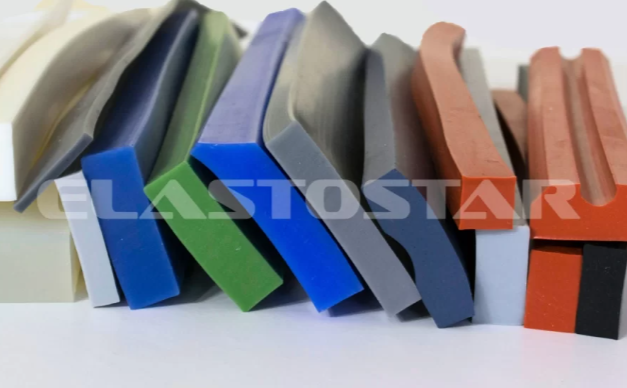
The installation method determines whether a V-channel profile maintains alignment, compression, and long-term sealing performance.
Selecting the correct approach ensures the rubber weatherstrip remains stable under repeated movement and environmental exposure.
1. Installation Scenario 1: PSA Tape-Backed Profiles
Pressure-sensitive adhesive backing is used where speed, simplicity, and clean surfaces are available.
Typical use cases
- Retrofit installations.
- Smooth metal or coated surfaces.
- Low to moderate compression loads.
Design and installation notes
- Surface preparation is critical for adhesion.
- Adhesive performance is affected by temperature and humidity.
- PSA is best suited where mechanical retention is not required.
In these applications, FDA silicone rubber is commonly supplied with tape backing to ensure consistent placement during installation.
2. Installation Scenario 2: Clip-In or Channel-Fit Profiles
Mechanical retention is preferred when positional stability is critical.
Typical use cases
- High-cycle doors and panels.
- Applications with higher compression force.
- Long-term or permanent installations.
Design and installation notes
- Groove dimensions must match profile tolerances.
- The installation force should not deform the V-legs.
- Mechanical retention prevents profile migration over time.
Profiles designed as Rubber P channels are frequently specified for clip-in installations due to their dimensional consistency and extrusion accuracy.
3. Installation Selection Checklist
Use this checklist during design review:
- Is the installation permanent or serviceable?
- What compression load will the profile experience?
- Will the assembly be opened and closed frequently?
- Are environmental conditions suitable for adhesives?
What Custom Extrusion Capabilities and MOQs Apply to V-Channel Weatherstripping?

Custom V-channel weatherstripping is produced using precision extrusion processes that allow profile geometry, material, and dimensions to be tailored to the application.
At Elastostar Rubber Corporation, V-channel profiles are manufactured under established extrusion categories, consistently used across industrial sealing applications.
1. Customisation Options Available Through Extrusion
Using Silicone E Channels, the following parameters can be customised:
- V-angle and leg length to control spring force.
- Wall thickness to balance flexibility and durability.
- Profile height to match gap and deflection limits.
- Durometer selection for closing-force control.
These adjustments allow the V-channel to be tuned for both sealing performance and ease of operation.
2. Tooling and Development Process
Custom extrusion tooling is developed based on the approved profile geometry.
- Tooling design reflects the profile’s complexity and tolerance requirements.
- Prototype extrusions are used to verify fit, compression, and recovery.
- Final tooling is released only after design validation.
Early tooling validation reduces redesign risk and improves production readiness.
3. Minimum Order Quantity (MOQ) Considerations
MOQs depend on extrusion setup and production efficiency.
- Standard silicone materials support lower MOQs.
- Custom colors or special requirements may increase MOQ.
- Continuous-length production improves yield and consistency.
Read More: Rubber Extrusion Profiles U Channel D Profile P Profile
Why Choose Elastostar Rubber Corporation for V-Channel Weatherstripping?

Effective V-channel weatherstripping depends on material consistency, extrusion accuracy, and process control across the full product lifecycle.
V Channel Manufacturer supports sealing applications with manufacturing discipline, engineering support, and compliance-driven production capabilities.
- Products manufactured to USP Class VI, Sections 87 & 88 compliance requirements for regulated and performance-critical applications.
- Custom extruded profiles, including V-channels, are supported alongside O-rings, gaskets, and sheet materials for integrated sealing systems.
- Engineering support covering reverse engineering, design assistance, prototyping, and transition to full production.
- Short lead times are enabled by controlled in-house manufacturing and streamlined production planning.
- Large-scale custom manufacturing capability within a dedicated facility, supporting both low-volume and scaled programs.
- Proudly Made in USA, ensuring traceability, consistent quality standards, and responsive collaboration.
By combining compliant materials, precision extrusion, and end-to-end manufacturing support, Elastostar Rubber Corporation helps ensure V-channel weatherstripping performs reliably from initial design through long-term service.
Recommended Reads
- Best Silicone Door and Window Seals for Weatherproofing
- Which Is the Best Type of Weather Stripping and Its Applications
- What Is the Purpose of a Rubber Door Seals

Conclusion
V-channel weatherstripping offers a reliable sealing solution where controlled compression, movement tolerance, and long service life are required. When designed correctly, the V-shaped geometry provides progressive sealing force while accommodating deflection, misalignment, and thermal movement.
However, performance depends on selecting the right material, defining compression and deflection limits, choosing the correct installation method, and aligning profile design with manufacturing capabilities. Evaluating these factors early helps prevent over-compression, premature wear, and installation issues. If you are specifying or redesigning V-channel weatherstripping for your application, contact us to discuss profile design, material options, and custom extrusion requirements tailored to your sealing needs.
FAQs
Q1. What is V-channel weatherstripping?
V-channel weatherstripping is a flexible sealing profile with a V-shaped cross-section that compresses and springs back under load. This geometry allows the seal to maintain contact across varying gaps, making the V-weatherstrip suitable for doors, panels, and enclosures that experience movement or misalignment.
Q2. How does the V-channel weatherstrip seal?
A V-channel seals through spring action. When compressed, the angled legs flex inward, generating controlled contact pressure against the mating surfaces. This progressive response enables a V-shaped seal to adapt to changes in gap while maintaining a consistent sealing force over repeated cycles.
Q3. What material is best for V-channel seals?
Material selection depends on temperature range, environmental exposure, and service life requirements. EPDM is commonly used for outdoor applications, silicone is preferred for wide temperature ranges and long-term elasticity, and TPE is used in controlled environments. Many V-channel profiles are produced as Silicone Extrusions when durability and compression recovery are critical.
Q4. What are the dimensions of V-channel weatherstripping?
V-channel dimensions vary by application and include profile height, leg length, wall thickness, and V-angle. These dimensions are selected based on gap size, expected deflection, and allowable compression. Custom dimensions are often specified to ensure proper sealing without over-compression.
Q5. How do you calculate the compression force for a weatherstrip?
Compression force is evaluated based on material stiffness, profile geometry, and installed deflection. Rather than relying on theoretical values, force is typically measured through compression testing at the expected working deflection. This approach helps ensure the V-channel seal provides adequate sealing without excessive closing force.
Q6. Where is V-channel weatherstripping used?
V-channel weatherstripping is widely used in automotive doors and compartments, architectural windows and doors, appliances, and equipment enclosures. Its ability to tolerate movement and maintain sealing force makes it effective across diverse weatherstrip profiles and industries.
Q7. Can V-channel seals be installed with adhesive backing?
Yes. V-channel profiles can be supplied with pressure-sensitive adhesive (PSA) backing for quick installation on smooth surfaces. Adhesive-backed profiles are best suited for light-to-moderate compression loads and retrofit applications. Higher-load applications typically use mechanical retention methods.
Q8. What is the difference between V-bulb and V-channel seals?
A V-channel seal relies on angled legs to create spring force, while V-bulb weatherstripping incorporates a hollow bulb to absorb compression. V-channels generally provide more controlled, progressive force, whereas bulb designs are used where larger deflection and lower closing force are required.
Q9. How do you install V-channel weatherstripping?
Installation methods include PSA tape-back mounting, clip-in retention, or channel-fit designs. The correct method depends on compression force, cycle frequency, and service conditions. Proper installation ensures the rubber v-channel remains aligned and maintains consistent sealing performance over time.
Q10. What is the minimum order quantity for custom V-channel extrusions?
Minimum order quantities vary based on material type, profile complexity, and production setup. Standard materials and simpler profiles typically allow lower MOQs, while custom colors or tight tolerances may increase them.