Biocompatibility is a critical requirement for materials used in medical and pharmaceutical applications. USP Class VI certification is one of the most widely recognized standards for evaluating the biological safety of elastomers and plastics that come into contact with the human body.
Defined under United States Pharmacopeia <88>, USP Class VI testing uses in vivo methods to assess systemic toxicity, tissue irritation, and implantation response.
For manufacturers working with medical components, understanding biocompatibility testing, material selection, and documentation requirements is essential.
This guide explains USP Class VI, how it compares with ISO 10993, and why medical-grade silicone testing plays a key role in regulatory compliance.
Key Takeaways
- USP Class VI is a strict biocompatibility standard that confirms materials are safe for contact with the human body.
- Materials must pass three in vivo tests for toxicity, irritation, and long-term tissue response to be considered compliant.
- Consistent material formulation, processing, and specimen preparation are critical for passing testing and avoiding failures.
- USP Class VI focuses on material safety, while ISO 10993 evaluates the final medical device under real-use conditions.
- Proper documentation and traceability are essential for regulatory approvals and FDA submissions.
- Early planning of testing, timelines, and material selection helps avoid delays and reduces compliance risk.
- At Elastostar Rubber Corporation, we support these programs with custom manufacturing, design help, and application support, prototype-to-production-run capability, and Proudly Made in USA quality control.
- Medical silicone materials used in these applications often require compliance with USP Class VI Sections 87 & 88.
Table of Contents
USP Class VI Definition and Regulatory Scope (USP <88>)
USP Class VI is a biocompatibility classification defined under United States Pharmacopeia <88> (USP <88>). It evaluates whether a material causes adverse biological responses upon contact with living tissue.
Because of its strict requirements, class VI USP is commonly specified for materials used in medical devices, pharmaceutical processing, and laboratory applications.
1. What USP <88> Covers?
USP <88> focuses on in vivo biological testing, not just chemical composition. Materials are evaluated based on how the body responds to them under controlled test conditions.
Passing USP Class VI testing means the material demonstrates acceptable biological performance across all required tests.
2. Why USP Class VI Matters?
USP Class VI is often requested by medical OEMs and regulatory teams because it provides high confidence in material safety. While it does not replace device-level approval, it supports broader biocompatibility testing requirements used in regulatory submissions.
Manufacturers producing medical-grade silicone components typically align material selection, processing controls, and documentation with USP <88> expectations, following structured quality and validation practices similar to those outlined in our Elastostar compliance overview.
Read More: FDA Approved vs FDA Compliant – Here’s What Sets Them Apart
Three Required In Vivo Tests for USP Class VI Compliance

To meet USP Class VI requirements under USP <88>, a material must successfully pass three specific in vivo biocompatibility tests.
These tests evaluate how living tissue responds to the material under controlled conditions. Failing any one test results in non-compliance.
1. Systemic Injection Test
The systemic injection test evaluates acute systemic toxicity. Material extracts are injected into test animals to observe whether the material causes harmful systemic reactions. This test helps identify potential toxic responses that could affect the entire body.
2. Intracutaneous (Intradermal) Test
The intracutaneous test assesses localized tissue irritation. Material extracts are injected just beneath the skin to observe redness, swelling, or other inflammatory responses. This test is critical for materials used in applications involving skin or tissue contact.
3. Implantation Test
The implantation test measures long-term tissue compatibility. A sample of the material is implanted into muscle or subcutaneous tissue and monitored over time for signs of inflammation, necrosis, or adverse tissue response. This test is especially important for medical components that are in prolonged contact.
USP Class VI Test Overview
| Test Type | Purpose |
| Systemic Injection | Detects acute systemic toxicity |
| Intracutaneous | Evaluates local tissue irritation |
| Implantation | Assesses long-term tissue compatibility |
Importance of Consistent Material Control
Because USP Class VI testing is strictly pass/fail, material formulation, curing method, and processing consistency are critical.
Manufacturers conducting medical-grade silicone testing rely on controlled production and documented quality systems.
Read More: How Silicone Material Choices Affect Recall Risk
Testing Protocols and Specimen Preparation
Accurate USP Class VI testing depends not only on the test methods but also on how specimens are prepared and handled before evaluation.
Poor sample preparation can invalidate results, even if the base material is suitable.
1. Specimen Preparation Requirements
For medical-grade silicone testing, samples must be representative of the final manufactured product. This includes:
- The same formulation and curing method are used in production.
- Final surface finish and thickness.
- No post-processing that alters material behavior.
Specimens are typically cleaned and conditioned before testing to remove contaminants that could affect biocompatibility testing results.
2. Extraction Protocols
USP <88> requires material extracts to be prepared using specific solvents and conditions. These extracts simulate how the material may interact with the body:
- Aqueous and non-aqueous extraction media.
- Defined temperature and time conditions.
- Controlled extract-to-surface-area ratios.
These extracts are then used in the required class VI testing procedures.
Importance of Process Control
Consistency is critical. Variations in curing, mixing, or handling can change biological response outcomes.
This is why manufacturers rely on documented quality systems, validated processes, and traceable production controls, such as the quality control framework for regulated silicone products.
Read More- How to Test the Quality of Rubber
Acceptance Criteria and Pass/Fail Standards

USP Class VI testing is evaluated on a strict pass or fail basis. There are no partial approvals or tolerance ranges. A material must meet the acceptance criteria for all required tests to be considered compliant under USP <88>.
1. How Results Are Evaluated
Each in vivo test is assessed for signs of adverse biological response. These may include toxicity, irritation, inflammation, or tissue damage beyond acceptable limits. If any test shows an unacceptable response, the material fails USP Class VI requirements.
What Causes a Failure?
Common reasons materials fail USP Class VI testing include:
- Inconsistent formulation or curing methods.
- Residual processing contaminants.
- Variations between test samples and production material.
- Poor control of raw materials or batch traceability.
Because of this, biocompatibility testing must be supported by stable manufacturing processes and documented quality controls.
Importance of Documentation and Compliance

Passing USP Class VI testing is not only about the test result but also about maintaining supporting documentation. Test reports, material certifications, and traceability records are often reviewed during audits and regulatory submissions.
Manufacturers producing medical-grade silicone components typically maintain compliance documentation aligned with certification and quality requirements.
This is especially important for custom silicone parts such as Ruber O-rings, seals, gaskets, and tubing, where formulation consistency and batch traceability directly impact compliance.
USP Class VI vs ISO 10993 Biocompatibility Standards
Both USP Class VI and ISO 10993 are widely used for biocompatibility testing, but they serve different purposes and are applied at different stages of product approval.
How the Standards Differ?
USP Class VI is a material-focused standard defined under USP <88>. It evaluates whether a material causes adverse biological responses using a fixed set of in vivo tests.
Results are strictly pass/fail.
ISO 10993 is a broader, risk-based framework used for medical device evaluation. Testing is selected based on device type, contact duration, and clinical use, which means requirements can vary significantly between products.
| Aspect | USP Class VI (USP <88>) | ISO 10993 |
| Scope | Material-level testing | Device-level evaluation |
| Test Approach | Fixed in vivo tests | Risk-based test selection |
| Outcome | Pass or fail | Risk assessment-based |
| Typical Use | Material qualification | Regulatory device approval |
| Regulatory Context | Pharma, medical materials | Global medical device compliance |
When Both Are Required?
Many medical programs use USP Class VI to qualify materials early, then apply ISO 10993 testing at the device level for regulatory submissions. Understanding how these standards complement each other helps reduce risk and avoid redundant testing.
For example, medical-grade silicone tubing or gaskets may carry USP Class VI material certification, while the final assembled medical device undergoes ISO 10993 evaluation.
Material behavior and curing method, especially for medical silicones, play a key role in outcomes under both standards, our silicone material.
USP Class VI Certification Process and Timeline
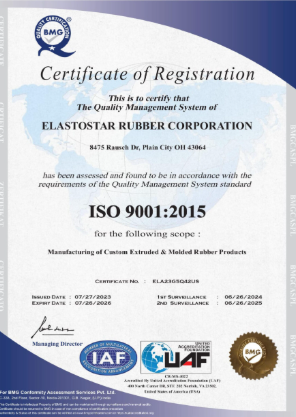
The USP Class VI certification process follows a structured path designed to confirm material safety and traceability. Understanding this process helps manufacturers plan testing without delaying development timelines.
Typical Certification Process
The process usually includes:
- Material selection and formulation review to ensure suitability for USP <88> testing.
- Specimen preparation using production-representative material.
- Third-party laboratory testing for systemic injection, intracutaneous, and implantation tests.
- Test report review and documentation to confirm compliance with USP Class VI requirements.
Any change in formulation, curing method, or processing may require re-testing.
Expected Timeline
While timelines can vary by laboratory and test schedule, a typical USP Class VI testing timeline includes:
- Sample preparation and submission: 1–2 weeks.
- In vivo testing and observation periods: 4–8 weeks.
- Final reports and documentation: 1–2 weeks.
Overall, manufacturers should plan for 6–12 weeks from sample submission to final documentation.
Also Read– Elastostar Rubber Corporation Is a B-A-B-A-A Compliant Manufacturer
FDA Documentation Requirements for USP Class VI Materials

USP Class VI certification does not replace FDA approval, but it plays an important role in supporting FDA submissions for medical devices and pharmaceutical applications.
Regulatory teams often use USP Class VI data as part of broader biocompatibility testing documentation.
How USP Class VI Data Is Used in FDA Submissions?
USP Class VI test reports are commonly included in:
- Device Master Files (DMFs).
- Material qualification packages.
- Supplier documentation for FDA audits.
- Technical files supporting 510(k) or PMA submissions.
These reports demonstrate that the material meets established biological safety requirements under USP <88>.
Documentation That Must Be Maintained
To support FDA review, manufacturers are expected to maintain:
- Complete USP Class VI test reports from accredited laboratories.
- Material specifications and formulation details.
- Batch traceability and change control records.
- Statements of compliance and certificates.
Any change to material formulation, curing method, or processing conditions may require updated documentation or re-testing.
FDA documentation often references USP Class VI test reports for silicone tubing, gaskets, seals, and molded elastomer components used within the device or system.
Why Choose Elastostar Rubber Corporation for USP Class VI Silicone Materials?

Elastostar Rubber Corporation supports medical and pharmaceutical rubber manufacturers with materials and processes aligned to strict biocompatibility requirements.
- We support custom manufacturing for regulated medical and pharmaceutical silicone components.
- We work with materials that meet USP Class VI Section 87 & 88 compliance where required.
- We manufacture FDA-approved silicone products for relevant applications.
- We support platinum-cure silicone tubing for use with peristaltic pumps in medical and pharmaceutical fluid-handling systems.
- We manufacture custom extrusions, gaskets, O-rings, and rubber sheet materials for regulated programs.
- We provide reverse engineering support for legacy parts and replacement programs.
- We offer prototype-to-production-run capability to support development through to full manufacturing.
- We provide design help and application support for part geometry, material selection, and manufacturability.
- Our large manufacturing facility supports both specialized and production-scale requirements.
- We focus on the shortest possible lead time to support regulated supply needs.
- Our products are Proudly Made in the USA, supporting quality control, traceability, and dependable supply.
- By combining medical-grade material support with controlled manufacturing and compliance-focused processes, we help customers manage biocompatibility requirements with greater confidence.
Recommended Reads
Conclusion
USP Class VI certification plays a critical role in demonstrating the biological safety of materials used in medical and pharmaceutical applications. Understanding USP <88> requirements, in-vivo testing methods, acceptance criteria, and documentation expectations helps manufacturers reduce regulatory risk and avoid costly delays.
Material selection, consistent processing, and proper test preparation are essential for successful biocompatibility testing, especially when working with medical-grade silicone. By aligning material performance with both USP Class VI and broader regulatory frameworks such as ISO 10993, manufacturers can support smoother approval pathways.
Reach out to us to discuss USP Class VI requirements, material selection, and compliance support for your application.
FAQs
Q1. What is the USP Class VI certification?
USP Class VI certification is a biocompatibility classification defined under the United States Pharmacopeia <88>. It confirms that a material does not produce adverse biological responses when tested using specific in vivo methods, making it suitable for medical and pharmaceutical applications.
Q2. What tests are required for USP Class VI?
USP Class VI requires three in-vivo tests: the systemic injection test to evaluate acute toxicity, the intracutaneous test to assess localized tissue irritation, and the implantation test to examine long-term tissue response. All three tests must be passed.
Q3. What is the difference between USP Class VI and ISO 10993?
USP Class VI is a material-level, pass/fail standard using fixed in-vivo tests, while ISO 10993 is a risk-based framework applied at the medical device level. ISO 10993 testing varies based on device use and contact duration.
Q4. How long does USP Class VI testing take?
USP Class VI testing typically takes between 6 and 12 weeks. The timeline includes specimen preparation, in-vivo testing periods, observation time, and final test report documentation.
Q5. What materials pass USP Class VI testing?
High-purity materials with stable formulations are most likely to pass. Medical-grade silicones, particularly platinum-cured silicone elastomers, are commonly used because of their low toxicity and chemical stability.
Q6. Is platinum-cured silicone always USP Class VI?
No. While platinum-cured silicone is well-suited for USP Class VI testing, certification is not automatic. The specific formulation, processing conditions, and finished material must still be tested and documented.
Q7. What are the acceptance criteria for USP <88> testing?
USP <88> testing uses strict pass/fail criteria. A material must show no unacceptable systemic toxicity, irritation, or adverse tissue response in any of the required tests to be considered compliant.
Q8. Do all medical devices need USP Class VI certification?
Not all medical devices require USP Class VI certification. It is commonly used to qualify materials, while device approval often relies on ISO 10993 testing and FDA regulatory pathways.
Q9. How much does USP Class VI testing cost?
The cost of USP Class VI testing varies depending on the laboratory, material type, and test scope. Costs typically range from several thousand to tens of thousands of dollars, including testing and reporting.
Q10. What documentation is required for FDA submission with USP Class VI?
FDA submissions typically include USP Class VI test reports, material specifications, certificates of compliance, batch traceability records, and change-control documentation. These support broader biocompatibility and regulatory review.