
When it comes to high-temperature materials, extruded silicone rubber excels, thanks to its exceptional heat resistance, flexibility, and stability, making it a top choice for various applications, including engine gaskets, oven seals, and high-voltage insulators. This blog addresses a simple yet important question: how hot can silicone rubber tolerate, and what makes it a reliable material for extreme environments?
We’ll also compare it with other heat-resistant rubber types, cover real-world applications, and show how rubber product manufacturers like Elastostar customize silicone products for performance and durability.
Key Takeaways
- Silicone rubber can handle very high heat up to 300°C in some cases.
- It doesn’t melt like plastic, but slowly breaks down at extreme temperatures.
- It’s used in hot areas like engines, ovens, electronics, and appliances.
- Compared to other rubbers like EPDM and Viton, silicone lasts longer in heat.
- You can get custom parts like U-channel, D-channel, or P-channel seals.
- Silicone is safe for food and medical use, and holds up well outdoors too.
- A good manufacturer like Elastostar helps you get the right fit, material, and quality.
Table of Contents
Understanding the Highest Temperature Silicone Rubber Can Endure

Silicone rubber seals is engineered to handle a wide range of temperatures, making it suitable for various demanding applications. Generally, the highest temperature silicone can tolerate ranges from -60°C to +230°C (-76°F to +446°F). However, specialized formulations can endure even higher temperatures, up to +300°C (572°F), for short periods. This impressive heat tolerance ensures that silicone rubber products remain functional and reliable under extreme conditions.
Read more – What Is the Resistance Level of Silicone Rubber?
The Science Behind Silicone Heat Resistance
The superior silicone heat resistance can be attributed to its unique chemical structure. Silicone rubber is composed of silicon-oxygen chains, which are more stable and less reactive than the carbon-carbon bonds found in other types of rubber. This stability prevents degradation at high temperatures, ensuring that silicone rubber products maintain their mechanical properties and performance even in harsh environments.
What is the Melting Point of Silicone Rubber Temperature?
Unlike many materials that have a defined melting point, silicone rubber does not melt in the traditional sense. Instead, it begins to degrade at temperatures above 300°C (572°F). The silicone melting temperature is technically the point where the material loses its physical integrity and starts to break down chemically. This characteristic makes silicone rubber an excellent choice for applications where maintaining shape and functionality at high temperatures is crucial.
How Silicone Compares with Other Heat-Resistant Rubber Materials

To understand why silicone is preferred in demanding environments, it’s helpful to compare it with other high-heat rubber options like EPDM, Viton, and Neoprene.
Heat Resistance Comparison of Common Rubber Types
| Rubber Material | Max Temperature (°C) | Key Strengths | Limitations |
|---|---|---|---|
| Silicone Rubber | 230–300 | Excellent thermal and UV stability | Higher material cost |
| EPDM | ~150 | Affordable, good weather resistance | Weak at high temps |
| Viton (FKM) | ~200 | Fuel and chemical resistant | Expensive and less flexible |
| Neoprene | ~120 | Abrasion resistant, good grip | Limited heat performance |
Silicone stands out for its wide operating range and resistance to degradation. For engineers and designers, this means more thermal safety margin in applications like ovens, turbines, and engine compartments.
What are the Applications of Heat-Resistant Rubber?

Heat-resistant rubber is essential in numerous industries.
Here are a few key applications:
- Automotive Industry: Silicone rubber products such as hoses, gaskets, and seals are used in engines and exhaust systems where high temperatures are typical.
- Aerospace Industry: The ability of silicone rubber to withstand extreme temperatures makes it ideal for insulating components and protecting equipment in aircraft applications.
- Electrical and Electronics: Silicone rubber is used in insulating materials and components that must endure high heat generated by electronic devices.
Examples of Silicone Rubber in Real-World Applications
Let’s look at how specific silicone-based components are used across industries:
- Silicone Sponge: Used in industrial ovens, HVAC systems, and cleanrooms. Its cushioning and insulation properties make it ideal for vibration control and thermal management.
- Silicone Rubber Gasket: Found in compressors, autoclaves, medical chambers, and high-pressure vessels. These gaskets prevent leakage in extreme temperatures and remain flexible over years of use.
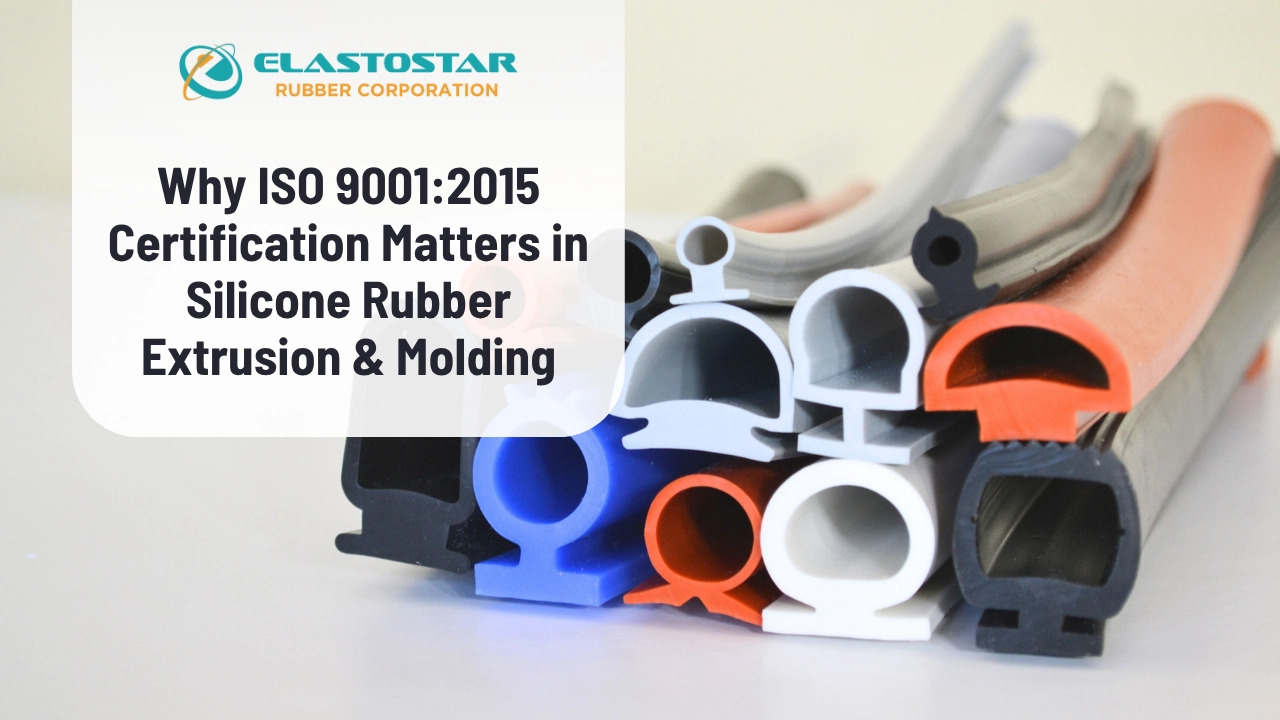
- U-Channel Rubber Seal: Ideal for door perimeters in furnaces, enclosures, and commercial ovens. U-channel rubber grips surfaces tightly while flexing to seal irregular edges.
- D-Channel Rubber Profile: Used for RV and container door seals. The curved profile helps compress better under mechanical load, ensuring air-tight insulation.
- P-Channel Rubber Gasket: A common choice for tray sealing, isolators, and pharmaceutical equipment due to its clean compression and minimal gas permeability.
- Silicone Window Seal & Rubber Window Seal: These are essential for temperature control and noise damping in architectural glass installations, laboratories, and vehicles.
Each of these components can be supplied as custom silicone products, tailored to specific size, color, hardness, and regulatory compliance requirements.
Read more – Best Silicone Door and Window Seals for Weatherproofing
Comparing Different Heat-Resistant Rubber Types
While there are various types of heat-resistant rubber, silicone rubber is often preferred for its superior performance. Other materials like EPDM and Viton also offer heat resistance but typically do not match the high-temperature tolerance of silicone.
For instance, EPDM can withstand temperatures up to 150°C (302°F), while Viton can handle up to 200°C (392°F). These figures are significantly lower than the highest temperature silicone can endure, making silicone the material of choice for more demanding applications.
Role of a Rubber Product Manufacturer in Heat-Resistant Projects

Choosing the right supplier is as important as selecting the right rubber.
A capable rubber product manufacturer doesn’t just produce silicone parts they engineer solutions. They can advise on material grades, recommend profile types, and conduct heat aging tests for validation.
At Elastostar, our expertise in rubber profiles manufacturing allows us to produce precise U-channel, D-channel, and P-channel designs tailored to your assembly, operating temperature, and environment.
Working with a specialized rubber profiles manufacturer also means you get support in:
- Prototyping to spec
- Durometer matching (soft to firm silicone)
- Co-extrusions and adhesive backing
- FDA, UL, and RoHS material certification
- Bulk production with short lead times
Customizing Silicone Rubber Products for Specific Needs
At Elastostar, we recognize that different applications require different specifications. That’s why we offer customized silicone rubber products tailored to meet your unique needs. Whether you need a specific size, color, or durometer, our team can develop a product that precisely fits your requirements. Our expertise in heat resistant rubber solutions ensures that you receive a product capable of performing reliably under your specific conditions.
Read more – How to Choose an Extruded Rubber Manufacturer in the USA
Quality Assurance for Silicone Rubber Products
Ensuring the quality and performance of silicone rubber products is critical, especially for high-temperature applications. At Elastostar, we adhere to strict quality control processes to guarantee that our products meet the highest standards. Our state-of-the-art manufacturing facilities and rigorous testing procedures ensure that every batch of silicone rubber we produce is of the utmost quality and reliability.
Recommended Reads
- Sponge Silicone Rubber Products: Benefits & Applications
- The Advantages Of Silicone For Rubber Products
- 5 Benefits Of Using Silicone Rubber For Window And Door Seals

Conclusion
Silicone rubber is an exceptional material known for its ability to withstand high temperatures. Its unique properties, such as excellent silicone heat resistance and the absence of a traditional melting temperature of silicone, make it ideal for a wide range of industrial applications. Whether you’re in the automotive, aerospace, or electronics industry, silicone rubber products offer a reliable solution for high-temperature environments. Contact us today to learn more about our products and services.
FAQs
1. What is the highest temperature silicone rubber can withstand?
Most general-purpose silicone rubber can endure continuous temperatures up to 230°C (446°F). For high-performance applications, specialized formulations can tolerate up to 300°C (572°F) for limited durations without losing flexibility or shape.
2. Does silicone rubber melt under high heat?
No. Unlike thermoplastics, silicone rubber does not melt in the conventional sense. Instead, it begins to degrade chemically at temperatures above 300°C, but typically retains its physical form up to that point.
3. Is silicone sponge suitable for high-temperature environments?
Yes. Silicone sponge offers excellent heat resistance, typically up to 200°C (392°F). It’s commonly used for thermal insulation, vibration damping, and sealing in ovens, HVAC systems, and industrial equipment.
4. How does silicone rubber compare to EPDM and Viton in terms of heat tolerance?
Silicone outperforms both. EPDM withstands temperatures up to 150°C, while Viton handles up to 200°C. Silicone rubber, in contrast, remains stable up to 230–300°C, making it the preferred choice for high-heat applications.
5. Where are silicone rubber gaskets typically used?
Silicone rubber gaskets are ideal for sealing joints exposed to high temperatures in automotive engines, industrial ovens, sterile pharmaceutical environments, and electrical enclosures.
6. Can I order custom silicone products for specific heat-based applications?
Yes. Manufacturers like Elastostar specialize in custom silicone products, including extrusions, gaskets, and seals made to precise size, color, durometer, and thermal performance requirements.
7. What are U-channel rubber seals used for?
U-channel rubber seals are designed to grip and cushion panel edges or glass. They’re widely used in oven doors, lab equipment, furnaces, and automotive enclosures to provide thermal sealing and mechanical protection.
8. What makes D-channel rubber profiles suitable for sealing?
D-channel rubber profiles are often used where compressive sealing is needed, such as vehicle doors, electrical cabinets, and machinery housings. Their shape allows for consistent compression under load while maintaining a tight seal.
9. Where are P-channel rubber gaskets commonly used?
P-channel gaskets are ideal for autoclaves, pharma isolators, and tray sealing systems. Their unique profile allows them to create secure, consistent compression in high-temperature or hygienic settings.
10. What’s the difference between silicone window seals and standard rubber window seals?
While both provide insulation, silicone window seals offer greater heat resistance, UV stability, and weatherproofing, making them a superior choice for demanding environments or outdoor installations.
11. Is silicone rubber safe for food and medical applications?
Yes. FDA-grade silicone is widely used in food processing, medical tubing, and sterile gaskets. It withstands high heat, resists contamination, and complies with safety regulations.
12. How long can silicone rubber last in high-temperature conditions?
When properly formulated and installed, silicone rubber can last for 5–10 years or longer, even under continuous exposure to elevated temperatures, UV light, and various weather conditions.
13. Can rubber profiles be manufactured in different shapes and hardness levels?
Absolutely. Manufacturers like Elastostar offer rubber profiles in a wide range of shapes (U, D, P channels) and durometer ratings, from soft silicone sponge to firm solid extrusions, customized to your application.
14. What should I look for in a rubber profiles manufacturer for heat-resistant parts?
Look for a rubber profiles manufacturer with experience in high-temperature silicone, in-house extrusion capabilities, testing and compliance certifications (FDA, UL, ISO), and the ability to customize tooling and materials.
15. Can silicone products be customized by size, color, or certification needs?
Yes. From custom-sized window seals to color-matched P-channel gaskets, silicone rubber can be tailored to meet project-specific needs including FDA-grade, flame-retardant, or high-strength formulations.