
In industries such as aerospace, automotive, and chemical processing, O-rings may be small, but they perform a critical role in keeping systems sealed and safe. The problem arises when standard rubber seals are exposed to aggressive fuels or harsh solvents.
Under these conditions, traditional O-rings often swell, crack, or break down completely, leading to costly leaks, downtime, and even safety risks. Studies show that a majority of fuel system sealing failures are caused by material incompatibility. This has created a growing demand for O-rings for aggressive fuels and O-rings for solvents that can deliver long-lasting performance.
The answer lies in fluorosilicone O-rings. At Elastostar Rubber Corporation, we turn this challenge into an opportunity by providing advanced fluorosilicone products designed for reliability where others fail. In this blog, we will explore why.
What Are Fluorosilicone O-Rings?
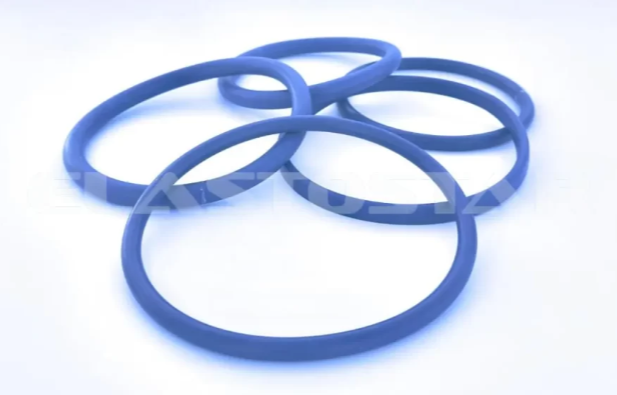
Fluorosilicone O-rings are specialized sealing components made from a unique fluorine-modified silicone rubber. This composition combines the flexibility of silicone O-rings with the chemical resistance of fluorocarbon, giving them superior performance in harsh environments.
Unlike standard seals, fluorosilicone rubber O-rings resist swelling, cracking, and degradation when exposed to fuels, oils, and solvents.
They are often manufactured as custom rubber O-rings, custom silicone rings, or even extruded O-rings to meet specific industry requirements. Available in different profiles such as rectangular O-rings or vulcanized O-rings, they deliver reliable sealing across a wide temperature range from cryogenic lows to high-heat conditions.
By offering durability and stability where standard silicone fails, fluorosilicone O-ring seals have become the trusted choice for aerospace, automotive, and chemical processing applications.
Why Standard O-Rings Fail in Fuels and Solvents?
Standard O-rings made from materials such as nitrile or basic silicone often struggle when exposed to fuels and solvents. These elastomers are not engineered for prolonged chemical contact, which causes them to lose their sealing strength over time.
While fuel resistant O-rings and solvent resistant O-rings are designed for such environments, most ordinary seals cannot deliver reliable performance.
When exposed to gasoline, diesel, or industrial solvents, standard materials such as regular silicone O-rings or rubber O-ring gaskets often suffer from:
- Swelling – fuel or solvent absorption distorts the seal’s shape.
- Cracking – surface fractures appear under chemical stress.
- Softening – the material weakens, reducing its ability to seal.
- Early degradation – general-purpose rubber breaks down faster than chemical-resistant elastomers like fluorosilicone.
These issues make standard seals unsuitable for industries where long-term reliability and safety are essential.
How Do Fluorosilicone O-Rings Perform in Fuel Applications?

One of the biggest advantages of extruded O-rings for fuel is their ability to perform where ordinary seals fail. Thanks to their fluorine-modified structure, they resist swelling and degradation when exposed to aggressive fuels such as gasoline, diesel, and jet fuel.
In fact, studies show that fluorosilicone seals can last up to three times longer than standard silicone O-rings in continuous fuel exposure.
In fuel-heavy environments, fluorosilicone is often chosen as the best O-ring for gasoline, the best O-ring for diesel fuel, and a trusted option for O-rings for jet fuel.
These seals provide:
- Stable sealing performance even with continuous fuel contact.
- Resistance to swelling and cracking that weakens standard elastomers.
- Long service life, cutting downtime and replacement costs by as much as 40% in fuel systems.
When compared with Viton, fluorosilicone also offers superior low-temperature flexibility while maintaining excellent resistance in fuel-rich applications.
Read more: High Temperature O-Rings for Industrial Applications
How Do Fluorosilicone O-Rings Handle Solvents?

One of the greatest strengths of fluorosilicone is its ability to resist damage from harsh solvents. Fluorosilicone O-rings’ chemical resistance allows them to handle alcohols, aromatic hydrocarbons, and industrial cleaning agents that rapidly degrade standard elastomers.
While traditional silicone O-rings often swell or lose strength in these environments, fluorosilicone maintains its sealing performance. Independent testing shows that fluorosilicone retains over 90% of its tensile strength after prolonged solvent exposure, compared to less than 50% for standard silicone.
Important benefits of spliced vulcanized O-rings for solvents include:
- Strong solvent compatibility seals for aggressive cleaning agents.
- Resistance to hydrocarbons, protecting against swelling and softening.
- Stable performance in alcohols and aromatics, where other elastomers fail.
- Longer service life, reducing downtime and maintenance costs.
From aerospace hydraulic systems to automotive and chemical processing, hydrocarbon-resistant O-rings made from fluorosilicone deliver reliability where standard seals cannot.
How Do Fluorosilicone O-Rings Perform in Extreme Temperatures?
In many industries, seals must perform reliably under both freezing and high-heat conditions. High-performance rectangular silicone O-rings are designed for exactly that.
They maintain flexibility at cryogenic lows near –75°F (–60°C) and remain stable up to +400°F (+204°C). This wide operating range makes them a go-to choice for aerospace, automotive, and chemical applications where temperature extremes are common.
Standard silicone O-rings may handle heat but lose strength in fuels and solvents, while Viton performs well in fuels but struggles at very low temperatures. Fluorosilicone bridges this gap, combining chemical resistance with temperature resilience.
Key advantages include:
- Consistent sealing across broad temperature swings.
- Cold flexibility for aerospace and cryogenic use.
- Heat stability, making them dependable as high-temp O-rings.
This balance ensures long-lasting, reliable performance in the harshest environments.
Where Are Fluorosilicone O-Rings Used in Industry?
Hot Sliced O-rings are trusted in industries that demand chemical resistance, temperature stability, and long service life.
- Aerospace fluorosilicone O-rings – Vital for jet fuel and hydraulic systems. Industry data shows fluorosilicone is used in over 70% of aerospace fuel sealing applications.
- Automotive custom O-rings – Reliable in engines, EV battery systems, and emission controls where durability matters.
- Industrial/Chemical – Fuel system sealing silicone O-rings protect pumps, valves, and processing equipment from aggressive chemicals.
At Elastostar, we support these industries not only with high-performance seals but also with reverse engineering, prototype-to-production solutions, and expert design help.
With the shortest lead-time delivery, Elastostar ensures customers get reliable sealing products when they need them most.
Read more: Custom Silicone O-Rings – Leading Manufacturer in the USA and Canada
How Does Fluorosilicone Compare to Other O-Ring Materials?

When it comes to demanding sealing applications, engineers often weigh the differences between fluorosilicone vs silicone O-rings and Viton vs fda silicone O-rings. Silicone O-rings are valued for their flexibility and excellent high-temperature performance, but they quickly lose effectiveness in contact with fuels and solvents.
Fluorosilicone retains the flexibility of silicone while adding robust chemical resistance, making it far more reliable in fuel-heavy environments.
Viton O-rings, on the other hand, are strong contenders in high-heat and fuel systems. However, they become stiff at low temperatures, where fluorosilicone continues to provide dependable sealing.
While the cost of extruded silicone O-rings may be higher than standard silicone or nitrile, their extended service life and reduced maintenance needs make them cost-effective in critical industries.
Quick Comparison: Fluorosilicone vs Silicone vs Viton
| Property / Factor | Fluorosilicone O-Rings | Silicone O-Rings | Viton O-Rings |
| Fuel & Solvent Resistance | Aerospace, automotive, and chemical sealing | Poor – swells and degrades | Excellent – strong resistance |
| Low-Temperature Flexibility | Very Good (to –75°F / –59°C) | Very Good | Limited – stiff in cold |
| High-Temperature Resistance | Good (to ~350°F / 177°C) | Excellent (to ~400°F / 204°C) | Excellent (to ~400°F / 204°C) |
| Durability & Longevity | Highly reliable in mixed conditions | Moderate – weak in fuels | High – strong in hot fuel |
| Cost | Higher upfront, lower lifecycle cost | Lower cost, short lifespan | Higher cost, fuel-focused |
| Best Use Cases | Aerospace, automotive, chemical sealing | Medical, food-grade, high-heat dry uses | Fuel systems, high-heat industry |
With this balance of properties, fluorosilicone stands out as a versatile material for sealing in extreme conditions. Elastostar specializes in delivering custom hollow O-rings customized to these demanding environments, ensuring both performance and reliability.
Read more: A Complete Guide to High Temperature Silicone Rubber
Standards and Compliance for Fluorosilicone O-Rings
When choosing fluorosilicone O-ring manufacturers in the USA, certifications play a vital role in ensuring product quality and reliability. Elastostar stands out by adhering to globally recognized standards that guarantee consistent performance and compliance across industries.
- ISO & AS9100D Certified – Ensuring aerospace-level quality in design and manufacturing.
- IATF 16949 – Meeting stringent requirements for the automotive industry.
- USP Class VI Section 87 & 88 Approved – Confirming biocompatibility and safety, critical for medical and sensitive applications.
In addition to O-rings, Elastostar also provides fluorosilicone gaskets and seals, designed and tested to meet these rigorous standards. Working with a certified U.S. manufacturer means reliability, shorter lead times, and assurance that every product has undergone strict quality checks.
Elastostar’s certifications and compliance ensure customers in the aerospace, automotive, and chemical industries get dependable sealing solutions they can trust.
How to Choose the Right Fluorosilicone O-Rings?
Choosing the right O-ring is essential for reliable sealing in demanding environments. Consider these factors:
- Size & Standards – Ensure the O-ring matches exact groove dimensions and industry specifications.
- Hardness (Durometer) – Softer grades offer flexibility in cold conditions, while harder grades perform better under pressure.
- Application Environment – Check compatibility with fuels, solvents, or harsh chemicals for long-term reliability.
- Certified Supplier – Partnering with a U.S. manufacturer like Elastostar ensures quality, fast delivery, and custom solutions.
Elastostar specializes in fluorosilicone seals for fuel systems and Moulded silicone O-rings for harsh chemicals, providing dependable performance across aerospace, automotive, and industrial applications.
Recommended Reads
- Viton vs Silicone O-Rings: Which is the Best Choice?
- What’s the Difference Between EPDM and Silicone Rubber?
- Silicone Gaskets vs Neoprene: What to Choose?
Conclusion
In environments where fuels, solvents, and extreme temperatures quickly degrade standard elastomers, high performance fluorosilicone O-rings stand out for their reliability. Their resistance to swelling, cracking, and chemical attack makes them indispensable in aerospace, automotive, and industrial chemical processing. To ensure your systems run safely and efficiently, contact Elastostar for certified, custom-engineered sealing solutions.
With expertise in design, reverse engineering, and fast delivery, We help industries stay ahead with dependable performance. For projects that demand precision and durability, Elastostar Rubber Corporation remains a trusted partner in advanced fluorosilicone sealing technology.
Frequently Asked Questions (FAQ)
1. What are fluorosilicone O-rings used for?
Fluorosilicone O-rings are commonly used in aerospace, automotive, and chemical industries where exposure to harsh fuels and solvents is unavoidable. These fluorosilicone rubber O rings provide reliable sealing in pumps, valves, and fuel systems.
2. Are hot sliced O-rings fuel resistant?
Yes, they are designed to be fuel-resistant O-rings that withstand long-term exposure to gasoline, diesel, and aviation fuels without swelling or degrading, making them ideal for demanding fuel system applications.
3. How do fluorosilicone O-rings perform with solvents?
They are considered excellent solvent-resistant O-rings, providing strong chemical compatibility with alcohols, hydrocarbons, and aromatics while preventing cracking and breakdown in solvent-heavy environments.
4. What is the difference between fluorosilicone and Viton O-rings?
When comparing Viton vs fluorosilicone O rings, Viton handles extreme heat well, while fluorosilicone offers better flexibility and low-temperature resistance. For help with choosing, reach out to Elastostar Rubber Corporation.
5. Can custom silicone O-rings be used in aerospace applications?
Yes, they are widely recognized as aerospace fluorosilicone O rings, trusted for sealing in jet fuel systems, hydraulic lines, and extreme temperature ranges where safety and compliance are critical.
6. Are Rectangular silicone O-rings safe for automotive use?
Absolutely. These automotive fluorosilicone O rings perform reliably in engines, EV battery systems, and emission controls. For custom solutions, contact Elastostar Rubber Corporation.
7. Do rubber O-rings cost more than standard O-rings?
Yes, the cost of fluorosilicone O rings is higher than standard elastomers, but their superior durability and resistance reduce replacement frequency and overall long-term expenses.
8. Where can I buy fluorosilicone O-rings in the USA?
You can purchase them directly from fluorosilicone O ring manufacturers in USA like Elastostar Rubber Corporation, who specialize in custom sizing, fast delivery, and certified quality seals.
9. How long do fluorosilicone O-rings last in fuel systems?
When properly selected, these fuel system sealing fluorosilicone O rings can last significantly longer than nitrile or silicone alternatives, maintaining performance even in aggressive fuels.
10. What makes Fda silicone O-rings better than regular silicone O-rings?
While silicone provides flexibility, it lacks solvent resistance. Fluorosilicone vs silicone O rings proves fluorosilicone is the superior choice for fuel, solvent, and hydrocarbon-rich environments. For expert advice, reach out to Elastostar Rubber Corporation.
11. Can fluorosilicone O-rings handle high temperatures?
Yes, these are known as high-temp O-rings, performing reliably from cryogenic lows to elevated heat ranges, making them suitable for aerospace and automotive engines.
12. Are fluorosilicone O-rings FDA-approved for food and medical applications?
Certain grades are manufactured as FDA silicone O-rings, offering safe sealing in food, beverage, and pharmaceutical equipment when FDA compliance is required.
13. Can I order custom sizes of fluorosilicone O-rings?
Yes, manufacturers like Elastostar provide custom rubber O rings and custom-size O rings, ensuring precise fitment for prototypes, reverse engineering, and large production runs.
14. Are fluorosilicone O-rings resistant to hydrocarbons?
Absolutely. They are trusted as hydrocarbon-resistant O-rings, delivering superior sealing against aromatic and aliphatic hydrocarbons found in solvents and fuels.
15. How quickly can silicone O-rings be delivered?
Reputed suppliers offer some of the shortest lead time delivery in the industry, ensuring your custom silicone rings or production runs arrive on time without supply chain delays.