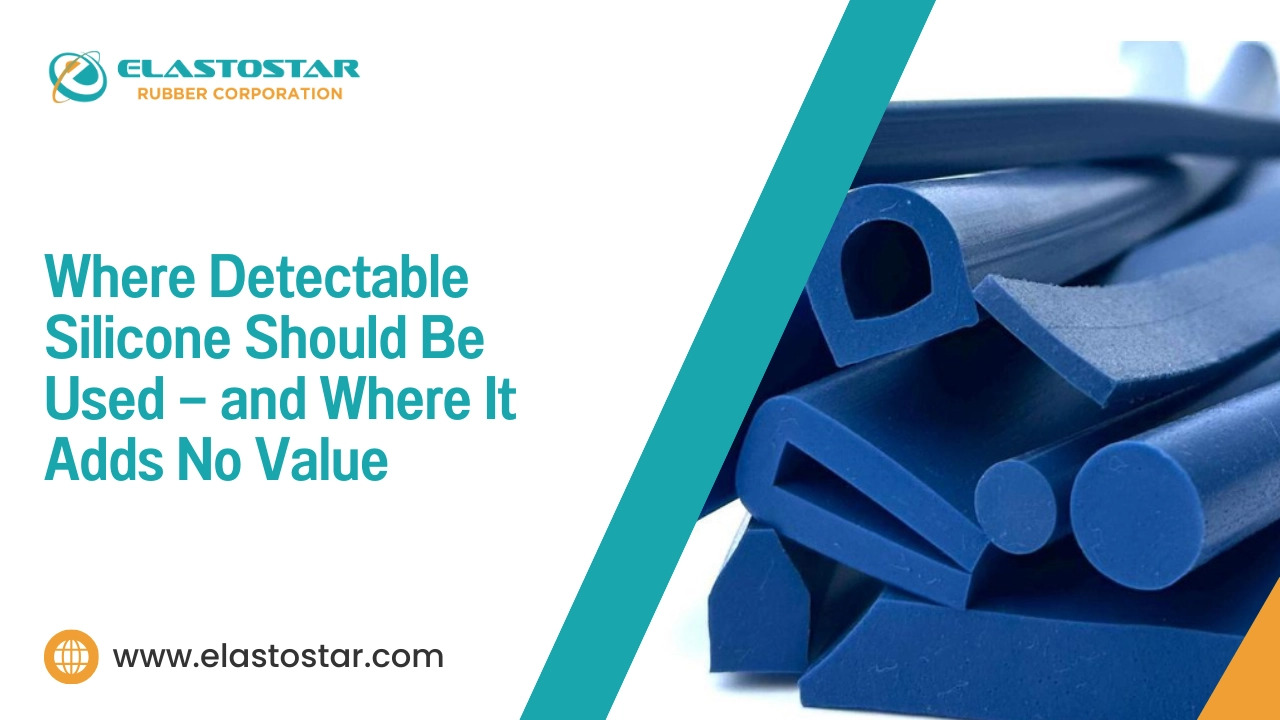
Foreign-object contamination remains a leading cause of product recalls in food, beverage, and pharmaceutical plants. Industry reports show that a large percentage of recalls are due to small fragments breaking off seals, tubing, gaskets, or rubberised material.
This is why detectable silicone applications are valuable in critical control points, where X-ray or metal scanners must detect even tiny particles.
But detectable materials do not improve safety everywhere. In many parts of a production line, adding cost does not reduce risk. At Elastostar, we help engineers decide where detectable silicone gaskets, platinum-cured food tubing, or silicone-on-metal sealing strips are necessary and where standard silicone performs better.
In this blog, we will outline where detectable silicone truly delivers value, and where it does not.
Key Takeaways
- Flow performance depends on tubing flexibility too soft collapses, too stiff disrupts pump accuracy.
- Platinum-cured silicone tubing maintains stable internal volume during continuous compression cycles.
- Wall thickness affects flow consistency thin walls expand, thick walls resist deformation.
- Pump compatibility is critical; tubing must match roller force, cycle speed, and rebound rate.
- Bend radius impacts efficiency tight bends restrict flow and increase backpressure.
- Elastostar tubing offers precise ID/OD control, kink resistance, and reliable flow stability for high-cycle systems.
Table of Contents
High-Risk Detection Zones Where Detectable Silicone Is Truly Required?
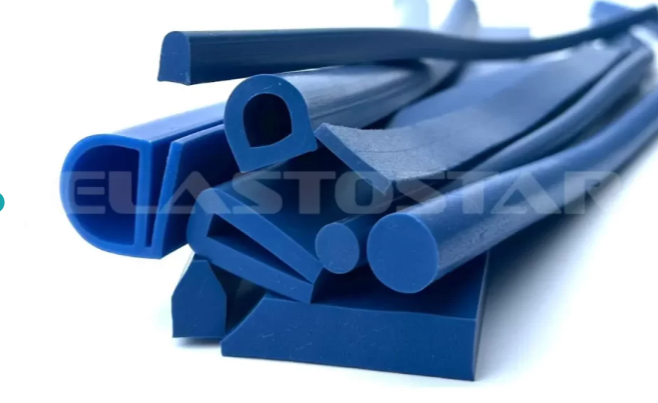
These are areas where even a small fragment can enter the product stream, triggering contamination or a product recall.
In food and pharma zones, sealing materials must be visible to metal and X-ray rubber systems. Detectable silicone is valuable only where a fragment could directly contact product flow or be carried downstream.
Elastostar’s solutions, including silicone-on-metal gaskets, platinum-cured food tubing, and heat-resistant silicone strips, help operators maintain detection reliability at high-risk points.
Where Does Detectable Silicone Prevent Real Contamination Risks?
- Mixer doors and hatch seals.
- Conveyor belt seals that sit over open product.
- Pump tubing in liquid transfer lines.
- Gaskets in filling, dosing, or packaging equipment.
- Door strips and rubberised material near open batches.
- Sanitary gaskets are used in washdown and CIP/SIP areas.
Low-Risk Areas Where Detectable Silicone Is Unnecessary and Adds No Value
These are zones where a detectable material offers no additional safety benefit because there is no path for fragments to reach the product stream.
In many equipment areas, adding detectable silicone provides no safety benefit and only increases material costs. These detectable silicone limitations occur when the component is installed deep within machinery, fully shielded from the product, or never exposed to operational stress.
Elastostar often sees overuse of detectable materials in attempts to “upgrade” systems, but it delivers no ROI in these low-risk positions.
Situations Where Detectable Silicone Adds No Operational Value
- Internal seals inside gearboxes or motor housings.
- Rubber protective strips are used only as vibration dampers.
- Silicone strip or white rubber strips mounted behind solid panels.
- High-temperature zones where scanners cannot detect fragments anyway.
- Rubber panels or bumpers that do not contact the product or the airflow.
- Components without break risk (thick, reinforced pieces).
Why Detectable Materials Are Not Needed Here
- No foreign-object path to product.
- No mechanical stress that can cause chipping.
- No scanning coverage in the location.
- No impact on contamination, even if wear occurs.
- Higher cost without measurable safety gain.
Cost vs Benefit Analysis for Detectable Silicone in Production Lines
Detectable silicone has clear advantages, but only when the safety benefit outweighs the added cost.
Detectable materials are more expensive than standard silicone because they contain additives that enable scanning by metal detectors or X-ray systems. A proper detectable silicone cost analysis requires determining whether the part sits in a true contamination path.
We help plants calculate ROI detectable silicone so they avoid overspecifying components that do not meaningfully reduce risk or audit exposure.
When Detectable Silicone Delivers Strong ROI
- Gaskets are located directly over the open food product flow.
- Food tubing transfers liquids into filling or dosing lines.
- Silicone gasket material is installed in packaging or sorting equipment.
- Weak points where chipping or tearing regularly occurs.
- Components that are scanned by detection systems on every batch.
When Detectable Silicone Wastes Budget
Below is a simple overview that shows when detectable material has value and when it doesn’t:
Cost vs Benefit Snapshot
| Location Type | Benefit Level | Recommended Material |
|---|---|---|
| Open-product contact area | High benefit | Detectable silicone gaskets / food tubing |
| Internal machine chambers | Low benefit | Standard silicone / rolls of silicone rubber |
| Non-contact panel edges | No benefit | Rubberised material / protective strips |
| Scanner-covered zones | High benefit | X-ray visible silicone strip |
| Scanner-blocked zones | Low benefit | Standard high-temperature silicone |
Read More – Advantages of Platinum-Cured Silicone Tubing
False Security Risks When Detectable Silicone Is Used Incorrectly
Detectable silicone is effective only when the scanning system, placement, and design all work together. Many facilities misapply it, creating a false sense of safety.
Some teams assume detectable silicone will solve every contamination issue. This is one of the most common misconceptions about detectable silicone. The reality is that scanners cannot read through thick metal covers, deep housings, or blind corners.
If a high-temperature silicone gasket or silicone-on-metal strip is installed in an area the detector cannot see, it provides no protective benefit.
Another problem is overconfidence in detection sensitivity. Very small fragments, thin slivers, or worn edges from white rubber strips may fall below detection thresholds. Moisture, sticky product buildup, or improper calibration can further distort X-ray contrast.
These detection system limitations create blind spots that make detectable materials unreliable without proper scanner placement and routine testing.
The result is a dangerous scenario: plants assume everything is protected, but detection coverage does not align with how equipment is used.
Read More – The Benefits of X-Ray and Metal Detectable Rubber Seals in the Food Industry
Strategic Use of Detectable Silicone in Critical Control Plans
Detectable materials must be placed intentionally, not everywhere, to support a strong and efficient food-safety program.
How to Decide Where Detectable Silicone Belongs?
A solid, detectable silicone strategy begins by mapping all points where fragments could realistically fall into the product. These areas include open transfer zones, exposed mixers, dosing heads, and sections of food tubing that run directly above product.
We often recommend detectable silicone gaskets or silicone-on-metal seals only where break likelihood and contamination impact are both high.
This prevents overspecification and ensures the right materials protect the right areas.
How Detectable Silicone Fits Into a HACCP-Aligned Material Plan?
A good HACCP material strategy prioritizes the highest-risk zones first, Critical Control Points where fragments are most dangerous. Detectable silicone adds value when scanners cover the area, the part is exposed to wear, and the fragment size is detectable.
In other zones (like deep interior machinery or shielded rubberised material), standard silicone performs just as well at a lower cost. The goal is not to use detectable material everywhere, but to apply it precisely where it strengthens your CCP plan without unnecessary budget impact.
Why Elastostar Rubber Corporation Is the Right Partner for Detectable & Standard Silicone Materials

At Elastostar Rubber Corporation, we focus on providing manufacturers with the appropriate material for each sealing point, not the most expensive one. Detectable silicone, high-temperature silicone, sanitary gaskets, and standard silicone strips each serve specific roles.
We help our customers place each material exactly where it adds real protection. Our controlled U.S. manufacturing, documentation, and engineering support ensure stable performance throughout the production environment.
What You Get With Us?
- Custom silicone rubber strips, sanitary gaskets, silicone gasket material, and food-grade tubing.
- Detectable and non-detectable options based on real break-risk levels.
- USP Class VI compliant materials for sensitive applications.
- Reverse engineering for existing or worn-out sealing components.
- Prototype-to-production guidance for OEM equipment design.
- Full batch traceability for every order we manufacture.
- Documentation support for QA teams and audit requests.
- In-house formulation, curing, and extrusion control for consistency.
- Shortest lead times with a domestic, USA-based manufacturer.
- Stable supply planning for repeat orders and replacements.
Recommended Reads

Conclusion
Detectable silicone serves a clear purpose, but only when used in the right locations. A smart, detectable silicone strategy focuses on high-risk contact points, scanner coverage, and areas where fragments could actually reach the product stream.
In many zones, using detectable silicone adds cost without value; its limitations create unnecessary spending and false security. Elastostar helps manufacturers select the correct material, whether detectable silicone gaskets, food tubing, or standard rubberised material. If you need guidance choosing the right option for your process, reach out to us.
FAQs
Q1. Where should detectable silicone be used in production lines?
Detectable silicone should be installed only in detectable silicone applications where fragments could directly enter the product stream. These include exposed gaskets on mixer doors, seals above conveyors, sanitary tubing in filling lines, and silicone strips located within scanner coverage. Any area identified as a CCP (Critical Control Point) is a strong candidate for detectable materials.
Q2. When does detectable silicone add no real value?
Detectable silicone adds no value in locations that never contact the product or airflow. These detectable silicone limitations include deep internal machine chambers, motor housings, hidden rubberised material, shielded seals, and high-heat zones where scanners cannot detect fragments. In these cases, standard silicone performs equally well at a lower cost.
Q3. Is detectable silicone cost-effective for all applications?
Not always. A proper cost analysis of detectable silicone shows that detectable materials deliver ROI only in high-risk areas where scanners actively monitor product flow. Using detectable silicone in low-risk zones increases costs without improving safety. Plants should evaluate exposure, wear patterns, and scanner coverage before upgrading materials.
Q4. Can detectable silicone create a false sense of contamination control?
Yes. One common misconception about detectable silicone is that every fragment will automatically trigger a scanner. Detection failures can occur due to miscalibration, blind spots, tiny fragments, or scanner interference from dense product. Detectable silicone is effective only when paired with proper scanner testing and proper equipment placement.
Q5. How should detectable silicone be strategically placed in control zones?
A strong, detectable silicone strategy follows HACCP principles: identify critical break-risk zones, confirm scanner visibility, verify detectability of fragments, and select materials based on exposure. Detectable silicone gaskets, food tubing, or silicone-on-metal strips should be used only where contamination pathways exist.