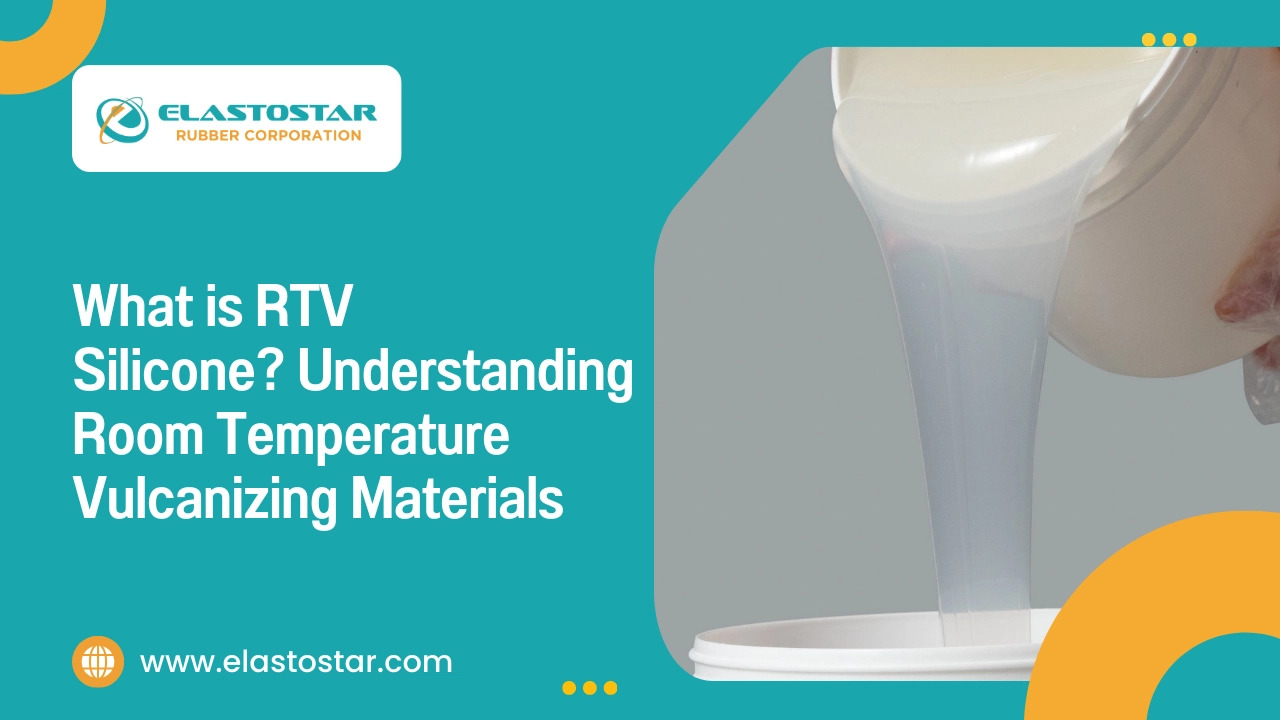
RTV silicone is widely used across industrial, electrical, and sealing applications because it cures at room temperature without the need for heat or pressure. When customers ask what RTV silicone is, they are usually looking for a material that offers flexibility, durability, and reliable sealing under varying conditions.
Unlike heat-cured silicones, RTV materials simplify processing while maintaining excellent thermal and chemical resistance.
In this guide, we explain how RTV silicone works, how it cures, and where it is best applied. Our goal is to help engineers and manufacturers understand room temperature vulcanizing silicone and select the right RTV system for long-term performance.
Key Takeaways
- RTV silicone cures at room temperature without heat or pressure.
- It offers flexibility, thermal stability, and chemical resistance after curing.
- RTV-1 and RTV-2 systems differ in cure method and process control.
- Curing can occur through moisture, platinum-cure, or tin-cure mechanisms.
- RTV silicone is widely used for sealing, bonding, potting, and repairs.
- Selecting the right RTV type depends on movement, temperature, and application needs.
Table of Contents
What Is RTV Silicone?
RTV stands for Room Temperature Vulcanizing, which means the silicone sponge cures and forms a rubber-like material at ambient conditions. RTV silicone is a liquid or paste silicone compound that transforms into an elastic solid through a chemical crosslinking reaction without external heat.
RTV silicone is supplied as either a single-component or two-component system. Once applied, the material begins curing via moisture exposure or a catalyst-driven reaction, depending on the formulation. After curing, it retains flexibility, resists temperature extremes, and provides excellent sealing and bonding properties.
Because of these characteristics, room-temperature-vulcanizing silicone is commonly used for sealing, gasketing, potting, and bonding applications where ease of application and material stability are critical.
RTV Definition and Chemistry Basics
To clearly define RTV silicone, it is important to understand both the term and its chemistry. RTV stands for Room Temperature Vulcanizing, which describes a silicone material that cures into an elastic rubber at ambient conditions. When people ask what is RTV, they are referring to a silicone system that does not require heat, pressure, or specialized curing equipment to form a durable rubber structure.
From a chemistry standpoint, RTV silicone begins as a liquid or paste made of silicone polymers, fillers, and curing agents. Once exposed to air moisture or a catalyst system, the material undergoes a crosslinking reaction. This reaction converts the uncured compound into a flexible, rubber-like solid with strong thermal and chemical resistance.
At Elastostar Rubber Corporation, we work with RTV-compatible silicone materials that align with these curing principles, ensuring predictable performance in sealing, bonding, and gasketing applications. The underlying material behavior is explained further in our silicone material overview.
Read More: Silicone vs Plastic: What Is the Difference Between Them?
Why RTV Silicone Behaves Differently?
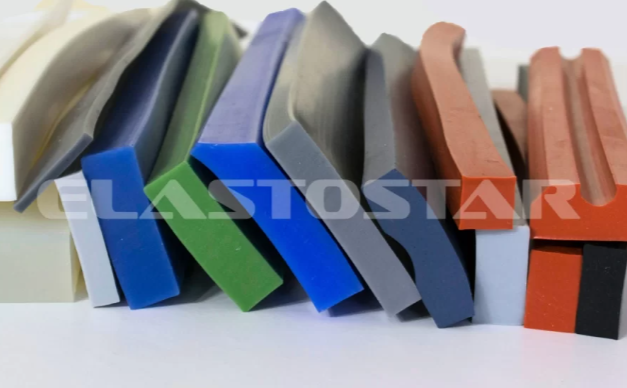
RTV silicone differs from heat-cured silicone because the curing reaction occurs without external energy input. This allows RTV materials to be applied directly on-site or during assembly.
Key chemical characteristics include.
- A siloxane polymer backbone that provides flexibility and stability.
- Crosslinking agents that activate curing at room temperature.
- Resistance to heat, moisture, and aging after cure.
Because of this chemistry, room temperature vulcanizing silicone is widely used where ease of processing and long-term elasticity are required.
RTV-1 vs RTV-2 Silicone Systems
Once we understand what is RTV silicone, the next step is choosing between RTV-1 silicone and RTV-2 silicone systems.
Both are room-temperature vulcanizing materials, but they differ in curing behavior, process control, and suitability for application.
1.RTV-1 Silicone Systems
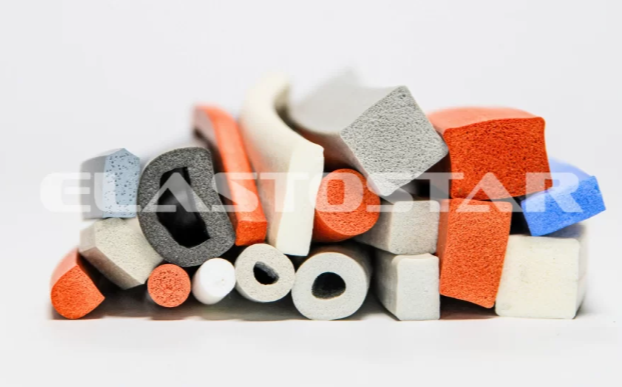
RTV-1 silicones are single-component materials that cure when exposed to moisture in the air. They are supplied ready to use and begin curing immediately after application, for on-site sealing and assembly work.
Key characteristics of RTV-1 silicone.
- Cures from the surface inward through moisture exposure.
- No mixing required, simplifying application.
- Cure speed depends on humidity and joint thickness.
We commonly see RTV-1 systems used as an RTV gasket maker in sealing applications involving rubber U-channel profiles and rubber bulb seals, where flexibility and ease of installation are more important than high structural strength.
2.RTV-2 Silicone Systems
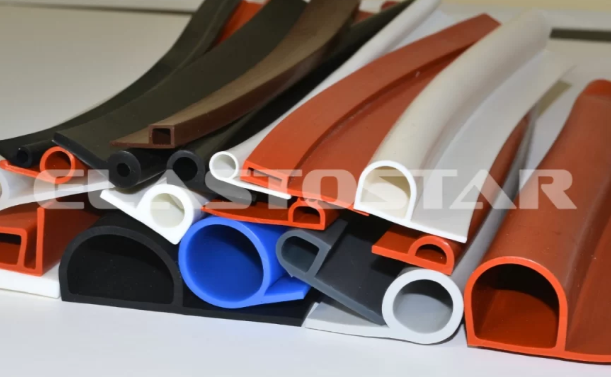
RTV-2 silicones are two-component systems that cure through a controlled chemical reaction once the base and catalyst are mixed. This allows consistent curing throughout the material, regardless of ambient humidity.
Key characteristics of RTV-2 silicone.
- Uniform curing through thick sections.
- Predictable and controllable cure times.
- Suitable for precision and production-controlled environments.
RTV-2 systems are often selected for molding and encapsulation processes, including applications involving Rubber molded parts, where dimensional stability and consistent mechanical properties are required.
RTV-1 vs RTV-2 at a Glance
| Feature | RTV-1 Silicone | RTV-2 Silicone |
| Components | One-part | Two-part |
| Cure Trigger | Air moisture | Chemical catalyst |
| Cure Control | Environment-dependent | Highly controlled |
| Typical Use | Sealing and gasketing | Casting and molding |
RTV Silicone Curing Mechanisms
Understanding curing mechanisms is essential when selecting RTV materials for sealing, bonding, or encapsulation.
While all RTV silicones cure at ambient temperature, the crosslinking reaction mechanism varies by formulation. These curing differences influence flexibility, cure speed, by-products, and long-term performance.
1. Moisture-Cure RTV Systems
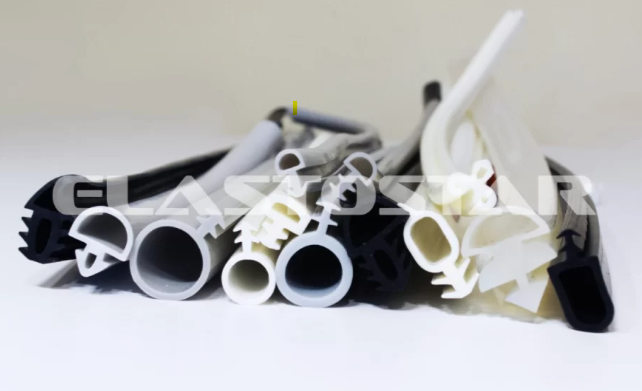
Moisture-cure RTV silicones rely on humidity in the air to initiate curing. Once exposed, curing begins at the surface and progresses inward.
Key characteristics
- Simple application without mixing.
- Cure rate depends on humidity and joint thickness.
- Commonly used for sealing and gasketing applications.
Moisture-cure RTV systems are often selected for field-installed sealing applications such as Rubber window and door seals, where ease of use and flexibility are critical.
2. Platinum-Cure RTV Systems
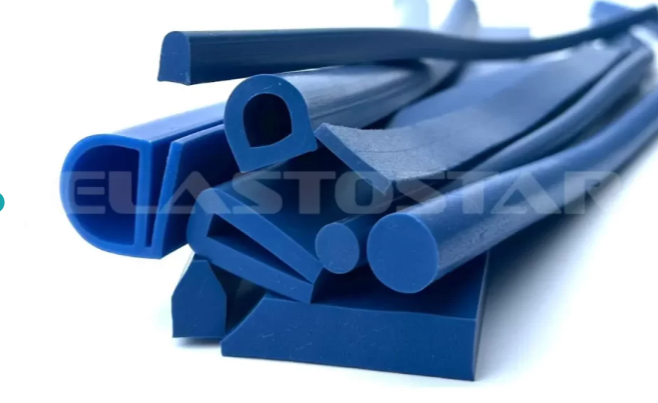
Platinum-cure RTV systems use a catalyst-driven reaction rather than moisture exposure. This curing mechanism produces no corrosive by-products and offers excellent material purity.
Key characteristics
- Uniform curing throughout the material.
- Excellent thermal stability and elasticity.
- Suitable for sensitive or regulated applications.
We commonly evaluate platinum-cure RTV systems for bonding and sealing applications involving FDA metal and X-ray detectable silicone, where cleanliness, stability, and compliance are required.
3. Tin-Cure RTV Systems
Tin-cure RTV systems also cure through a chemical reaction but differ from platinum systems in performance and by-products.
Key characteristics.
- Reliable curing at room temperature.
- Good adhesion to a variety of substrates.
- Slightly lower long-term stability compared to platinum systems.
Tin-cure RTV systems are often considered for general industrial bonding and sealing tasks where material compatibility and cost efficiency are key factors.
Curing Mechanism Comparison
| Cure Type | Cure Trigger | Key Advantage | Typical Use |
| Moisture-Cure | Ambient humidity | Easy application | Field sealing |
| Platinum-Cure | Catalyst reaction | High purity and stability | Regulated applications |
| Tin-Cure | Catalyst reaction | Broad adhesion | Industrial bonding |
Properties Comparison: RTV Silicone vs Heat-Cured Silicones
While both RTV and heat-cured silicones are based on similar polymer chemistry, their processing methods and final properties differ significantly.
Understanding these differences helps us select the right silicone system for sealing, bonding, or production-scale applications.
Key Property Differences
| Property | RTV Silicone | Heat-Cured Silicone |
| Cure Temperature | Cures at room temperature | Requires elevated heat |
| Processing | Applied directly, no tooling | Requires molds and curing ovens |
| Cure Control | Moderate, application dependent | High, production controlled |
| Mechanical Strength | Flexible, moderate strength | Higher tensile and tear strength |
| Dimensional Stability | Good for thin sections | Excellent for molded parts |
| Production Volume | Low to medium | Medium to high |
What are the Applications of RTV Silicone by Type
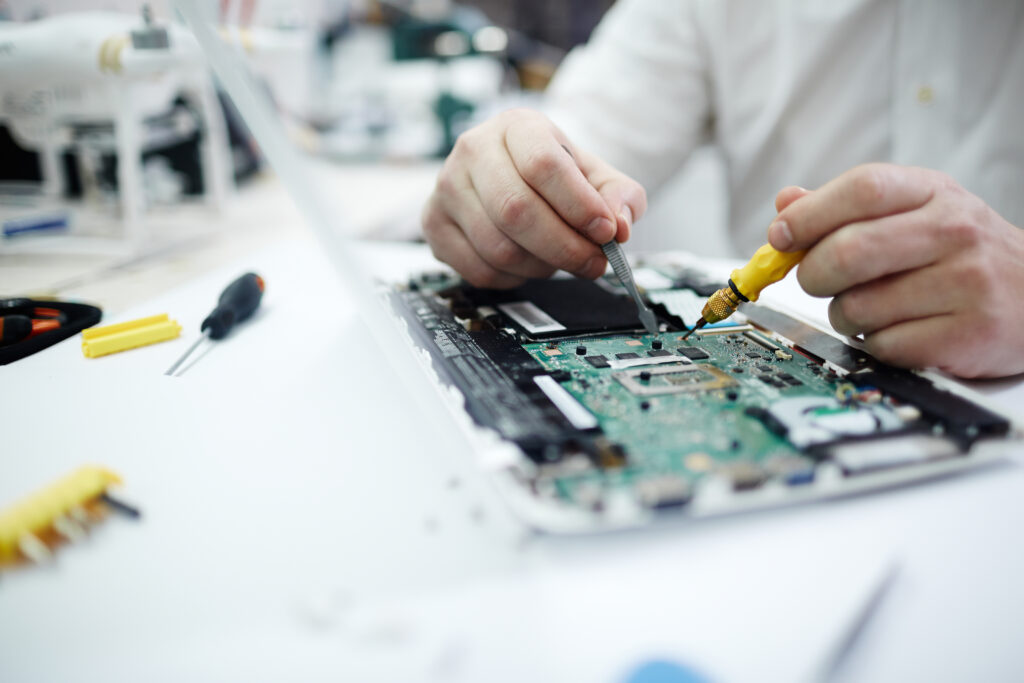
RTV silicone is used across a wide range of industrial applications because it cures at room temperature and meets diverse sealing, bonding, and protection requirements.
Selecting the correct RTV type ensures reliable performance based on movement, temperature, and exposure conditions.
1. Sealing and Gasketing Applications
RTV silicone is widely used as a sealant for static and semi-dynamic sealing. Its flexibility allows it to maintain a seal even when components expand or vibrate.
Typical applications include.
- Flange sealing and equipment housings.
- Environmental sealing against dust and moisture.
- Gap filling where tight tolerances are not possible.
We often see RTV systems evaluated for sealing profiles such as Rubber D-channel seals and Rubber T-seal profiles, where compression recovery and long-term elasticity are essential.
2. Bonding and Assembly Applications
RTV silicone is also used for bonding elastomer components that require flexibility after curing. Unlike rigid adhesives, RTV materials allow bonded parts to move without cracking.
Common bonding uses include.
- Elastomer-to-metal assemblies.
- Rubber-to-rubber interfaces.
- Flexible joint reinforcement.
In these applications, RTV materials are often paired with components such as Rubber lip seals and gaskets, where controlled movement and sealing integrity must coexist.
3. Potting and Protection Applications
RTV silicones are used for potting and encapsulation to protect components from environmental exposure while maintaining flexibility.
Typical protection benefits include.
- Moisture and dust resistance.
- Vibration damping.
- Electrical insulation.
Potting RTV systems are commonly used for assemblies incorporating extruded rubber double-bulb seals, where environmental sealing and impact protection are required.
4. Repair and Maintenance Applications
RTV silicone is frequently used for field repairs because it cures without heat and adheres well when surfaces are properly prepared.
Repair use cases include.
- Emergency sealing.
- On-site Silicone gasket formation.
- Maintenance of elastomer interfaces.
RTV materials provide a practical solution when replacing formed components is not immediately possible.
Interesting Reads: Top 5 Commercial Applications of Silicone Rubber Products
Selection Guide for RTV Silicones
Selecting the right RTV silicone starts with understanding how the material will perform in real operating conditions.
While many customers ask what is RTV silicone, the more important question is which RTV formulation best fits the application. We evaluate several practical factors before recommending an RTV system.
Key Factors to Consider
1. Temperature range.
RTV silicones perform well across a wide temperature range, but specific formulations are better suited for continuous heat exposure or thermal cycling.
2 . Movement and flexibility.
Applications involving vibration or expansion require RTV systems that remain elastic after curing rather than rigid or brittle.
3. Cure control and speed.
RTV-1 systems are ideal for simple sealing tasks, while RTV-2 systems provide controlled curing for thicker sections or production environments.
4 . Substrate compatibility.
Metal, plastic, and elastomer rubber substrates may require different cure chemistries or primers to ensure reliable adhesion.
5 . Regulatory or hygiene requirements.
For regulated environments, material purity and compliance are critical.
Matching RTV Type to Application
| Application Need | Recommended RTV Type |
| General sealing | RTV-1 moisture-cure |
| Thick sections or molds | RTV-2 two-part |
| Sensitive substrates | Neutral cure (alkoxy or oxime) |
| Regulated environments | Platinum-cure systems |
In regulated or hygienic applications, we often evaluate RTV systems alongside materials such as silicone rubber cord, where clean curing and long-term stability are required.
Recommended Reads
- What Is the Highest Grade Silicone?
- What Makes Heat-Resistant Silicone So Popular?
- A Complete Guide to High-Temperature Silicone Rubber

Conclusion
As a specialized silicone rubber manufacturer, Elastostar Rubber Corporation brings deep material knowledge to RTV silicone selection and application. We design and manufacture high-performance silicone rubber products, including RTV compounds, gaskets, seals, silicone tubing, and custom-engineered elastomer solutions for industrial, medical, and OEM environments.
Their manufacturing approach focuses on precise formulation control, consistent curing behavior, and compliance with demanding standards such as FDA and USP Class VI, where required. By combining material science expertise with application-driven design, Elastostar helps customers select the right RTV system for sealing, bonding, potting, and protection, ensuring long-term reliability, durability, and predictable performance in real operating conditions.
FAQs
Q1. What does RTV silicone stand for?
RTV silicone stands for Room Temperature Vulcanizing silicone. It refers to silicone materials that cure into an elastic rubber at ambient temperatures without requiring heat or pressure.
Q2. What is the difference between RTV-1 and RTV-2 silicone?
RTV-1 silicone is a single-component material that cures when exposed to air moisture. RTV-2 silicone is a two-component system that cures through a controlled chemical reaction after mixing. RTV-2 systems offer more predictable curing for thicker sections.
Q3. How does RTV silicone cure at room temperature?
RTV silicone cures via a chemical crosslinking reaction triggered by moisture or a catalyst. This reaction transforms the uncured material into a flexible, rubber-like solid at room temperature.
Q4. What are the types of RTV silicone curing systems?
RTV silicone curing systems include moisture-cure and catalyst-based systems, such as platinum- and tin-cure. Each system differs in cure speed, by-products, and long-term performance.
Q5. Is RTV silicone better than heat-cured silicone?
RTV silicone is better for applications requiring easy application, on-site curing, and flexibility. Heat-cured silicone is preferred for high-volume production and applications requiring higher mechanical strength and tighter tolerances.
Q6. How long does RTV silicone take to cure?
Cure time depends on formulation, humidity, and thickness. RTV-1 systems typically skin over within hours and fully cure within 24 to 72 hours. RTV-2 systems cure based on the catalyst ratio and controlled conditions.
Q7. What is acetoxy cure RTV silicone?
Acetoxy-cured RTV silicone releases acetic acid during curing, producing a strong odor. It offers fast curing and good adhesion, but may not be suitable for corrosion-sensitive substrates.
Q8. Can RTV silicone be used as a gasket maker?
Yes, RTV silicone is widely used as a gasket maker. It has flexibility, temperature resistance, and the ability to form custom seals for static and semi-dynamic gasketing applications.
Q9. What is the temperature range of RTV silicone?
Most RTV silicone materials perform well across a wide temperature range, typically from low sub-zero conditions up to high continuous operating temperatures. Exact limits depend on the specific formulation.
Q10. Is RTV silicone food-safe or medical-grade?
Certain RTV silicone formulations are suitable for food-contact or medical applications when they meet regulatory standards such as USP Class VI. Material selection should always comply with applicable requirements.