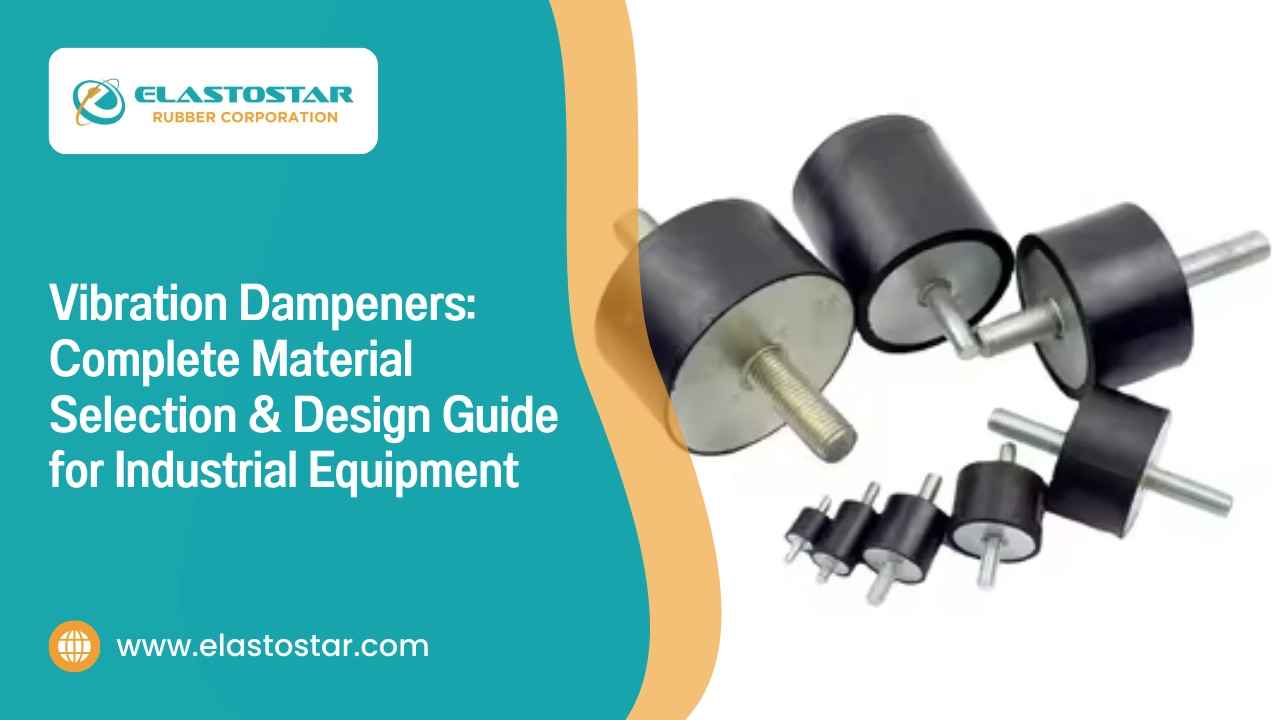
Industrial vibration is a leading cause of premature equipment failure. Studies show that excessive vibration can reduce machinery lifespan by 30–50% and increase maintenance costs by up to 40% in heavy industrial environments. Uncontrolled vibration also contributes to noise, structural fatigue, and frequent component failures.
Vibration dampeners are designed to control these forces by absorbing energy and isolating motion at the source. However, effective vibration control depends on proper selection, material choice, load calculation, and frequency tuning.
In this guide, we will cover the types of vibration dampeners, compare materials, explain design principles, and outline installation best practices to help industrial teams make reliable, long-term decisions.
Key Takeaways
- Industrial vibration leads to early equipment wear and increased maintenance costs.
- Vibration dampeners reduce vibration and noise by absorbing energy at the source.
- Selecting the right vibration dampener type and material improves long-term equipment performance.
- Proper load sizing and frequency tuning help prevent resonance and vibration amplification.
- Correct installation of vibration dampeners is essential for reliable, long-term vibration control.
- Material compatibility with temperature and chemical exposure affects dampener lifespan.
- Regular inspection helps maintain vibration control and prevent unexpected failures.
Table of Contents
Types of Vibration Dampeners Used in Industrial Equipment
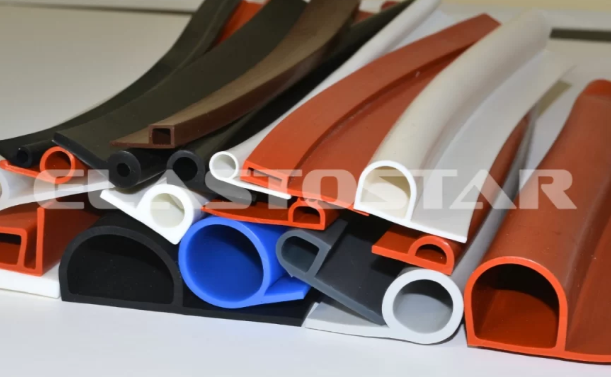
Industrial equipment generates vibration in different directions and intensities depending on speed, load, and operating conditions.
Selecting the right vibration dampeners depends on how vibration travels through the machine and how it needs to be isolated.
1. Vibration Mounts
Vibration mounts are installed between machinery and its supporting structure to limit vibration transfer. In industrial settings, these mounts are commonly manufactured as custom molded rubber parts, designed to handle both static and dynamic loads.
Where are vibration mounts used?
- Motors and compressors.
- Industrial generators.
- Rotating machinery operating continuously.
Why does this solution work?
- Limits vibration transmission into structures.
- Improves equipment stability.
- Reduces long-term fatigue on frames and fasteners.
2. Rubber Dampeners and Bushings
Rubber dampeners and bushings are compact components placed between connected parts rather than beneath full equipment loads.
These components are often produced as precision-molded rubber bushings to ensure a consistent fit and controlled movement.
Typical applications
- Mechanical linkages.
- Frames and housings.
- Pivot points requiring vibration isolation.
Key advantages
- Absorb localized vibration.
- Reduce metal-to-metal contact.
- Extend component service life.
3. Silicone Vibration Isolators
In high-temperature or chemically exposed environments, silicone vibration isolators are used where standard rubber materials lose elasticity.
These isolators are commonly manufactured as die-cut shape components, allowing stable performance over long operating cycles.
Where are they preferred?
- Heat-adjacent equipment.
- Chemical processing machinery.
- Outdoor industrial installations.
Performance benefits
- Wide temperature operating range.
- Long-term flexibility.
- Stable viscoelastic damping behavior.
4. Anti-Vibration Pad
Anti-vibration pads are flat dampening components installed beneath equipment bases to reduce vibration and noise transfer. These pads are typically produced from rubber or silicone sheet materials, making them easy to install and replace.
Common installations.
- Pumps and compressors.
- HVAC units.
- Floor-mounted industrial machines.
Why are they effective?
- Distribute loads evenly.
- Reduce vibration transmission.
- Require minimal installation effort.
Interesting Reads: Top 8 Benefits of Using Rubber Seals & Gaskets for Industrial Applications
Material Comparison for Vibration Dampeners
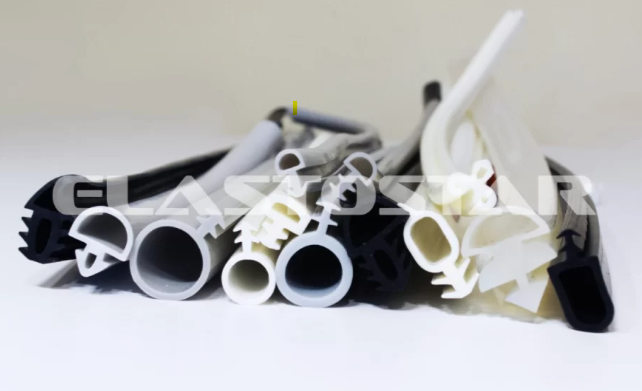
The performance of vibration dampeners depends heavily on material selection. Different elastomers respond differently to load, temperature, chemicals, and vibration frequency.
Choosing the right material improves isolation efficiency, extends component life, and reduces long-term maintenance issues.
Materials such as silicone are often selected for demanding environments due to their thermal stability and long-term elasticity, as outlined in our silicone material.
Common Materials Used in Vibration Dampeners
| Material | Key Properties | Typical Industrial Use | Vibration Performance |
| Silicone Rubber | Wide temperature range, excellent aging resistance | High-temperature equipment, chemical environments | Stable damping across a broad frequency range |
| EPDM Rubber | Strong weather and ozone resistance | Outdoor machinery, HVAC systems | Effective low to mid-frequency damping |
| Neoprene Rubber | Balanced oil resistance and durability | General-purpose industrial equipment | Consistent vibration isolation under moderate loads |
| Natural Rubber | High elasticity and resilience | Machinery with lower operating temperatures | Excellent low-frequency vibration absorption |
| Urethane (Polyurethane) | High load capacity, abrasion resistance | Heavy-duty and high-load equipment | Lower damping, higher stiffness control |
How Material Choice Affects Vibration Control?
- Softer elastomers offer better vibration isolation but support lower loads.
- Stiffer materials handle heavier loads but transmit more vibration.
- Extreme temperatures can reduce damping efficiency if the material is incompatible.
- Chemical exposure and UV conditions influence long-term material stability.
Selecting materials with proven performance characteristics, especially in variable temperature environments, helps ensure vibration dampeners remain effective throughout the equipment’s service life.
Load Capacity Calculations and Spring Rate Selection
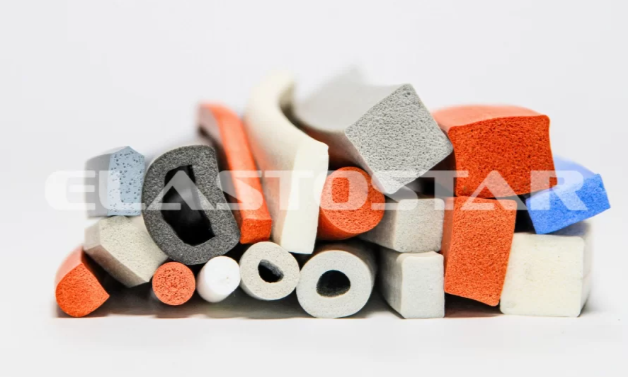
Accurate load capacity evaluation is critical to the performance and durability of vibration dampeners. Selecting a dampener solely based on the equipment’s static weight often leads to improper deflection, reduced isolation efficiency, and premature failure.
In industrial environments, vibration loads fluctuate continuously due to start-up forces, imbalance, and operating cycles.
To maintain consistent load behavior, many vibration isolation components are manufactured as custom rubber squares where dimensional accuracy and repeatability are essential.
We follow established tolerance controls to ensure predictable load performance across production runs, as detailed in its RMA precision tolerance guidelines.
Static Load vs Dynamic Load
- Static load refers to the total weight of equipment when it is not operating.
- Dynamic load includes additional forces generated during operation, such as vibration peaks, rotational imbalance, and transient shock.
Vibration dampeners must always be selected based on the maximum expected dynamic load, not static weight alone.
Understanding Spring Rate in Vibration Dampeners
Spring rate is the rate at which a damper deflects under a given load and directly influences vibration isolation performance.
- A lower spring rate improves vibration isolation but allows greater movement.
- A higher spring rate increases stability but transmits more vibration.
Correct spring rate selection balances isolation efficiency with equipment stability and mounting safety.
Avoiding Overloading and Undersizing
Improper sizing can result in.
- Reduced vibration isolation effectiveness.
- Permanent compression set in elastomer materials.
- Increased stress on mounting hardware and equipment frames.
Even load distribution across all mounting points is essential to maintain long-term performance.
Frequency Tuning for Industrial Machinery
In addition to load capacity, vibration dampeners must be tuned to the operating frequency of industrial machinery. If the natural frequency of the dampener system is too close to the machine’s operating frequency, resonance can occur, amplifying vibration instead of reducing it.
For frequency-sensitive applications, elastomer stability plays a major role. Silicone sponge cells are often selected where temperature fluctuations or chemical exposure could otherwise change stiffness and affect vibration behavior.
Performance verification and inspection practices, similar to our quality control process, help ensure consistent damping characteristics over time.
Natural Frequency vs Operating Frequency
- Operating frequency is determined by machine speed, RPM, or cycle rate.
- Natural frequency is the rate at which the dampener system naturally oscillates.
For effective vibration isolation, the dampener system’s natural frequency should be significantly lower than the equipment’s operating frequency.
Role of Viscoelastic Damping
Elastomer materials provide viscoelastic damping, absorbing vibration energy and converting it into small amounts of heat.
This helps to.
- Reduce vibration amplitude.
- Control resonance effects.
- Smooth cyclic and transient vibrations.
Tuning Dampeners for Rotating Equipment
Rotating equipment such as motors, compressors, and pumps generates predictable vibration frequencies.
Key tuning considerations include.
- Equipment RPM and harmonic frequencies.
- Load variation during operation.
- Long-term material stability under cyclic stress.
Proper tuning ensures vibration control remains effective across the equipment’s full operating range.
Installation Best Practices for Vibration Dampeners
Even correctly selected vibration dampeners can fail to perform if installation is not handled properly. Installation quality directly affects load distribution, vibration isolation efficiency, and long-term durability.
To support proper installation, manufacturers often provide dimensional references, drawings, and guidance in technical documentation, such as our product brochures.
1. Correct Placement and Load Distribution
Vibration dampeners must be positioned to ensure the equipment’s weight is evenly distributed across all mounting points. Uneven loading leads to premature wear and reduced isolation performance.
In many installations, rubber gaskets and sealing profiles are used alongside dampeners to ensure proper seating between equipment bases and mounting surfaces.
Best practices include.
- Align dampeners with the equipment’s center of gravity.
- Avoid offset or angled mounting positions.
- Use compliant interface materials to prevent hard contact points.
2. Surface Preparation and Mounting Interfaces
Mounting surfaces must be flat, clean, and free of debris to ensure dampeners perform as intended. Poor surface contact can transmit vibration directly into the structure.
In industrial assemblies, silicone extrusions are often used as protective interface elements around mounting zones to accommodate minor surface irregularities and reduce vibration transfer.
Installation tips.
- Clean mounting surfaces thoroughly.
- Avoid sharp edges that can damage elastomer materials.
- Ensure consistent contact across the full mounting area.
3. Fastening, Sealing, and Alignment
Over-tightening fasteners can compress vibration dampeners beyond their designed deflection range. Under-tightening can allow excessive movement.
To maintain alignment and protect mounting hardware, elastomeric seals and O-rings are commonly used to control movement and prevent vibration-related loosening.
Key considerations.
- Tighten fasteners to recommended torque levels.
- Allow designed deflection space for dampeners.
- Verify alignment after initial run-in cycles.
4. Inspection and Maintenance Guidelines
Routine inspection helps identify early signs of wear, compression set, or material fatigue. Environmental exposure, temperature cycling, and vibration frequency all influence service life.
Visual checks of interface components, seals, and surrounding elastomer elements help ensure vibration dampeners continue to perform as expected over time.
Why Partner with Elastostar Rubber Corporation?

As an experienced Rubber product manufacturer, we provide dependable vibration control solutions backed by engineering support and in-house manufacturing.
Why Choose Us?
- USP Class VI compliant products
We meet the requirements of Sections 87 and 88 for regulated applications. - Custom elastomer manufacturing
We produce extruded profiles, O-rings, gaskets, and sheet materials to specification. - End-to-end support
We handle reverse engineering, design assistance, prototyping, and production. - Fast and reliable delivery
Our large facility supports short lead times and scalable production. - Made in the USA
All products are manufactured domestically for consistent quality.
Recommended Reads
- What Is Rubber Compounding?
- The Advantages of Silicone for Rubber Products
- Which Is the Best Type of Rubber for Your Application?

Conclusion
Effective vibration control requires more than selecting a basic isolation component. Properly engineered vibration dampeners reduce equipment wear, control noise, and improve operational stability when material choice, load capacity, and frequency behavior are matched to real operating conditions. Understanding how different dampening methods perform under varying environments helps prevent premature failures and unnecessary maintenance costs.
When combined with correct installation and routine inspection, vibration dampeners contribute to longer equipment life and more reliable industrial performance. For application-specific guidance, material recommendations, or custom vibration-control solutions tailored to your equipment, contact us to discuss your requirements with experienced engineers.
FAQs
Q1. What are vibration dampeners, and how do they work?
Vibration dampeners are components that reduce mechanical vibration by absorbing and dissipating energy. They work by deforming the elastomer, converting vibration into heat, and limiting vibration transfer to surrounding structures and equipment.
Q2. What is the difference between vibration dampeners and vibration isolators?
Vibration dampeners reduce vibration amplitude, while vibration isolators focus on separating equipment from its mounting surface. In industrial applications, many solutions combine both functions, especially when using elastomer-based designs.
Q3. Which material is best for vibration dampening, silicone or rubber?
Both materials are effective. Silicone vibration isolators are preferred for high-temperature or chemically exposed environments, while rubber dampeners offer excellent elasticity and cost efficiency for general industrial machinery.
Q4. How do I calculate load capacity for vibration mounts?
Load capacity should be calculated using the equipment’s total operating weight and expected dynamic forces. Proper sizing ensures vibration dampeners provide isolation without excessive deflection or material fatigue.
Q5. What is the natural frequency of a vibration dampener?
Natural frequency is the rate at which a dampener system vibrates on its own. For effective vibration control, the natural frequency should be significantly lower than the equipment’s operating frequency.
Q6. Can vibration dampeners reduce noise in industrial machinery?
Yes. By limiting structure-borne vibration, vibration dampeners help reduce noise transmission through floors, frames, and mounting structures, improving overall acoustic performance.
Q7. What are the applications of silicone vibration isolators?
Silicone vibration isolators are commonly used in high-temperature equipment, outdoor installations, chemical processing machinery, and applications requiring long-term material stability.
Q8. How long do rubber vibration dampeners last?
The lifespan of rubber dampeners depends on load, environment, and vibration exposure. With correct material selection and installation, they can perform reliably for many years in industrial applications.
Q9. What is the difference between passive and active vibration isolation?
Passive vibration isolation uses elastomers such as rubber or silicone to absorb vibration without external power. Active isolation relies on sensors and control systems and is typically used in precision or laboratory environments.
Q10. Do elastomer components, such as O-rings and gaskets, help control vibration?
Yes. Elastomer O-rings, Rubber gaskets, and extruded profiles help control vibration at joints, seals, and interfaces by preventing metal-to-metal contact and absorbing localized vibration.
Q11. How do extruded rubber profiles support vibration-damping systems?
Extruded rubber profiles are often used as interface elements or protective barriers. They help distribute loads evenly, reduce vibration transfer, and improve sealing and alignment in industrial assemblies.
Q12. How do I select the right vibration dampener for my equipment?
Selecting the right vibration dampener depends on equipment weight, operating frequency, environmental conditions, and installation constraints. Evaluating material properties, load capacity, and vibration behavior together ensures reliable long-term performance.