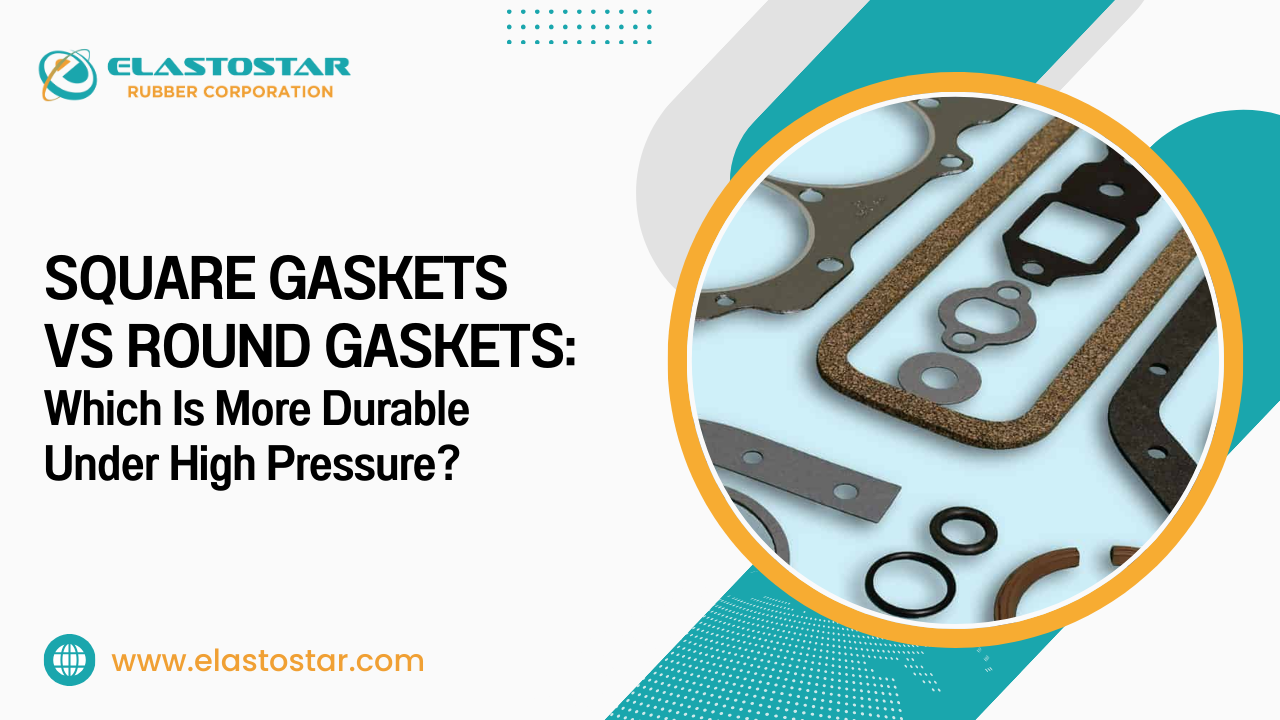
In high-pressure systems, selecting the correct gasket shape is crucial for achieving reliable and long-lasting sealing. Rubber Gaskets are used to prevent leaks between two surfaces, but not all shapes perform the same under pressure. A rubber gasket for high pressure must be both strong and flexible, and properly designed for the specific application. Among the most durable gasket types, square and round gaskets are the most widely used.
Understanding which shape is better suited for high-pressure conditions can help reduce failures and improve system performance. As a leading manufacturer of rubber products, Elastostar Rubber Corporation offers high-quality, custom gasket solutions for demanding industries.
In this blog, we compare square and round gaskets to help you make the best choice.
Takeaways
- Round gaskets offer better performance in high-pressure and dynamic systems due to even stress distribution and flexibility.
- Square gaskets are best suited for static, flat surfaces where broad coverage is more important than pressure handling.
- Material choice matters. Silicone, FKM, EPDM, and FFKM are ideal for heat, chemicals, and compression.
- Gasket shape affects durability; square corners may fail under pressure if not supported.
- Proper compression and fit are essential to avoid leaks and premature failure.
- For windows, enclosures, and panels, square or custom-shaped gaskets are preferred.
- Elastostar provides custom gasket solutions with fast lead times and support from design to production.
Table of Contents
Gaskets vs. O-Rings: Understanding Key Functional Differences
Gaskets and O-rings are both essential components in sealing systems, but they serve different purposes and function in unique ways. Gaskets are typically flat and are used to seal the space between two stationary surfaces, such as flanges or mechanical covers.
They are designed to tolerate compression and prevent the escape of gases or liquids in static conditions.
On the other hand, O-ring gaskets are circular in cross-section and fit into a groove, forming a seal through radial or axial compression.
They are ideal for dynamic applications, especially where movement, vibration, or high pressure is involved. While both play a crucial role in industrial sealing, understanding the differences between these seals and gasket options helps in choosing the right solution for different types of sealing requirements.
Read more: Silicone O-Rings vs Rubber O-Rings: What to Choose?
What Are Round Gaskets? Benefits, Design & Pressure Performance

Round gaskets are circular sealing components designed to fit into grooves and form tight, reliable seals under compression. Their shape allows for even pressure distribution, making them ideal for applications involving motion or fluctuating force.
Because of their ability to maintain sealing performance under dynamic conditions, these gaskets are commonly used in pumps, valves, and hydraulic systems.
In high-pressure environments, they provide excellent resistance to deformation and leakage. When made from advanced materials like silicone rubber round gasket, they also offer added benefits such as heat resistance, chemical durability, and long-term flexibility in industrial and aerospace systems alike.
Benefits of Round Gaskets
- Excellent for dynamic systems with movement or vibration.
- Uniform pressure distribution reduces the risk of leaks.
- Round gaskets for high pressure perform well under stress.
- Silicone rubber round gasket options provide thermal and chemical resistance.
Read more: High Temperature O-Rings for Industrial Applications
What Are Square Gaskets? Functionality, Strengths & Limitations

Square gaskets rubber are sealing components designed with a flat or rectangular profile, often used between two static surfaces. Unlike O-rings or round gaskets, which seal inside grooves under dynamic pressure, square gaskets are ideal for flat-faced joints where the surfaces remain stationary.
A gasket square provides a broad sealing surface, making it especially effective in applications such as electrical panels, flanged pipe connections, and access covers. These gaskets offer reliable sealing in low to moderate pressure environments, but under high-pressure conditions, they may be more prone to corner stress and compression failure if not adequately supported.
When made from high-performance materials like a silicone square gasket, they can handle elevated temperatures, provide excellent sealing against moisture or dust, and maintain flexibility over time, especially in indoor or protected industrial environments.
Features of Square Gaskets
- Best suited for static sealing between flat surfaces.
- Offer a wide surface contact for improved coverage.
- Silicone square gasket options provide temperature and weather resistance.
- May require proper support to handle high-pressure sealing without distortion.
Square Gasket vs Round Gasket: Which Is More Durable Under Pressure?
Choosing between a square and round gasket for high-pressure applications depends on how the seal handles stress, compression, and long-term performance.
Square Gasket vs Round Gasket Comparison Table
| Feature | Round Gasket | Square Gasket |
| Pressure Resistance | Highly reduced risk of deformation or leakage under fluctuating pressure | Moderate suitable for low to medium pressure in static applications |
| Stress Distribution | Uniform handles compression evenly around the seal | Uneven — corners may concentrate stress and lead to early failure |
| Seal Integrity | Often used with silicone, FKM, and EPDM for heat and chemical resistance | May weaken under high pressure without proper backing or support |
| Best Use Case | Dynamic systems: valves, pumps, cylinders | Static seals: flanged joints, covers, electrical enclosures |
| Durability Under Pressure | Longer-lasting in harsh, high-pressure conditions | Reliable in stable, low-pressure environments |
| Material Compatibility | Uneven corners may concentrate stress and lead to early failure | Compatible with wide flat materials like silicone, neoprene, or nitrile |
| Installation Requirements | Requires precision groove fit for best performance | Easier to cut and fit on flat surfaces |
| Example | Silicone rubber round gasket | Silicone square gasket |
In a high pressure gasket vs low pressure gasket comparison, round gaskets clearly outperform in terms of pressure handling and durability.
Square gaskets remain valuable in static, flat applications where pressure is evenly applied and movement is minimal.
How to Choose the Right Rubber for Pressure & Heat?

Choosing the right material is just as important as the gasket’s shape, especially in high-pressure or high-temperature environments. A high-pressure rubber gasket must handle constant force without cracking, shrinking, or deforming. Materials like FKM (Viton®), FFKM, EPDM, and silicone rubber are commonly used in industrial applications for their strength and resistance to heat, chemicals, and compression.
For extreme temperatures, selecting a high-temperature gasket seal made from the correct rubber compound ensures long-lasting performance. Whether you need flexibility, chemical resistance, or thermal stability, the material you choose will determine how well your rubber seal gasket performs under pressure.
Common Rubber Materials for Gaskets:
- FKM (Viton®): High chemical and heat resistance.
- Silicone: Flexible, great for extreme hot/cold temperatures.
- EPDM: Best for steam, water, and outdoor weathering.
- FFKM: Top choice for aggressive chemicals and very high temperatures.
Read more: What Is the Best Type of Rubber for Your Application?
What are the Applications of Square or Round Gaskets?
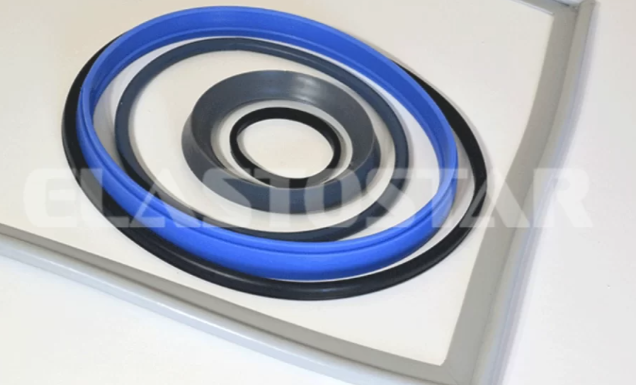
The choice between square and round gaskets depends on pressure levels, surface shape, and whether the application involves movement.
Where to Use Round Gaskets?
- Best suited as a gasket for high-pressure applications such as pumps, hydraulic systems, and valves.
- Ideal for dynamic systems that involve movement or vibration.
- Common in industrial machinery, fluid systems, and rotating equipment.
Where to Use Square Gaskets?
- Preferred in static systems with flat sealing surfaces.
- Frequently used in electrical boxes, flanged connections, and large panel seals.
- Widely applied in architectural sealing, including rubber gaskets for windows.
In Automotive Applications:
- Different types of gaskets in automotive applications include:
- Round gaskets (O-rings): Used in engines, fuel systems, and air conditioning.
- Square or flat gaskets: Used in valve covers, oil pans, and structural seals.
- Custom shapes are used for door seals, trunk lids, and sound insulation.
- Round gaskets (O-rings): Used in engines, fuel systems, and air conditioning.
Common Gasket Failures- The Role of Shape in Longevity
Gasket failure often happens when the wrong shape is used for the application. Round gaskets handle pressure more effectively because they distribute stress evenly across their surface. Square gaskets, however, may wear out faster at the corners, where pressure builds up. This can cause cracks or leaks over time.
The shape also affects how well the gasket returns to its original form after being compressed. If it stays flat or loses its grip, the seal can fail. The durability of rubber seals depends on using the right shape and material for the job.
Different gasket types are made for other uses. A rubber sealing gasket must match the pressure, temperature, and surface it’s sealing to avoid failure.
Design Considerations: Fit, Compression & Groove Compatibility
Proper gasket performance depends on more than just the material or shape; it also relies on a correct fit, adequate compression, and surface compatibility. At Elastostar Rubber Corporation, we carefully design gaskets to match the groove size, compression percentage, and sealing surface. Whether it’s a round or square profile, the gasket must seat properly to avoid leaks or premature wear.
For architectural applications, we offer rubber sealing for windows with an exact fit and weather resistance. Our rubber gaskets for windows are made to ensure long-term sealing without cracking or shrinking. We also supply gasket silicone rubber for high-flexibility and high-temperature uses, guaranteeing reliable performance in demanding environments.
Elastostar in Action: Custom Solutions for High-Pressure Applications

At Elastostar Rubber Corporation, we specialize in designing custom gaskets and seals to meet specific performance challenges. We make rubber T-seals for a hydraulic system exposed to continuous high pressure and temperature fluctuations. Our engineering team optimized the material and compression fit to prevent leaks and extend service life.
In another case, we supplied a precision-molded T gasket for an industrial panel enclosure that required a tight seal with minimal deflection. The solution delivered reliable performance while reducing installation time.
These examples demonstrate our ability to solve real-world sealing problems through technical expertise, rapid prototyping, and material knowledge, enabling our clients to reduce downtime and enhance equipment reliability.
Read more: Rubber Extrusion Profiles: U-Channel, D-Profile, P-Profile
Choosing the Best Gasket Shape for Your Needs
Choosing the best gasket shape for sealing depends on how and where the gasket will be used. At Elastostar Rubber Corporation, we make it easy to decide by looking at pressure, movement, and surface type.
Here’s a quick guide to help you:
- Use round seals for moving parts or high-pressure systems (like pumps or valves).
- Use square seals for flat, non-moving surfaces (like panels or covers).
- For rubber gaskets for doors or windows, square or custom shapes give the best surface contact.
- In the square vs round seal choice, round is better for pressure; square is better for coverage on flat surfaces.
Need help choosing? Our team is ready to assist with design and custom solutions.
How Elastostar Rubber Corporation Crafts Precision Gaskets?
At Elastostar Rubber Corporation, we utilize advanced methods such as custom gasket cutting, compression molding, and rubber extrusion profiles to produce high-performance sealing solutions. Whether it’s a single prototype or a full production run, we support our customers with reverse engineering, design help, and fast turnaround.
Our team is known for delivering some of the shortest lead times in the industry without compromising on quality. As experienced rubber seal manufacturers, we ensure every product meets the highest standards. We also offer materials that pass USP Class VI and USP Class VI Sections 87 & 88, making our gaskets suitable for medical, pharmaceutical, and food-grade applications.
Recommended Reads
- FDA Silicone Rubber for Food Processing Equipment
- High Temperature O-Rings for Industrial Applications
- Top 5 Things About Gasket Designs You Need to Know
Conclusion
When it comes to high-pressure systems, round gaskets offer better durability due to even stress distribution and flexibility. Square and Rubber bulb gaskets are ideal for static applications where surface coverage is more important than pressure resistance. Therefore, the choice of gasket shape depends on the specific application.
For movement or pressure, go round. For flat, fixed joints, go square. With numerous gasket types available, selecting the right shape and material is crucial for achieving long-term performance. At Elastostar Rubber Corporation, we help you make the best choice with expert support and custom-engineered sealing solutions.
FAQs
1. What is the difference between square and round gaskets?
Square gaskets have flat edges and are designed for sealing flat, static surfaces, such as panels or enclosures. Round gaskets, such as O-rings, are circular and ideal for sealing moving parts or systems under high pressure. The right gasket shape ensures better sealing and longer performance.
2. Are square gaskets suitable for high-pressure systems?
Square gaskets are suitable for low- to moderate-pressure applications. However, for high-pressure systems, round gaskets typically perform better due to their ability to handle even compression and reduce stress points.
3. Can square gaskets replace O-rings?
Square gaskets can replace O-rings only in non-moving, static systems. For dynamic applications involving movement or vibration, O-rings offer a more secure and durable seal. Contact us to help determine the best fit.
4. What material is best for high-temperature sealing?
Silicone rubber is an excellent choice for high-temperature sealing. It performs well in both square and round shapes, offering stability, flexibility, and resistance to heat over time.
5. Do square gaskets seal as tightly as round ones?
Square gaskets can provide a tight seal on flat, stable surfaces when installed correctly. However, round gaskets generally create a more uniform seal under compression, especially in systems under pressure or movement.
6. Can I order custom-shaped gaskets for my equipment?
Yes. At Elastostar Rubber Corporation, we offer custom gaskets and seals designed to meet your specific requirements. Whether you require round, square, rectangular, or custom profiles, we can produce gaskets tailored to your application and specifications.
7. What gasket material works best for windows and doors?
EPDM and silicone are the most popular choices for rubber gaskets for windows and doors. They offer excellent weather resistance, UV protection, and flexibility over time.
8. How does compression affect gasket performance?
Proper compression allows a gasket to fill the sealing gap and prevent leaks. Too much or too little compression can cause the gasket to fail prematurely. Choosing the right design and material helps maintain long-term performance.
9. Are square gaskets used in cars or machinery?
Yes. Square gaskets are commonly used in static applications, such as valve covers, flanged joints, and electronic enclosures. There are many types of gaskets in a car, and the right shape depends on the specific sealing need.
10. What are the common failure points in round gaskets?
Round gaskets may fail due to over-compression, aging, chemical exposure, or extrusion under pressure. Using the correct rubber material and proper installation techniques can help avoid these issues.
11. Can square gaskets be used in dynamic sealing systems?
Generally, square gaskets are not suitable for systems with motion or vibration. They may wear out quickly or lose sealing ability. Round gaskets or O-rings are better suited for dynamic sealing.
12. Which gasket shape handles temperature changes better?
Both square and round gaskets perform well in changing temperatures when made from the right material, such as heat-resistant silicone or FKM. The key is selecting the correct compound for your environment.
13. Do square gaskets need special installation?
Yes, square gaskets should be installed carefully on flat surfaces with even pressure. The sealing area must be clean, and compression should be controlled to prevent leaks or damage to the gasket.
14. What is the lifespan of square vs round gaskets?
Round gaskets tend to last longer in high-pressure, dynamic systems because of their shape and flexibility. Square gaskets are reliable in static applications but may wear faster under uneven stress.
15. How do I choose the right gasket shape for my system?
Consider the pressure level, surface type, temperature, and movement. Round gaskets are better suited for high-pressure or moving parts, while square gaskets are ideal for flat, fixed joints. Contact Elastostar Rubber Corporation for expert guidance and customized recommendations.