Selecting the right molding process is critical when designing rubber–plastic assemblies that must perform reliably under mechanical, thermal, or environmental stress. Two commonly used approaches, overmolding and insert molding, offer different advantages depending on part geometry, material compatibility, tooling constraints, and production volume.
In this guide, we break down insert molding vs overmolding from a practical engineering perspective, examining how each process works, how materials bond at the interface, and what design and manufacturing factors influence process selection.
The goal is to help designers and procurement teams choose the most effective method for durability, cost control, and long-term performance.
Key Takeaways
- Insert molding and overmolding are two common methods for combining elastomers with rigid materials in multi-material components.
- Insert molding places a rigid insert inside the mold before elastomer injection, creating retention mainly through mechanical locking.
- Overmolding applies an elastomer layer over a pre-formed substrate, providing surface coverage, protection, and improved grip or sealing.
- Insert molding is often preferred when precise positioning of components such as metal inserts, shafts, or fasteners is required.
- Overmolding is well-suited for applications requiring soft-touch surfaces, environmental sealing, or vibration damping.
- Process selection depends on factors such as material compatibility, interface design, tooling complexity, and production requirements.
- Insert molding generally enables faster production launch, while overmolding offers greater design flexibility and functional integration.
Table of Contents
What Is Overmolding and Insert Molding at the Cross-Section Level?
The difference between overmolding and insert molding becomes clear when viewed in cross-section, where the sequence of materials and interface behavior determines mechanical performance and durability.
1. Insert Molding: Cross-Section Interface Formation
In insert molding, a rigid component is positioned inside the mold before elastomer injection.
At the cross-section:
- The insert remains fixed while the elastomer flows around it.
- Retention depends on surface texture, undercuts, or holes in the insert.
- The elastomer locks mechanically once cured.
This approach is commonly used when sealing or retention is required at specific locations, such as around shafts or fasteners.
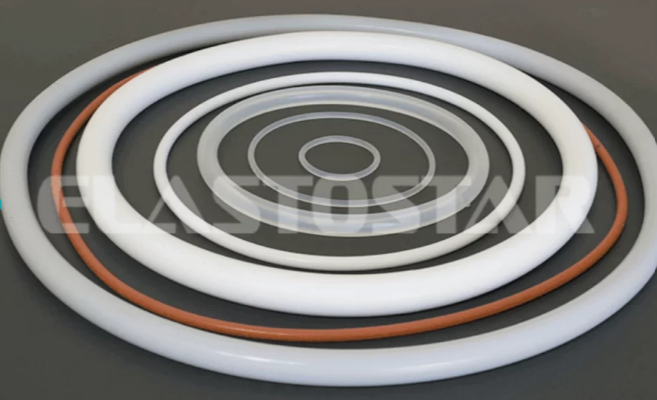
Applications that use Silicone Rubber O-Rings often rely on insert-molding principles to maintain precise positioning while achieving reliable sealing.
2. Overmolding: Layered Material Bonding
Overmolding applies an elastomer layer over a pre-molded substrate in a secondary operation.
At the cross-section:
- The base component is fully formed first.
- The elastomer covers selected surfaces or edges.
- Bonding occurs through material compatibility and controlled molding conditions.
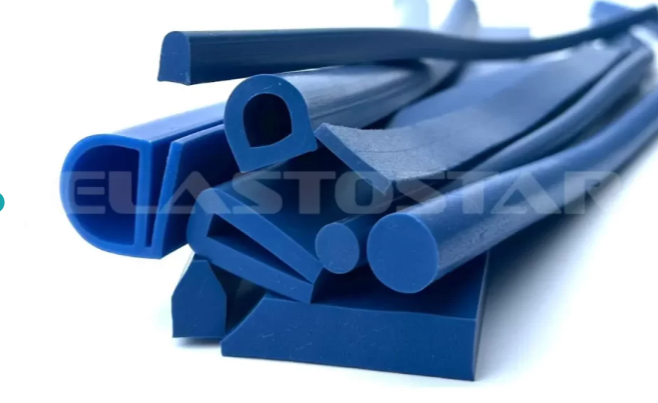
This process is frequently selected when continuous coverage or grip is required across a surface. Extruded Rubber Bulb Seal illustrate how elastomer layers can be molded to provide environmental sealing and impact absorption.
3. Retention Mechanisms Across Both Processes
Regardless of method, retention is created at the interface.
- Insert molding emphasizes geometric interlock.
- Overmolding emphasizes surface bonding and coverage.
- Both methods distribute stress differently at the interface.
In designs requiring flat sealing surfaces, Die-Cut Gaskets demonstrate how controlled elastomer geometry enables predictable compression without relying on full-surface bonding.
4. Material Behavior at the Interface
Material selection influences how stress is transferred across the interface.
- Softer elastomers reduce stress concentration.
- Stiffer substrates improve dimensional stability.
- Compatibility affects long-term adhesion and peel resistance.
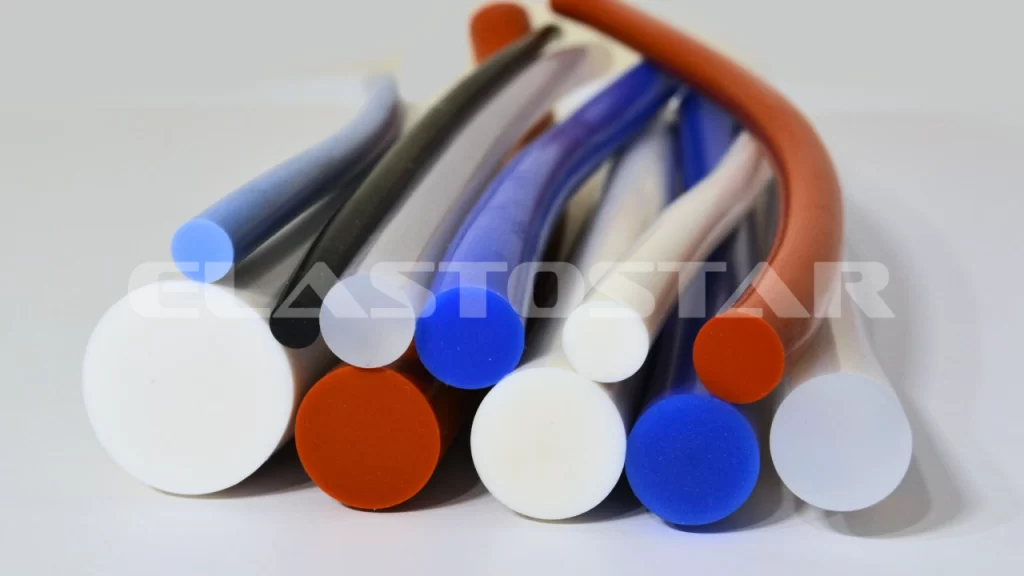
Components such as Silicone Rubber Tubing highlight how elasticity and recovery properties influence interface durability when elastomers are combined with rigid substrates.
Read More: Will Silicone Bond to Rubber? The Complete Adhesion Guide for Elastomers
How Do Overmolding and Insert Molding Compare as Manufacturing Processes?
The choice between insert molding and overmolding is often driven by how the process affects interface strength, production flow, and long-term performance.
A side-by-side comparison helps clarify where each method fits best.
| Comparison Factor | Insert Molding | Overmolding |
| Process sequence | Often, two tools or two stages | Elastomer molded over pre-formed substrate |
| Interface formation | Primarily mechanical retention | Mechanical + chemical bonding |
| Tooling approach | Single mold with insert features | Dependent on the insert geometry |
| Bond consistency | Dependent on insert geometry | Dependent on material compatibility |
| Design flexibility | Limited once insert geometry is fixed | Higher flexibility in coverage areas |
| Cycle time | Shorter per cycle | Longer due to secondary operation |
| Typical use case | Localized sealing or retention | Surface coverage, grip, protection |
1. Manufacturing Flow Differences
Insert molding integrates the rigid component directly into the molding cycle. This simplifies handling but requires precise insert placement and retention features.
Overmolding separates substrate production from elastomer application. While this adds a step, it allows elastomers to be applied selectively where needed, improving functional integration.
2. Interface Strength and Functional Impact
- Insert molding relies heavily on geometry for retention.
- Overmolding relies on material compatibility and surface preparation.
- Peel resistance is typically higher in overmolded designs.
In applications where softness and compression control are critical at the interface, Closed Cell Silicone Sponge Rubber is often evaluated for overmolded sealing zones.
3. Process Suitability by Functional Requirement
- Electrical or static-sensitive designs may integrate Electrically Conductive Silicone Rubber Tubing within insert-molded assemblies.
- Fluid-handling components that require clean, stable interfaces may use Platinum Cured Silicone Tubing in overmolded housings.
These examples highlight how process selection influences material integration and part functionality.
Read More: All About Silicone Rubber Die-Cut Gaskets and Their Cutting Method
What Design Factors Determine Whether to Use Overmolding or Insert Molding?
Process selection is often decided at the design stage, where geometry, substrate behavior, and interface requirements either enable or restrict the use of two-shot molding techniques.
1. Substrate Compatibility and Surface Interaction
The base material must support reliable elastomer retention.
- Plastics with higher surface energy improve bonding in overmolding.
- Metals often require mechanical features for insert molding.
- Smooth substrates reduce adhesion unless treated or textured.
In regulated environments, designs incorporating FDA Metal & X-Ray Detectable Silicone Rubber Seals often rely on insert molding to maintain precise seal positioning while ensuring detectability.
2. Draft Angles and Part Release Requirements
Draft angles influence mold release and surface quality.
- Insert molding requires a draft on both the insert and the elastomer features.
- Overmolding requires a draft primarily on the elastomer layer.
- Insufficient draft increases tool wear and part distortion.
Designs that include protective edge features, such as Rubber U-Channel, must balance draft requirements with retention strength to avoid pull-out during demolding.
3. Use of Undercuts and Mechanical Interlocks
Undercuts enhance retention but increase tooling complexity.
- Insert molding often uses undercuts in the rigid insert.
- Overmolding may use elastomer flow into recesses for lock-in.
- Excessive undercuts can complicate tool design and ejection.
Mechanical interlocks should be designed to support load transfer without concentrating stress at the interface.
4. Tolerance Stack-Up at the Interface
Dimensional variation affects bond reliability.
- Insert molding is sensitive to the accuracy of insert placement.
- Overmolding is sensitive to substrate dimensional stability.
- Interface gaps can reduce retention strength or sealing performance.
When tolerance control is critical, flat elastomer elements such as Silicone Rubber Cord are sometimes incorporated into designs to absorb variation without stressing the bond line.
5. Design Review Checklist
Before selecting a process, confirm:
- Is the substrate material compatible with elastomer bonding?
- Are draft angles sufficient for clean release?
- Are undercuts necessary or avoidable?
- Can tolerances be maintained across production volume?
Which Material Combinations Work Best for Overmolding and Insert Molding?
Material pairing plays a decisive role in bond strength, durability, and process reliability.
The success of rubber–plastic assemblies depends on how the elastomer interacts with the substrate during molding and in service, especially in rubber overmolding applications.
1. Silicone Over ABS (Plastic Substrates)
Silicone over ABS is commonly used where flexibility and temperature resistance are required on a rigid housing.
Design characteristics
- ABS provides structural rigidity and dimensional stability.
- Silicone delivers elasticity, sealing, and environmental resistance.
- Surface preparation improves bonding reliability.
This combination is frequently selected for housings and enclosures that require localized sealing or grip. Platinum Cured Silicone Tubing is often integrated into ABS-based assemblies to maintain cleanliness and performance in sensitive environments.
2. TPE Over Polycarbonate (Transparent or Impact-Resistant Parts)
TPE and polycarbonate pair well when optical clarity or impact resistance is required.
Design characteristics
- Polycarbonate maintains strength and transparency.
- TPE offers soft-touch and vibration-damping properties.
- Bonding is typically achieved through mechanical interlock.
This combination is suited for consumer and industrial components where appearance and ergonomics matter.
3. Rubber Bonded to Metal Inserts
Rubber-to-metal interfaces are common in load-bearing or vibration-sensitive assemblies.
Design characteristics
- Metal provides strength and heat resistance.
- Rubber absorbs shock, seals, or isolates vibration.
- Mechanical retention features are critical.
4. Material Compatibility Considerations
When selecting combinations, engineers should evaluate:
- Thermal expansion mismatch between materials.
- Chemical exposure and aging behavior.
- Load transfer across the interface.
- Manufacturing repeatability at scale.
In applications requiring compressible sealing layers, Silicone Sponge Rubber is sometimes incorporated to accommodate tolerance variation without overstressing bonded interfaces.
Also Read– Custom Silicone Rubber Molding Process Explained Clearly
How Do Tooling Complexity and Cost Differ Between Overmolding and Insert Molding?

Tooling requirements are one of the most significant cost drivers when choosing between overmolding and insert molding.
The difference is not just in mold price, but in how many tools are required, how complex they are to maintain, and how tolerant they are to variation during production.
- Insert molding typically relies on a single mold,
But that mold must precisely locate and retain the insert during injection. Any movement of the insert can result in flash, misalignment, or inconsistent part geometry.
This makes insert-mold tooling sensitive to placement accuracy, especially when elastomers are molded around rigid features such as metal or plastic cores.
In applications where sealing must remain precise, vulcanized silicone O-rings are often incorporated to compensate for minor positional variations without increasing tooling complexity. - Overmolding usually requires multiple tooling stages,
either through two separate molds or a two-shot configuration. While this increases upfront tooling cost, it allows greater flexibility in how and where the elastomer is applied. This is particularly useful when elastomer coverage is limited to specific surfaces or grip areas rather than the entire part. - Tool wear and maintenance differ between the two processes.
Insert molds experience wear around insert retention features, while overmold tools experience wear at bonding interfaces and shut-off areas.
Over time, tooling designed for softer elastomers, such as those used with Extruded Silicone Sponge, may require more frequent inspection to maintain dimensional consistency.
From a cost perspective, insert molding often appears less expensive initially, but overmolding can reduce secondary assembly steps and improve functional integration. The right choice depends on production volume, part complexity, and tolerance requirements rather than tooling cost alone.
How Do Lead Times Differ Between Insert Molding and Overmolding?
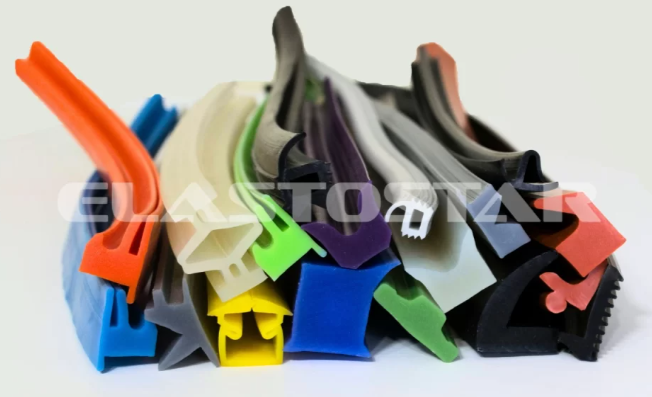
Lead time differences are driven by tooling sequence, validation steps, and the number of molding operations involved. These factors directly affect planning decisions when evaluating overmolding services for new programs.
1. Insert Molding: Faster Initial Launch
- Uses a single mold where the insert and elastomer are combined in one cycle.
- Tool validation focuses mainly on insert placement accuracy.
This approach is often chosen when components such as lip seal Gaskets must be integrated precisely without adding secondary production steps.
2. Overmolding: Longer Setup, More Flexibility
- Requires the substrate to be molded and approved before the elastomer is applied.
- Adds a secondary molding or two-shot step to the timeline.
Assemblies that include flexible elements like Silicone omega seals benefit from this method, as elastomer placement can be adjusted without reworking the base tool.
3. Validation and Testing Impact
- Insert molding validation is front-loaded and geometry-focused.
- Overmolding validation includes additional bond and adhesion testing.
Profiles such as E-Channel Profiles may undergo extended checks to confirm dimensional stability across production runs.
4. Production Ramp-Up Considerations
- Insert molding typically reaches volume production sooner.
- Overmolding supports design changes later in the lifecycle with less disruption.
Insert molding favors speed to market, while overmolding trades longer initial lead times for greater design adaptability and functional integration.
Where Are Overmolding and Insert Molding Used in Real Applications?
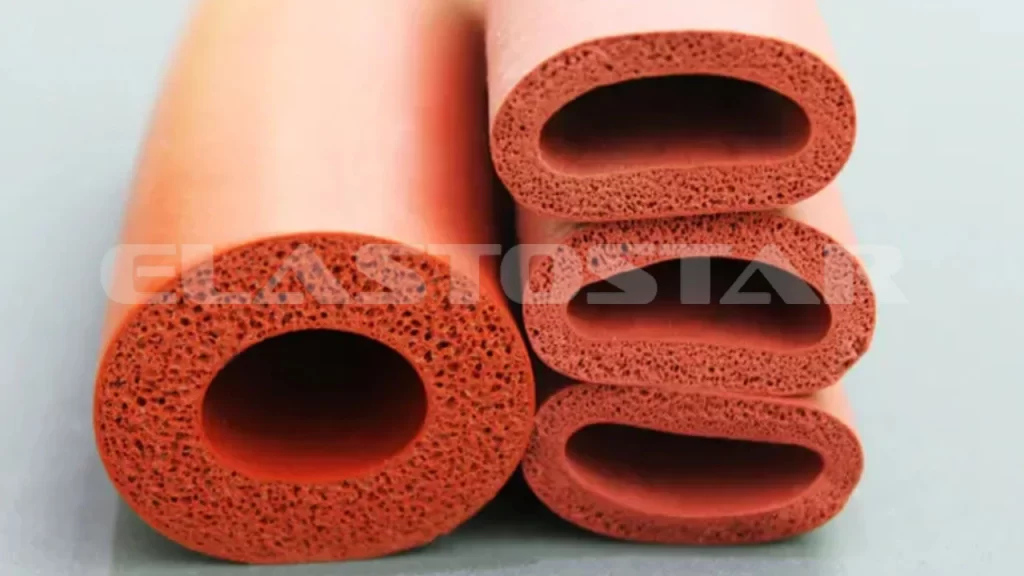
Selecting between insert molding and overmolding becomes clearer when viewed through real-world application needs rather than process theory alone.
1. Medical & Diagnostic Components
- Insert molding is commonly used where seals must be positioned precisely and remain traceable.
- Assemblies may incorporate Silicone Rubber Seals to support contamination control and regulatory compliance.
2. Industrial Equipment & Enclosures
- Overmolding is selected when environmental sealing or vibration isolation is required on external surfaces.
- Flat sealing interfaces often integrate Rubber Gaskets to manage compression while protecting rigid housings.
3. Electrical & Electronic Assemblies
- Insert molding supports accurate alignment of conductive or insulating elements within plastic or metal frames.
- Overmolding adds strain relief, insulation, or protective layers without secondary assembly.
4. Appliance & Consumer Hardware
- Overmolding is used to add soft-touch, grip, or moisture protection to rigid components.
- Insert molding is preferred where parts must remain dimensionally fixed during repeated use cycles.
Tolerance Management & Interface Control
- Insert molding handles tight positional tolerances more effectively.
- Overmolding absorbs variation through elastomer coverage and flexibility.
In designs where surface flatness and stability are critical, Silicone Sheets are sometimes used as reference sealing layers within molded assemblies.
Why Choose the Right Partner for Overmolding and Insert Molding Projects?

Selecting the correct molding process from a Rubber manufacturer in the USA is only part of the equation.
Execution quality, compliance, and manufacturing capability ultimately determine whether rubber–plastic assemblies meet performance and lifecycle expectations.
- Products meet USP Class VI, Sections 87 & 88 compliance, supporting regulated and performance-critical applications.
- Custom extruded profiles, O-rings, and gaskets are available to support integrated sealing and interface requirements within molded assemblies.
- Reverse engineering and design support, from prototype development through full production runs, to reduce redesign risk and accelerate validation.
- Shortest-lead-time delivery is enabled by controlled in-house processes and efficient production planning and quality control.
- Custom manufacturing supported by a large-scale facility, capable of handling both low-volume programs and scaled production.
- Proudly Made in USA, ensuring traceability, consistent quality standards, and responsive collaboration.
When process selection, material behavior, and manufacturing execution are aligned, overmolded and insert-molded assemblies achieve greater reliability, repeatability, and long-term performance.
Recommended Reads
- Medical Micro Molding Precision LSR Components for Medical Devices
- Procurement Guide for Silicone Rubber Suppliers
- What Is the Resistance Level of Silicone Rubber
Conclusion
Choosing between insert molding and overmolding is not a one-size-fits-all decision. Each process offers distinct advantages depending on part geometry, material compatibility, tooling constraints, lead time expectations, and functional requirements at the interface.
Insert molding provides precision and positional control, while overmolding enables surface integration, protection, and design flexibility. Evaluating these factors early helps reduce tooling changes, prevent bond failures, and improve long-term reliability of rubber–plastic assemblies.
If you are assessing process options or redesigning an existing component, contact us to discuss material selection, process feasibility, and manufacturing considerations tailored to your application needs.
FAQs
Q1. What is the difference between overmolding and insert molding?
Overmolding applies an elastomer layer over a finished substrate, while insert molding places the rigid insert into the mold before elastomer injection. The difference affects interface strength, production flow, and suitability for overmolding versus precision insert placement.
Q2. Which is more cost-effective overmolding or insert molding?
Insert molding often has lower upfront tooling costs, while overmolding can reduce assembly steps and improve functionality. Cost-effectiveness depends on volume, tooling complexity, and whether integrated sealing replaces secondary components.
Q3. What materials can be overmolded together?
Common combinations include elastomers over plastics or metals. Material compatibility, surface preparation, and thermal behavior determine the success of bonds in multi-material molding applications.
Q4. Can silicone be overmolded onto plastic?
Yes, silicone can be overmolded onto plastics such as ABS or polycarbonate when bonding conditions are controlled. In regulated environments, FDA Metal & X-Ray Detectable Silicone Tubes follow similar material-behavior principles for cleanliness and traceability.
Q5. What are the key design considerations for overmolding?
Designers must evaluate draft angles, interface geometry, stress distribution, and substrate compatibility. Profiles like Rubber P-Channel demonstrate how geometry influences retention and load transfer at the bond line.
Q6. How does tooling cost differ between overmolding and insert molding?
Insert molding typically uses a single mold with insert retention features. Overmolding may require additional tooling stages or two-shot systems, which increase cost but allow greater design flexibility.
Q7. What is two-shot injection molding?
Two-shot injection molding is a process in which two materials are molded sequentially in a single cycle. It is commonly used in silicone overmolding to achieve consistent bonding without manual handling between steps.
Q8. What are typical lead times for overmolded parts?
Overmolded parts generally have longer initial lead times due to multiple tooling and validation stages. However, they often reduce downstream assembly time and the need for design revisions later in production.
Q9. Can metal inserts be used in overmolding?
Yes, metal inserts are frequently used in overmolding when mechanical strength is required. Compressible elements such as Square Seals & Gaskets help absorb stress and protect the bond interface.
Q10. What industries commonly use overmolding technology?
Overmolding is widely used in medical devices, industrial equipment, electrical housings, and consumer products. These industries value integrated sealing, durability, and functional layering achieved through overmolding services.