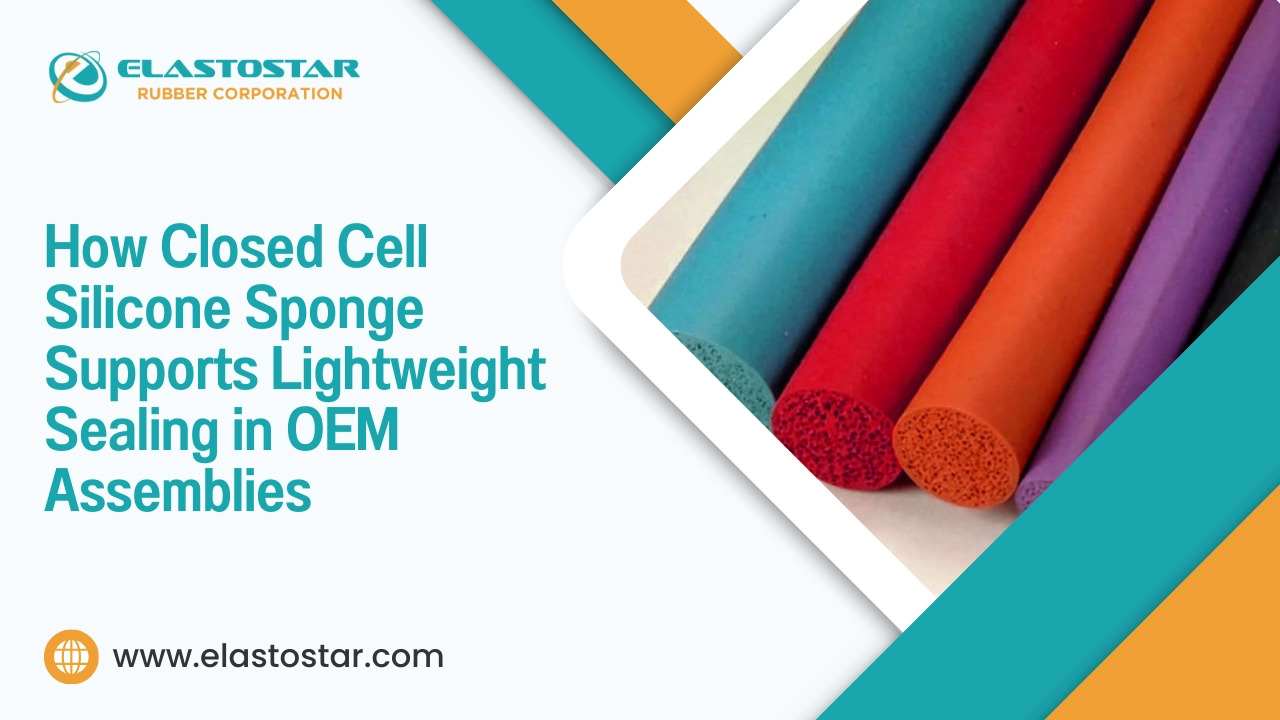
OEM assemblies demand components that reduce weight without compromising protection, especially in compact or thin-wall designs. This is where lightweight silicone seals, including silicone sponge and silicone foam, offer a major advantage. Their low density provides reliable sealing, cushioning, and environmental resistance while keeping assemblies lighter and more efficient.
Silicone Sponge Seal material behavior, temperature range, and fabrication options for engineers evaluating performance. Products like our silicone sponge sheets help OEM teams achieve stronger sealing with less weight.
In this blog, we will explain how silicone sponge supports lightweight sealing in modern OEM applications.
Key Takeaways
- Silicone sponge reduces weight without sacrificing protection—ideal for compact housings, thin-wall enclosures, and lightweight OEM builds.
- Closed-cell structure delivers strong sealing with minimal mass, improving efficiency in electronics, HVAC, automotive, and appliance assemblies.
- Compression control is the main advantage — silicone sponge adapts to surface variations, prevents leaks, and avoids permanent flattening under low force.
- Thin-wall designs stay protected — silicone sponge absorbs vibration, handles thermal cycling, and maintains elasticity where solid rubber would deform.
- Tolerance variation is no problem — sponge fills micro-gaps, adapts to misalignment, and recovers shape even when panels flex, or plastic components shrink.
- Real-world reliability is consistent — sponge materials withstand vibration, heat, ozone, and UV exposure without cracking or premature collapse.
- Elastostar is preferred by OEM teams thanks to U.S.-made, batch-stable, platinum-cured sponge with precise density control, custom profiles, and full traceability.
Table of Contents
How Weight Reduction in OEM Designs Improves Performance Without Compromising Sealing
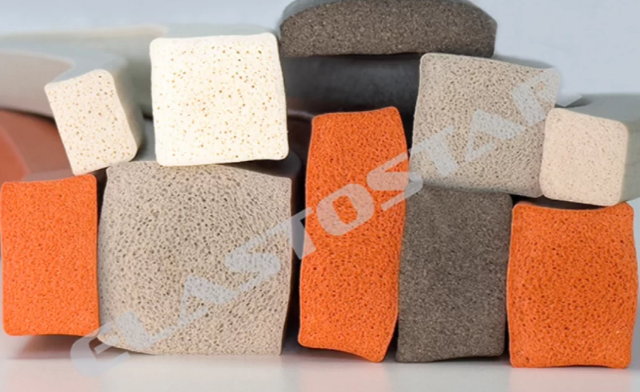
Lightweight OEM assemblies need sealing materials that deliver performance without adding bulk. This is where low-density silicone sponge becomes valuable. Its closed-cell structure provides a strong sealing force with minimal mass, making it ideal for compact housings, electronic modules, and thin-wall enclosures.
Compared to solid silicone, silicone sponge and silicone foam reduce overall component weight while still resisting compression, vibration, and environmental exposure.
We manufacture lightweight options, such as silicone sponge sheets, that enable OEM designers to reduce weight in doors, panels, and enclosures without sacrificing sealing strength. This improves efficiency, fuel economy (in automotive applications), and overall system stability in lightweight assemblies.
Also Read– Sponge Silicone Rubber Products: Benefits & Applications
How Compression Control in Lightweight Assemblies Prevents Deformation and Leakage
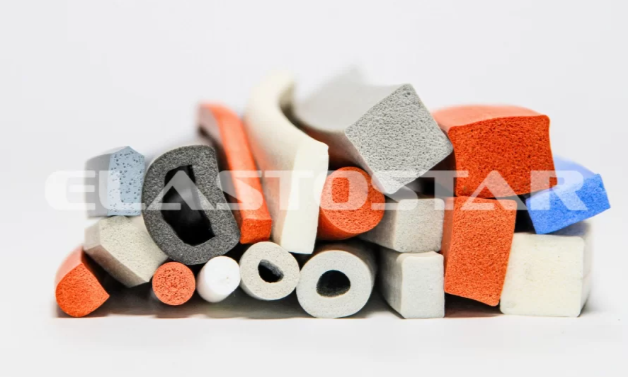
In lightweight OEM builds, sealing failure often comes from uneven pressure. Panels flex, housings shift, and fasteners apply an inconsistent load. A material with strong compression-set resistance addresses this problem by absorbing pressure evenly and returning to its original shape after release.
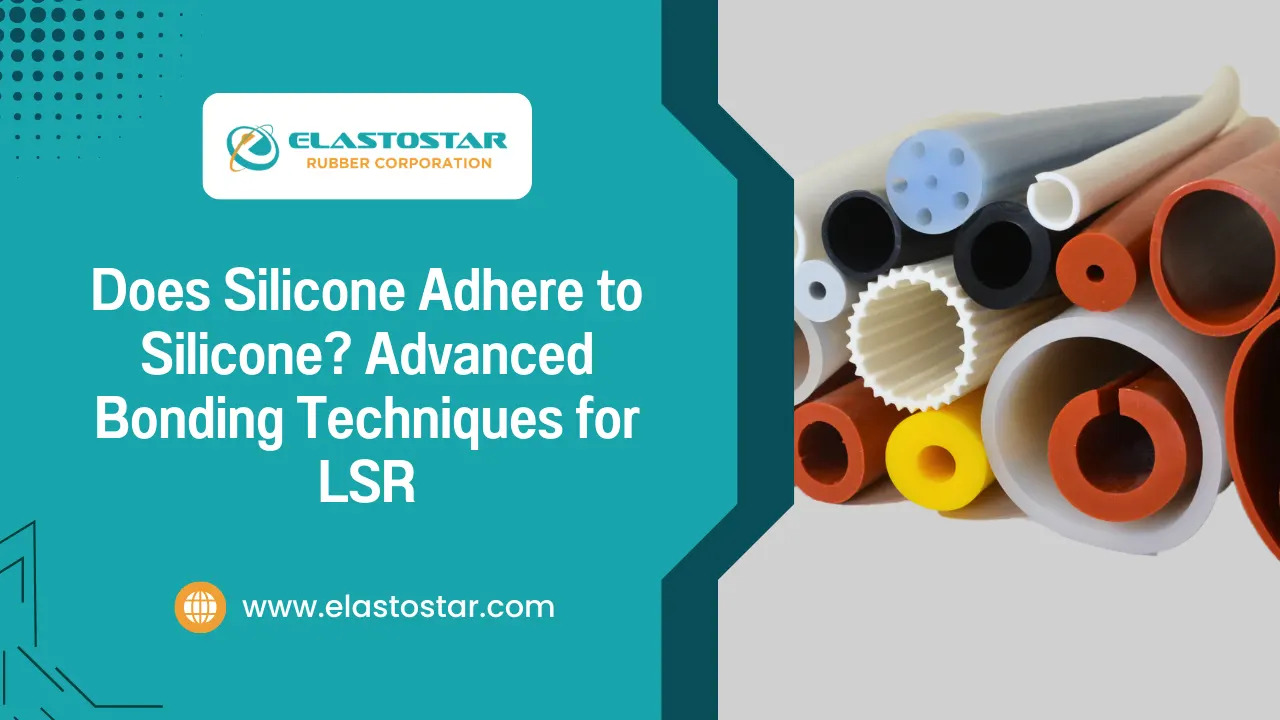
Silicone sponge, including sponge tube and other flexible profiles, adapts to surface variations while keeping a consistent seal line. This prevents air leaks, dust entry, and micro-gaps that form when rigid materials can’t compensate for assembly tolerances.
The ability to compress smoothly without permanent flattening makes silicone sponge ideal for lightweight electronics, appliance covers, and automotive interior components.
How Durability in Thin-Wall Applications Supports Long-Term OEM Reliability
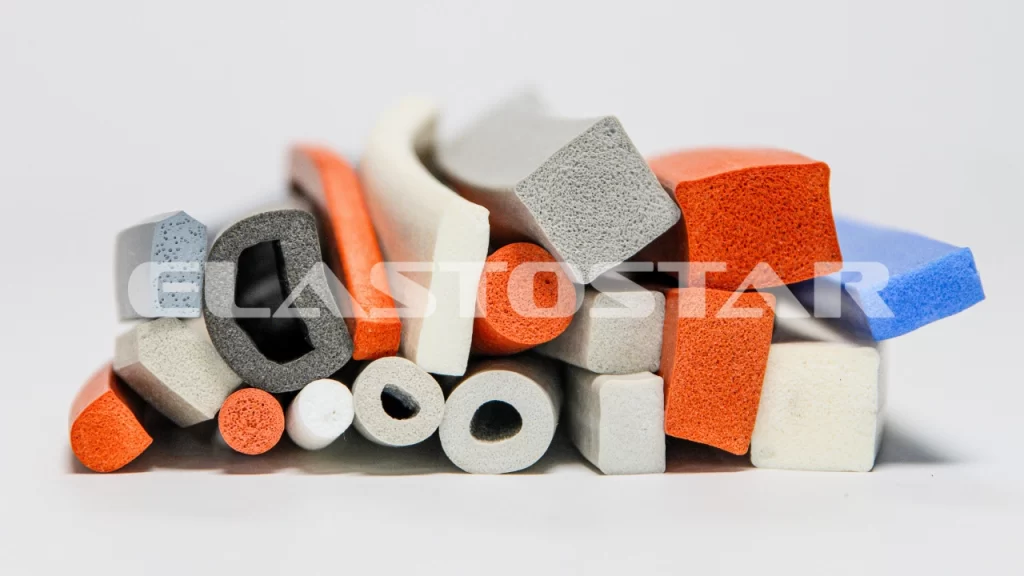
Thin-wall OEM assemblies need sealing materials that perform reliably under pressure, movement, vibration, and environmental exposure.
Silicone sponge and other lightweight, thin-wall sealing materials maintain cushioning and sealing force without tearing or collapsing, even in tight or delicate housings.
A. Why Thin-Wall Designs Need Durable Sponge Materials
1. Limited space
Thin housings leave very little room for thick or rigid gaskets.
2. Higher vibration transfer
Panels flex more, so the sealing material must absorb shock.
3. Constant thermal cycling
Electronics, automotive components, and HVAC units are subject to frequent temperature fluctuations.
4. Lower compression force available
Lightweight designs don’t allow for heavy fastening hardware.
B. How Silicone Sponge Handles These Stresses
- Maintains elasticity under continuous load.
- Resists heat, ozone, and UV exposure.
- Recovers shape quickly after compression.
- Reduces stress on plastic housings.
- Prevents cracking in thin-wall assemblies.
We often use silicone foam strips or sponge rubber for these applications because their structure stabilizes under prolonged pressure and temperature cycles.
C. Quick Durability Comparison (Where Table Makes Sense)
| Property | Silicone Sponge | Solid Rubber |
| Flexibility in thin walls | Excellent | Limited |
| Weight | Very light | Heavy |
| Heat resistance | Stable | Good |
| Compression recovery | High | Medium |
D. Real OEM Use-Cases
- Electronics housings.
- Lightweight automotive panels.
- HVAC access doors.
- Battery compartment covers.
- Appliance front panels.
Silicone sponge withstands movement, vibration, and uneven pressure, for thin-wall geometry where solid materials would deform or leak.
Also Read–Silicone Rubber: How Long Does It Last?
How Application Fit & Tolerance Management Reduce OEM Assembly Errors
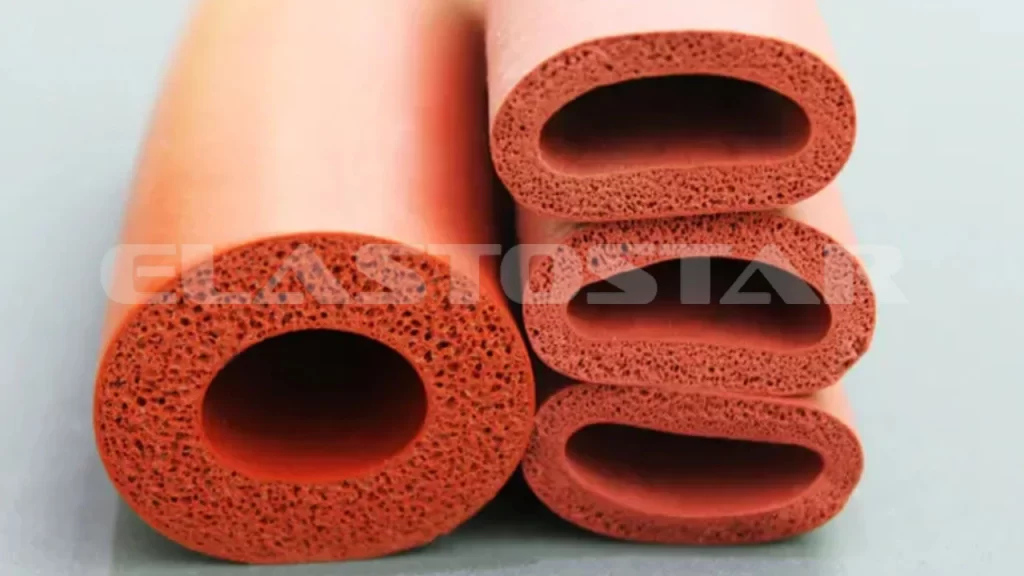
OEM assemblies rarely come out perfectly aligned, which makes sealing consistency difficult. Closed-cell silicone sponge supports tolerance compensation by adapting to dimensional shifts, uneven surfaces, and pressure variations.
Its flexibility allows it to fill micro-gaps without requiring hardware redesign. For engineers needing dimensional accuracy guidelines, our RMA Precision Tolerance reference provides verified data.
A. Why Tolerance Issues Occur in OEM Builds
- Plastic shrink variation
Injection-molded enclosures rarely match the original CAD dimensions. - Panel bending or flexing
Thin panels distort during assembly, creating uneven sealing paths. - Inconsistent screw torque
Fasteners apply different pressures from one station to another. - Irregular surface finishes
Machining marks and slight warping create gaps that normal gaskets cannot seal.
B. How Silicone Sponge Solves These Problems
- Conforms to uneven surfaces instantly.
- Fills micro-gaps created by misaligned parts.
- Compresses predictably under low force.
- Recovers shape even after repeated cycles.
- Compensates for dimensional variation without extra hardware.
We commonly use sponge rubber tubing in these tolerance-sensitive applications because they delivers flexible, reliable sealing even when assembly conditions vary.
Its elasticity and ability to adapt to imperfect fits make silicone sponge a preferred choice for OEM teams seeking reliable sealing performance in variable production environments.
Why Elastostar Rubber Corporation Is the Preferred Choice for OEM Silicone Sponge Sealing?

As one of the most trusted silicone rubber manufacturers, we support OEM teams with sealing materials engineered for lightweight assemblies, precise fit, and consistent long-term performance. Because we manage production entirely within our U.S. facility, we control formulation, curing, CNC-cutting, and inspection from start to finish.
This gives you stable density, predictable compression behavior, and full batch traceability across every lot. Our custom silicone products include die-cut sponge gaskets, silicone foam strips, sponge cords, and precision-cut sealing profiles designed to match exact OEM geometry.
We also offer fast prototyping, reverse engineering, and USP Class VI-compliant options. Combined with short lead times and reliable U.S. manufacturing, we help OEM teams integrate lightweight sealing solutions with confidence.
Recommended Reads
- Top Reasons to Choose U.S. Silicone Rubber Over Offshore Products
- Which Rubber Materials Can Withstand High Heat?
- Why Are High Temperature Gaskets Popular & What Are They Used For?

Conclusion
Lightweight OEM assemblies need sealing materials that deliver reliability without adding unnecessary weight. Silicone sponge provides this balance through flexibility, cushioning, and strong sealing performance across thin-wall designs, electronics enclosures, and precision-fit components.
Its silicone sponge durability ensures long service life even under compression, vibration, and temperature changes. If your project requires support with material selection, custom profiles, or prototype development, contact our engineering team. With consistent material quality, U.S.-based manufacturing, and fast lead times, we help OEM designers deliver dependable, lightweight sealing in every assembly.
FAQs
Q1. How does closed-cell silicone sponge reduce weight in OEM sealing applications?
Closed-cell silicone sponge supports weight reduction by providing strong sealing with far less mass than solid rubber. This helps OEM designers reduce overall assembly weight without sacrificing environmental or vibration protection.
Q2. Why is compression control important in lightweight silicone sponge seals?
Compression control ensures stability by preventing permanent flattening. The material’s compression-set resistance allows it to maintain sealing pressure even in thin or delicate housings, reducing the risk of deformation, leaks, or premature seal fatigue.
Q3. How do OEMs integrate closed-cell silicone sponge into compact assemblies?
OEMs easily integrate silicone sponge due to its design flexibility and sealing properties. It can be die-cut, CNC-cut, or formed into custom profiles (such as sponge strips or seals) that fit tight curves, small housings, or irregular enclosures without requiring hardware redesign.
Q4. Can closed-cell silicone sponge perform reliably in thin-wall OEM designs?
Yes. Silicone sponge performs exceptionally well in thin-wall designs due to its sealing performance. It absorbs vibration, resists temperature swings, and maintains elasticity without cracking or stressing surrounding components.
Q5. How does closed-cell silicone sponge handle tolerance variations in OEM assemblies?
Closed-cell silicone sponge excels at tolerance compensation, adapting to uneven surfaces, filling micro-gaps, and recovering shape after pressure changes. If you’re unsure which grade or profile best fits your tolerance range, contact us for engineering support.