A practical guide to form in place gaskets covering FIPG materials, bead design, automation options, and cost break-even versus die-cut gaskets.
Form-in-place sealing has become a preferred solution for manufacturers looking to reduce assembly complexity, improve design flexibility, and control long-term sealing performance. Instead of relying on pre-cut components, liquid-applied materials are dispensed directly onto the mating surface and cured to form a continuous seal.
This approach eliminates tooling constraints while enabling precise control over bead geometry and compression.
In this blog, we explain how form-in-place gaskets work, compare them with traditional die-cut methods, and evaluate material options, design considerations, automation potential, and cost break-even points to help engineers determine when FIPG is the right sealing strategy.
Key Takeaways
- Form-in-place gaskets (FIPG) create seals by dispensing liquid material directly onto a surface and curing it after assembly.
- FIPG removes the need for die-cut gasket tooling and reduces inventory complexity.
- Programmable dispensing allows precise control of bead path, width, height, and compression.
- Material choice such as RTV silicone, polyurethane, or anaerobic compounds affects cure speed, flexibility, and sealing performance.
- Proper bead design, compression targets, and surface preparation are critical for reliable sealing.
- FIPG often becomes cost-effective in low-to-medium production volumes or when designs change frequently.
- Automation with robotic dispensing and inspection systems improves repeatability and production efficiency.
Table of Contents
How Is FIPG Technology Different from Die-Cut Gaskets?
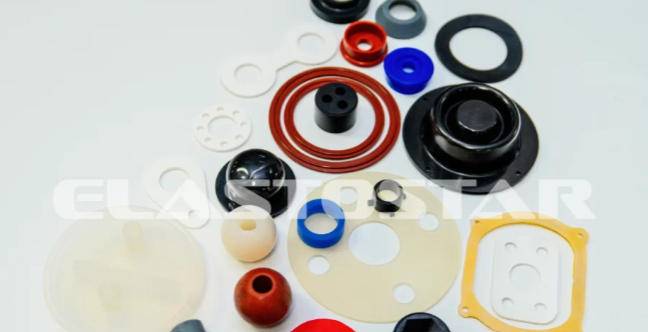
Form-in-place sealing replaces pre-shaped components with a liquid-applied material that is dispensed directly onto a mating surface and cured after assembly.
This approach changes how die-cut seals are designed, applied, and validated, especially in applications requiring flexibility and process control.
What Happens During a Dispensed Sealing Process?
In a dispensed system, sealing material is applied as a controlled bead before assembly.
- The bead is dispensed along the sealing path using programmed equipment.
- Bead width and height are controlled through process parameters.
- The assembly compresses the bead to the target sealing geometry.
- The material cures after assembly, forming a continuous seal.
This results in a cured-in-place gasket that adapts to surface variation and maintains uniform sealing pressure.
How do die-cut gaskets depend on Fixed Geometry?
Traditional sealing relies on pre-cut components manufactured to a fixed outline.
- Each gasket shape requires dedicated tooling.
- Inventory must be maintained for every design variant.
- Design changes often introduce cost and lead-time delays.
- Sealing performance is sensitive to variations in alignment and compression.
These limitations make die-cut solutions less adaptable to evolving designs.
Why Dispensed Sealing Improves Design Flexibility
Dispensed sealing removes the dependency on fixed gasket geometry.
- Sealing paths can follow complex or irregular shapes.
- Bead dimensions can be adjusted without tooling changes.
- Minor surface inconsistencies are absorbed during cure.
This flexibility is a key driver of the adoption of form-in-place gaskets in low-to-medium-volume production and in frequently revised designs.
Material Behavior in FIPG Applications
The performance of FIPG systems depends on predictable flow, adhesion, and curing behavior.
- Consistent viscosity ensures stable bead formation.
- Cure timing must align with assembly and handling cycles.
- Adhesion to substrate materials affects long-term sealing reliability.
Read More: All About Silicone Rubber Die-Cut Gaskets and Their Cutting Method
Dispensed vs Die-Cut Sealing: Process Comparison
| Aspect | Dispensed FIPG | Die-Cut Gaskets |
| Sealing geometry | Programmable bead path | Fixed shape |
| Tooling requirement | None | Dedicated dies |
| Design changes | Software-based | New tooling |
| Surface conformity | High | Limited |
| Inventory complexity | Low | High |
What Material Options Are Used in Form-in-Place Gasket Systems?
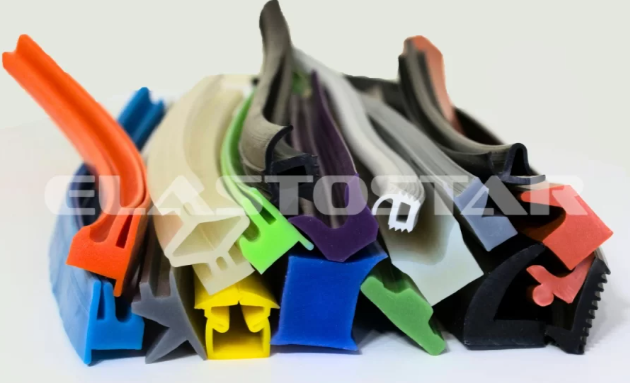
Material chemistry plays a decisive role in how FIPG systems perform, cure, and integrate into production workflows.
Selecting the right option ensures formed in place sealing delivers consistent results across pressure, temperature, and cycle-time requirements.
1. One-Part RTV Silicone Systems
One-part RTV silicone materials cure when exposed to ambient moisture and are widely used for flexible sealing paths.
- Simple dispensing without mixing equipment.
- Cure occurs after assembly.
- Accommodates surface variation and movement.
These systems are commonly applied in applications that also use silicone rubber sheets for flat sealing, where flexibility and compliance are critical.
2. Two-Part Polyurethane (PU) Systems
Two-part PU materials cure through a controlled chemical reaction after mixing.
- Faster and more predictable cure time.
- Higher rigidity compared to RTV systems.
- Suitable for automated and high-volume production lines.
PU systems are often evaluated alongside silicone hoses in fluid-handling assemblies where pressure stability and process control are important.
3. Anaerobic Gasket Materials
Anaerobic materials cure in the absence of oxygen when confined between metal surfaces.
- Cure only inside the joint area.
- Strong resistance to pressure and vibration.
- Best suited for rigid, machined flanges.
These materials are typically used in precision metal-to-metal assemblies rather than flexible sealing paths.
4. Material Selection Considerations
Choosing the correct material requires balancing performance requirements with production realities.
- Required cure speed versus takt time.
- Substrate material and surface finish.
- Flexibility versus rigidity needs.
- Exposure to heat, fluids, or vibration.
Read More: What Is RTV Silicone Understanding Room Temperature Vulcanizing Materials
Material Comparison Overview
| Material Type | Cure Mechanism | Typical Application | Key Advantage |
| One-part RTV silicone | Moisture-cure | Flexible sealing paths | Simple processing. |
| Two-part PU | Chemical reaction | Automated production | Controlled fast cure. |
| Anaerobic | Oxygen-free cure | Rigid metal flanges | High pressure resistance. |
Why Do Manufacturers Choose FIPG Over Traditional Gaskets?
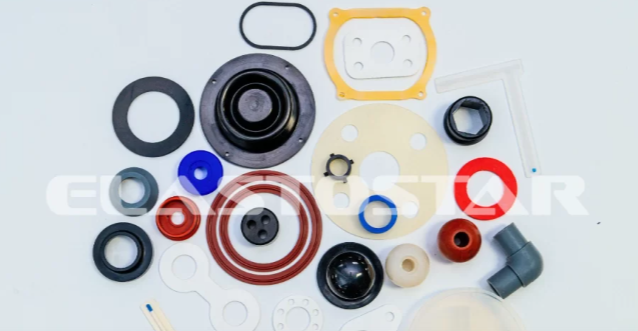
The shift toward liquid-applied sealing is driven by a combination of cost control, design freedom, and process consistency.
When evaluated beyond unit price, FIPG gaskets often deliver measurable advantages across both engineering and manufacturing operations.
Advantage 1: No Dedicated Tooling or Die Costs
Formed sealing removes the need for custom-cut tooling.
- Eliminates die design and maintenance expenses.
- Reduces lead time for new or revised gasket geometries.
- Enables rapid iteration during design changes.
This advantage is particularly relevant in assemblies that previously relied on fixed-shape silicone rubber extrusions, where tooling constraints limited design flexibility.
Advantage 2: Greater Design Flexibility
Dispensed sealing adapts easily to evolving product designs.
- Bead paths can follow complex or non-linear geometries.
- Sealing layouts can be changed through software rather than hardware.
- One process supports multiple product variants.
This flexibility supports form-in-place gaskets in applications with frequent design updates or multiple enclosure sizes.
Advantage 3: Consistent Bead Geometry and Compression
Process-controlled dispensing improves repeatability.
- Bead width and height are set through dispensing parameters.
- Compression is more uniform across the sealing path.
- Variability from manual placement is reduced.
Assemblies incorporating molded silicone parts benefit from this consistency, as controlled compression improves long-term sealing reliability.
Why Process Control Matters?
The performance benefits of FIPG depend on repeatable dispensing and dimensional accuracy. Adhering to RMA precision tolerance standards helps ensure bead geometry and compression targets remain consistent across production runs.
What Design Factors Determine the Performance of Dispensed Sealing Beads?
The success of FIPG systems depends less on material choice alone and more on how the sealing bead is designed and compressed in the joint.
Poor bead geometry can lead to leakage, over-compression, or inconsistent cure, even when the correct material is selected.
1. Bead Width and Height Ratio Fundamentals
Bead geometry must be designed to achieve controlled compression after assembly.
- Bead height determines the available compression range.
- Bead width controls contact area and sealing stability.
- Excessive height can cause squeeze-out or slow curing.
- Insufficient height can result in incomplete sealing.
In most dispensed gaskets, bead width is designed to be wider than bead height to promote uniform compression and surface contact.
2. Compression Targets After Assembly
Effective sealing requires predictable compression once components are mated.
- Typical compression ranges are defined during design validation.
- Over-compression may damage cured material or reduce seal life.
- Under-compression can lead to leakage paths or poor adhesion.
Assemblies incorporating silicone sponge profiles alongside FIPG require careful compression control to avoid uneven load distribution across the joint.
3. Surface Preparation and Adhesion Zones
Surface condition directly affects bead performance.
- Clean, dry substrates improve adhesion consistency.
- Surface finish influences bead spread and contact.
- Discontinuities can interrupt seal continuity.
Designing proper adhesion zones ensures the bead remains anchored during cure and service.
Bead Geometry Design Guidelines
| Design Element | Engineering Consideration | Impact on Seal |
| Bead height | Allows controlled compression | Prevents leakage |
| Bead width | Increases contact area | Improves stability |
| Compression ratio | Matches material capability | Extends seal life |
| Surface finish | Supports adhesion | Reduces peel risk |
4. Material Interaction With Bead Geometry
Different materials respond differently to compression and cure.
- Softer materials tolerate wider compression ranges.
- Stiffer materials require tighter dimensional control.
- Cure shrinkage must be considered during bead design.
Applications using platinum-cured silicone tubing in adjacent fluid paths often require tighter bead control to ensure sealing integrity across connected systems.
Why Design Validation Is Critical?
Bead geometry must be validated under real assembly conditions.
- Trial builds confirm compression targets.
- Inspection verifies bead continuity and spread.
- Adjustments are made before production release.
Validation practices aligned with Elastostar’s certifications and compliance standards help ensure bead designs meet functional and quality requirements.
When Does FIPG Become More Cost-Effective Than Die-Cut Gaskets?
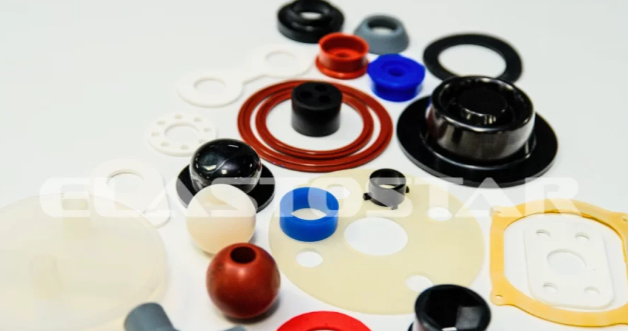
Evaluating FIPG requires looking beyond per-part cost and focusing on the total cost of ownership. In many applications, liquid gasket systems achieve cost advantages once tooling, inventory, and design-change overhead are considered.
Cost Elements to Include in the Analysis
A fair comparison must account for all direct and indirect costs.
- Tooling and die fabrication for die-cut gaskets.
- Inventory carrying costs across multiple gasket SKUs.
- Scrap and rework from misalignment or handling damage.
- Engineering time required for design changes.
- Equipment and setup costs for FIPG dispensing.
Assemblies that previously relied on die-cut silicone gaskets often underestimate the hidden cost of tooling revisions and inventory management.
Volume and Design Stability Considerations
Break-even points vary based on production volume and design maturity.
- Low-to-medium volumes favor FIPG due to the elimination of tooling.
- Frequent design changes accelerate FIPG payback.
- High-volume, stable designs may favor die-cut solutions.
Programs that use custom-molded silicone parts alongside sealing elements often achieve faster ROI when FIPG reduces part count and assembly complexity.
Illustrative Cost Break-Even Comparison
| Cost Factor | FIPG Sealing | Die-Cut Gaskets |
| Tooling cost | None | High upfront |
| Inventory | Minimal | Multiple SKUs |
| Design changes | Low cost | New tooling |
| Scrap risk | Low | Moderate |
| Equipment cost | Moderate | Low |
When FIPG Delivers the Strongest ROI
FIPG typically becomes cost-effective when:
- Annual volumes are moderate.
- Product designs are still evolving.
- Multiple gasket variants would otherwise be required.
- Assembly simplification reduces labor time.
ROI analysis should always be validated against real production data.
Supporting Cost Validation
Accurate cost evaluation depends on consistent process capability and inspection discipline. Elastostar’s quality control processes support reliable data collection when validating sealing performance and long-term cost assumptions.
Read More: Material Selection Impact on Product Reliability
How Can Form-in-Place Gaskets Be Automated in Production Environments?
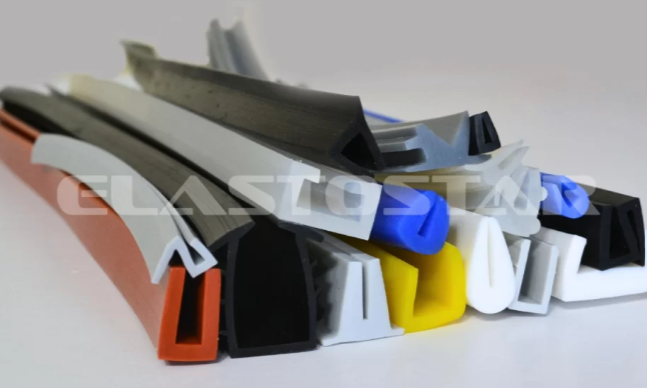
Automation plays a major role in scaling FIPG from pilot builds to stable production.
When implemented correctly, automation improves repeatability, reduces operator dependency, and supports consistent seal quality across large production runs.
Automation Path 1: Programmable Dispensing Systems
Automated dispensing replaces manual bead application with controlled, repeatable motion.
- CNC or robotic dispensers follow programmed sealing paths.
- Bead width and height are controlled through software parameters.
- Repeatability improves across shifts and production lots.
This approach is commonly adopted in assemblies where sealing interfaces interact with custom silicone U profiles requiring precise alignment and consistent compression.
Automation Path 2: Vision-Guided Bead Placement
Vision systems enhance dispensing accuracy on complex or variable components.
- Cameras verify part position before dispensing.
- Bead placement adjusts automatically for minor part variation.
- Defects are detected before assembly.
Vision-guided systems are particularly valuable when sealing paths must interface cleanly with fluid-routing components such as reinforced silicone tubing.
Automation Path 3: Inline Inspection and Process Monitoring
Inspection is integrated directly into the production line.
- Bead continuity and geometry are checked immediately after dispensing.
- Deviations trigger alerts or automatic rejection.
- Process data is logged for traceability and quality analysis.
Inline inspection reduces downstream rework and improves first-pass yield.
Choosing the Right Level of Automation
Automation should match production scale and complexity.
| Production Scenario | Recommended Automation Level | Primary Benefit |
| Low volume / high mix | Semi-automated dispensing | Flexibility |
| Medium volume | Robotic dispensing | Repeatability |
| High volume | Fully automated + vision | Throughput & consistency |
| Regulated products | Automation + inspection | Traceability |
When Automation Delivers the Most Value
FIPG automation delivers the strongest returns when:
- Manual placement variability affects seal performance.
- Production volume justifies equipment investment.
- Consistent bead geometry is critical to long-term sealing reliability.
Automation should be viewed as a process-stability tool rather than just a labor-reduction strategy.
Why Manufacturers Trust Elastostar Rubber Manufacturer for Form-in-Place Gasket Solutions?

Elastostar Rubber Corporation brings engineering discipline and manufacturing consistency to form-in-place gasket applications, supporting customers from early evaluation through stable production.
As an experienced gasket product manufacturer, we focus on process reliability, material performance, and repeatability rather than one-size-fits-all solutions.
- Proven experience supporting FIPG and advanced sealing systems across industrial and regulated applications.
- Engineering-driven approach to material behavior, bead geometry, and long-term sealing performance.
- Strong emphasis on process control, inspection, and validation to ensure consistent results in production.
- Ability to support pilot trials, design optimization, and scale-up without disrupting manufacturing flow.
- U.S.-based manufacturing that enables responsive collaboration, predictable lead times, and full traceability.
For manufacturers adopting form-in-place gasket technology, we provide the technical foundation and production reliability needed to achieve consistent sealing performance over time.
Recommended Reads
- Gasket vs O-Ring: Meaning Differences and Applications
- Can You Laser Cut Silicone Rubber
- The Step-by-Step Process of Custom Silicone Rubber Molding
Conclusion
Form-in-place gasket technology offers manufacturers a flexible and scalable approach to sealing, particularly where design changes, complex geometries, or inventory reduction are priorities. When evaluated correctly, FIPG can deliver measurable benefits in cost control, process consistency, and long-term sealing performance.
However, success depends on proper material selection, bead design, validation, and process control. Working with an experienced partner helps ensure these elements are addressed from the start. If you are evaluating FIPG for a new or existing application, contact us to discuss material options, design considerations, and implementation strategies tailored to your production requirements.
FAQs
Q1. What are form-in-place gaskets?
Form-in-place gaskets are seals created by dispensing a liquid material directly onto a component surface, which then cures after assembly. This method allows the seal to follow the exact geometry of the joint, making form-in-place gaskets suitable for complex or non-uniform sealing paths.
Q2. How do FIPG gaskets differ from die-cut gaskets?
FIPG gaskets are applied as a liquid bead and cured in position, whereas die-cut gaskets are pre-manufactured components installed during assembly. FIPG reduces tooling dependency and alignment risk, while die-cut gaskets rely on fixed shapes and inventory.
Q3. What materials are used for FIPG?
FIPG materials include one-part RTV silicones, two-part polyurethane systems, and anaerobic compounds. Material selection depends on cure time, flexibility, and operating conditions. In assemblies where FIPG interfaces with flexible connections, silicone rubber tubing is often used in adjacent fluid or airflow paths.
Q4. What are the advantages of FIPG over traditional gaskets?
FIPG offers tooling elimination, improved design flexibility, and consistent bead geometry. These benefits simplify production changes and reduce inventory complexity. From a manufacturing perspective, formed-in-place sealing supports faster design iterations compared to fixed gasket components.
Q5. What equipment is needed for FIPG dispensing?
FIPG dispensing typically requires programmable dispensing systems, material supply units, and basic process controls. Equipment selection depends on production volume and automation level. In mixed sealing systems, FIPG processes are sometimes combined with Rubber P profiles without major changes to the layout.
Q6. At what production volume does FIPG become cost-effective?
FIPG often becomes cost-effective at low-to-medium production volumes or when designs change frequently. Savings come from eliminating tooling, reducing scrap, and minimizing part variation, especially when replacing multiple die-cut gasket designs.
Q7. What are typical bead dimensions for FIPG?
Bead dimensions vary by application, but bead width is generally designed to be greater than bead height to achieve stable compression. Final geometry is validated during assembly trials.
Q8. Can FIPG be automated in production?
Yes. FIPG is well-suited for automation using robotic or CNC dispensing systems. Automation improves repeatability and reduces operator variability. Automated FIPG lines are often integrated alongside processes that handle silicone rubber extrusions in enclosure and housing assemblies.
Q9. What are cure times for FIPG materials?
Cure times depend on material chemistry, bead size, and environmental conditions. One-part systems cure more slowly, while two-part systems provide faster, controlled curing. Cure timing must align with handling and downstream production steps.
Q10. What industries use form-in-place gasket technology?
Form-in-place gasket technology is widely used in automotive, electronics, industrial equipment, HVAC, and enclosure manufacturing. It is especially effective where continuous sealing and reduced part count are critical. In vibration-sensitive environments, FIPG is sometimes paired with silicone sponge for load distribution.