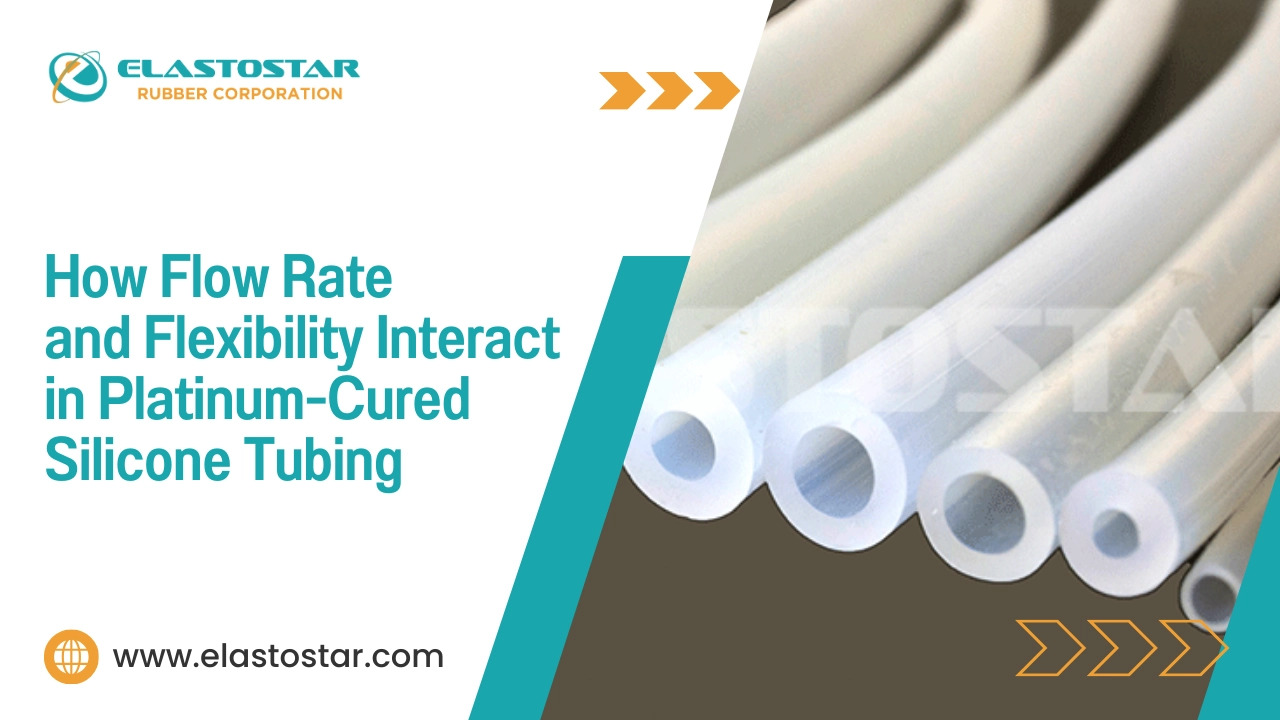
Flow rate performance is directly influenced by how a tube bends, compresses, and recovers during operation. In high-cycle systems, even small changes in flexibility can shift pressure drop, delivery volume, and overall flow stability. This is why platinum-cured silicone tubing is widely used in equipment that demands reliable performance under constant motion.
Its smooth interior, elastic recovery, and controlled wall strength allow consistent flow across varying pressures and pump speeds. These characteristics make it ideal for pharmaceutical transfer, dosing systems, and peristaltic pump applications.
In this blog, we will explore how flexibility and flow interact inside real pumping systems.
Key Takeaways
- Tubing flexibility controls flow — too soft collapses, too stiff reduces accuracy.
- Platinum-cured silicone tubing keeps flow stable under constant pump compression.
- Wall thickness impacts performance — thin walls expand, thick walls maintain volume.
- Pump compatibility is essential to prevent flow drift and premature tubing wear.
- Bend radius affects efficiency — sharp bends restrict flow and increase backpressure.
- Elastostar tubing delivers consistent ID/OD control, kink resistance, and reliable flow stability.
Table of Contents
Tubing Flexibility and Flow Stability in Continuous Pumping
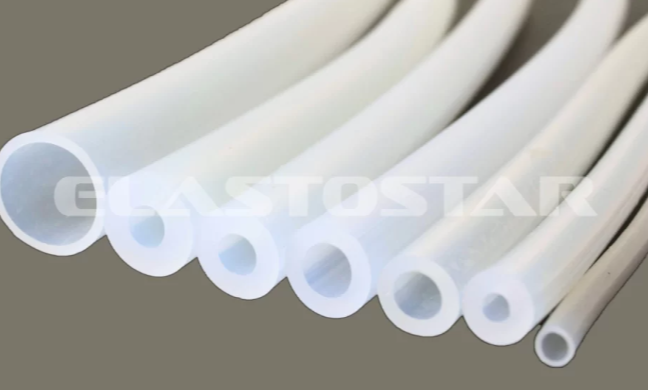
Flexible tubing directly affects how smoothly liquid moves through a system, especially in pumps that rely on compression and rebound.
When tubing flexes too easily, it can collapse under suction, restricting flow. If it is too stiff, it can resist the pump rollers and reduce delivery accuracy. Choosing the right pump tubing flexibility helps ensure the internal volume remains stable as the tube bends or compresses.
This is why platinum-cured tubing, surgical tubing, and high-grade rubber hosing are preferred in systems that require silicone flow stability during continuous operation or variable flow demand.
What Flexibility Controls?
- Flow smoothness during peristaltic compression.
- Internal volume consistency across bends.
- Collapse resistance under low suction.
- Pressure drop reduction in long runs.
- Ability to respond to high-cycle motion without deforming.
Read More – Silicone Tubing: Meaning, Types, Benefits
Wall Thickness and Flow Dynamics in Platinum-Cured Tubing
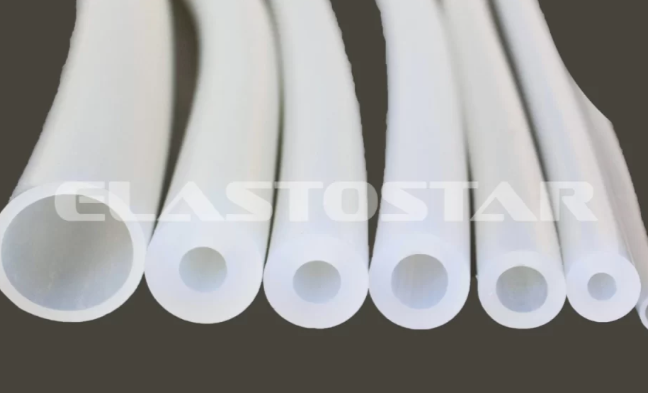
The thickness of the tubing wall directly influences pressure stability, internal expansion, and overall flow accuracy.
Flow performance depends heavily on silicone wall thickness, because thinner walls can expand under pressure while thicker walls resist deformation.
Accurate tubing dimensional control ensures that the ID/OD ratio stays consistent so the tubing maintains predictable flow across temperature changes and pumping cycles. Elastostar’s dimensional guidelines here help engineers choose proper tolerances:
We manufacture platinum-cured silicone tubing with controlled ID/OD ratios to ensure stable delivery in high-cycle systems.
How Thin Walls Affect Flow?
- Expansion under higher pressure reduces dosing accuracy.
- More prone to flattening when bent sharply.
- Increases pulsation amplitude in peristaltic pumps.
How Thick Walls Affect Flow?
- Better pressure resistance and consistent internal volume.
- Less deformation under the pump roller compression.
- Slightly higher roller force required for movement.
Pump Compatibility Considerations for Stable Flow Rates
Tubing must match the pump’s compression style, roller force, and operating speed to ensure accurate, stable flow.
A major factor in pump system compatibility is how well the tubing handles repeated compression without deforming or thinning.
Peristaltic pumps, in particular, place continuous mechanical stress on the tubing wall. If the material isn’t engineered for repeated motion, tubing flex fatigue accelerates, leading to flow drift, reduced dosing precision, or premature wear.
Our platinum-cured silicone tubing is designed to maintain stability through thousands of cycles, providing smooth rebound and a consistent internal volume.
Read More – Is Platinum-Cured Silicone Tubing Worth the Investment Compared to Offshore Alternatives?
Key Compatibility Factors Engineers Must Check
- Roller force vs tubing hardness for smooth compression.
- Cycle speed and duration in high-frequency pumping.
- Tubing rebound rate after each compression stroke.
- Pump head design and number of rollers.
- Compatibility with medical tubing, flexible rubber tubing, or custom hose sizes.
- Behavior under vacuum, suction lift, or discharge pressure.
Bend Radius and Flow Restriction in Flexible Tubing
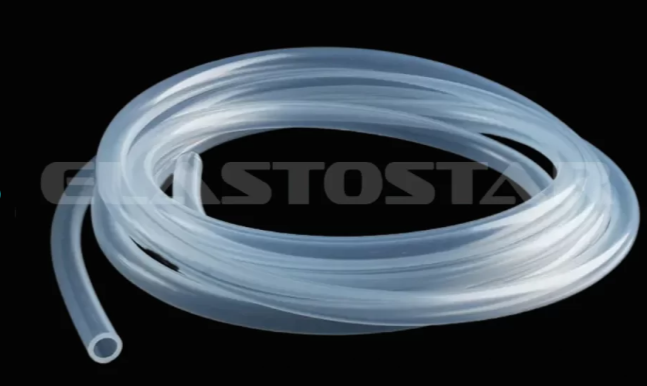
The way a tube bends determines whether flow stays smooth or becomes restricted, especially in tight equipment layouts.
When tubing bends beyond its recommended radius, the internal passage narrows and creates flow restriction bending, reducing output and increasing backpressure.
Even high-quality tubing has silicone flexibility limits; too much bending causes partial collapse, while insufficient flexibility prevents proper installation in compact pump heads or routed pathways. Elastostar’s custom silicone hoses are manufactured to retain their shape during bending without kinking or flattening, ensuring stable flow in tight assemblies.
Do This for Proper Flow
- Keep bends within the recommended radius.
- Use gradual curves instead of sharp angles.
- Support tubing in long vertical or horizontal runs.
- Choose wall thickness based on bending demands.
Avoid This to Prevent Flow Loss
- Tight loops that pinch or flatten the tubing.
- Routing behind components where heat softens rubber tubing.
- Pulling the tubing too tight during installation.
- Ignoring kink test results during prototyping.
Why Elastostar Rubber Corporation Is the Right Partner for High-Flex, Stable-Flow Silicone Tubing?

At Elastostar Rubber Corporation, we design tubing that performs reliably in real operating conditions, not just in controlled tests. Our focus is on flow stability, flexibility control, and dimensional accuracy, so OEMs get tubing that delivers predictable results across thousands of pump cycles.
With controlled material formulation and U.S.-based manufacturing, we ensure consistency from prototype to full production.
- Platinum-cured silicone tubing engineered for stable flow and flexible installation.
- Custom ID/OD sizing, hardness options, and wall-thickness control.
- Batch-traceable materials for regulated industries.
- Support for OEM builds, redesigns, and performance upgrades.
- Reverse engineering for existing or failed tubing.
- Prototype → production scalability for new equipment lines.
- Made in USA for consistent quality and shorter lead times.
- Technical guidance for pump matching, pressure ranges, and flow behavior.
Recommended Reads
- Platinum-Cured Silicone Tubing for Pharma Use
- How Long Does Silicone Rubber Last?
- Advantages of Platinum-Cured Silicone Tubing

Conclusion
Flow performance depends on more than just tubing size; it’s shaped by flexibility, wall strength, pump compatibility, and how the tube behaves under real operating stress. Achieving reliable silicone flow optimization requires balancing all these elements so the system delivers steady output without collapse, drift, or fatigue.
With the right process tubing design, operators can prevent flow interruptions, extend maintenance intervals, and improve dosing accuracy. At Elastostar Rubber Corporation, we support OEMs and processors in selecting the ideal tubing grade for pressure, temperature, and flow requirements.
FAQs
Q1. How does tubing flexibility affect flow rate in platinum-cured silicone tubing?
Tubing that is too soft can collapse under suction, reducing internal volume and causing flow restrictions. Tubing that is too rigid resists pump rollers, resulting in inconsistent delivery. Choosing the right pump tubing flexibility ensures the bore remains stable, enabling predictable flow even during continuous peristaltic cycles.
Q2. How does wall thickness influence flow performance in silicone tubing?
Flow accuracy depends on silicone wall thickness, because thin walls expand under pressure while thicker walls resist deformation. Correct ID/OD ratios prevent flow drift, pulsation spikes, or collapse during bends. Elastostar’s platinum-cured silicone tubing is engineered with precise dimensional control for stable flow behavior.
Q3. How do pumps affect flow and flexibility in platinum-cured silicone tubing?
Peristaltic and roller pumps repeatedly compress the tube, which can create tubing flex fatigue if the material is not designed for repeated motion. This affects flow rate, dosing accuracy, and long-term stability. Matching tubing hardness to pump force is essential for optimal performance.
Q4. Does bending silicone tubing reduce flow efficiency?
Yes, bending beyond the recommended radius can cause flow-restrictive bending, which narrows the internal passage and increases backpressure. This reduces efficiency, especially in tight equipment layouts. Using high-quality, kink-resistant tubing ensures smooth flow even in compact assemblies.
Q5. How do engineers balance flow rate and flexibility when selecting silicone tubing?
Engineers follow a flow control tubing selection process that considers pressure, temperature, viscosity, pump type, and bend radius. The goal is to find a tube flexible enough for routing, yet strong enough to resist collapse. Elastostar supports OEMs with sizing, hardness options, and custom ID/OD tolerances to achieve both stability and flexibility.