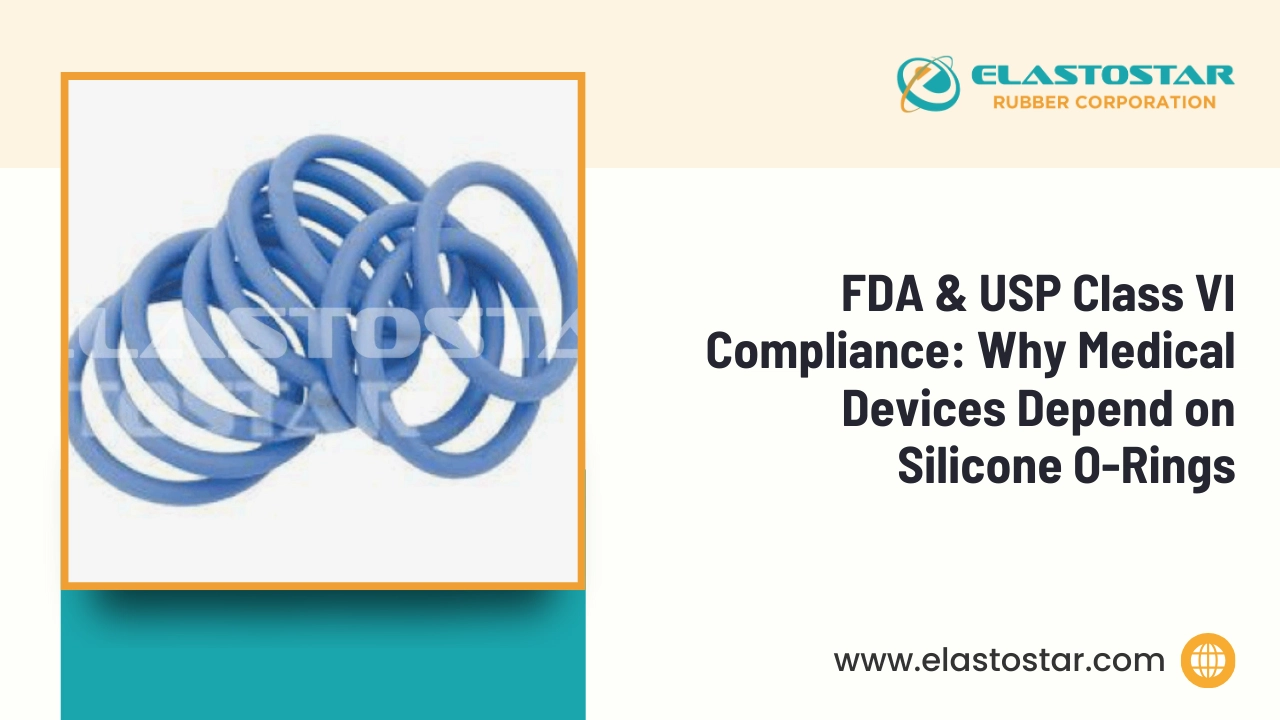
In the healthcare department, compliance protects patients and supports reliable performance. Every part that contacts the human body must meet strict regulations to reduce risks of contamination or failure. Standards such as the FDA silicone rubber standards set safety rules so that elastomers used in sealing are non-toxic and consistent. O-rings, though small, play a key role in medical devices by keeping seals secure in surgical tools, pumps, and diagnostic systems.
In this blog, we will explain FDA and USP Class VI requirements, why silicone O-rings are vital in medical devices, and how to choose the right compliant seals.
Key Takeaways
- FDA and USP Class VI are top standards that ensure silicone O-rings are safe for medical use.
- FDA compliance checks material safety, while USP Class VI tests biological response and compatibility.
- Medical-grade silicone O-rings are vital in surgical tools, pumps, catheters, and pharmaceutical equipment.
- Benefits include patient protection, reliability, regulatory approval, and cost efficiency.
- Choosing the right supplier, like Elastostar Rubber Corporation, ensures certified quality and faster delivery.
Table of Contents
What Are FDA and USP Class VI Standards?
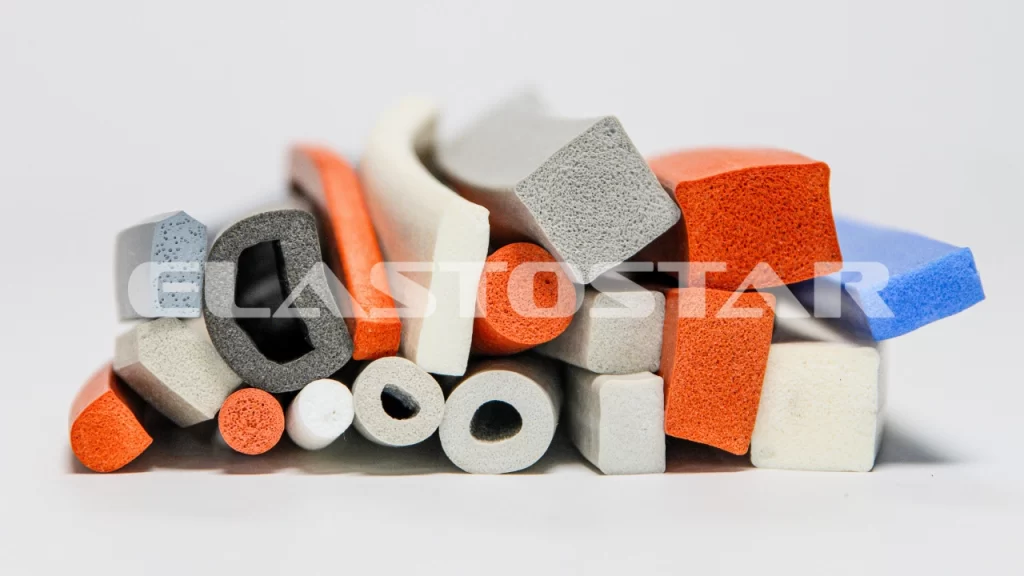
When choosing materials for medical sealing, two of the most recognized certifications are FDA approval and USP Class VI compliance.
Both play a vital role in confirming that silicone O-rings are safe for use in devices that come into contact with the human body.
- FDA approved silicone O-rings are manufactured with materials that pass safety requirements set by the U.S. Food and Drug Administration.
- These standards confirm that the silicone does not release harmful compounds when in contact with body fluids, drugs, or tissues.
- USP Class VI silicone rubber undergoes stricter biological testing, including implantation and systemic injection studies.
- This testing measures toxicity, irritation, and overall compatibility with the human body.
- FDA compliance addresses material safety, while USP Class VI focuses on biological response under real-world medical conditions.
Also Read– FDA & Medical Grade Silicone Rubber Standards
Why Silicone O-Rings Are Preferred in Medical Devices?
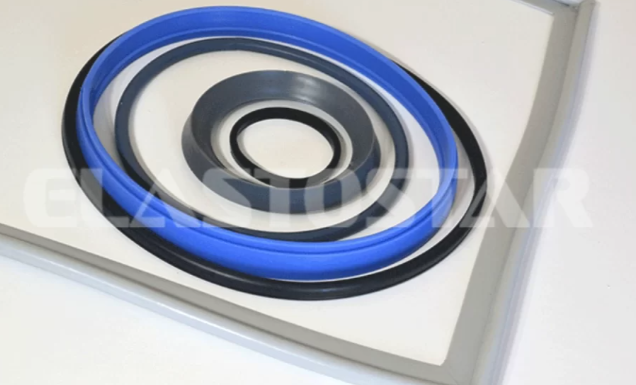
Among the many sealing materials available, biocompatible silicone O-rings stand out for their safety and versatility.
In medical devices, they are valued not only for reliability but also for their ability to perform under demanding conditions.
- Patient Safety: Silicone is biologically inert, which means it does not react with tissues or fluids. This property makes medical-grade silicone O-rings suitable for contact with the human body.
- Sterilization Resistance: These seals can tolerate multiple sterilization methods, including steam autoclaving, gamma radiation, and ethylene oxide (EtO), without losing performance.
- Durability: Extruded Silicone resists extreme temperatures, chemicals, and biological exposure, making it dependable in critical healthcare environments.
- Long-Term Reliability: The material retains flexibility and sealing strength over time, reducing risks of leakage or device failure.
What are the Applications of Silicone O-Rings in Medical Devices?
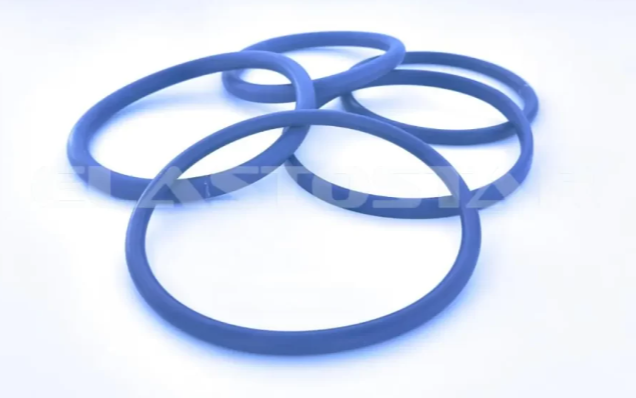
Silicone seals for medical devices are trusted in healthcare because they deliver safe, clean, and reliable performance.
Their role is to prevent leaks, maintain pressure, and protect patients during critical operations.
- Surgical instruments and implants: Silicone O-rings in surgical instruments provide tight sealing that handles sterilization and repeated use.
- IV pumps, dialysis, and catheters: Flexible O-rings help maintain safe fluid transfer in life-support and patient-care devices.
- Pharmaceutical manufacturing equipment: Clean sealing solutions for drug production, packaging, and sterile filling systems.
- Diagnostic and imaging equipment: Used in analyzers and imaging machines where accuracy depends on leak-free operation.
- Respiratory and anesthesia equipment: Found in ventilators and oxygen systems to maintain safe airflow.
These applications show how silicone O-rings support patient safety and keep medical systems performing reliably.
Read More– Silicone Seals for Aerospace and Medical Applications
What are the Benefits of FDA & USP Class VI Compliant Silicone O-Rings?

In healthcare, compliance gives confidence that a sealing material is safe, consistent, and dependable. Silicone O-rings healthcare compliance helps manufacturers avoid risks while supporting safer outcomes for patients.
- Patient Protection: Certified silicone reduces the chances of toxicity, leaching, or contamination.
- Regulatory Advantage: Meeting FDA and USP Class VI requirements speeds up device approvals across global markets.
- Reliable Sealing: Tested fluorosilicone O-rings perform under sterilization, temperature changes, and fluid exposure in critical equipment.
- Cost Efficiency: Durable materials reduce downtime and limit frequent replacement cycles.
These benefits explain why FDA and USP Class VI compliant silicone O-rings are trusted in life-saving devices and pharmaceutical systems.
FDA vs USP Class VI Compliance – What’s the Difference?
Both FDA and USP Class VI standards apply to silicone O-rings, but they focus on different aspects of safety and performance.
Understanding these FDA vs USP Class VI silicone O-ring differences helps medical device manufacturers choose the right material for their applications.
| Aspect | FDA Compliance | USP Class VI O-Ring Seals |
| Focus | Material safety for food, drugs, and tissue contact | Biological response and toxicity testing |
| Testing Method | Review of material formulation | Implantation, systemic injection, and irritation tests |
| Scope | Ensures no harmful leaching or contamination | Confirms material is safe for direct body contact |
| Application | Widely used in medical and food-contact devices | Critical medical devices requiring biocompatibility |
| Regulatory Role | Approval for safe use in regulated industries | Certification of safety for long-term human exposure |
Both standards are important, but together they provide a complete picture of safety. FDA compliance covers chemical safety, while USP Class VI O-ring seals prove biological compatibility, making both vital in healthcare & Pharmaceutical applications.
How Do You Choose the Right Medical-Grade Silicone O-Rings?

Selecting medical-grade O-rings involves more than just size; the right choice depends on compliance, performance, and supplier support.
- Material Grade: Use FDA-compliant or USP Class VI-certified silicone.
- Design and Size: Select molded, hollow, or custom-engineered O-rings for accurate fit.
- Sterilization Compatibility: Match the seal to processes like steam, gamma, or EtO.
- Certified Suppliers: Work with trusted medical silicone O-ring manufacturers for documentation and traceability.
- Reverse Engineering & Design Support: Helpful for moving from prototype to production.
- Lead Time: Prefer suppliers with the shortest delivery times for critical projects.
Reliable suppliers provide medical-grade silicone seals for healthcare equipment that meet compliance and support safe performance.
Certifications and Quality Standards
At Elastostar Rubber Corporation, compliance goes beyond FDA and USP Class VI standards. Our materials are rigorously tested to meet USP Class VI Section 87 & 88 requirements, confirming their safety and biocompatibility. We are also ISO & AS9100D certified, serving industries from medical to aerospace with trusted sealing solutions.
Recommended Reads
- Complete Guide to FDA‑Approved Silicone for Medical Use
- What Are the Uses of Silicone O‑Rings? Benefits and Applications
- What Is the Difference Between Medical‑Grade Silicone and Regular Silicone?
Conclusion
In medical devices, patient safety depends on every part performing without risk. Compliance with FDA-compliant silicone O-rings and USP Class VI standards gives confidence that the seals used in surgical tools, pumps, and pharmaceutical systems meet strict safety expectations.
Choosing the right supplier adds further value, with access to reliable products, technical support, and faster delivery. For manufacturers, compliant silicone O-rings are more than just seals; they are safeguards that protect patients and strengthen trust in healthcare equipment.
FAQs
Q1. What are FDA-compliant silicone O-rings?
They are silicone O-rings approved by the FDA for safe use in medical and food-contact devices. For certified products, you can reach out to Elastostar Rubber Corporation for details.
Q2. What does USP Class VI mean for silicone O-rings?
It means the silicone has passed strict biological tests for safety, including toxicity, irritation, and its reaction with the human body.
Q3. Why are silicone O-rings important in medical devices?
They keep medical equipment sealed, prevent leaks, and protect patients from contamination.
Q4. Are all silicone O-rings safe for medical use?
No. Only FDA-compliant and USP Class VI tested silicone O-rings are suitable for healthcare use.
Q5. What medical devices use FDA & USP Class VI O-rings?
They are widely used in surgical tools, IV pumps, dialysis systems, catheters, diagnostic machines, and pharmaceutical equipment. To get the right fit for your project, contact us at Elastostar for technical support.
Q6. How are silicone O-rings tested for biocompatibility?
They go through tests like implantation and injection studies to confirm safety and check for toxic effects.
Q7. What is the difference between FDA and USP Class VI compliance?
FDA checks material safety, while USP Class VI involves deeper biological testing for body contact use. You can also read more on our blog at Elastostar about these compliance standards.
Q8. Can silicone O-rings handle sterilization methods like steam or gamma?
Yes. Medical-grade silicone O-rings can resist steam, gamma radiation, and EtO sterilization without damage.
Q9. Are USP Class VI silicone O-rings needed in pharmaceutical manufacturing?
Yes. They are often required to meet strict hygiene and contamination-control rules in drug production.
Q10. Where can I buy FDA and USP Class VI compliant silicone O-rings?
You can source them from trusted medical silicone O-ring manufacturers like Elastostar Rubber Corporation, known for certified quality and fast delivery.