Engineers and buyers choose custom fluorosilicone O-rings when failure isn’t an option. These seals continue to perform in fuels, oils, and solvents, and they remain flexible during cold starts. That reliability can increase O-ring costs, but the value is evident in fewer leaks, fewer changeouts, and less downtime.
Look beyond unit price to the total cost over the life of your equipment. When a seal lasts longer and prevents rework, the investment quickly pays back. When comparing materials, consider O-ring gaskets for use in fuel and solvent applications. They strike a balance between performance and durability in critical, high-risk applications.
In this blog, we will explain the basics of FVMQ, compare it with silicone and Viton, outline the costs, and discuss when custom options are worthwhile.
Key Takeaways
- Fluorosilicone seals fuels, oils, and aromatics better than regular silicone.
- It stays flexible in cold starts and seals well at low temperatures.
- Pick FKM Viton for continuous high heat in oils.
- Pick VMQ silicone when fuels and solvents are not present.
- Custom parts cost more due to special polymers, tight tolerances, and extra testing.
- Better fit and stability cut leaks, changeouts, and downtime.
- ROI improves within a few maintenance cycles.
- Best suited for automotive fuel systems, aerospace fuel handling, electronics, and select medical applications.
- Avoid steam, amines, and certain brake fluids unless validated.
- Elastostar provides ISO 9001 2015 quality, Made in USA production, bulk programs, and full traceability.
Table of Contents
What Are Fluorosilicone O-Rings?
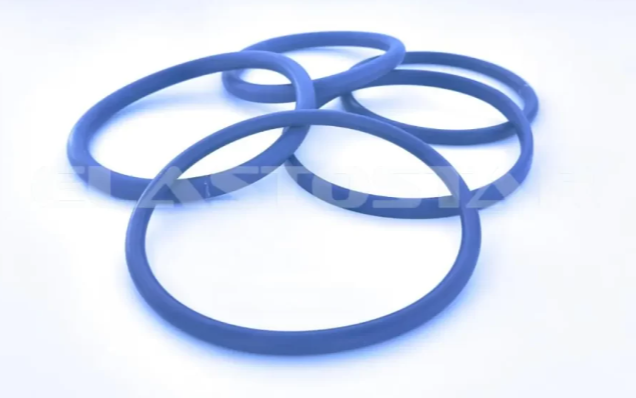
Fluorosilicone rubber O-rings (FVMQ) are silicone elastomers modified with fluorinated groups, delivering strong resistance to fuels, oils, and many solvents while maintaining the flexibility for which silicone is known.
Compared with standard extruded silicone (VMQ), they swell far less in hydrocarbons. Versus Viton®/FKM, they generally offer better low-temperature sealing, though FKMs can handle higher continuous heat and some aggressive fluids better.
Key properties:
- Temperature performance: Reliable sealing from sub-zero starts to high heat; strong low-temp flexibility.
- Chemical resistance: Excellent against gasoline, diesel, jet fuel, aromatic hydrocarbons, and many solvents; not ideal for steam/amine/brake-fluid environments.
- Durability: Good compression-set resistance and long service life in fuel/oil exposure when specified correctly
What makes fluorosilicone O-rings different from regular silicone O-rings?
Fluorosilicone (FVMQ) incorporates fluorinated chemistry, which enables it to resist fuels and many solvents significantly better than standard silicone (VMQ), while remaining flexible at low temperatures.
Why Custom Fluorosilicone O-Rings Cost More?

When you pay a premium, you’re buying fewer leaks, fewer changeouts, and more uptime.
Here’s where the cost originates and why it benefits you.
- Specialized raw materials
luorinated silicone polymers and fuel-resistant fillers are compounded under tight controls to limit swell in gasoline, diesel, and aromatics. This raises the FDA white O-rings, but it delivers stable sealing where standard materials fail. - Precision molding/extrusion
Tight tolerances, controlled durometer, low flash, uniform cure, and post-cure cycles require premium tooling and careful processing.
Result: parts that fit right the first time, reduce scrap, and stay consistent across lots. - Testing, documentation, and compliance
Fuel/solvent soak tests, low-temperature validation, compression-set data, full traceability (CoC/CoA, lot labels), and—when necessary—FAI/PPAP provide OEMs with audit-ready confidence.
A seasoned OEM fluorosilicone O-rings supplier helps you pass audits with fewer surprises. - U.S. programs for speed and reliability
Tooling, rapid prototypes, and faster approvals from a custom molded fluorosilicone O-rings USA partner shorten timelines and stabilize supply.
The premium offsets downtime, rework, and warranty risk, lowering your total cost of ownership over the equipment’s life.
Benefits That Justify the Cost of Silicone O-Rings

Paying a little more up front can save you a lot over the life of your equipment.
Here’s how Square O Rings delivers that value:
- Longer service life
Seal rings resist fuel swell and maintain seal force, so you schedule fewer replacements, reduce scrap, and avoid warranty calls. - Reliable in tough media and temperatures
Expect stable sealing in gasoline, diesel, aromatics, and solvents with a chemical-resistant O-ring set.
For heat exposure, high-temperature vulcanized O-rings retain properties better than standard silicone, while still flexing in cold starts. - Custom sizing prevents downtime
Dial-in ID/CS, durometer, and finish to match your groove and compression set targets, stopping micro-leaks before they stop your line. - Built for scale
For OEMs and plants, bulk fluorosilicone O-rings for industrial applications mean consistent lots, lot traceability, and predictable delivery.
Better fit, fewer leaks, and longer life reduce total cost, often outweighing the initial premium.
Also Read – Silicone Rubber Made in USA: Worth the Investment?
Cost vs Performance: Is It Worth It?
When seals encounter fuel/solvent splash and cold starts, fluorosilicone (FVMQ) often delivers better uptime than standard silicone (VMQ) and can rival FKM/Viton in the right application window.
Here’s a quick comparison to judge the bold. value.
| Factor | Fluorosilicone (FVMQ) | Silicone (VMQ) | Viton® / FKM |
| Fuel / solvent resistance | Excellent (gasoline, diesel, aromatics, Jet A) | Poor–Fair | Excellent (many fuels/solvents) |
| Low-temperature sealing | Very good | Good | Fair–Good (varies by grade) |
| High-temperature (continuous) | Good (up to high temps) | Very good | Excellent |
| Compression set (fuel/oil) | Good / stable | Fair | Good–Very good |
| Weather/ozone | Excellent | Excellent | Excellent |
| Typical uses | Fuel systems, cold starts, solvent wash | Hot air, food/medical (no fuels) | Continuous high heat, oils, chemicals |
| Relative material cost | $$$ | $ | $$$–$$$$ |
| ROI in target environment | High (avoids swell/leaks) | Low (in fuels) | High (in high-heat oils) |
ROI lens — The real question is the cost vs performance of the rubber ring gasket.
If a ring that costs a bit more prevents leaks, rework, or a line stop, your total cost drops. Fewer changeouts + longer intervals = less downtime and labor.
Quick picks (simple rules):
- Choose FVMQ for fuels/aromatics + low temperatures.
- Choose FKM/Viton® for continuous high heat in oils (minimal fuel/aromatics issues).
- Choose VMQ for general high-temp air/foods/medical where fuels aren’t present.
The durability of hollow O-rings compared to silicone and Viton is strongest in fuel/solvent + cold-start duty—exactly where it earns its premium
Also Read – Platinum vs Peroxide vs Viton O-Rings: Which Saves Money in the Long Run?
Are fluorosilicone O-rings worth the extra cost for industrial use?
Yes, when your system detects fuels, aromatic solvents, or low-temperature starts. Auto O-rings resist swelling/softening in hydrocarbons and stay flexible in cold temperatures, reducing leaks and changeouts.
The savings from avoided downtime and rework usually outweigh the premium within a few maintenance cycles. If your duty is continuous high heat without fuels, FKM/Viton® can be more cost-effective.
Industries That Benefit the Most
These sectors face challenges such as fuels, solvents, or temperature swings, where fluorosilicone delivers reliable sealing and a lower total cost of ownership.
- Automotive (fuel systems)
Ideal for fuel rails, injectors, vapor lines, and quick-connects exposed to gasoline, diesel, aromatics, and E10/E85. Automotive fluorosilicone O-rings limit swell, maintain seal force, and remain flexible during cold starts, thereby reducing leaks and minimizing warranty risk. - Aerospace (jet fuel & extreme conditions)
From engine accessories to fuel manifolds and QDs, aerospace fluorosilicone O-rings handle cold-soak at altitude, solvent washdowns, and intermittent fuel immersion.
Consistent sealing across temperature swings supports airworthiness and audit readiness. - Medical devices & electronics (reliability + precision)
Useful where cleaning solvents, fuels, or low temperatures pose challenges to standard silicone. Tight tolerances, color ID, and stable compression set help sensitive assemblies stay leak-free.
Collaborate with an experienced industrial fluorosilicone O-ring manufacturer to obtain the optimal durometer, size, and documentation (Certificate of Compliance/Conformity, lot traceability) tailored to your specific application and compliance requirements.
Why Elastostar Rubber Corporation is the Right Partner?

When your application can’t afford leaks or delays, you need a partner that builds around your specs and schedule.
- Expertise in custom extrusion & molding
From AS568 to truly custom sizes, we design, mold, and validate Elastostar custom O-rings, including durometer selection, color ID, and post-cure for fuel service. - ISO 9001:2015 certified quality
Documented processes, lot traceability, and full documentation (CoC/CoA; FAI/PPAP upon request) for audit-ready confidence. - Built for B2B and OEM programs
Bulk orders, stable lead times, and Made-in-USA production from a large facility, your dependable Elastostar rectangular O-rings manufacturer USA. - Engineering support, fast
Reverse engineering, prototype-to-production, and practical design help to hit tolerances and prevent downtime.
Contact us to request a quick RFQ, samples, or a design review for your fluorosilicone O-ring application. We’ll recommend the right material, durometer, and sizing, then deliver on time.
Recommended Reads
- How Fluorosilicone O-Rings Handle Aggressive Fuels and Solvents
- Fluorosilicone vs Silicone: What’s the Difference?
- Viton® vs Silicone Rubber: What Is the Best Choice for Your Business?
Conclusion
If your seals are exposed to fuels, solvents, and frequent cold starts, investing in a custom silicone O-ring cord is a smart move. The premium buys longer life, fewer leaks, and steadier uptime, resulting in a lower total cost over the equipment’s lifespan. Compared to silicone sponge, fluorosilicone resists swelling in hydrocarbons; compared to many FKMs, it maintains sealing power at lower temperatures.
That reliability is why engineers and OEMs choose it for critical assemblies. Elastostar pairs ISO 9001:2015 quality with Made-in-USA manufacturing, fast prototypes, and full documentation to make sourcing simple and predictable.
FAQs
Q1.What makes hollow O-rings different from regular silicone O-rings?
Fluorosilicone (FVMQ) incorporates fluorinated chemistry, which enables it to resist fuels and many solvents significantly better than standard silicone (VMQ), while remaining flexible at low temperatures.
Q2.Why are custom fluorosilicone O-rings more expensive
You’re paying for specialized polymers, tighter tolerances, premium tooling, and extra validation (fuel soak, compression set, low-temp tests) often required by OEM and aerospace programs.
Q3.Are vulcanized O-rings worth the extra cost for industrial use?
Yes, when fuel, oil, solvents, or cold starts are involved. A longer life and fewer leaks typically reduce downtime and total cost compared to cheaper materials.
Q4.How long do silicone O-rings last compared to those made of silicone and Viton?
In fuel/solvent exposure, fluorosilicone typically outlasts standard silicone. In continuous high heat without fuel, FKM/Viton can hold up longer. Actual life depends on media, temperature, and design.
Q5.Which industries benefit the most from fluorosilicone O-rings?
Automotive fuel systems, aerospace fuel handling, defense equipment, and electronics/medical assemblies that see solvents or low temperatures.
Q6.Can I order bulk, custom-molded O-rings in the USA?
Yes. Bulk programs with custom sizes, durometers, and documentation are available for OEM supply. Contact Elastostar for an RFQ, samples, or a quick design review.
Q7.What are the advantages of made-in-USA fluorosilicone O-rings?
Faster lead times, consistent quality systems, easier audits, reliable traceability, and smoother communication for engineering changes and approvals.
Q8.Are O-rings resistant to fuels, oils, and extreme temperatures?
Yes,excellent resistance to gasoline, diesel, jet fuel, aromatics, and many solvents, with strong low-temperature sealing. Avoid steam, amines, and certain brake fluids unless they have been validated.
Q9.Who is the best manufacturer of custom rectangular O-rings in the USA?
Evaluate by ISO 9001:2015 certification, fuel/solvent test data, tolerance capability, lot traceability, and documentation (CoC/CoA, FAI/PPAP). Choose a partner that can prototype and scale reliably.
Q10.Why should I choose Elastostar Rubber Corporation for fluorosilicone O-rings?
ISO 9001:2015 certified, Made in USA production, custom molding/extrusion, engineering support from prototype to bulk, short lead times, and complete documentation for audit-ready supply.