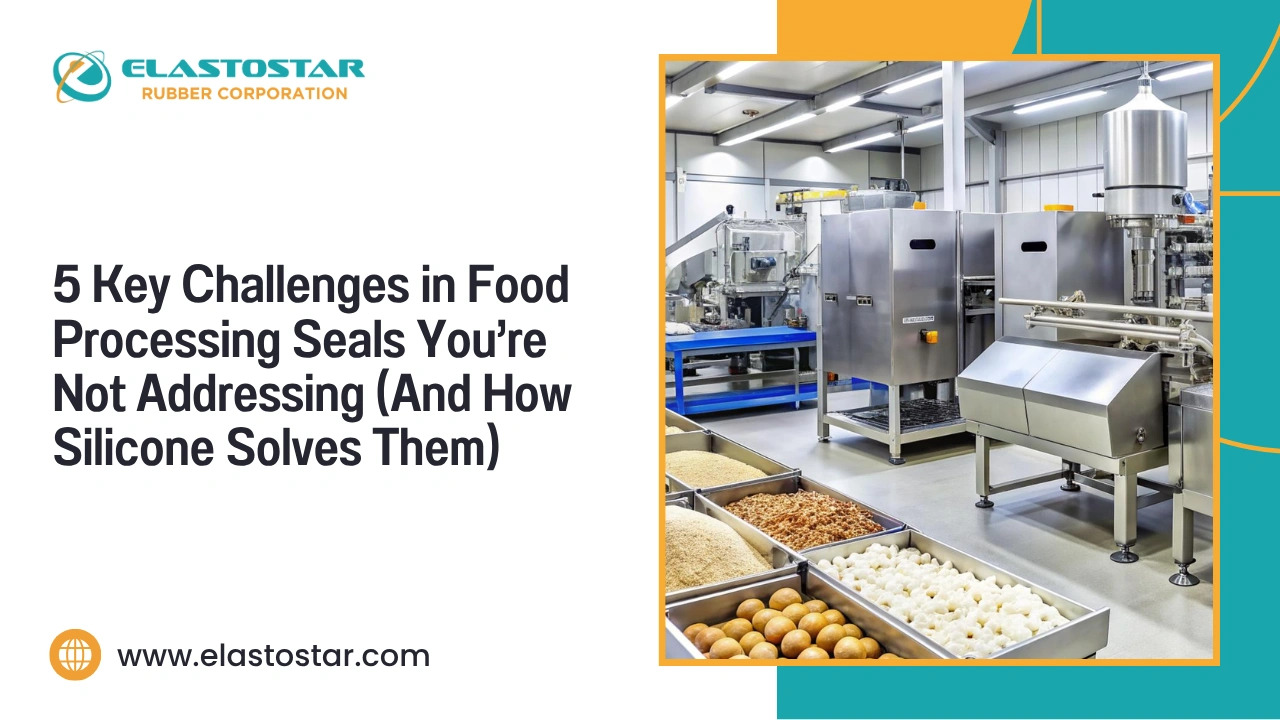
In food and beverage manufacturing, sealing failures are one of the biggest hidden risks. When ordinary seals break down, they can cause leaks, hygiene issues, and product contamination, leading to costly downtime and failed inspections.
Using the right silicone seals for food processing can prevent these issues by maintaining a contamination-free environment. Thanks to their heat resistance, hygiene benefits, and FDA compliance, food-grade silicone seals are now preferred across food lines that demand safety and continuous uptime.
In this blog, we will explore five sealing challenges processors often overlook and how silicone sealing solutions address them.
Key Takeaways
- Keeps food safe: Silicone seals stop leaks and bacteria buildup, keeping food zones clean and hygienic.
- Handles tough conditions: They stay strong under heat, steam, and cleaning chemicals without cracking.
- Saves time and money: Long-lasting seals mean fewer replacements and less downtime.
- Works with all foods: Silicone resists oils, acids, and alcohol, making it ideal for a wide range of foods.
- Meets safety standards: FDA-approved silicone helps plants stay compliant and pass inspections with ease.
- Trusted quality from Elastostar Rubber Corporation: Custom-made, durable silicone sealing products built for food safety and performance.
Table of Contents
5 Key Challenges of Silicone in Food Processing Industries
1. Contamination Risk in Seals
Food plants cannot afford hidden contamination risks. When seals absorb residue or form small cracks, bacteria can grow inside these surfaces and move into the production zone. Even a minor sealing failure can compromise hygiene, trigger product recalls, and damage brand trust.
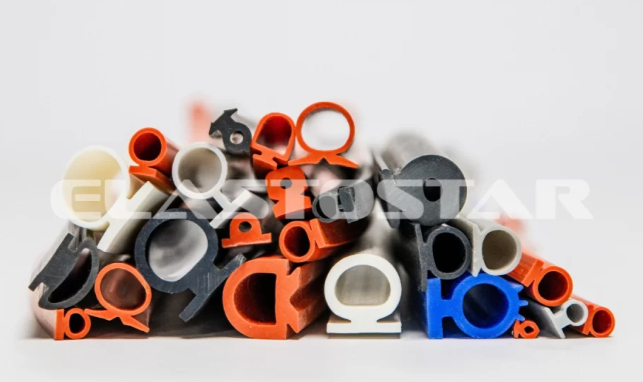
Using silicone seals for food processing supports stronger sanitation control. Food-grade silicone seals are non-porous and easy to clean, helping maintain contamination-free seals throughout washdowns. With silicone sealing solutions designed for hygienic environments, processors improve reliability and safety.
Choosing silicone food safety solutions, such as silicone tubing and hoses, ensures better compliance and long-lasting cleanliness.
Also Read: Top Applications of FDA Silicone Rubber in Food Processing Industries
2. Degrading Seals in Harsh Conditions
Food processing lines rely on continuous heat, steam, pressure, and aggressive CIP cleaning. Standard rubber often becomes brittle, swells, or cracks under these conditions, leading to early seal failure, leaks, and contamination. When equipment must stop repeatedly for maintenance, production efficiency and food safety both suffer.
Switching to silicone rubber for food manufacturing ensures seals remain stable during thermal cycling and cleaning. Heat-resistant silicone seals offer reliable performance in ovens, freezers, and hot-fill systems.
These high-performance silicone materials resist chemical attack and mechanical stress, for food industry operations. With temperature-resistant seals, especially silicone extruded profiles, food plants can keep equipment running longer between changeouts.
3. Cost of Frequent Seal Replacements
Every time a seal fails, the equipment must be stopped. Production delays increase labor costs, slow output, and create waste from interrupted batches. When seals wear out too fast, maintenance teams spend more time replacing parts rather than keeping lines productive.
Upgrading to silicone seals for food lines helps reduce the frequency of shutdowns. These cost-effective silicone seals extend lifecycle and improve operational reliability. With durable food-grade silicone, plants can avoid repeated seal failures and reduce replacement budgets.
Low-maintenance silicone performs better in harsh processing environments, resulting in longer-lasting seals that protect equipment uptime. We offer this reliability through its molded silicone components, engineered for performance and longevity.
4. Compatibility with Different Food Products
Food products vary widely, including acidic sauces, dairy, alcoholic beverages, oily snacks, and frozen goods, all of which interact differently with seal materials. Many conventional rubbers absorb fats or degrade when exposed to acids, leading to leakage, swelling, and contamination.
Upgrading to silicone seals for food applications ensures greater universal performance and a longer service life. Silicone food-safe seals resist oils, fats, alcohol, and cleaning agents without breaking down. Their wide compatibility makes universal silicone gaskets a smart choice for multi-product lines.
With chemical-resistant silicone seals, plants avoid material migration and protect food purity. We supports these needs with silicone sponge products engineered for consistent sealing across varying food environments.
| Seal Material | Oil/Fat Resistance | Acidic Food Resistance | Alcohol Resistance | Risk Level |
| Natural Rubber | Poor | Poor | Low | Very High |
| EPDM | Moderate | Good | Poor | Medium |
| NBR | Good | Poor | Moderate | Medium |
| Food-Grade Silicone | Excellent | Excellent | Excellent | Low |
Silicone performs reliably across multiple food categories, with fewer seal changes and fewer compliance issues.
5. Regulatory Compliance
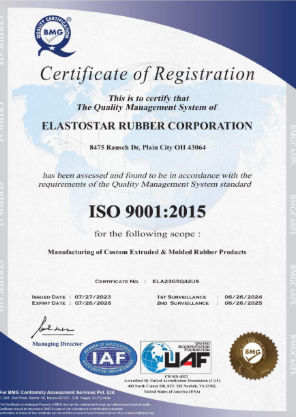
Food manufacturers operate under strict rules like the FDA, HACCP, FSMA, and GFSI standards. If sealing materials are not certified for food contact, plants risk audit failures, forced shutdowns, and product recalls. The result: financial loss and damaged brand credibility.
Using FDA-approved silicone seals helps maintain safety and compliance in critical production zones. FDA-compliant rubber seals are formulated for use in direct and indirect food-contact environments. With certified food-grade silicone, companies meet hygiene requirements and avoid migration risks.
When sealing applications fall under FDA regulation, choosing silicone for FDA-regulated industries, such as silicone cords and Rubber O-rings, ensures full documentation and traceability for audits.
Also Read: USA Silicone Seal Manufacturers: FDA & USP Class VI Certified
Why Choose Elastostar Rubber Corporation for Food-Grade Silicone Seals?
Food processors need sealing solutions that support hygiene, uptime, and full regulatory confidence. Elastostar Rubber Corporation, a leading USA rubber manufacturer, delivers performance you can rely on, with engineering expertise designed for demanding food environments.
Why do leading food manufacturers choose us?

- Proudly Made in the USA for consistent quality and reliable supply.
- Products meet USP Class VI, Sections 87 & 88, for safety in sensitive applications.
- Custom extruded profiles, O-rings, gaskets, and rubber sheet materials based on exact equipment needs.
- Reverse engineering is available for hard-to-source or obsolete parts.
- Prototype-to-production run flexibility for both small and large volumes.
- Expert design helps to improve seal performance and hygiene.
- Shortest lead time delivery to reduce downtime and supply delays.
- Custom manufacturing with a big facility to scale production anytime.
Elastostar’s advanced specialty silicone solutions ensure certified, traceable sealing products that help food manufacturers meet strict global standards without compromising durability or performance.
Recommended Reads
1. FDA Metal-Detectable Silicone Rubber O-Rings, Seals & Gaskets
2. Top Reasons to Choose U.S. Silicone Rubber Over Offshore Products
3. FDA Food-Grade Silicone Tubing: A Comprehensive Guide
Conclusion
Food safety and equipment reliability depend on the smallest components, and seals are one of the most critical. When they crack, soften, or absorb residue, the entire production line is at risk. Upgrading to high-performance silicone sealing solutions helps prevent contamination, reduce downtime, and maintain ongoing compliance in FDA-regulated environments.
Elastostar Rubber Corporation supports the food industry with certified silicone products that deliver long-lasting sealing performance where hygiene matters most. If you are looking to improve your existing sealing systems or replace outdated materials, our engineers are ready to help.
Contact us today to discuss your sealing needs and request a custom quote that meets your food processing requirements.
FAQs
Q1. Why are silicone seals important for food processing?
Silicone seals help keep food equipment clean and hygienic. They prevent bacteria and residue from entering the product zone, protecting food safety throughout every shift.
Q2. How do silicone seals stand up to extreme processing conditions?
Silicone stays flexible and strong during hot fill, freezing, steam cleaning, and rapid temperature changes. It doesn’t crack or break down like standard rubber, helping equipment run longer without failure.
Q3. How do silicone seals reduce long-term maintenance costs?
Silicone seals offer longer service life, so they don’t need frequent replacement. This reduces downtime, labor, and overall maintenance expenses for food manufacturers.
Q4. How versatile are silicone seals in food processing?
Silicone Rubber is compatible with dairy, acidic sauces, alcohol, oils, and frozen goods. Because it performs well with different food types, plants can switch products without changing seals. Silicone sheet materials are also available for customized sealing needs.
Q5. How does silicone help food manufacturers meet FDA regulations?
Food-grade silicone is tested for food contact safety. It supports FDA compliance and helps manufacturers pass inspections with less risk of audit problems or product recalls.